
EXCLUSIVE: Hugh Skinner Prefers the Unexpected
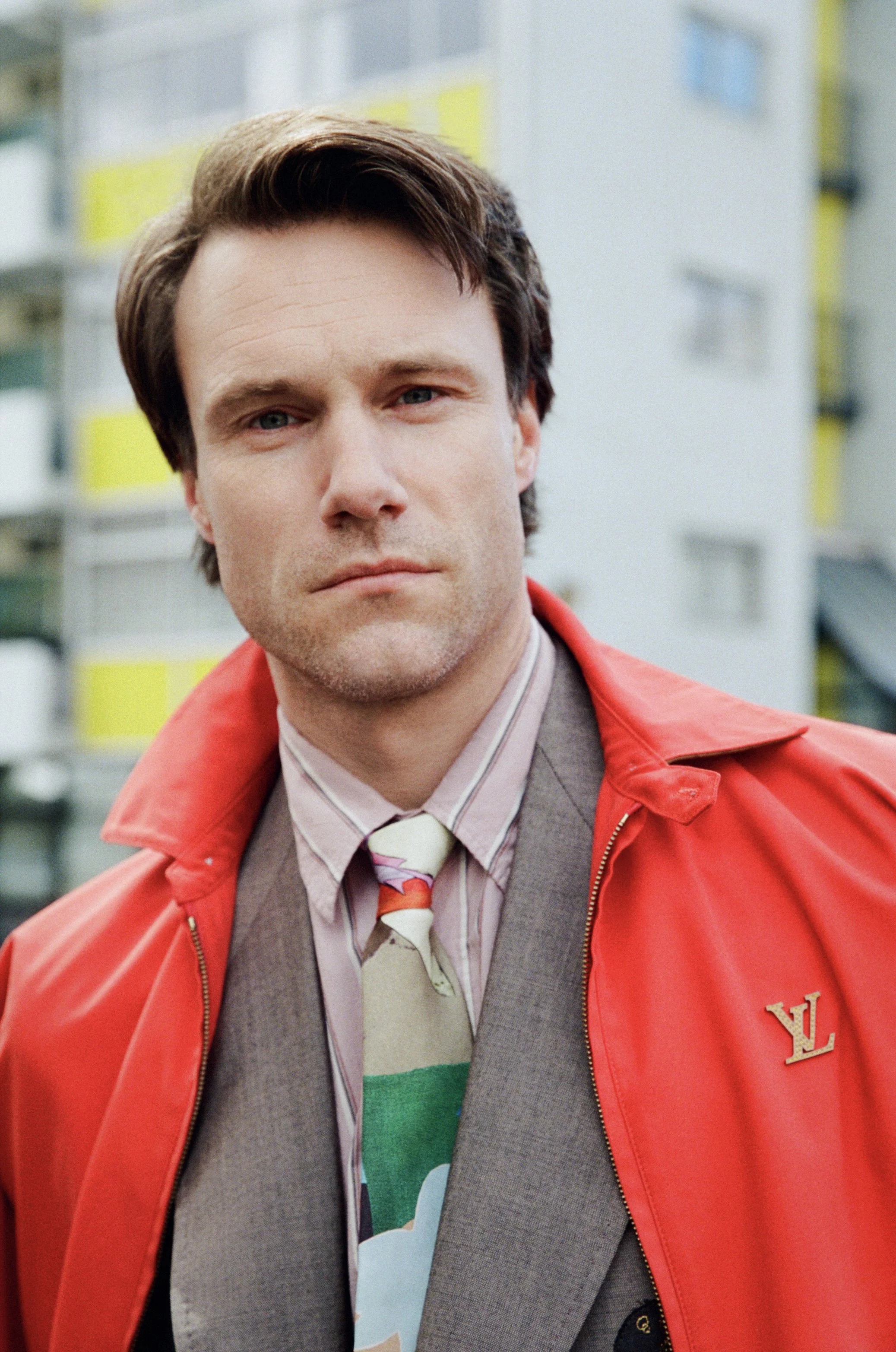
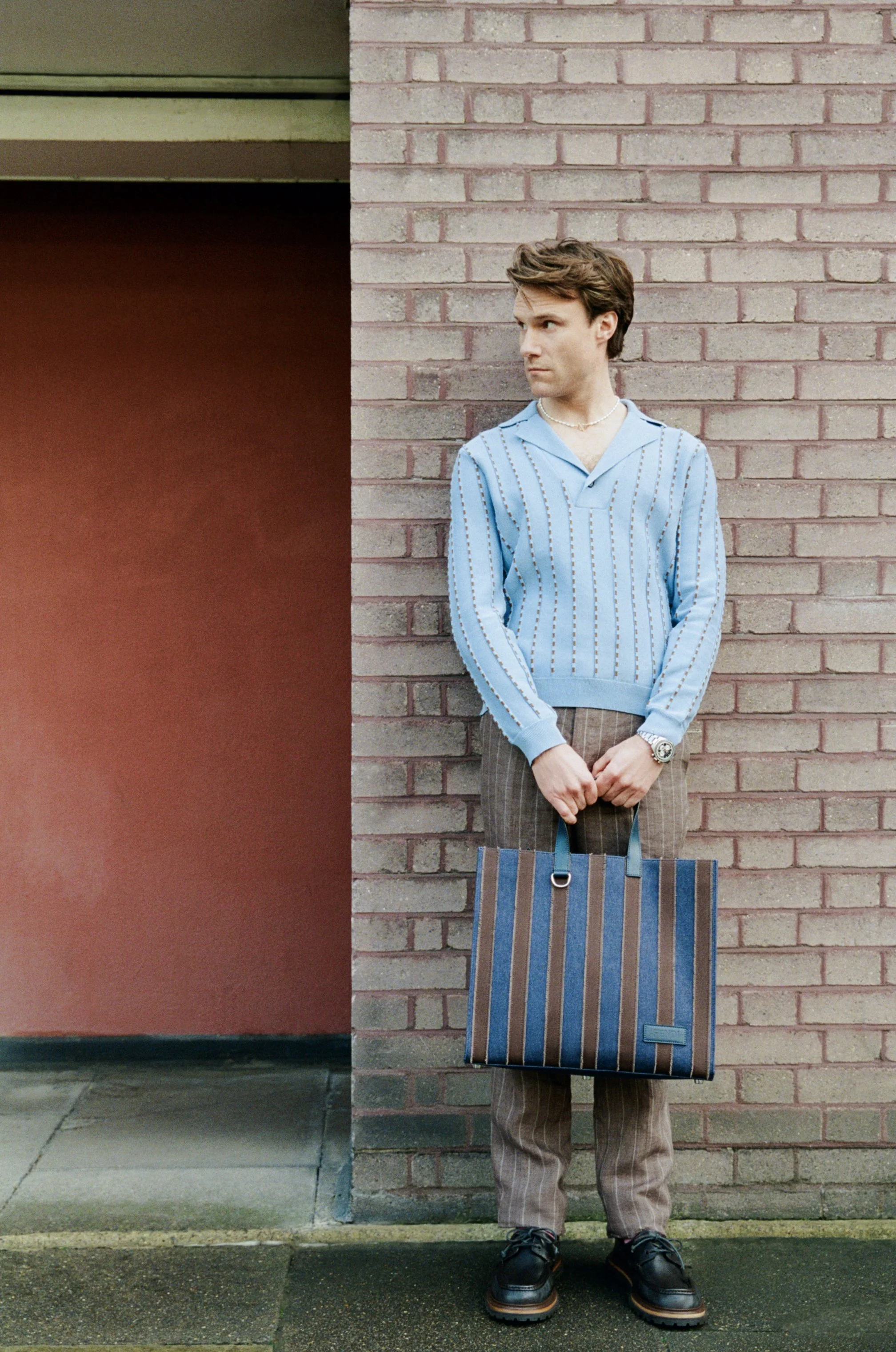
Jacket - Louis Vuitton, Jacket, Trousers & Tie - Paul Smith, Shirt - Oliver Spencer
From W1A to The Witcher, the British actor discusses awkward characters, experimental ambitions, and why getting things wrong is often the most interesting part of performance.
Words - Tajinder Hayer
Creative Direction - Michael Gray
Photography - Matt Hind
Styling - Annie Swain
Styling Assistance - Ben Ian James
Grooming - Simon Izzard at The London Style Agency using MDLondon
There are actors who build careers around consistency, and then there are actors like Hugh Skinner, whose appeal lies in the fact that you never quite know where he’ll turn up next. Over the past decade, he has drifted effortlessly between sharply observed British comedy, fantasy epics, psychological thrillers and theatre, often stealing scenes while appearing entirely unconcerned with stealing them at all. One moment he’s navigating the bureaucratic absurdity of W1A; the next he’s wearing an enormous wig in The Witcher or sharing the screen with Meryl Streep in Mamma Mia! Here We Go Again. The through-line is less about genre than instinct — a fascination with characters who feel slightly out of step with the world around them.
“I do love variety and trying as many different things as possible,” he says. “I like the idea of popping up in things that seem unexpected. And new stuff is scary, which is good.”
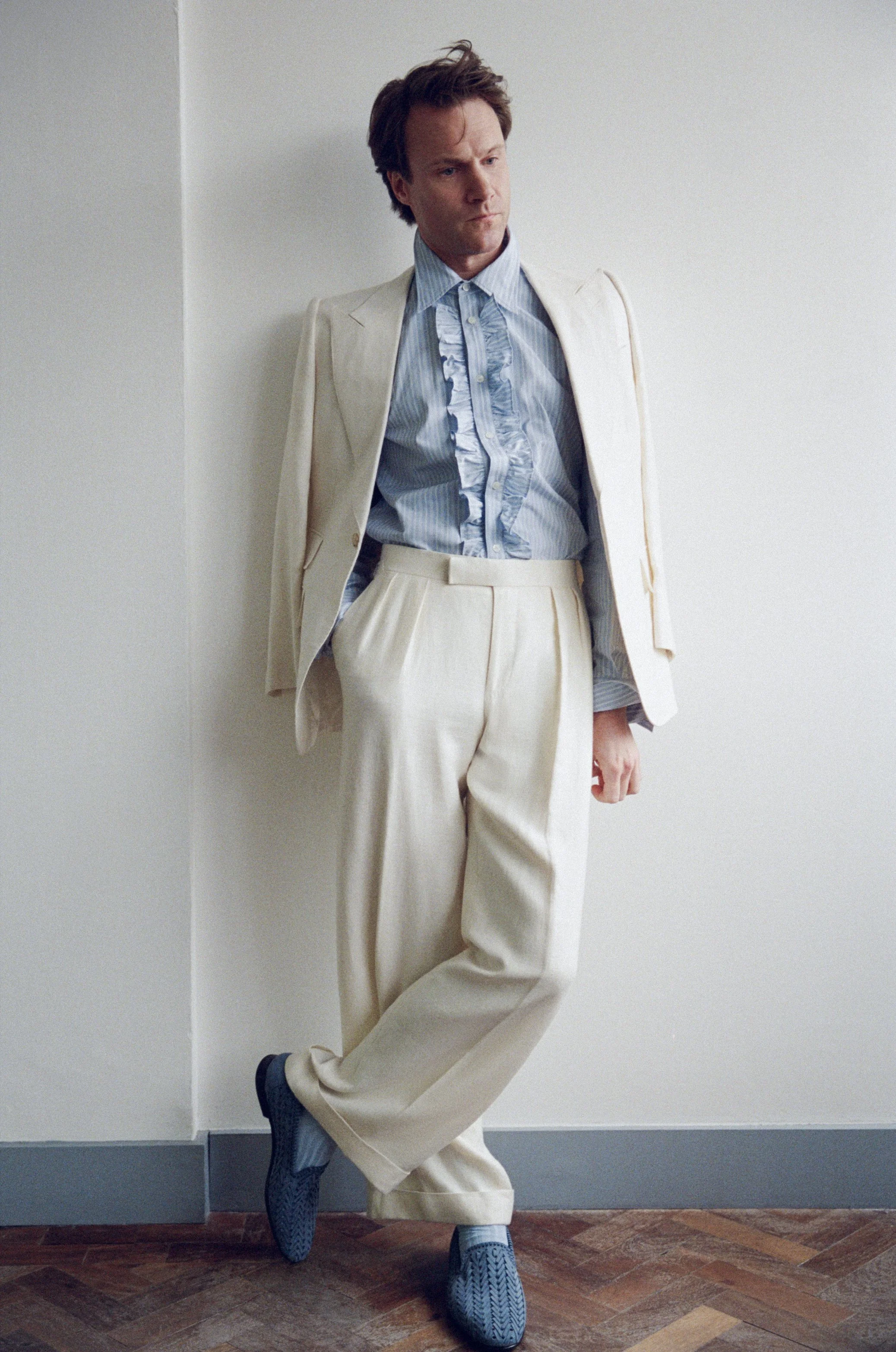
Suit - Edward Sexton, Shirt - AMI, Socks - London Sock Company, Shoes - Manolo Blahnik, Watch - Zenith
That appetite for unpredictability has quietly defined Skinner’s career since graduating from the London Academy of Music and Dramatic Art. While many actors spend years trying to establish a recognisable lane, Skinner appears most comfortable avoiding one entirely. Even now, after more than a decade on screen and stage, he still talks about acting less as mastery and more as pursuit.
“I think it’s the same on the whole,” he says, reflecting on whether his idea of success has changed since drama school. “I’m still chasing that feeling of when things align and it feels like it has gone ok.”
It’s an answer that reveals quite a lot about him. There’s little sense of career strategy or calculated reinvention. Instead, Skinner speaks like someone still fascinated by the mechanics of performance itself — particularly the fragile, unpredictable moments where scenes suddenly click into place.
That instinct was shaped early during his time at London Academy of Music and Dramatic Art. Ask what remains most important from his training, and his answer is tellingly unselfish.
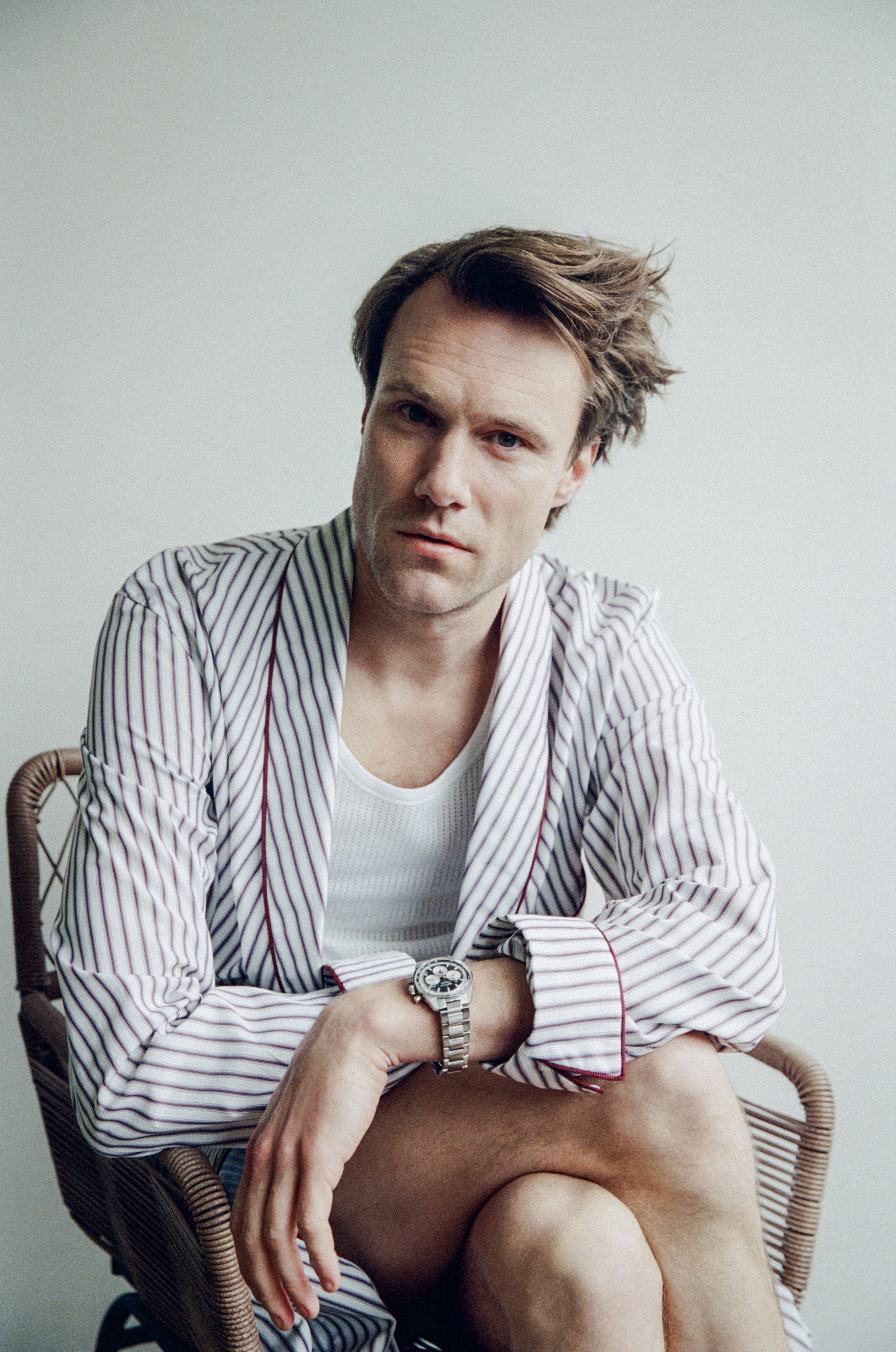
Gown - Turnbull & Asser, Shorts - Louis Vuitton, Watch - Zenith
“I think the main thing is probably the importance of keeping the focus on everyone else,” he says. “It’s so easy to get stuck in what you're doing and most of the time you just need to make it about the other people in the scene.”
It’s perhaps why his performances work so well in ensemble pieces. Skinner rarely dominates scenes in an obvious way, but he consistently sharpens the rhythm of the people around him. Comedy especially benefits from that approach, and few modern British actors understand awkwardness quite as precisely.
“I like playing characters who get stuff wrong, or where the audience are ahead of them,” he says.
That quality made him indispensable in W1A, John Morton’s brilliantly dry satire of institutional incompetence at the BBC. More than ten years after first playing Will Humphries, Skinner has now returned to the role in Twenty Twenty Six, which relocates Morton’s familiar bureaucratic chaos into the world of an international football tournament.
Revisiting a character after such a long gap could easily feel forced, but Skinner speaks about Will with genuine affection — and with the self-awareness that comes from returning to a role originally played in his twenties.
“I think initially I’d changed more than he had,” he says. “But as the series goes on, he’s increasingly perceptive, although it’s not always clear what he’s perceiving.”
Then, with characteristic self-deprecation, he adds: “I was slightly worried I might be a bit creepy playing him now I’m 40. I was in my 20s when I first did it. But Nicola who ran hair and make-up slapped on the foundation and I think it was ok.”
Morton’s writing remains a major draw for him. “I love John’s writing and I was giddy as hell when I originally got offered W1A, so I leapt at the opportunity to work with him again on Twenty Twenty Six,” he says.
What continues to resonate is Morton’s understanding of social absurdity — the uniquely British habit of circling around meaning without ever quite saying what we mean directly.
“The way he writes quirks we get stuck on when we mean something else or so much more, I find hugely relatable.”
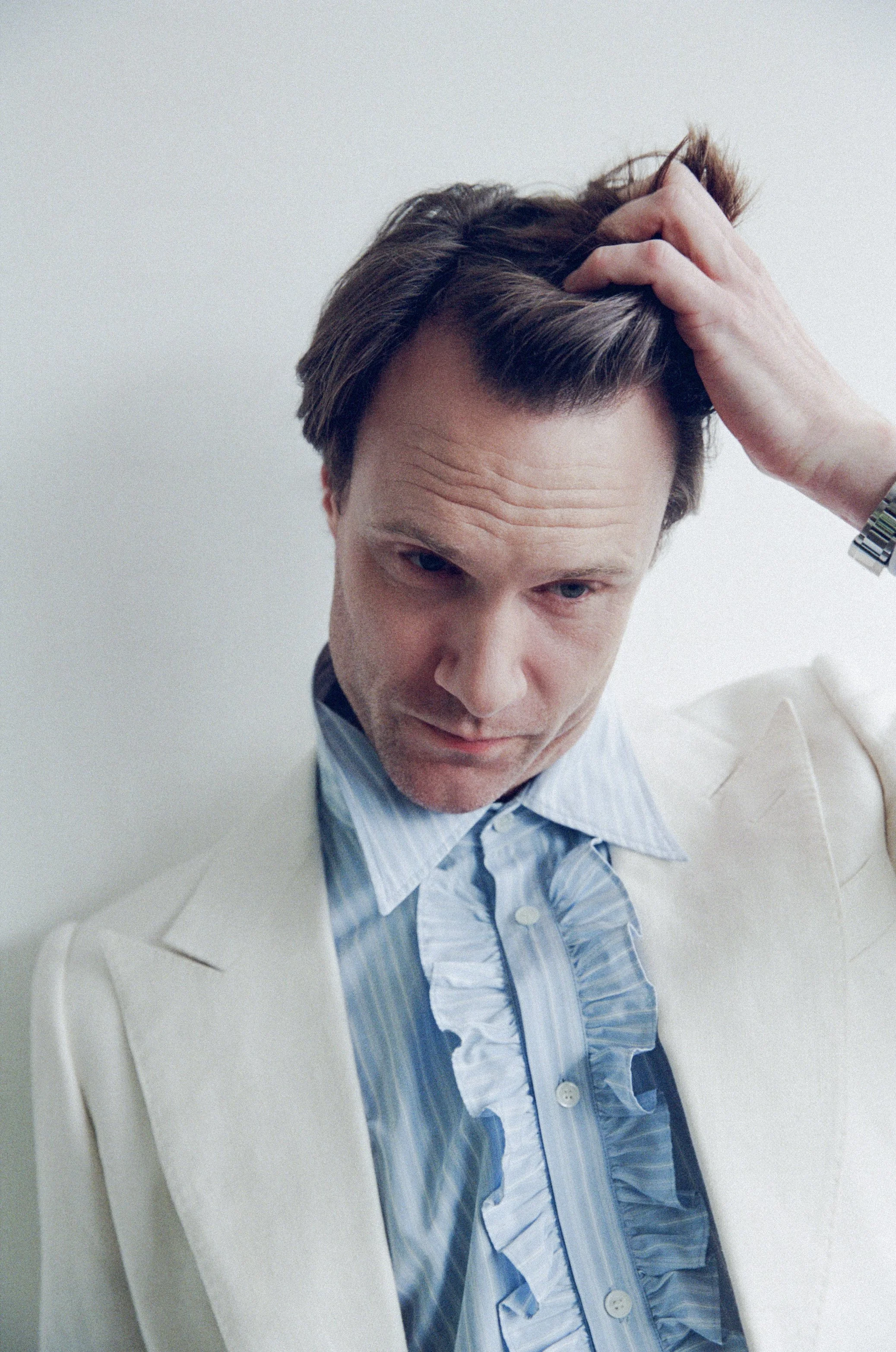
Suit - Edward Sexton, Shirt - AMI, Watch - Zenith
That fascination with behavioural detail also attracted Skinner to Two Weeks in August, the new BBC series written by Catherine Shepherd. The show follows a friendship group during a holiday that slowly unravels, mining tension and awkwardness from the kind of social dynamics most people recognise but rarely articulate.
“I’m a big fan of Catherine Shepherd so I couldn’t wait to read what she had written,” he says. “And I was blown away. The scripts had such an original tone.”
Again, it’s the observation of human behaviour that hooks him most.
“She observes idiosyncrasies in friendships I hadn’t clocked before, let alone seen on TV,” he says. “And obviously pretending to go on holiday was a big draw.”
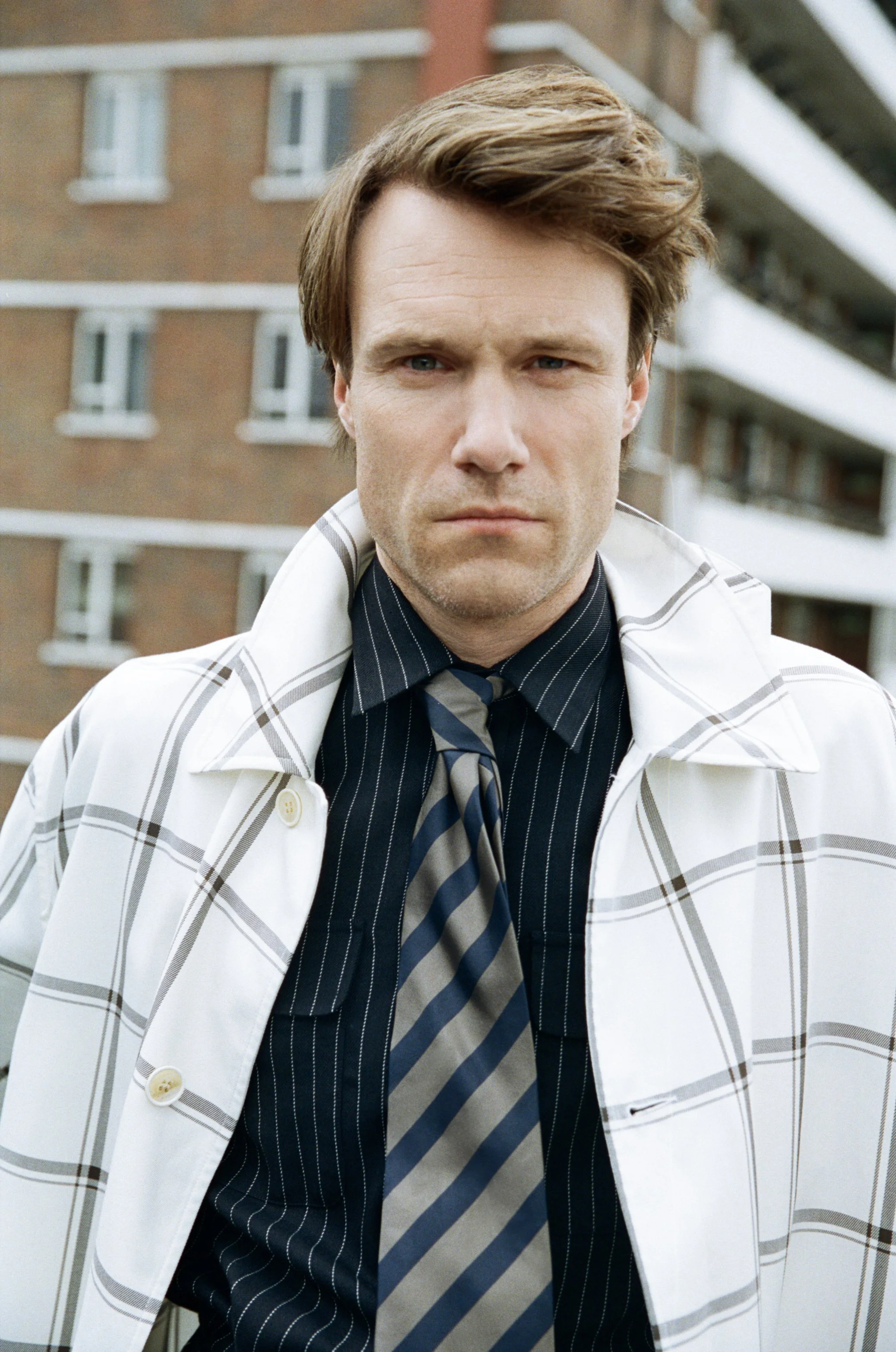
Coat & Tie - dunhill, Shirt - Ralph Lauren
Even in larger-scale productions, Skinner gravitates towards specificity rather than spectacle. Joining The Witcher as Prince Radovid introduced him to one of Netflix’s biggest global franchises and an intensely invested fanbase, but his approach remained surprisingly grounded.
“I’d never done anything like it before, it felt like a big challenge and that excited me,” he says. “You’re a small cog in a big machine on something like that, but on the whole I think it’s the same in terms of try and be truthful and make it seem like something’s happening.”
Then comes the detail that probably explains why audiences warm to him so easily.
“And I got an absolutely incredible wig.”
Theatre, meanwhile, continues to provide something screen work cannot. Last year, Skinner returned to the stage in The Importance of Being Earnest alongside Ncuti Gatwa, with the production later broadcast nationally through National Theatre Live.
For Skinner, the biggest difference is time.
“I think time is the main thing,” he says. “I’m dyslexic so to get to spend that much time with a script was incredible.”
Unlike television schedules, theatre allows performances to evolve gradually across rehearsal and performance runs. For an actor interested in rhythm, relationships and detail, that process clearly matters.
“The way it develops, and the relationships, over the run with that cast was a total joy.”
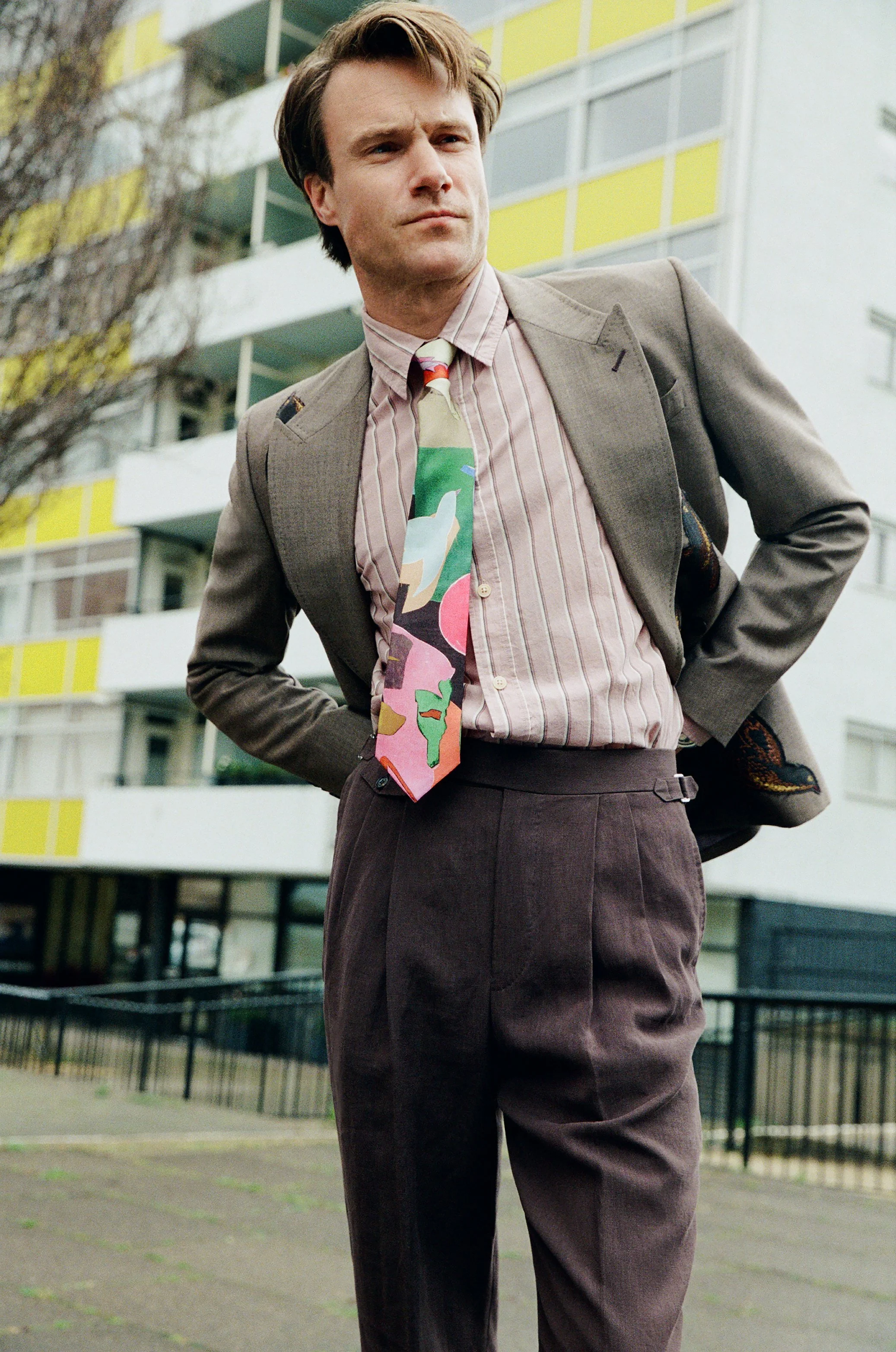
Jacket, Trousers & Tie - Paul Smith, Trousers - dunhill, Shirt - Oliver Spencer
Across his career, Skinner has worked opposite some of the industry’s most celebrated performers — Olivia Colman, Jessie Buckley, Ian McKellen and Meryl Streep among them. But when asked whether he learns by observing actors of that calibre, he seems almost bemused by the question.
“I mean I’d like to think so,” he says, “but I think with people like them, it’s so seamless and effortless you can’t really see a process.”
Still, certain performances have stayed with him. Discussing his upcoming appearance in the film adaptation of Frank and Percy, Skinner lights up when talking about finally working with Ian McKellen.
“I was so excited to work with him,” he says. “The first time I enjoyed Shakespeare was his Richard III film. He’s so sympathetic, you empathise with him and always understand where he’s coming from. It’s magic, particularly in the Shakespeare roles.”
For all the established productions and recognisable titles, though, Skinner still sounds most energised by uncertainty. When asked what comes next, he doesn’t mention franchises or prestige dramas. Instead, he talks about experimentation.
“I’d love to try something experimental,” he says. “There are lots of directors I’d like to work with. Or something improvised.”
Which feels entirely fitting. Hugh Skinner’s career has never really been about arriving somewhere definitive. The appeal lies in the unpredictability — the sense that the next role could easily be stranger, riskier or more unexpected than the last.
And, judging by the last decade, that’s exactly where he does his best work.
Twenty Twenty Six and Two Weeks in August are on BBC Iplayer now.