
At The Pass: Chet Sharma on Memory, Science and the Making of BiBi
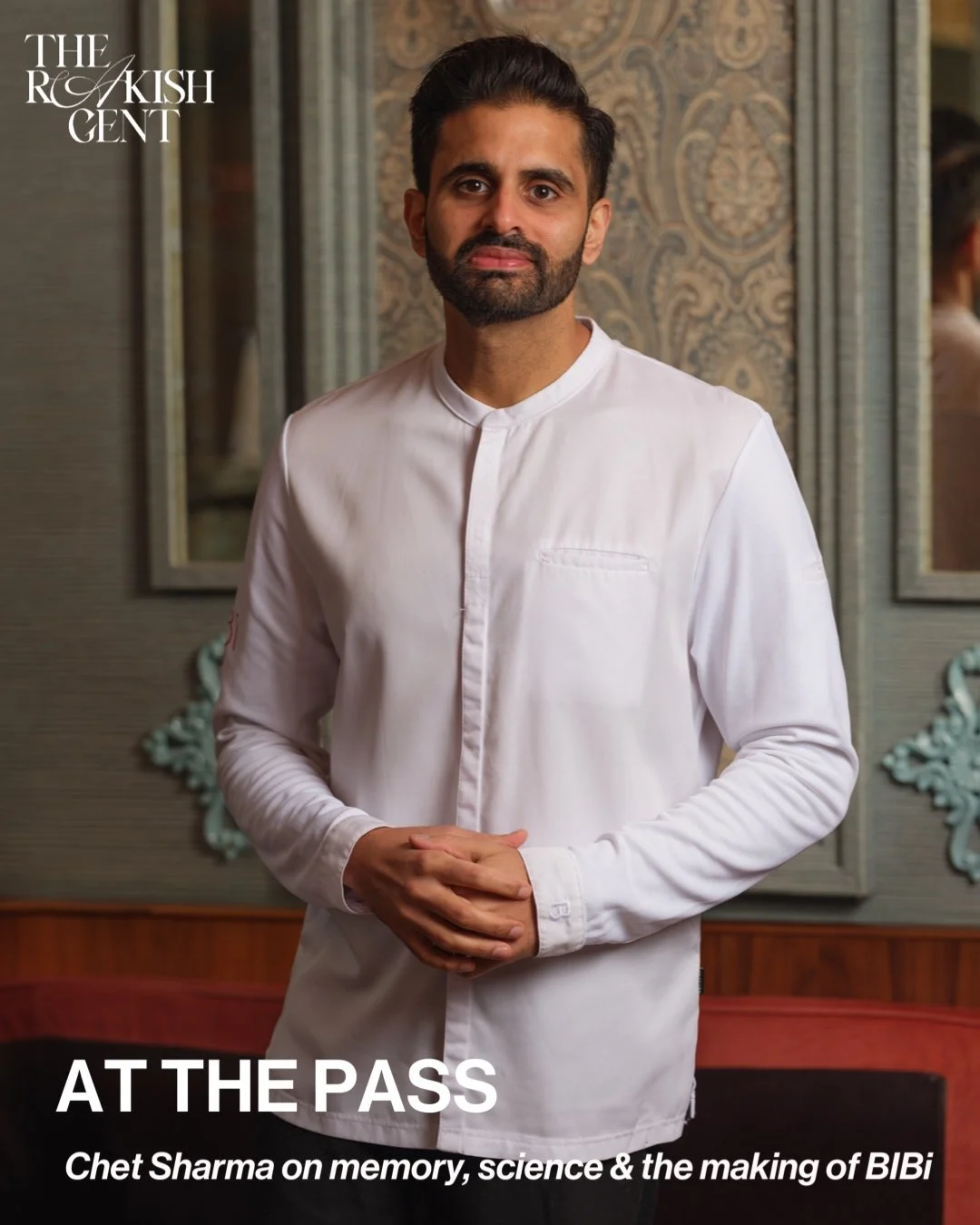
There is a tendency in modern hospitality to reduce chefs to simple narratives. The prodigy. The perfectionist. The rebel. The technician. But Chet Sharma resists easy categorisation, perhaps because his route to one of London’s most acclaimed dining rooms was never linear to begin with.
Before BiBi became one of Mayfair’s hardest tables to secure, Sharma was pursuing a DPhil in condensed matter physics at Oxford, after studying chemistry at UCL and completing a Master’s in clinical and experimental medicine. Somewhere in parallel, he was also DJing late-night sets at Ministry of Sound alongside artists including Kanye West, 50 Cent and Sean Paul. The chef’s whites arrived gradually, almost accidentally, through a succession of obsessive stages in some of Britain and Europe’s most exacting kitchens.
And yet, sitting inside BiBi today — amid the low amber glow, the soundtrack that hums beneath service, and the fragrant smoke curling from the sigree grill — the trajectory somehow makes perfect sense. Few restaurants in London feel so entirely authored. BiBi is technical without coldness, luxurious without theatre, and deeply personal without ever becoming sentimental. The restaurant’s name itself offers the first clue. “BiBi” is an affectionate term for grandmother, and the emotional centre of Sharma’s cooking still lives in childhood memory.
“My most ingrained memory is incredibly vivid,” he says. “I was about six years old, arriving at our family farm near Delhi at something like two in the morning. I was exhausted, hungry, probably a bit overwhelmed, and my uncle had cooked malai kofta entirely from scratch to welcome us.”
It is not simply the dish he remembers, but the act itself.
“What stayed with me wasn’t just the dish itself, but the care behind it. The fact that someone would go to that effort, at that hour, purely to make you feel at home — that’s something that has never left me.”
That idea — hospitality as emotional generosity rather than performance — quietly underpins everything at BiBi. Sharma speaks often about memory, but not in the overly polished language that has become fashionable in fine dining. His recollections are practical, sensory, rooted in texture and feeling rather than nostalgia for nostalgia’s sake.
“Alongside that, the real foundation of my cooking comes from time spent with my grandmothers,” he says. “They were very different cooks, but both had this extraordinary ability to create flavour without ever intellectualising it. It was all memory, instinct, repetition.”
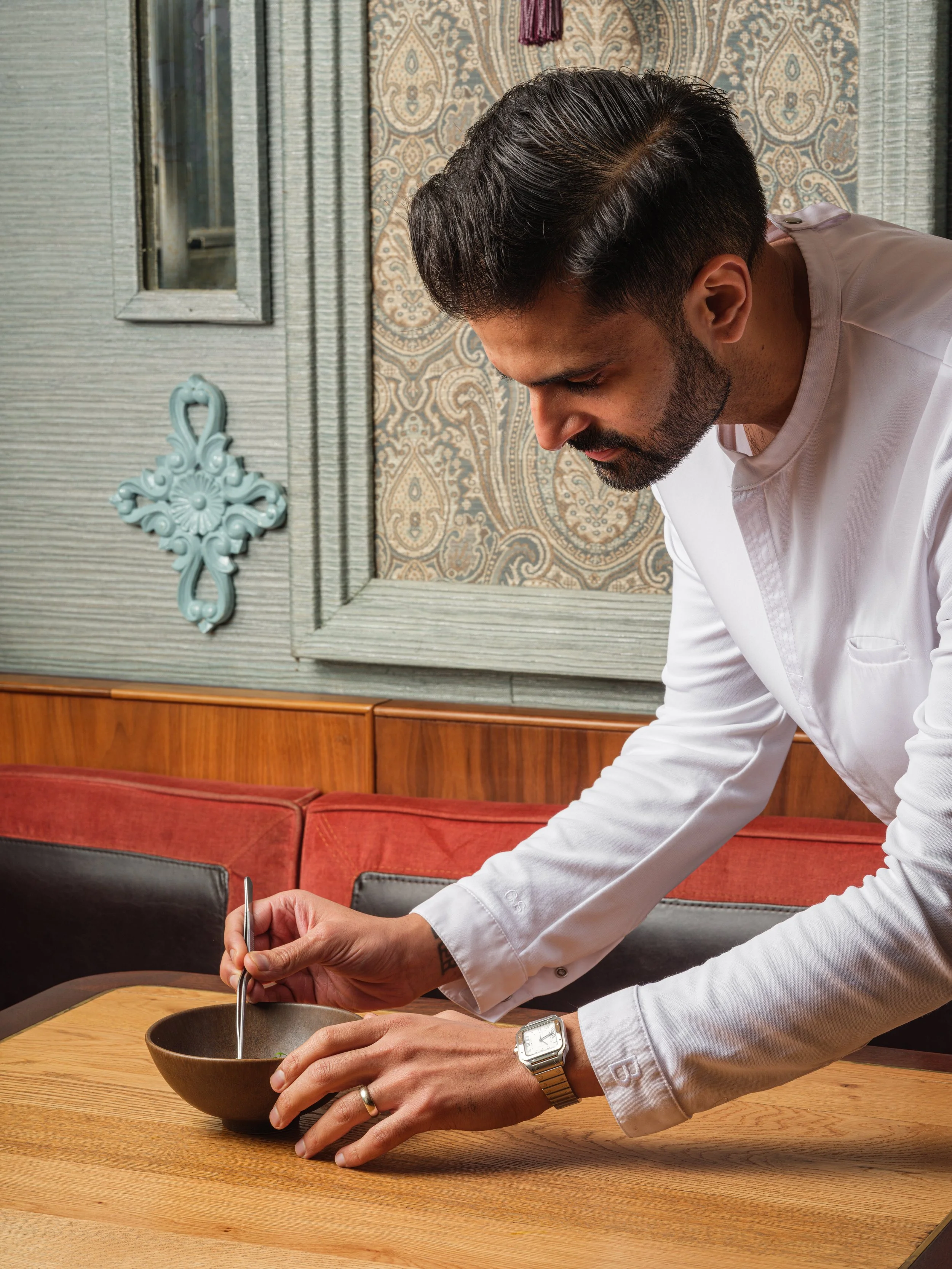
What BiBi attempts to do, in many ways, is translate those instincts into a more contemporary language. The result is one of the few restaurants in London currently operating in the increasingly overused “modern Indian” space that genuinely feels original.
That originality stems partly from Sharma’s refusal to flatten Indian cuisine into something singular. At BiBi, heritage grains from the subcontinent sit alongside British scallops and Yorkshire lamb. Single-origin spices are treated with the same forensic seriousness as Burgundy producers discuss terroir. The menu moves fluidly between regional influences, techniques and personal memories without ever slipping into confusion.
“I think authenticity can be quite limiting if you define it too rigidly,” Sharma says. “Especially with a cuisine as vast as Indian.”
“For me, authenticity isn’t about replication — it’s about honesty. It’s about being true to my own experiences of food across the subcontinent.”
It is a particularly timely perspective. London’s relationship with Indian cooking is evolving rapidly, moving beyond the long-standing binaries of curry house familiarity or special-occasion tasting menus. A new generation of chefs are increasingly exploring regional specificity, personal heritage and modern technique without feeling obliged to conform to inherited expectations of what Indian food in Britain should look like.
Sharma’s cooking sits at the forefront of that movement precisely because it feels so unconcerned with trend.
“So the question isn’t ‘is this authentic?’” he says, “but rather ‘does this feel true?’”
Truth, at BiBi, begins with ingredients. Provenance is discussed here with unusual seriousness, though Sharma is quick to distance himself from the performative use of the term. “Provenance has become a bit of a buzzword,” he says. “But for me it’s very practical.”

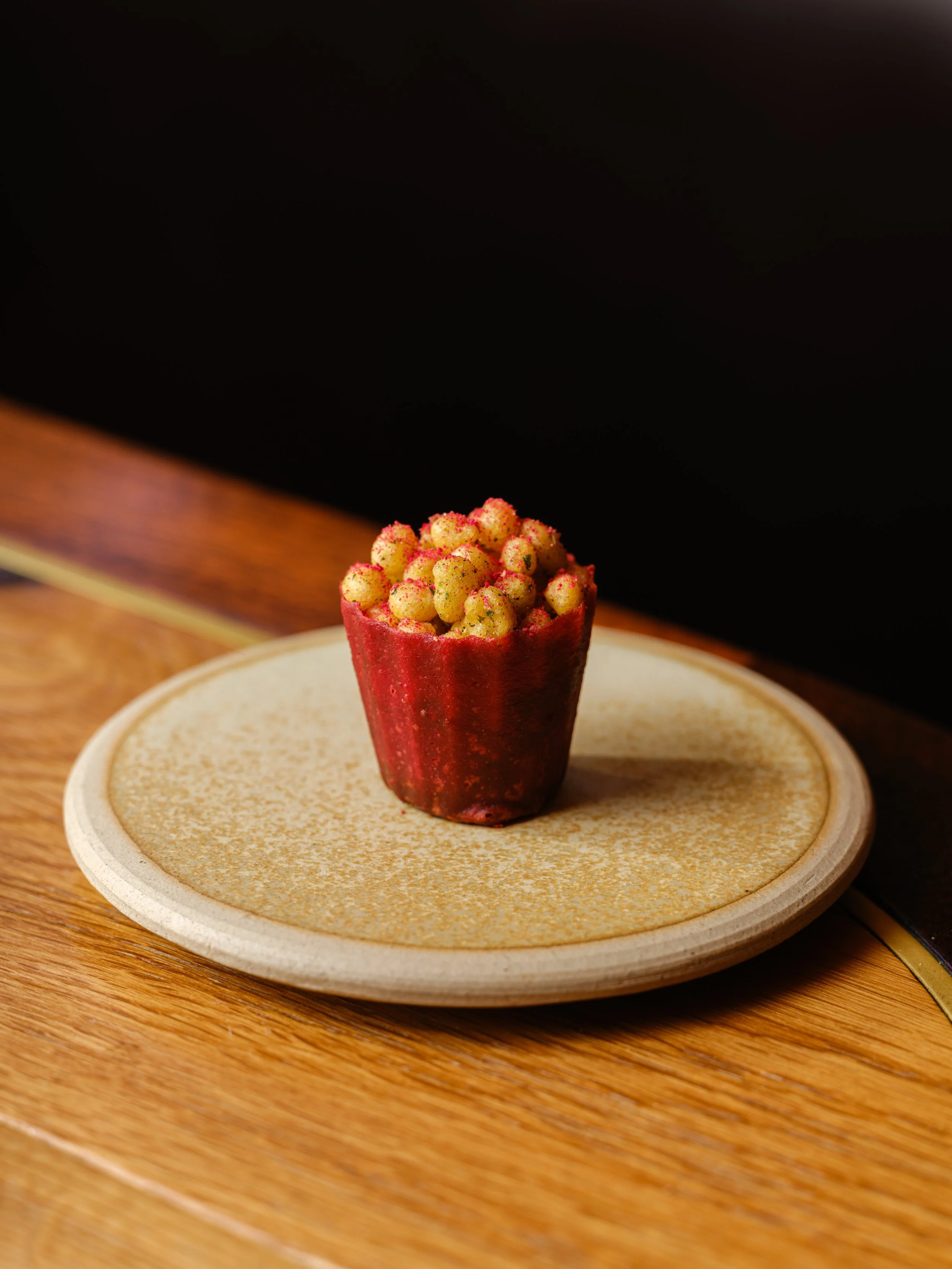
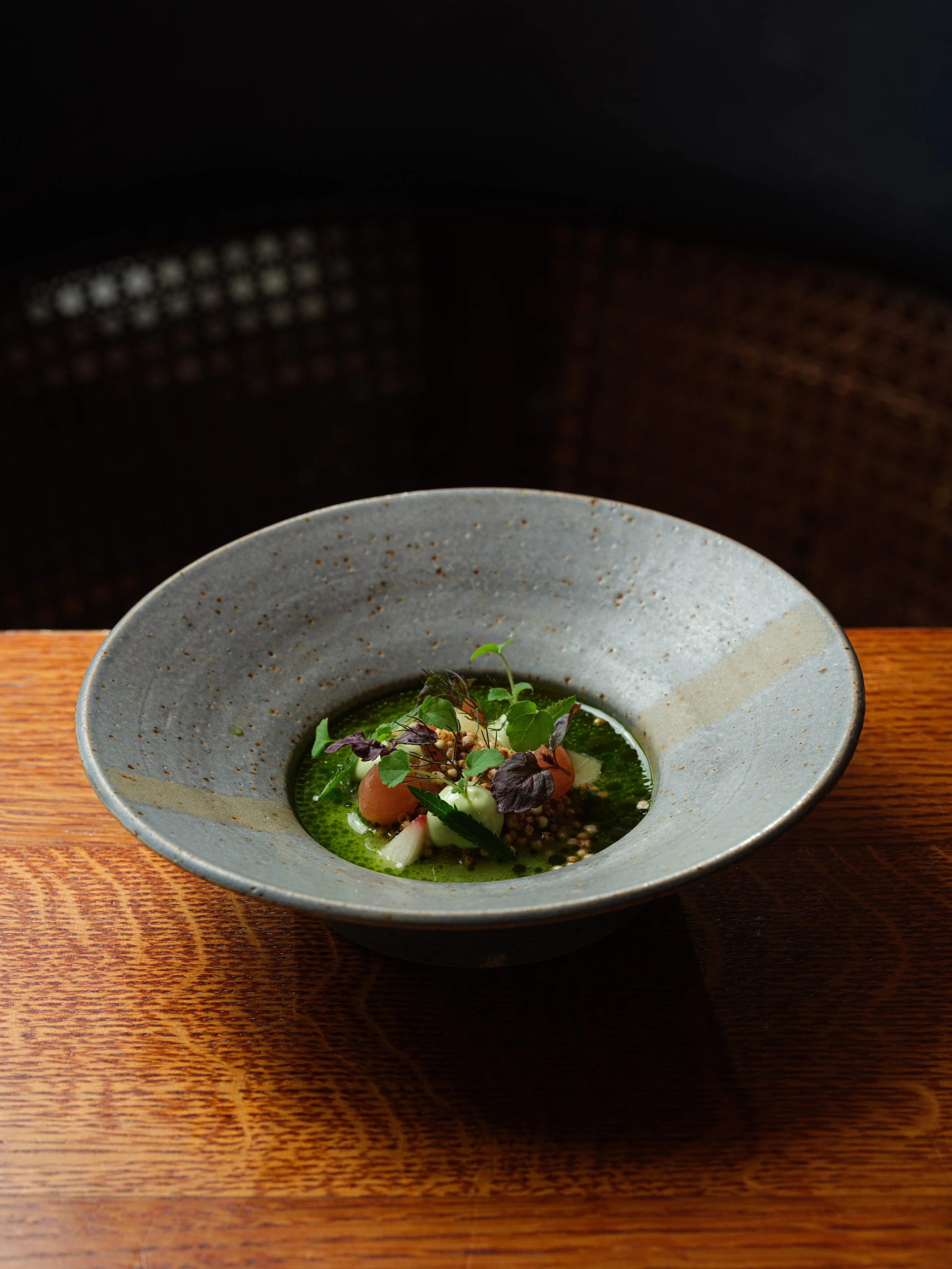
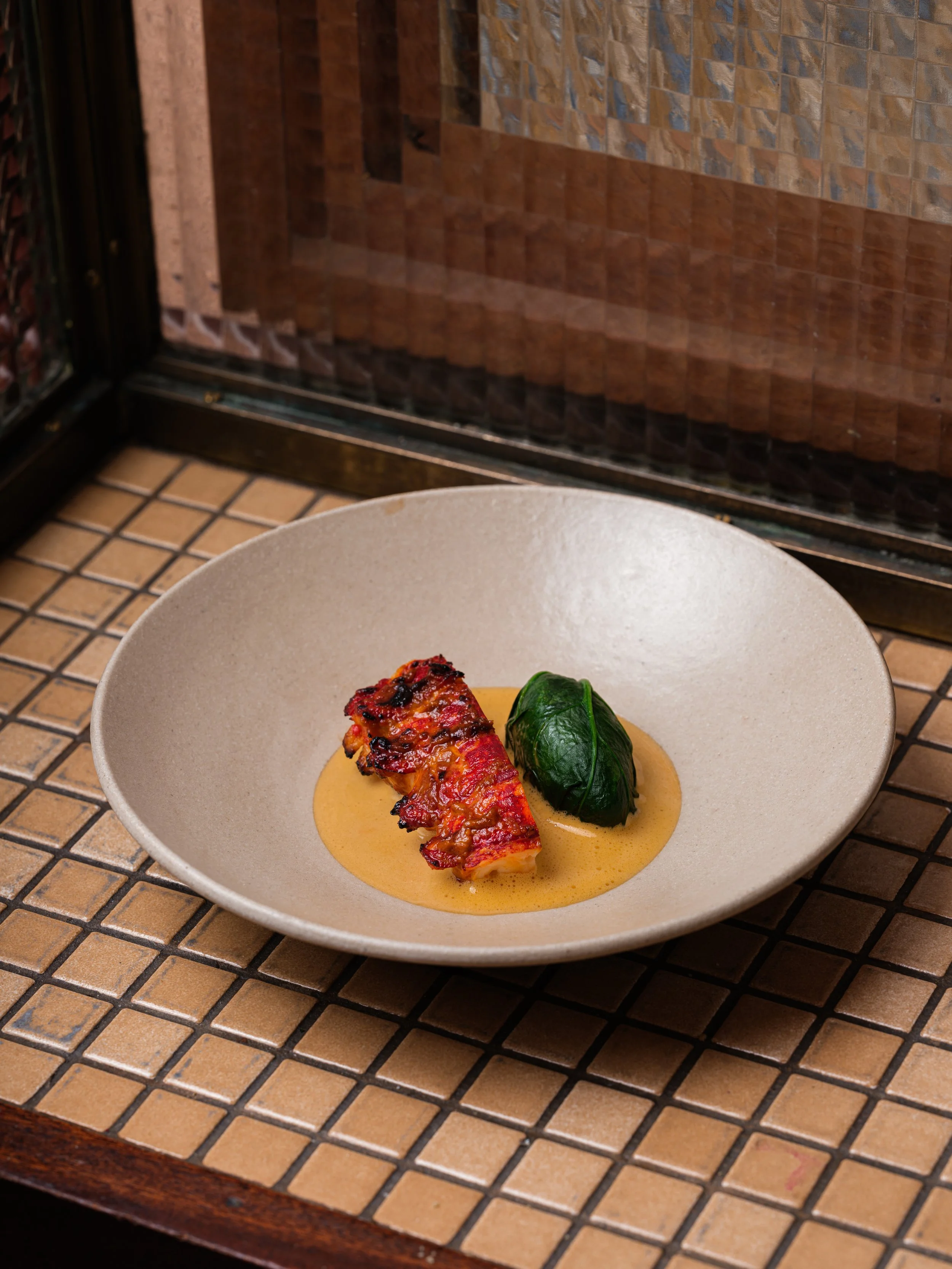

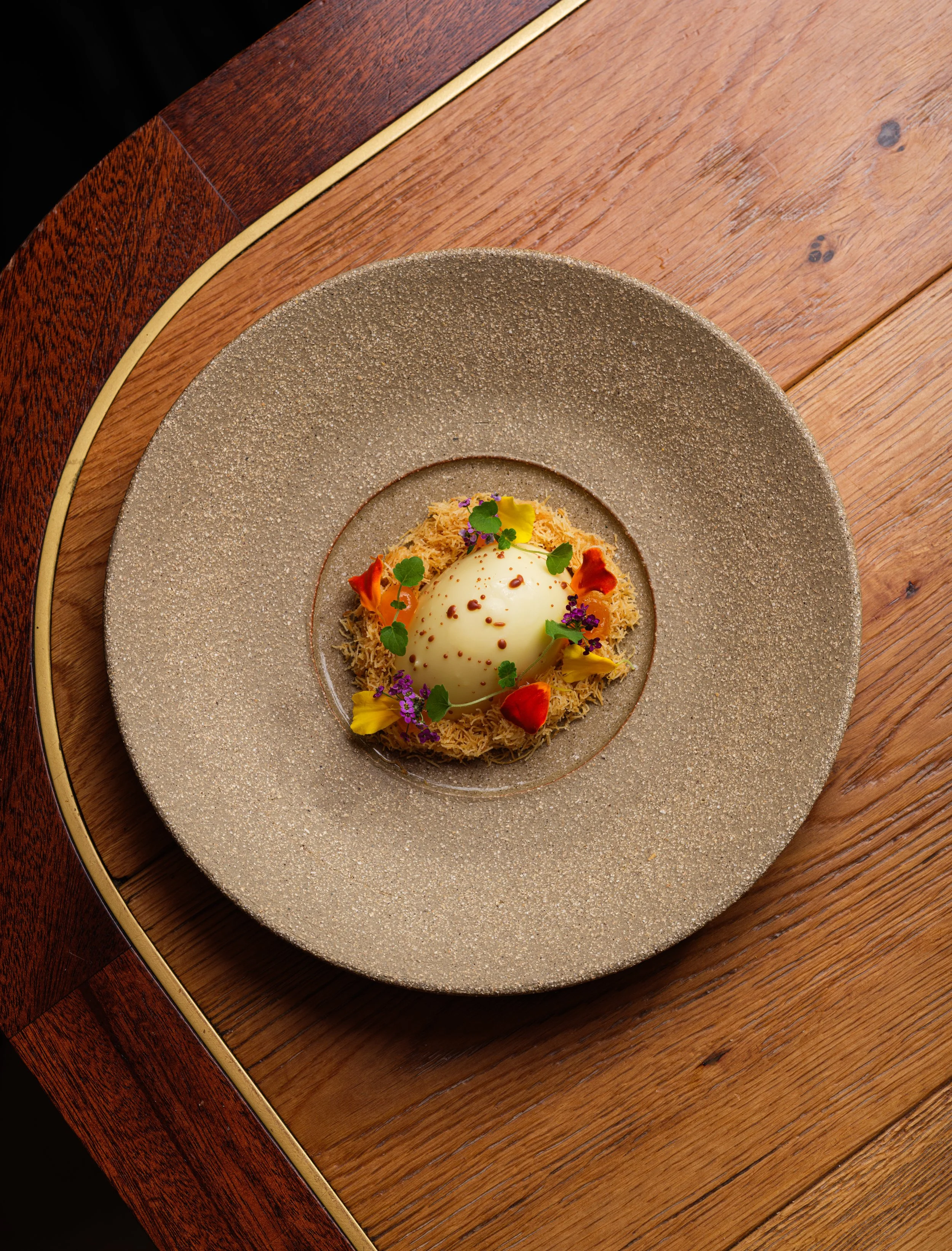
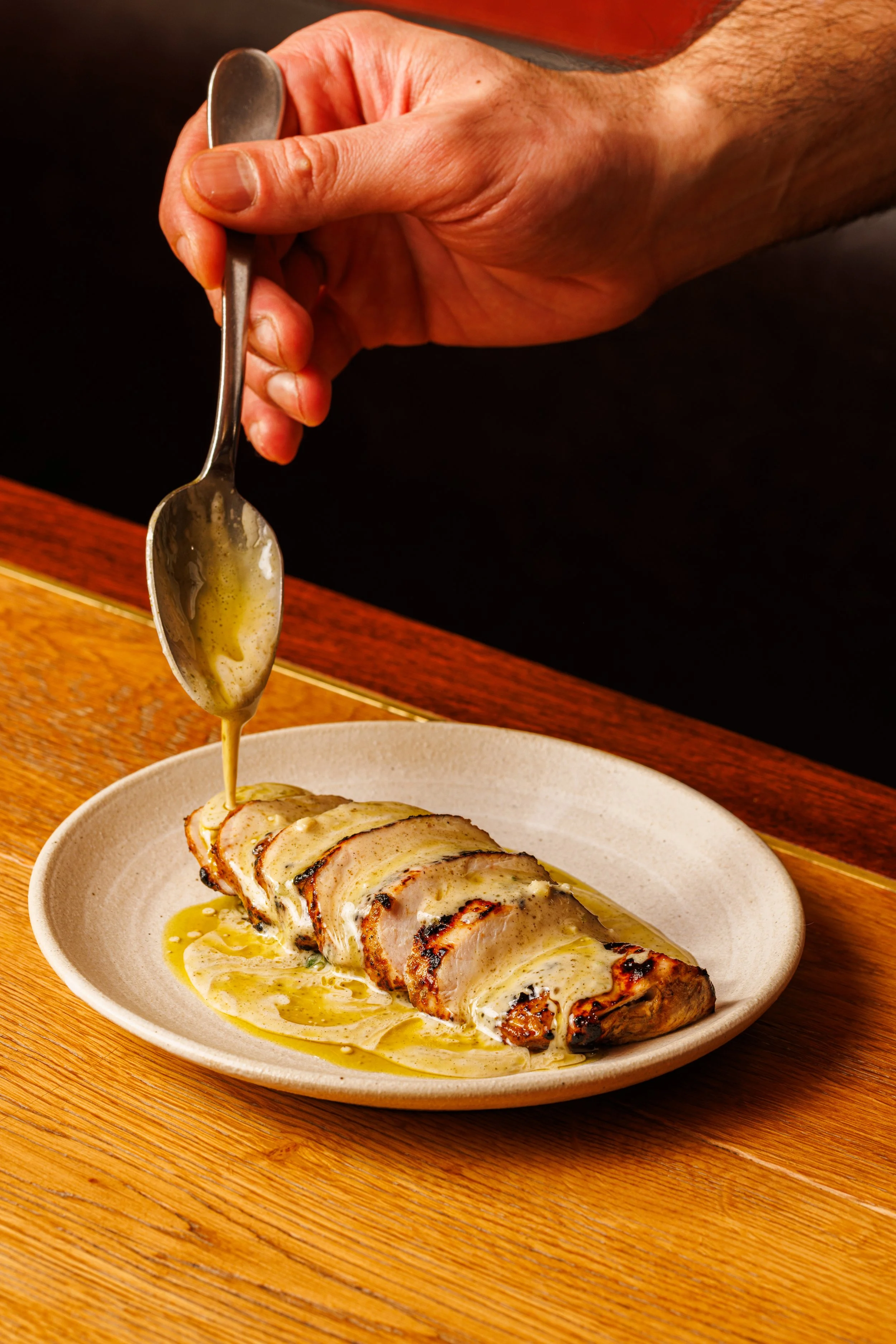
The rotis use paigambari wheat — the same heritage grain grown on his family’s farm in India. Spices are sourced directly from farms avoiding pesticide use. British produce is selected with equal scrutiny.
“It’s about traceability — knowing exactly where an ingredient comes from and how it’s been produced.”
There is also, perhaps unsurprisingly given Sharma’s academic background, an intellectual curiosity underpinning these decisions. He speaks about low-glycaemic grains and nutritional density with the ease of someone still entirely comfortable in scientific discourse.
“Ingredients like the wheat we use for our rotis aren’t just flavourful,” he says. “They have real health benefits.”
That scientific precision reveals itself throughout the restaurant, though not in the obvious molecular-gastronomy sense that diners might expect from a former physicist. Instead, it manifests as systems thinking — a meticulous understanding of process, structure and balance.
“I don’t think science directly dictates how I cook,” Sharma explains. “But it fundamentally shapes how I think.”
“It instilled a mindset around research, precision and process. In a restaurant, there are so many moving parts — ingredients, people, timing, logistics — that having systems in place becomes essential.”
BiBi’s menu reflects that rigour. Dishes arrive elegant and restrained rather than overloaded with technical flourish. Smoke, acidity, spice and sweetness are calibrated with remarkable precision, yet never feel clinical. Sharma is careful to emphasise that technique remains secondary to emotion.
“There’s a rigour to how we test dishes at BiBi,” he says. “Every element has to earn its place. But importantly, I don’t see it as science replacing intuition — it’s more about giving structure to something that is ultimately very emotional.”
Narrative, for Sharma, is the true starting point.
“Most dishes start with something intangible,” he says. “A memory from childhood, an experience travelling in India, or even a single ingredient that sparks something. That becomes the anchor.” From there comes the refinement process: how to translate feeling into flavour without losing its emotional core. “The story leads,” he says, “but it has to be supported by technique. One without the other doesn’t really work.”
Perhaps that balance explains why BiBi feels so unusually coherent. Many restaurants possess excellent food; fewer possess genuine identity. Sharma’s background outside hospitality may actually be part of the reason. Unlike chefs shaped exclusively by kitchens from adolescence onwards, he arrived with a broader set of influences already fully formed.
Music remains one of the clearest examples.
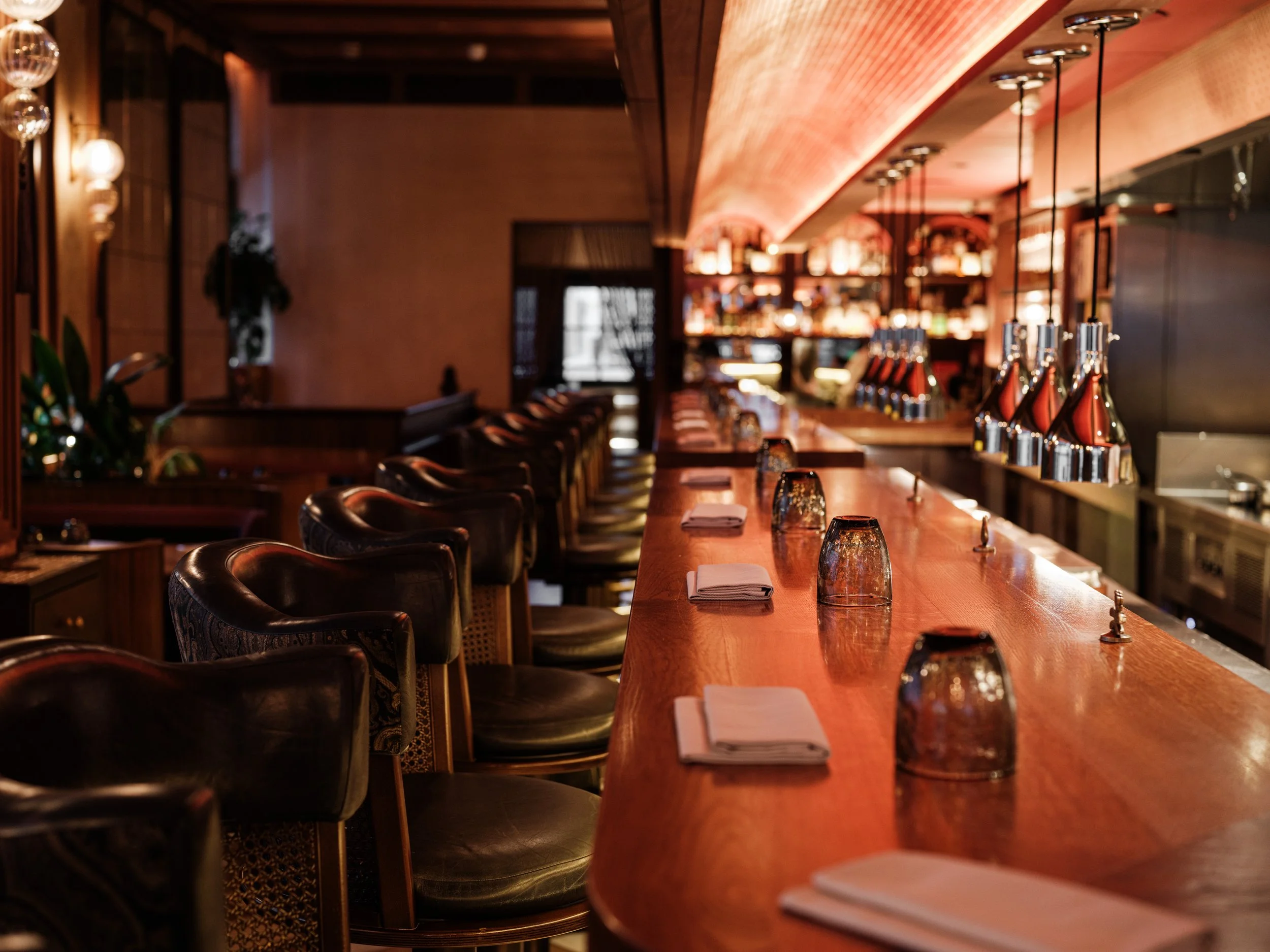
“I grew up surrounded by music — everything from Motown to Bollywood — and I played piano throughout my childhood,” he says. DJing, he insists, was less a separate life than an extension of that environment. Yet the influence remains palpable inside BiBi today. “Service has a rhythm to it,” Sharma says. “The kitchen has a tempo, and the dining room has an energy that shifts over the course of an evening.”
“In a way, BiBi is another form of composition — it’s just expressed through food rather than sound.” The comparison feels apt. On a busy evening, the restaurant moves with the controlled fluidity of a perfectly sequenced set. The open kitchen pulses with focused energy. Plates emerge in rhythm rather than haste. Even the soundtrack feels carefully calibrated to the room’s changing momentum.
Sharma’s years working under some of Europe’s most celebrated chefs undoubtedly contributed to that discipline. His CV reads like a catalogue of modern gastronomic heavyweights: Giorgio Locatelli, Simon Rogan, Raymond Blanc, Tom Kerridge, Heston Blumenthal, Brett Graham and Andoni Aduriz among them. Yet it was his time at Mugaritz in San Sebastián that appears to have left perhaps the deepest imprint.
“It shaped how I think about creativity,” he says, “but also how I think about people. It showed me that a restaurant can be both ambitious and deeply supportive of its team.” That philosophy now informs BiBi’s own culture. In an industry still reckoning with long-standing conversations around burnout, toxicity and sustainability, Sharma speaks about leadership with measured clarity rather than macho mythology.
Dining itself, he believes, has also fundamentally changed.
“Technical excellence is almost a given at a certain level now,” he says. “So what really differentiates a restaurant is how it makes people feel.”
That emotional dimension has become increasingly important within luxury hospitality more broadly. Guests are no longer simply buying access to difficult reservations or elaborate tasting menus; they are searching for meaning, connection and individuality.
“I think guests are looking for something that feels personal,” Sharma says. “Something with a clear identity and a sense of purpose.”
“At BiBi, that’s what we’re trying to create — an experience that stays with you beyond the meal itself.”



His recently published cookbook, BiBi: The Cookbook, appears to have deepened that self-reflection further. The process of writing it forced Sharma to step outside the relentless forward momentum of restaurant life.
“In a kitchen, you’re always looking forward,” he says. “Thinking about the next dish, the next service, the next idea.”
“The book forced me to pause and look back.”
That retrospective lens allowed him to trace clearer connections between seemingly disparate parts of his life: childhood memory, academic obsession, music, travel, kitchens and family.
“In that sense, it wasn’t just about documenting recipes,” he says. “It was about understanding the journey more clearly.”
As London’s dining scene continues to evolve, Sharma remains optimistic about the future of Indian cooking in Britain. More specifically, he is excited by the emergence of increasingly individual perspectives.
“There’s a growing confidence to move beyond stereotypes,” he says, “and explore the depth and diversity of the cuisine in a more nuanced way.”
“What excites me is seeing more individual voices emerge — chefs expressing their own experiences rather than trying to represent something monolithic.”
That idea perhaps explains BiBi better than anything else. The restaurant succeeds not because it attempts to define Indian food, but because it refuses the burden of doing so altogether. Instead, Sharma offers something more compelling: a singular personal perspective shaped by memory, migration, science, music, discipline and instinct.
At the end of the meal, long after the smoke and spice have faded, that is ultimately what lingers. Not simply flavour, but feeling.
Book a table at BiBi.