
Kettner's Gives Afternoon Tea a French Education
London has no shortage of afternoon teas. Few, however, arrive with the confidence to question what the ritual should look like in 2026. At Kettner's, Soho's grand old French institution, the answer isn't to reinvent the wheel—it's simply to make it taste better.
Afternoon tea has become one of London's most competitive dining experiences. Hotels compete on spectacle, pastry chefs chase ever more elaborate creations and themed menus appear with relentless regularity. Somewhere along the way, many forgot that afternoon tea is supposed to be something people actually want to eat. Kettner's has taken a rather different approach.
The historic Soho restaurant has unveiled its first afternoon tea since opening its doors in 1867, and rather than chasing novelty, it has focused on refinement. Under UK Group Executive Chef Nathanial Tofan, the menu respects British tradition while quietly reminding guests that Kettner's built its reputation on French cooking long before afternoon tea became London's favourite luxury pastime. It feels entirely fitting.
Few dining rooms carry the weight of history quite like Kettner's. August Kettner introduced French cuisine to Victorian London from this very address on Romilly Street, while generations of artists, politicians and writers have passed through its Georgian rooms since. Today, following its revival, the restaurant feels comfortably elegant rather than museum-like—a place where heritage is appreciated but never allowed to become precious.
That philosophy extends naturally to the food.
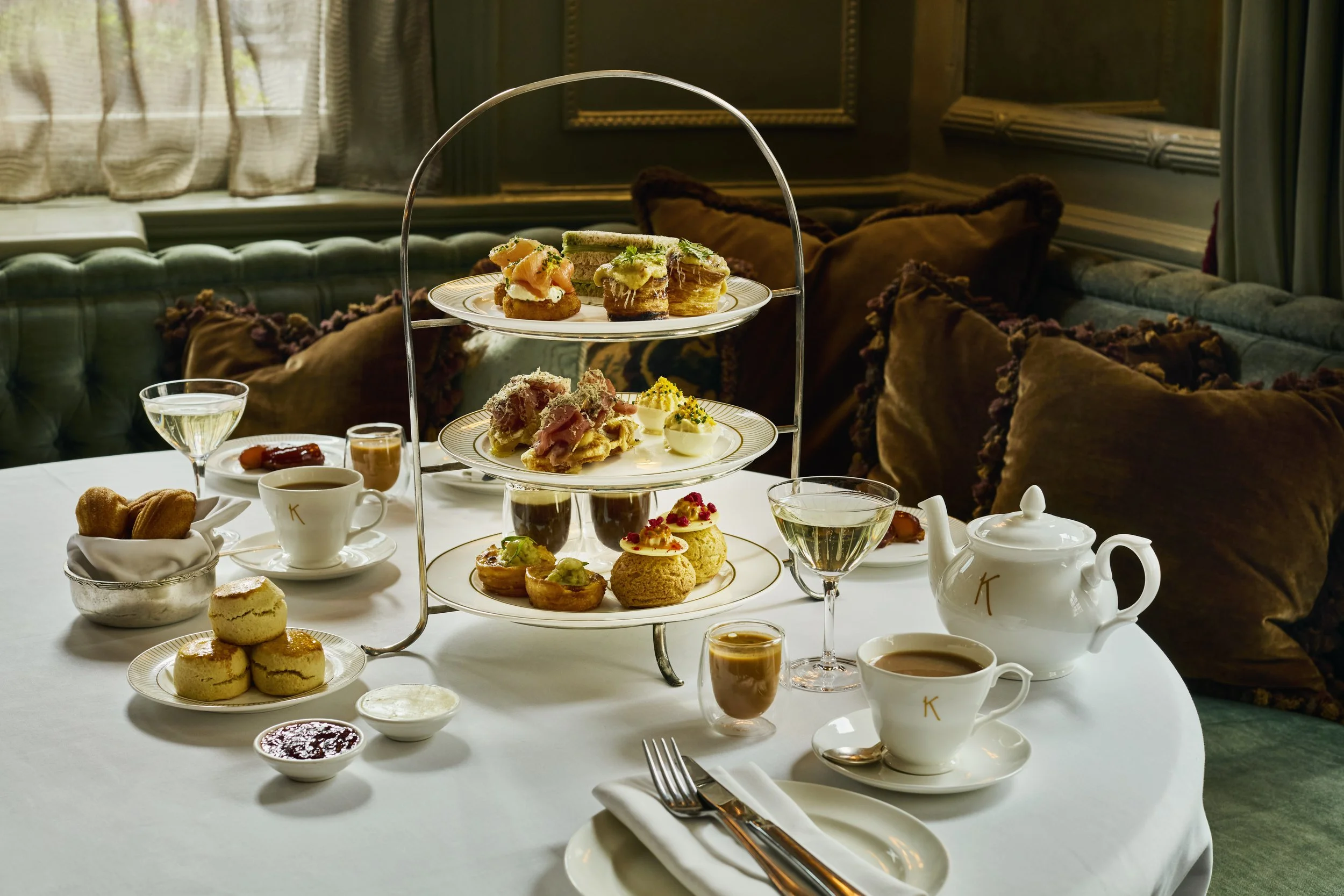
"Kettner's has always had this great mix of French influence and London character," explains Tofan. "We wanted to honour that heritage through classic flavours and techniques, but keep the experience relaxed, seasonal and enjoyable rather than overly formal." It's an important distinction. Luxury dining increasingly understands that sophistication doesn't have to announce itself. Instead of silver-service theatrics or unnecessary embellishment, Kettner's concentrates on craftsmanship and flavour. The familiar three-tier stand remains, but what arrives upon it feels considered.
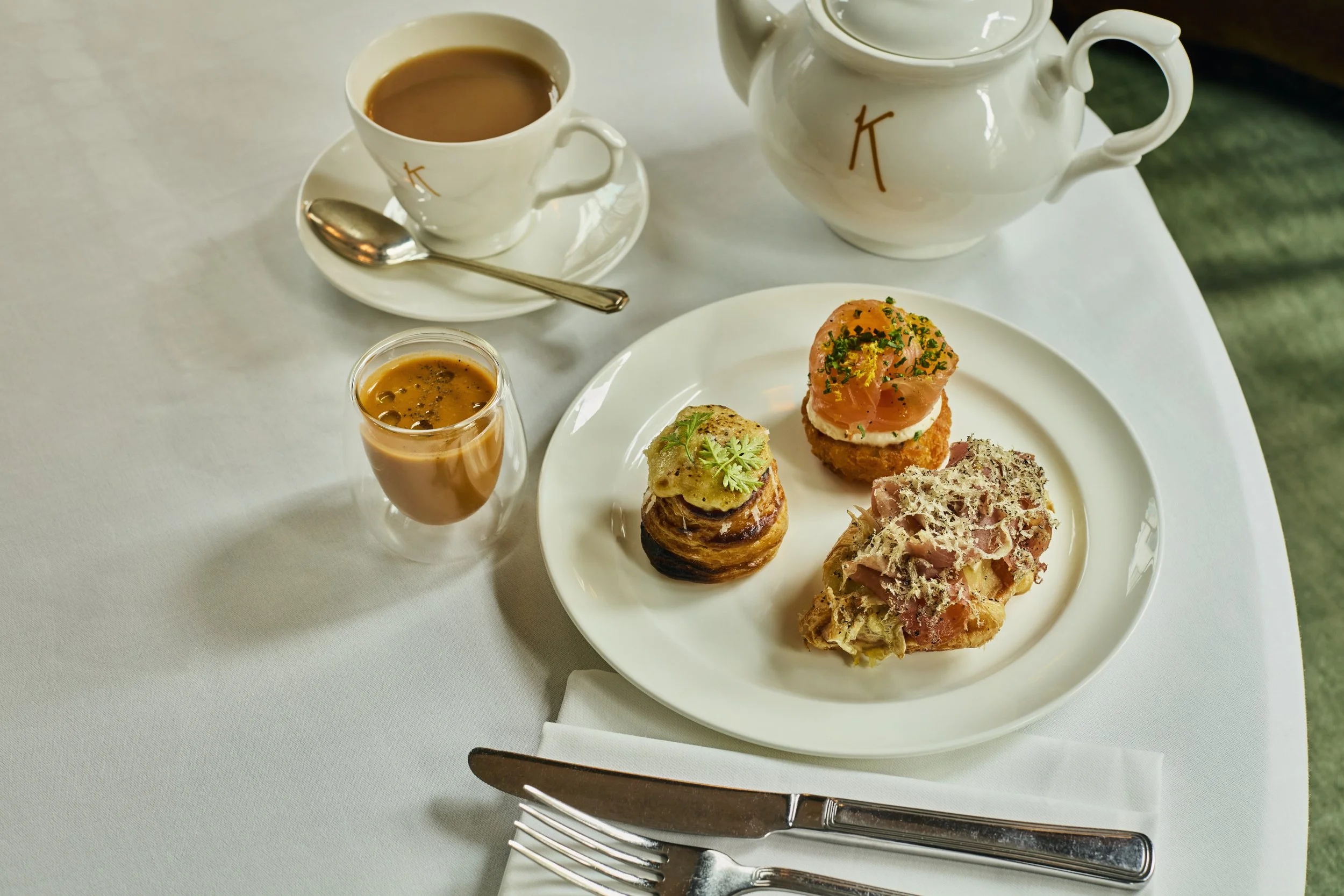
The savoury selection immediately sets the tone. Rather than relying solely on dainty finger sandwiches, there is a Tomato gazpacho sharpened with aged Sherry vinegar, a beautifully judged smoked salmon and cream cheese rösti, egg mayonnaise lifted by Espelette pepper, a Native lobster vol au vent with Marie Rose sauce and perhaps the menu's most playful creation: a Brie de Meaux and jambon croffle, combining buttery croissant pastry with the crispness of a waffle.
Alongside a seasonal finger sandwich—currently cucumber and dill on brown bread—the result feels more like a carefully composed lunch than obligatory prelude to the desserts. That was entirely deliberate. "We weren't interested in changing afternoon tea for the sake of it," says Tofan. "We wanted it to feel like something you'd genuinely choose to eat. That meant focusing on really good ingredients with classical French influence and serving dishes that feel more generous and flavours that pack clout."
It's a sentiment that reflects changing expectations around modern luxury. Diners are increasingly less interested in excess than excellence. Every element has a purpose; every bite earns its place. The sweet course leans even further into Kettner's French identity.
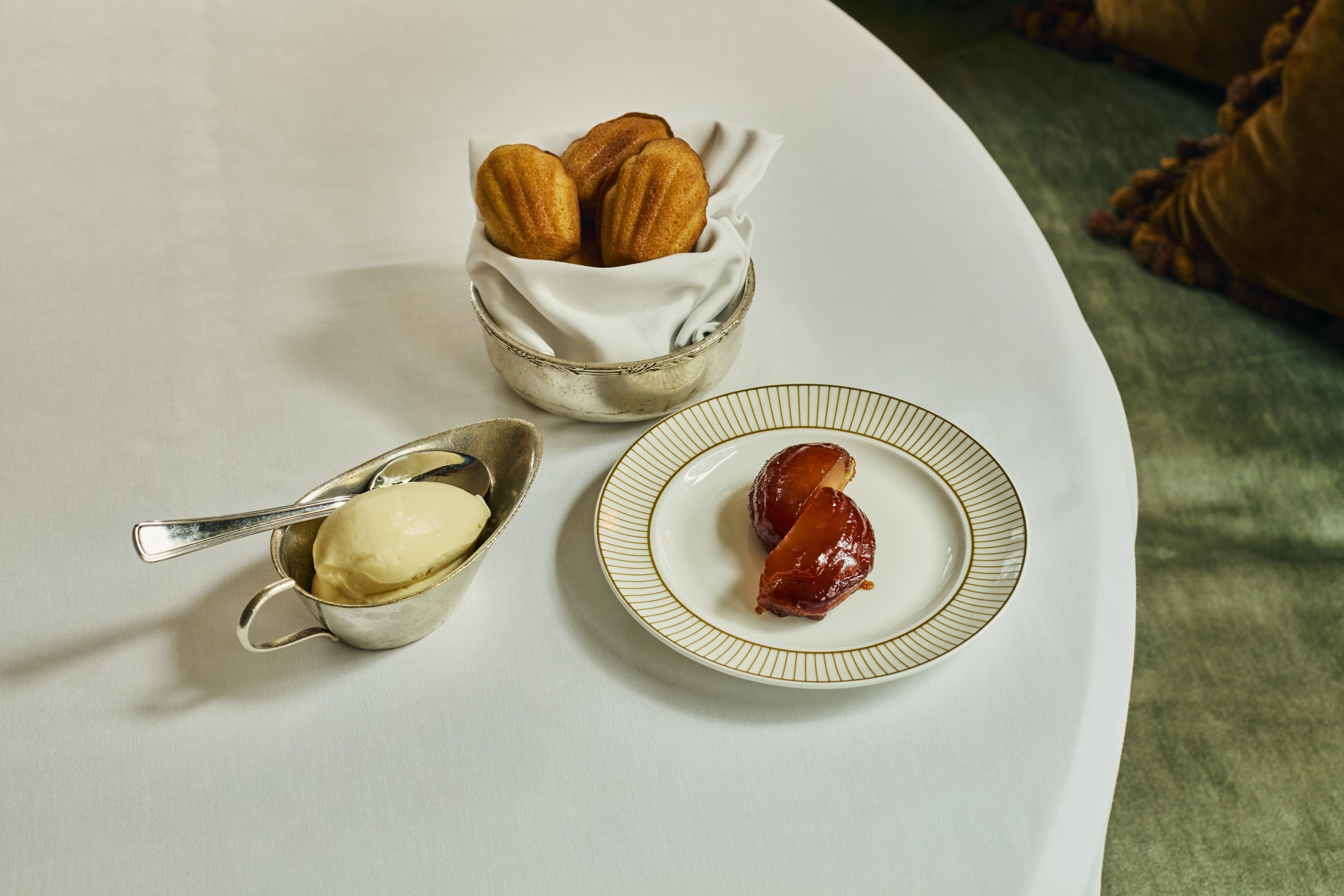
Rather than overwhelming diners with sugar, the pastry selection demonstrates restraint. A delicate apple tarte tatin sits alongside a silky pot au chocolat enriched with beurre noisette and sea salt, while traditional scones receive an understated Gallic twist through crème de Bresse replacing conventional clotted cream.
The standout, however, arrives warm. Made to order and baked throughout service, the vanilla madeleines scented with cognac capture everything Kettner's is trying to achieve.
"The madeleines probably sum it up best," says Tofan. "They're simple, classic and served warm, straight from the oven, so they bring a lovely moment to the table. It's about taking something familiar and doing it really well."

It's difficult to argue with that philosophy.
Too often, luxury hospitality mistakes complexity for quality. Kettner's instead finds confidence in execution. The madeleines don't need theatrical presentation; they simply need to arrive fresh enough to perfume the table with butter and vanilla. French pâtisserie naturally informs much of the dessert offering, although Tofan was careful not to allow technique to overshadow enjoyment.
"We wanted to celebrate the craftsmanship behind French pâtisserie without making it feel too heavy or elaborate. There are classic techniques throughout, alongside seasonal fruit and lighter flavours that let the ingredients do the work."
That emphasis on seasonality also ensures the menu won't remain static. While signature dishes such as the croffle, rösti, tarte tatin and madeleines will remain constants, other elements will evolve with Britain's produce. "Seasonality keeps the menu interesting," says Tofan. "As the seasons change, so will the produce, whether that's summer berries, autumn orchard fruit or winter citrus. It means the afternoon tea will continue to evolve while always staying true to the style of Kettner's."
It's the sort of thinking that prevents a menu becoming stale after social media has moved on to the next opening.
There is, of course, Champagne.
This is Kettner's after all.
Guests can pair the experience with tea, Champagne or both, while a dedicated cocktail list includes the Kyoto—a blend of Tanqueray No. Ten Gin, Sherry, Champagne, matcha and citrus—and a Champagne Martini finished with orange bitters. They're thoughtful additions rather than gimmicks, sitting comfortably alongside the restaurant's long-standing relationship with sparkling wine.
Even the presentation feels appropriately restrained. Bespoke Duchess China, handmade in Stoke-on-Trent with custom gold detailing, adds quiet elegance without distracting from the food itself.


At £55 per person—including a complimentary glass of Champagne until the end of August—the offering feels remarkably competitive given both the quality and postcode. In a city where afternoon tea prices comfortably exceed three figures, Kettner's has positioned itself as accessible luxury rather than unattainable indulgence.
Perhaps that's why it feels so convincing.
When asked what he hopes guests remember, Tofan's answer is telling.
"Most importantly, we hope guests leave thinking, 'I'd come back for that.' We want it to feel relaxed, generous and memorable whether they're celebrating something special or just catching up with friends." It's a refreshingly modest ambition.
And perhaps the greatest compliment any afternoon tea can receive isn't that it's the most extravagant in London—but that it's the one you'd happily book again next weekend.