
Staged Right: Mathias le Fèvre
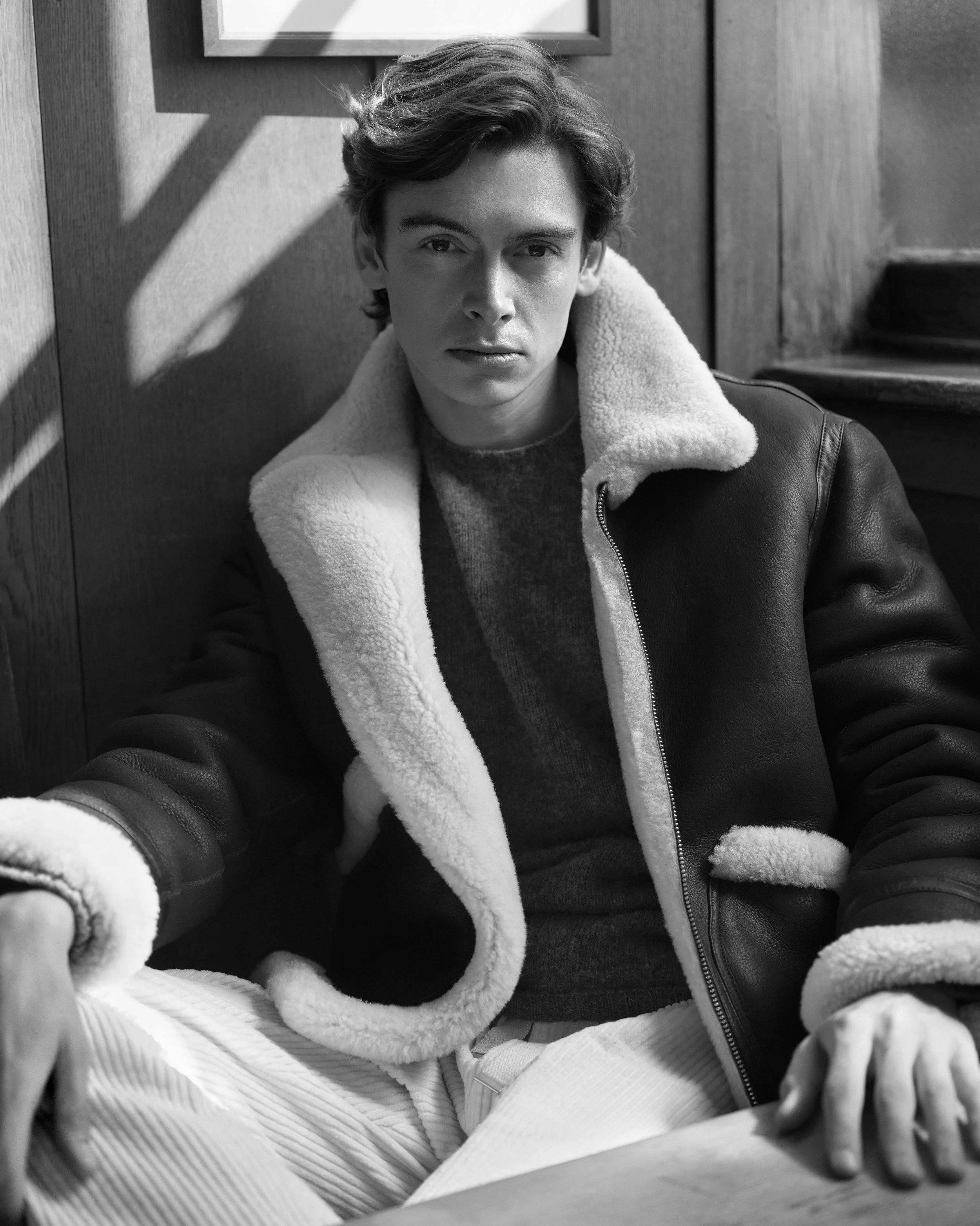
Shearling jacket - Mr P. At MR PORTER, Sweater - Trunk, Trousers - East Harbour Surplus at Trunk
From Savile Row sets to set life for real, Danish actor Mathias le Fèvre is writing his next chapter on screen — channelling discipline, craft, and a sharply tailored sense of style on the screen.
Photography - Will Milligan
Styling - Sophie Dunn
Grooming - Lillie Lindh
For much of the past decade, Mathias has been a fixture of London’s fashion world — known for his distinctive elegance, creative collaborations and deep appreciation for the artistry of menswear. His work, often rooted in the traditions of British tailoring, celebrated precision, proportion and timeless design. Now, that same meticulous eye for detail informs his approach to performance.
Over the past three years, Mathias has focused on acting, appearing in four short films and completing formal training at RADA. His background as a gymnast lends a striking physicality to his work — controlled, expressive, and quietly intense. Whether in movement or stillness, there’s a discipline that underpins everything he does.
Danish born, but currently based in London, he is now preparing for his debut feature: an indie, folklore-inspired psychological thriller in pre-production. It’s a project that feels characteristically him — refined yet raw, grounded in craft but reaching for something elemental.
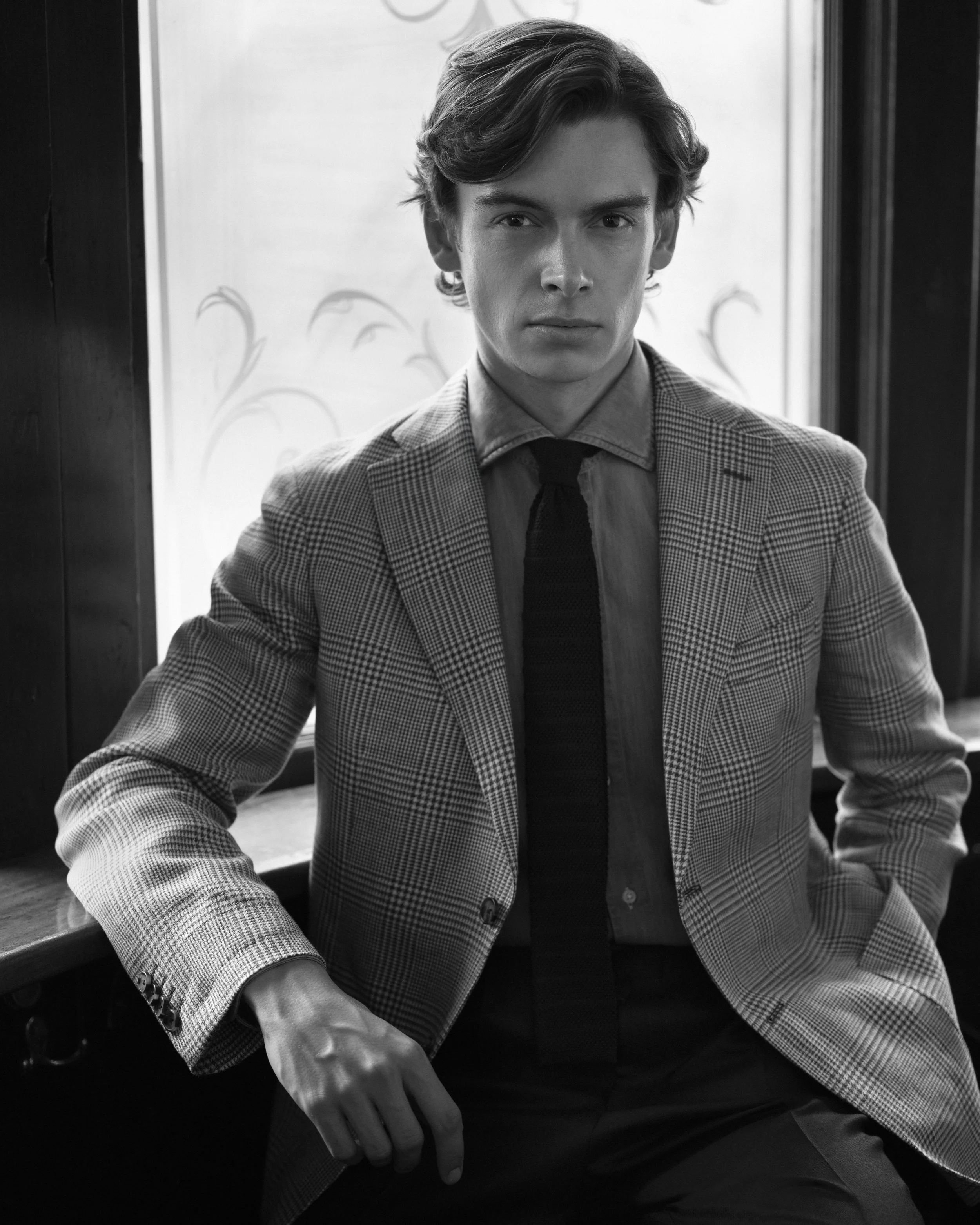
Jacket & Trousers - TWC Made-to-Order Tailoring, Shirt & Tie - Anglo-Italian
You started out in fashion. What made now the right moment to focus fully on acting?
Fashion gave me ten years in front of the camera, and eventually I moved behind it too – I worked as creative director on Swedish shirtmaker Stenströms’ 125th anniversary capsule collection. I loved building a whole world around that project, and it made me realise I was more interested in the people and the stories than in the clothes themselves.
I took an acting class about four years ago and it just clicked; it felt like the thing I’d been circling without knowing. For a while I tried to do both, but I suffer from tunnel vision, so I made a decision to put acting at the centre and keep everything else around it.
How has your background as a gymnast and model shaped you as an actor?
I started gymnastics when I was two and carried on until I was fourteen, so discipline and using my body are pretty baked in. It teaches you to repeat something until it works and not fall apart when you are under pressure.
Modelling then put me on set all the time, cameras, lights, people watching. The helpful thing now is that none of that scares me. On a film I do not really think about how I look or where the camera is, I just try to listen and play the scene. The homework happens before I get there.
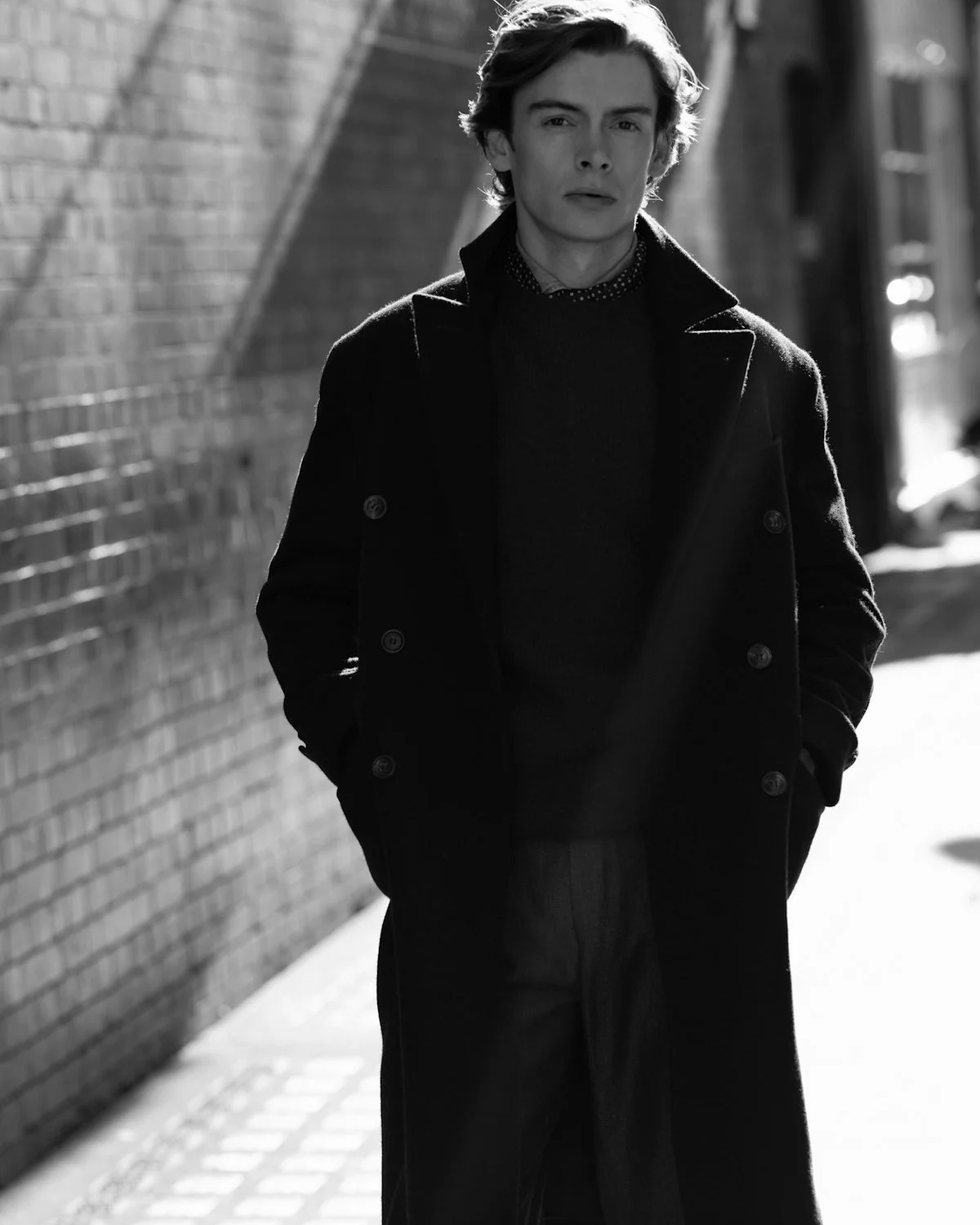
Overcoat - Rise & Fall, Knit - Oliver Spencer
What can you share about the projects you are working on now?
I have to keep the specifics of the feature quite vague for now, but it is an independent, folklore-inspired psychological thriller shooting next year. It is the first time I get to live with a character over a whole story rather than just a few scenes, which is exciting.
I am also researching for a short biopic on the German philosopher Philipp Mainländer with Quentin McCarron. It is a dark, intense part, I recently flew to Germany to see some of the places he lived and studied, just to get a feel for his world. Both projects are early steps, so my focus is to keep training and pick jobs where I feel slightly out of my depth in a good way.
How do you hope readers who know you from fashion will see this new chapter?
Ideally as a continuation. The style and narrative I developed in fashion is still useful, I care about the frame, the clothes, the texture of a world, but the priority now is what the characters are going through.
Some people will always know me from fashion and that is fine. If a few of them follow me into the films and get curious about the work, that is a bonus that I am grateful for.
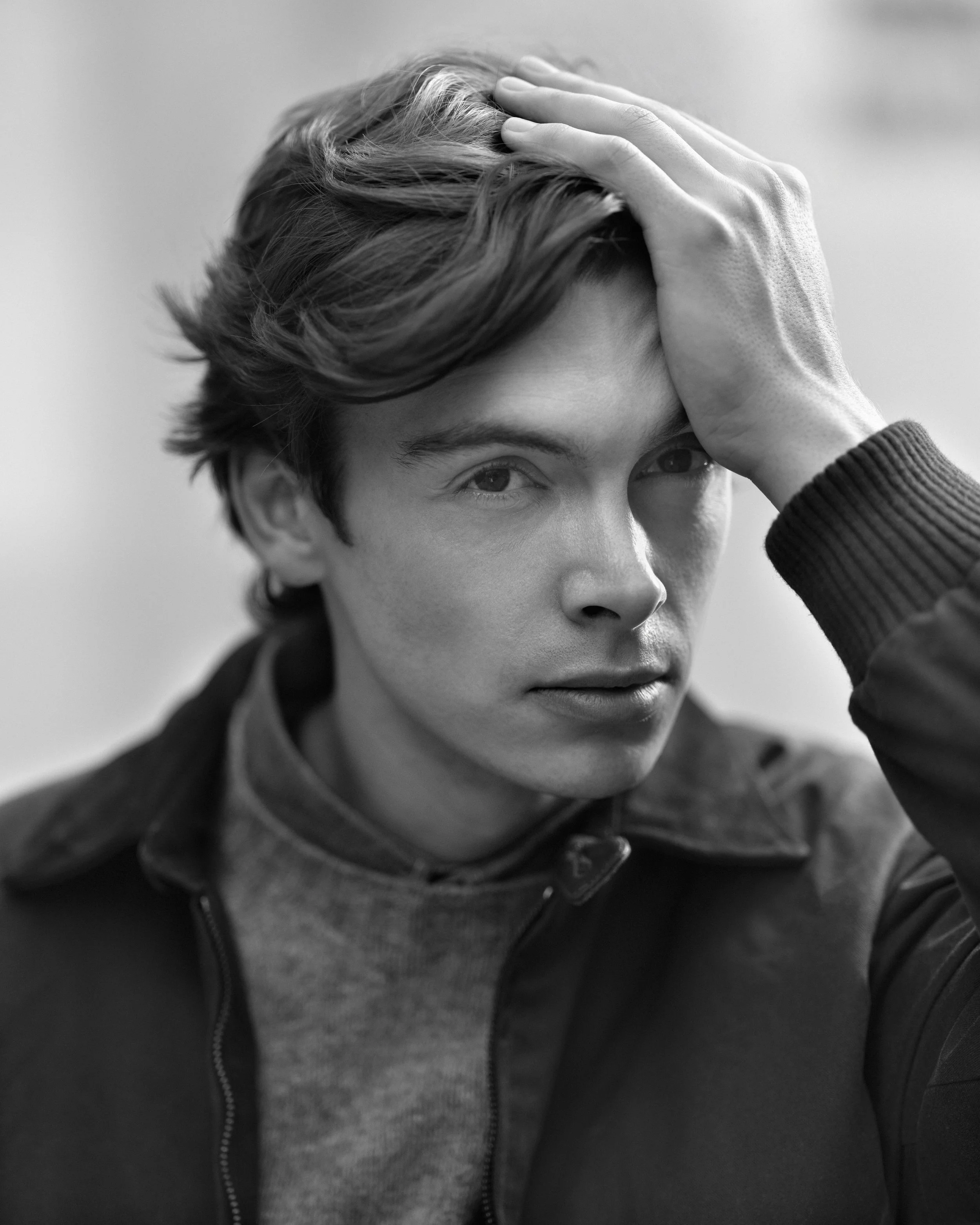
Bomber Jacket - Anglo Italian, Sweater & Shirt - TWC
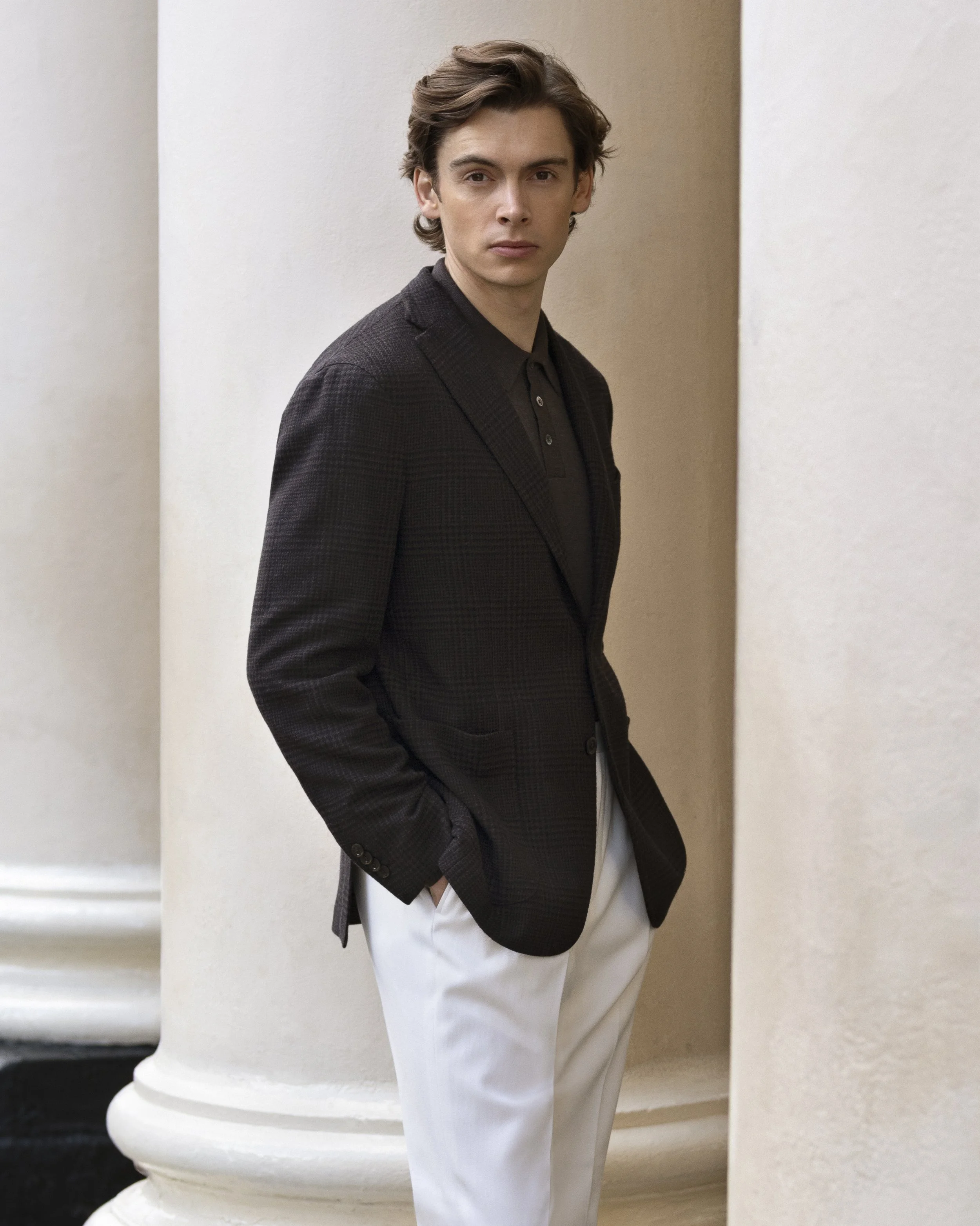
Jacket - Boglioli at Trunk, Polo Shirt - Trunk, Trousers - TWC Made-to-Order Tailoring
You have been in London ten years now. How has the city shaped you?
London’s been home for my entire adult life. It is where I learned there is a “right” and “wrong” way to prepare your scone depending on where you are from, discovered Savile Row, did my first tiny fashion jobs, and now my first films.
You can spend the morning having breakfast at your local caf (Regency Café is my favourite, but you have to get there around seven before the crowds), brush off your shoes for a meeting in a private members’ club, run to an audition in a slightly dodgy corner of Soho, and end the day watching raw, unfiltered talent on stage in a bar you have never heard of. That mix of old and new, tradition and chaos, suits me.
What does a typical week look like for you at the moment?
It is quite structured in a fluid sort of way. I train most days, whether that is boxing or yoga, movement work, or scene study. I love the outdoors so I try to get in a long run or hike, I’m also at the cinema at least once a week. Then there are practical things like self-tapes, meetings with my team, and the occasional brand project when it supports the bigger story. It is not very glamorous, but I like the routine.
Are you big on talking about your “method”?
I am still at the beginning of my career, so I am more comfortable doing the work than giving big speeches about my process. I do the homework, script work, research, physical prep, and then I try to forget it and be present with the other actors. My job is to help tell the story and hit my mark. If the scene works, nobody needs to hear how I got there, the rest can stay between me and my notebooks.
Follow Mathias le Fèvre on Instagram.