
EXCLUSIVE: Inside Daniel’s Husband: The Cast on Love, Conviction and London’s Anticipated New Drama

Luke wears Wool Polo Knit - Mithridate, Grey Trousers - Wax London, Loafers - Grenson
Joel wears Navy silk shirt - Thom Sweeney, Blazer & Trousers - dunhill
Raiko wears Shirt, Tie, Trousers & Jacket - Mithridate
Following its UK premiere at the Marylebone Theatre, The Rakish Gent speaks with Luke Fetherston, Raiko Gohara and Joel Harper-Jackson about stepping into Michael McKeever’s acclaimed drama, exploring modern masculinity and what audiences can expect from the play’s emotionally charged London debut.
Words - Tajinder Hayer
Photography - Nicholas Andrews
Styling - Gareth Scourfield
Grooming - Travis Nunes using Aesop Haircare and Skincare
The UK premiere of Daniel’s Husband arrived earlier this week this December at the Marylebone Theatre, bringing Michael McKeever’s acclaimed Off-Broadway drama to London for the first time. Directed by Alan Souza and produced by Plastered Productions, the play is an unflinching study of same-sex relationships, modern masculinity and the weight of conviction.
At its heart are three compelling performances: Luke Fetherston as Mitchell, Raiko Gohara as Trip and Joel Harper-Jackson as Daniel. Each brings a distinct energy to a story that begins with a perfectly curated life and unravels into something far more raw, testing the limits of love and the beliefs we cling to.
Ahead of the run, The Rakish Gent spoke to the cast about stepping into McKeever’s world, the emotional terrain of their characters and why Daniel’s Husband feels particularly resonant right now.
Luke Fetherston — Mitchell

Wool Polo Knit - Mithridate, Grey Trousers - Wax London, Loafers - Grenson
“I’m not sure what “modern masculinity” even is - I don’t think there’s anything particularly modern about the masculinity in this story. What you see are human behaviours: men protecting themselves, trying to stay in control.” - LUKE FETHERSTON
Most recently seen in Picture This, The Wheel of Time and Big Mood, Luke Fetherston takes on the role of Mitchell — one half of the couple at the centre of the play. Known for his sharp comedic timing and dramatic nuance, he brings a grounded intensity to a character wrestling with identity, partnership and what it means to choose love on your own terms.
What first drew you to Daniel’s Husband and to this particular role?
The honesty of the writing pulled me in immediately. Mitchell is layered, flawed and deeply human — confident on the outside, vulnerable underneath. That complexity made him a role I knew I wanted to explore.
For readers new to the play, how would you describe its central themes and the emotional world your character inhabits?
The play is about love, control and the fear of losing what matters most. Mitchell lives in a world shaped by logic and self-protection, even as he desperately wants connection. It’s a story full of tenderness and tension.
The play asks profound questions about love, commitment and conviction. Which of these themes resonates most strongly with you personally as you approach this performance?
Commitment. The play shows how commitment isn’t just a decision - it’s an emotional risk. Mitchell’s struggle with that feels very real, and it’s something I think many of us can relate to.
Michael McKeever’s writing has been praised for its honesty and emotional precision. How did you prepare to navigate the play’s more challenging or vulnerable moments?
By grounding everything in Mitchell’s truth. I focus on understanding his fear, the origin of his opinion and the love underneath it. If the relationships feel real, the vulnerable moments would happen much more naturally.
This production marks the play’s long-awaited UK premiere. How does staging it at the Marylebone Theatre—and for a London audience—shape the experience or the impact?
Marylebone’s intimacy suits the play perfectly. London audiences lean into character-driven work, and this space allows every emotional shift to land with real clarity and immediacy.
The Off-Broadway run of Daniel’s Husband was acclaimed for its intimacy and emotional punch. What do you think gives the play its enduring power for contemporary audiences?
It's truthfulness. The story feels deeply human and painfully relatable. It asks big questions without preaching, and audiences recognise themselves in these characters.

Wool Polo Knit - Mithridate, Grey Trousers - Wax London
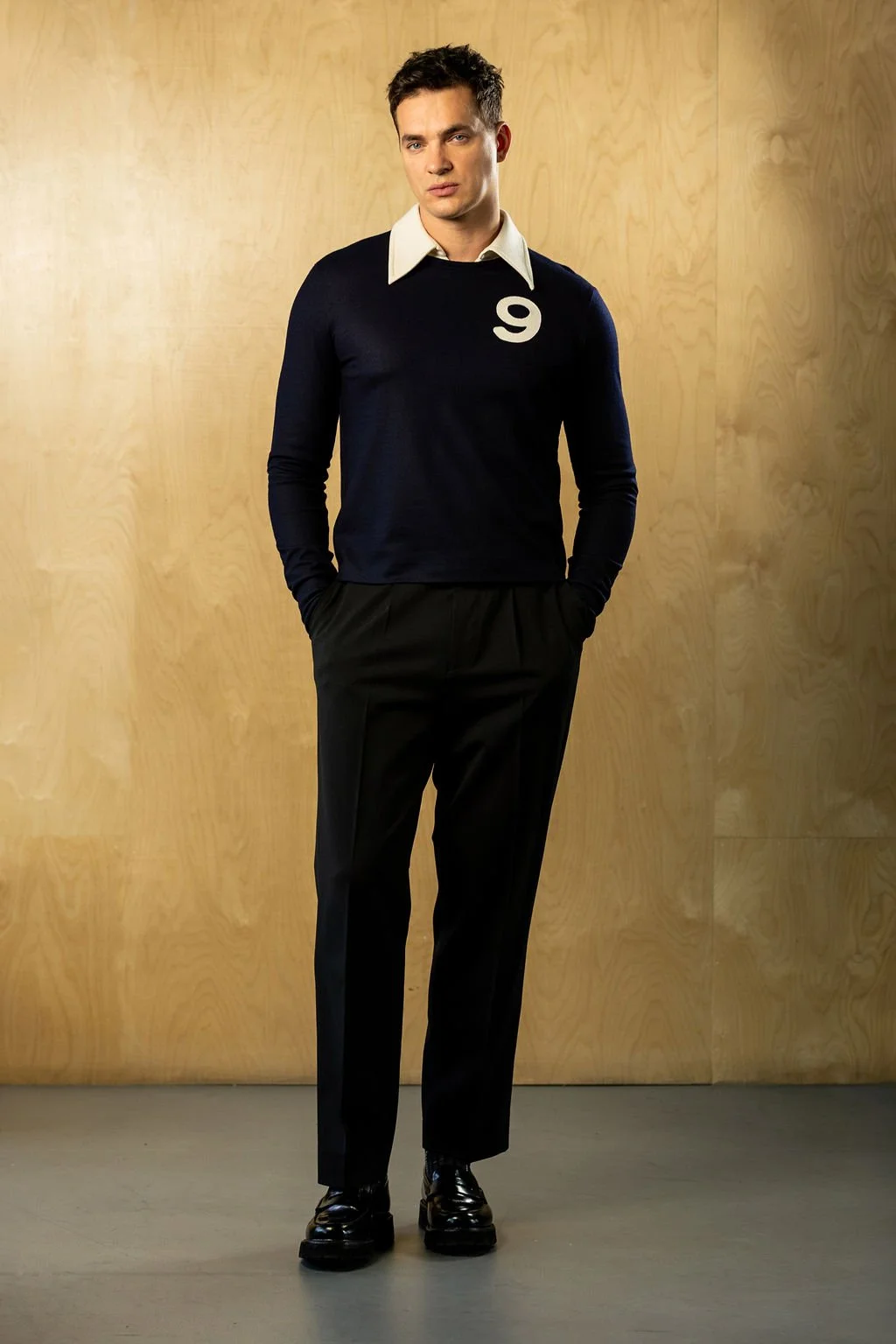
Wool Polo Knit - Mithridate, Grey Trousers - Wax London, Loafers - Grenson
The story explores modern masculinity in nuanced ways. How do you see that idea reflected in your character and in the relationships on stage?
I’m not sure what “modern masculinity” even is - I don’t think there’s anything particularly modern about the masculinity in this story. What you see are human behaviours: men protecting themselves, trying to stay in control. Mitchell is guarded for good reason. Their relationship highlights how different approaches collide, and how hard it can be for anyone - “modern” or not - to let themselves truly be seen.
What do you hope audiences take away—emotionally or intellectually—when they leave the theatre after seeingDaniel’s Husband?
I hope they leave thinking about the conversations we avoid - and the cost of avoiding them. And I hope they feel moved by the reminder that love requires courage, honesty and presence.
Raiko Gohara — Trip

Shirt, Tie, Trousers & Jacket - Mithridate
Following breakout roles in A Good Girl’s Guide to Murder and Allegiance, Raiko Gohara plays Trip, a character whose presence disrupts the ease of Daniel and Mitchell’s carefully arranged world. Gohara’s work has been defined by emotional clarity and conviction, both of which shape his approach to this complex figure.
What first drew you to Daniel’s Husband and to this particular role?
The first thing that drew me to Daniel’s Husband was the writing. Michael McKeever’s work is beautifully crafted and richly detailed. The characters feel complex, three-dimensional, and deeply human. The play presents multiple viewpoints and arguments that are all justified and compelling. Every character’s perspective is understandable; you may not agree with them, but you can clearly see where they’re coming from and why they feel the way they do. I immediately connected with the character Trip when I first read the play. He’s full of youth and joy, yet has a grounded soul, having been forced to grow up far sooner than he should have
For readers new to the play, how would you describe its central themes and the emotional world your character inhabits?
I think some of the essential themes include marriage, commitment, individual rights, people’s understanding of civil partnerships and marriage, and queer identity within relationships. However, the play also explores themes of loneliness and purpose. I find Trip to be such a beautifully detailed character. He finds solace and comfort in caring for people who are unwell. His journey shows him growing into a loving and compassionate person, shaped by the adults he’s fortunate to be surrounded by. I’m really drawn to him because I see so much of myself in his character.

Shirt, Tie, Trousers & Jacket - Mithridate, Boots Grenson
The play asks profound questions about love, commitment and conviction. Which of these themes resonates most strongly with you personally as you approach this performance?
I find the questions about love resonate with me most strongly. There are so many different forms of love, from platonic to romantic to sexual, and this play explores them all. It’s fascinating to see how far people will go for someone they love, how love can make them blind to the reality of their relationship, and how they may not fully see things as they are. The play also examines different sources of love, whether from family or chosen family. You see the contrast between conditional and unconditional love, and it’s compelling to consider whether that comes from a parent or from someone you’ve chosen to have in your life.
Michael McKeever’s writing has been praised for its honesty and emotional precision. How did you prepare to navigate the play’s more challenging or vulnerable moments?
To be honest, Michael’s writing does most of the work for you. It’s so detailed and grounded that it becomes very easy to connect with the material. Through conversations with my fellow actors and with our director, Alan Souza, I was able to deepen my understanding of these vulnerable situations and challenging moments.
This production marks the play’s long-awaited UK premiere. How does staging it at the Marylebone Theatre and for a London audience shape the experience or the impact?
The way Justin Williams has designed the set for the show is incredibly smart. The use of levels and the sense of isolation within a space that’s meant to be carefully curated for someone is fascinating. It almost feels like the home turns against the person who created it, reflecting the biggest and most difficult challenge in their life. Alan’s blocking is also stunning! It has a choreographic quality to it, almost like a dance, and the way the actors move around the stage is truly beautiful.
The Off-Broadway run of Daniel’s Husband was acclaimed for its intimacy and emotional punch. What do you think gives the play its enduring power for contemporary audiences?
What gives a play its power is how relatable and human it feels. There are so many intricate details in this show that anyone, whether queer or straight, can connect with. What also strengthens its impact is that many of the events in the play could happen to anyone, regardless of their age. Because of that, audiences are able to respond to so much of what unfolds on stage. Every person has responsibilities and commitments, so when they see something that reflects their own life or experiences, it resonates deeply and highlights those moments powerfully.
What do you hope audiences take away emotionally or intellectually when they leave the theatre after seeing Daniel’s Husband?
I hope people truly enjoy the show, but more than that, I hope they discover moments within it that resonate with them personally. I hope it challenges them, their ideas about commitment, identity, love, belonging, and even the direction of their own lives. If the play encourages someone to reflect on their relationships, their responsibilities, or what they value most, then it’s done something meaningful. Ultimately, I want audiences to leave the theatre feeling seen, understood, and perhaps even changed in some small way.

Shirt, Tie, Trousers & Jacket - Mithridate
“There are so many different forms of love, from platonic to romantic to sexual, and this play explores them all. It’s fascinating to see how far people will go for someone they love, how love can make them blind to the reality of their relationship, and how they may not fully see things as they are.” - RAIKO GOHARA

Navy silk shirt - Thom Sweeney, Blazer & Trousers - dunhill
Joel Harper-Jackson — Daniel
A standout of the West End in Cock, Standing at the Sky’s Edge and Kinky Boots, Joel Harper-Jackson steps into the role of Daniel — refined, composed, and deeply committed. His performance carries much of the play’s emotional weight, exploring what happens when certainty meets crisis.
What first drew you to Daniel’s Husband and to this particular role?
I was drawn to Daniel’s Husband immediately because it’s a play that feels both intimate and enormous at the same time. Michael McKeever writes with such clarity and compassion that you can’t help but be pulled in. Daniel is a beautifully layered character he’s warm, intelligent, romantic, and quietly principled and that combination felt incredibly human to me. I knew straight away it was a role that would ask a lot of me emotionally, and that’s always exciting as an actor.
For readers new to the play, how would you describe its central themes and the emotional world your character inhabits?
At its heart, the play is about love real, complicated, grown-up love and the choices we make when we decide to build a life with someone. It’s also about the things we take for granted, including the legal structures that protect the people we care about. Daniel lives in a world of hope and conviction. He knows what he wants, he believes in commitment, and he isn’t afraid to express that. But he’s also navigating a relationship with someone who loves him deeply yet carries his own fears and reservations. That emotional push and pull is where the play lives.
The play asks profound questions about love, commitment and conviction. Which of these themes resonates most strongly with you personally as you approach this performance?
The idea of conviction really resonates for me the courage to stand by what you know is right for you, even when it’s uncomfortable or when the person you love struggles with it. Daniel’s certainty isn’t stubbornness; it’s clarity. And exploring that how love requires both compromise and boundaries feels very truthful and very human.
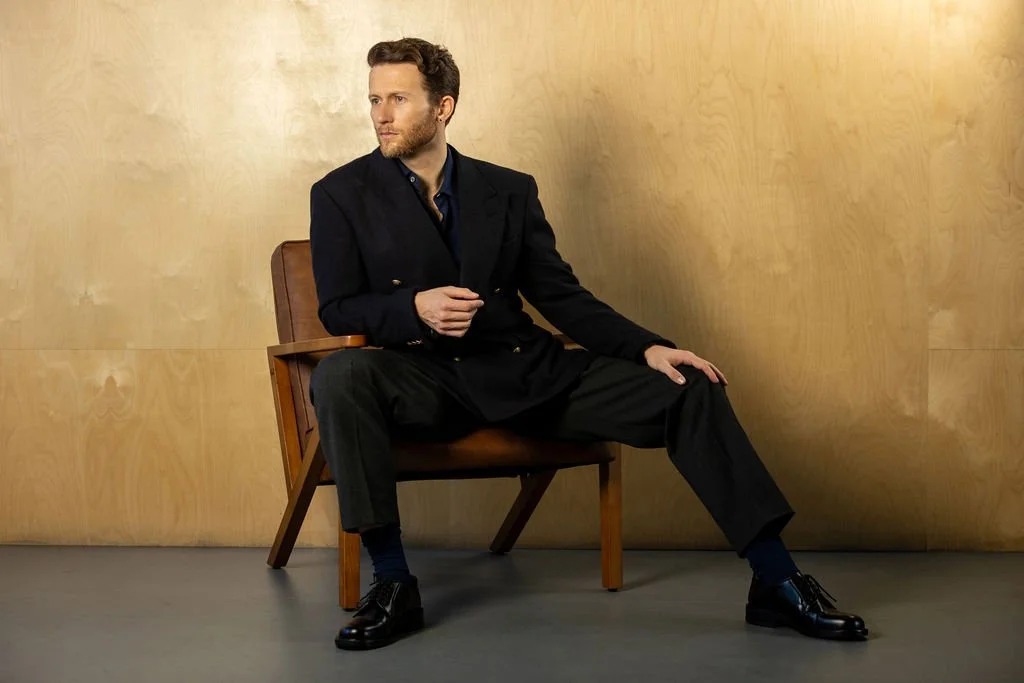
Navy silk shirt - Thom Sweeney, Blazer & Trousers - dunhill, Shoes - Mr P. at MR PORTER
“At its heart, the play is about love real, complicated, grown-up love and the choices we make when we decide to build a life with someone. It’s also about the things we take for granted, including the legal structures that protect the people we care about.” - Joel Harper-Jackson
Michael McKeever’s writing has been praised for its honesty and emotional precision. How did you prepare to navigate the play’s more challenging or vulnerable moments?
The writing does a lot of the heavy lifting, so my preparation has really been about allowing myself to be open. I’ve spent time sitting with Daniel’s circumstances, not rushing through the emotional beats, and letting myself feel the weight of what he’s fighting for. Working with Luke, Raiko, David and Liza has also been invaluable there’s such trust in the room, which makes it easier to go to those rawer places. It’s a play that rewards honesty, so the challenge is to stay present and truthful every night.
This production marks the play’s long-awaited UK premiere. How does staging it at the Marylebone Theatre and for a London audience shape the experience or the impact?
London audiences are incredibly generous but also incredibly perceptive, they lean into emotional work and they’re not afraid of plays that ask something of them. The Marylebone Theatre is an intimate space, which suits this story perfectly. You can feel the audience breathing with you.Because it’s the UK premiere, there’s also a sense of introducing the play to a new community, and that feels special. The themes are universal, but the conversation around them takes on a new dimension here.
The Off-Broadway run of Daniel’s Husband was acclaimed for its intimacy and emotional punch. What do you think gives the play its enduring power for contemporary audiences?
It speaks to things we all understand: love, fear, responsibility, and the fragility of the people we hold dear. The play never preaches, it simply places you inside a relationship and lets you witness the beauty and the heartbreak that come with it. Audiences recognise themselves in these characters. Even if their circumstances are different, the emotional truth is universal, and that’s why the play continues to connect.
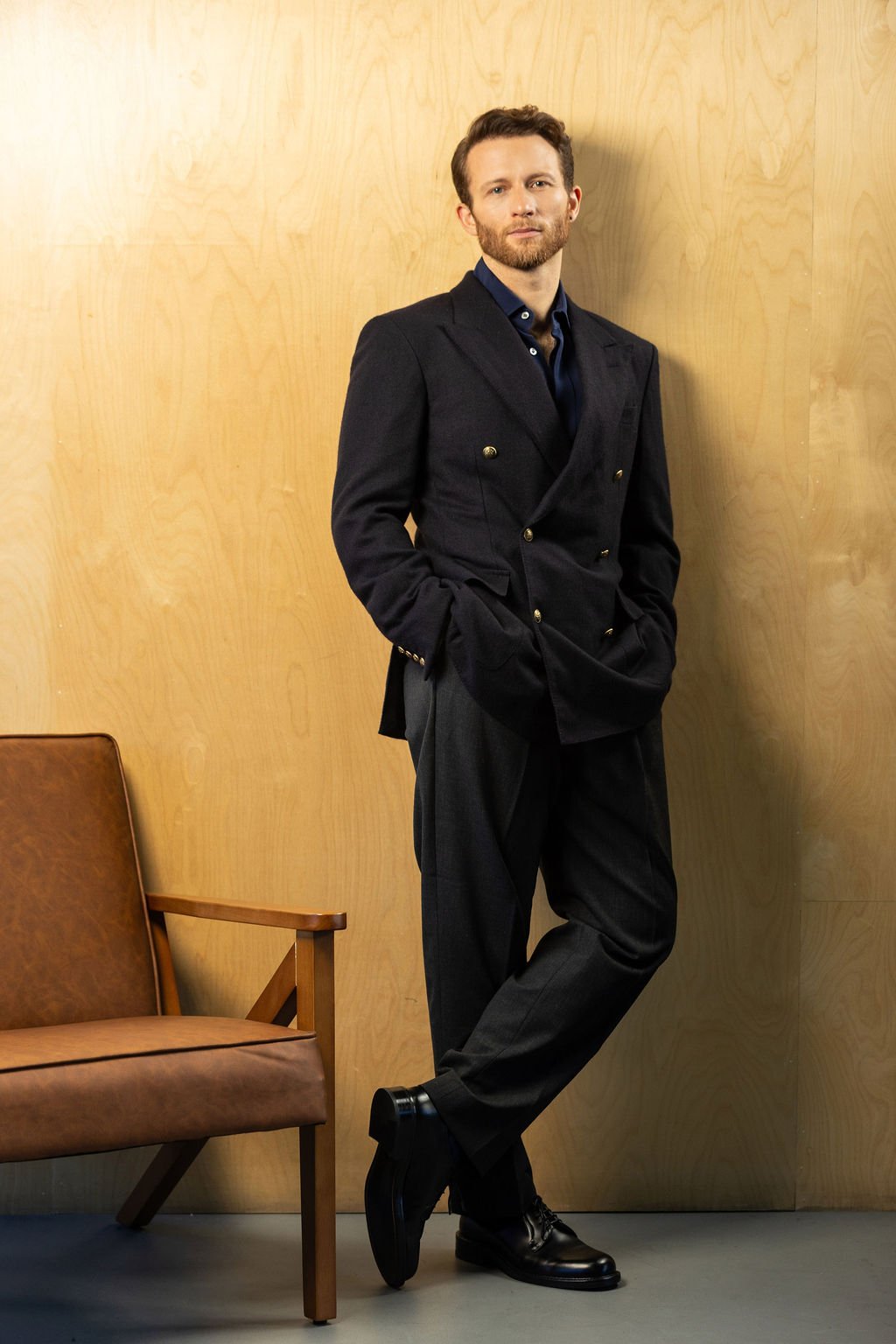
Navy silk shirt - Thom Sweeney, Blazer & Trousers - dunhill, Shoes - Mr P. at MR PORTER
The story explores modern masculinity in nuanced ways. How do you see that idea reflected in your character and in the relationships on stage?
What I love is that the play doesn’t treat masculinity as one fixed thing. Daniel is open about what he wants commitment, security, long-term love and that emotional honesty is a form of strength. Mitchell presents a brave, polished exterior, but beneath that is vulnerability and fear. Watching him confront those layers is profoundly moving. Trip and Mitchell stepping in as Daniel’s carers later in the story shows another dimension of masculinity responsibility, tenderness, and the quiet courage of showing up when things get hard. The play suggests that masculinity isn’t about hardness or stoicism; it’s about the choices you make in moments of truth.
What do you hope audiences take away emotionally or intellectually when they leave the theatre after seeing Daniel’s Husband?
I hope they leave with a deeper appreciation for the people they love and maybe a little urgency about not waiting to say the important things. I also hope it encourages conversations about the rights and protections that so many couples still rely on. But more than anything, I hope audiences walk out feeling moved, connected, and reminded of how precious and how vulnerable love really is.

Luke wears Wool Polo Knit - Mithridate, Grey Trousers - Wax London, Loafers - Grenson
Joel wears Navy silk shirt - Thom Sweeney, Blazer & Trousers - dunhill, Shoes - Mr P. at MR PORTER
Raiko wears Shirt, Tie, Trousers & Jacket - Mithridate, Boots Grenson
Daniel’s Husband is currently playing at Marylebone Theatre until 10 January 2025.