
EXCLUSIVE: Willkommen to the Dark Side: Matt Willis and the Seductive Terror of Cabaret
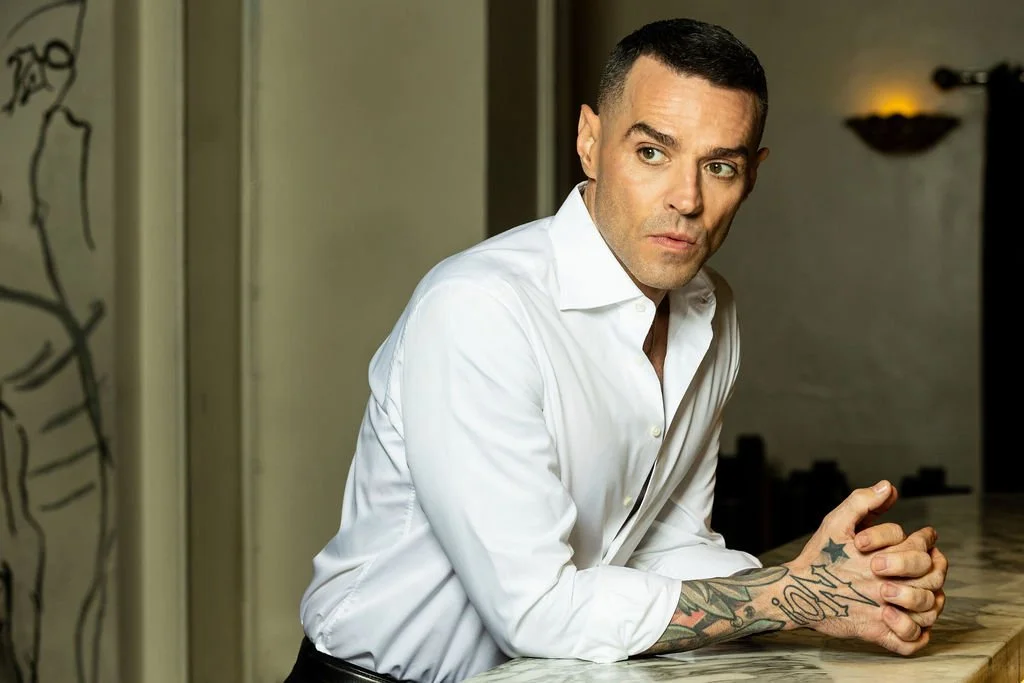
At the Kit Kat Club, the former Busted frontman delivers a performance of startling control, charisma and menace — proving that Matt Willis has never been more compelling than he is now.
Words - Tajinder Hayer
Photography - Nicholas Andrews
Grooming - Amanda Bowen using Tatcha
Hair - Oliver Moorhouse
There is a moment, just before the lights sharpen and the room seems to inhale, when Matt Willis stands entirely alone.
No bandmates. No arena roar. No television cameras. No place to hide.
At the Kit Kat Club at the Playhouse Theatre, transformed into the decadent, dangerous world of Cabaret, Willis rises into the spotlight as the Emcee — a role so psychologically loaded that it has become one of musical theatre’s most exacting tests of presence.
For four minutes at the top of the show, it is just him.
“It feels a bit like being led to the gallows every night,” he says with a laugh that suggests only half a joke. “You’re in this tiny dark tube beneath the stage, then suddenly you’re shot up into the light and it’s just you, on your own, for minutes. That’s a long time.”
And yet, it is precisely in that exposed solitude that Willis is at his most arresting.
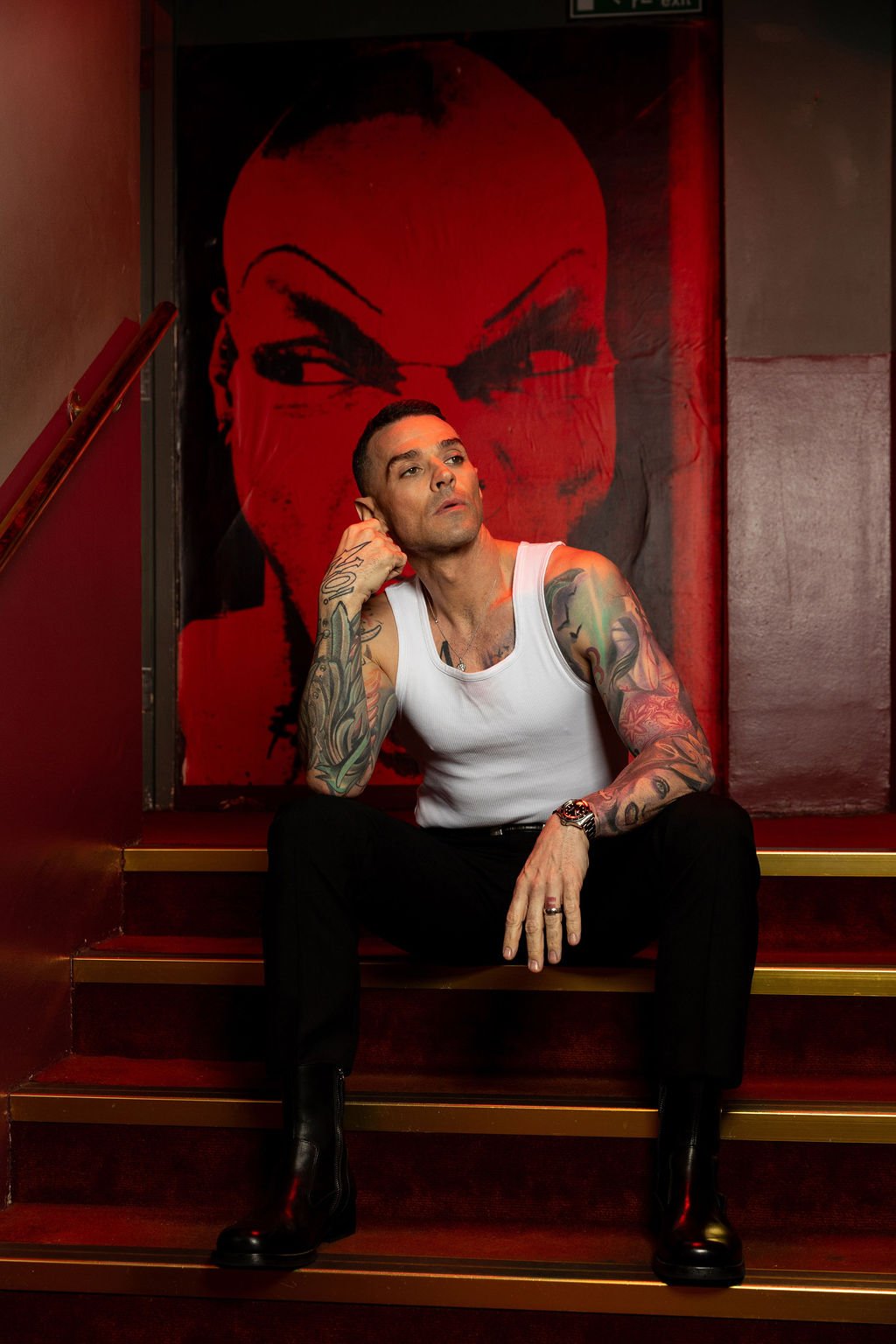
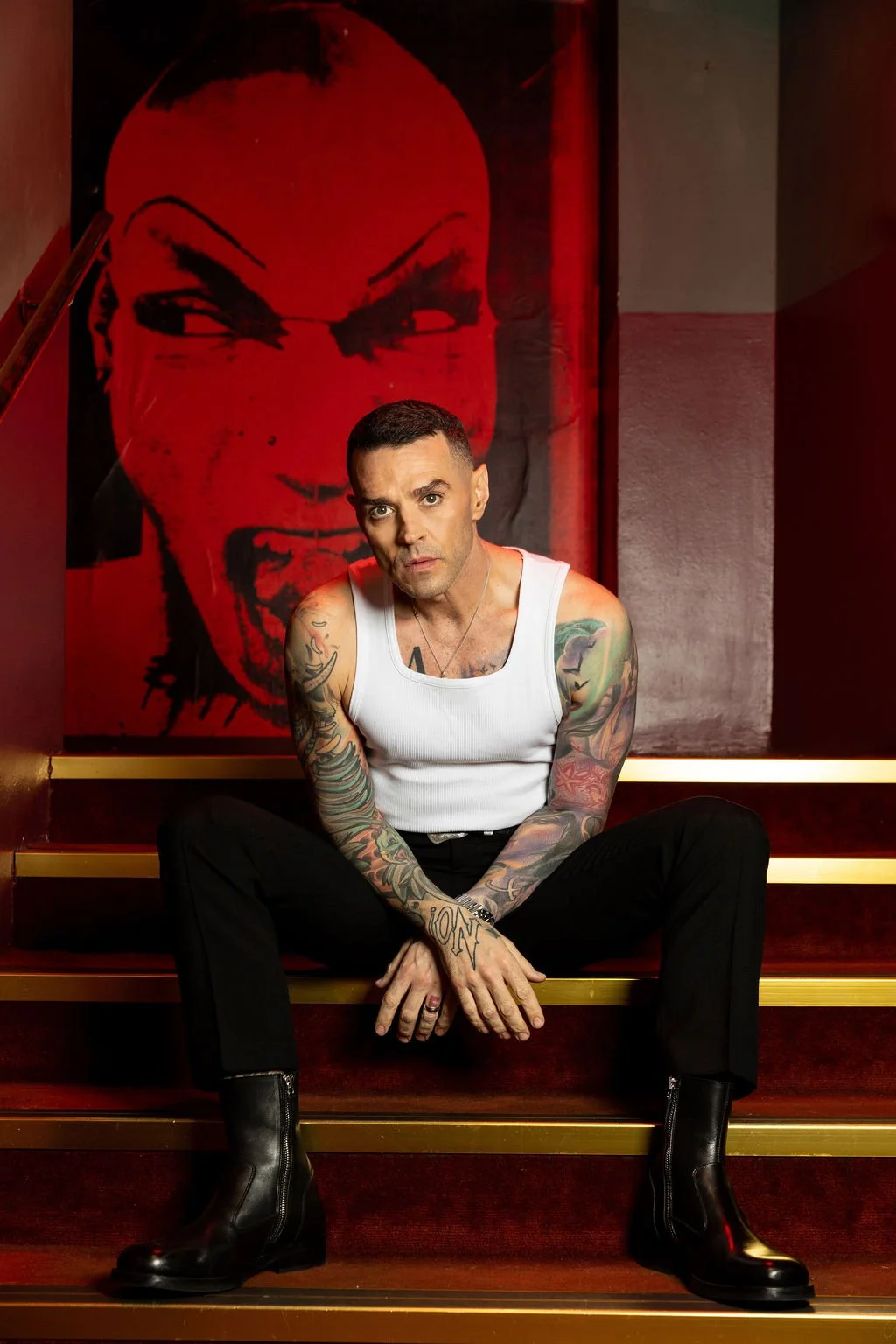
For many, Matt Willis will always be synonymous with Busted — the co-founder, bassist and co-vocalist whose easy command of a crowd helped soundtrack a generation. But on stage in Cabaret, that instinct for performance has been sharpened into something far more dangerous. The easy charisma remains, but it now arrives with teeth.
From January this year, Willis took on the iconic role of the Emcee in the West End’s Cabaret at the Kit Kat Club, opposite Katie Hall’s Sally Bowles, joining one of London theatre’s most acclaimed productions.
It is, by any measure, a formidable role. The Emcee is not simply host or narrator. He is seduction and warning, spectacle and shadow. He smiles, he taunts, he disarms. He is the glittering veneer of Berlin nightlife and the creeping dread beneath it.
For Willis, the appeal was immediate.
“When my agent asked what I wanted to do, Cabaret was one of the first things I said,” he recalls. “Playing the Emcee was almost a gut response.”
The opportunity, however, still came as a shock.
With Busted continuing to demand time, touring commitments and the realities of a life built across multiple disciplines, Willis has long had to fit his creative instincts into the margins. Theatre, television, documentary work — each has had to coexist with the band that remains his first love.
But this time, the timing aligned.
“There’s something about being the other side of 40,” he says, “that just makes you think: just fucking go for it.”
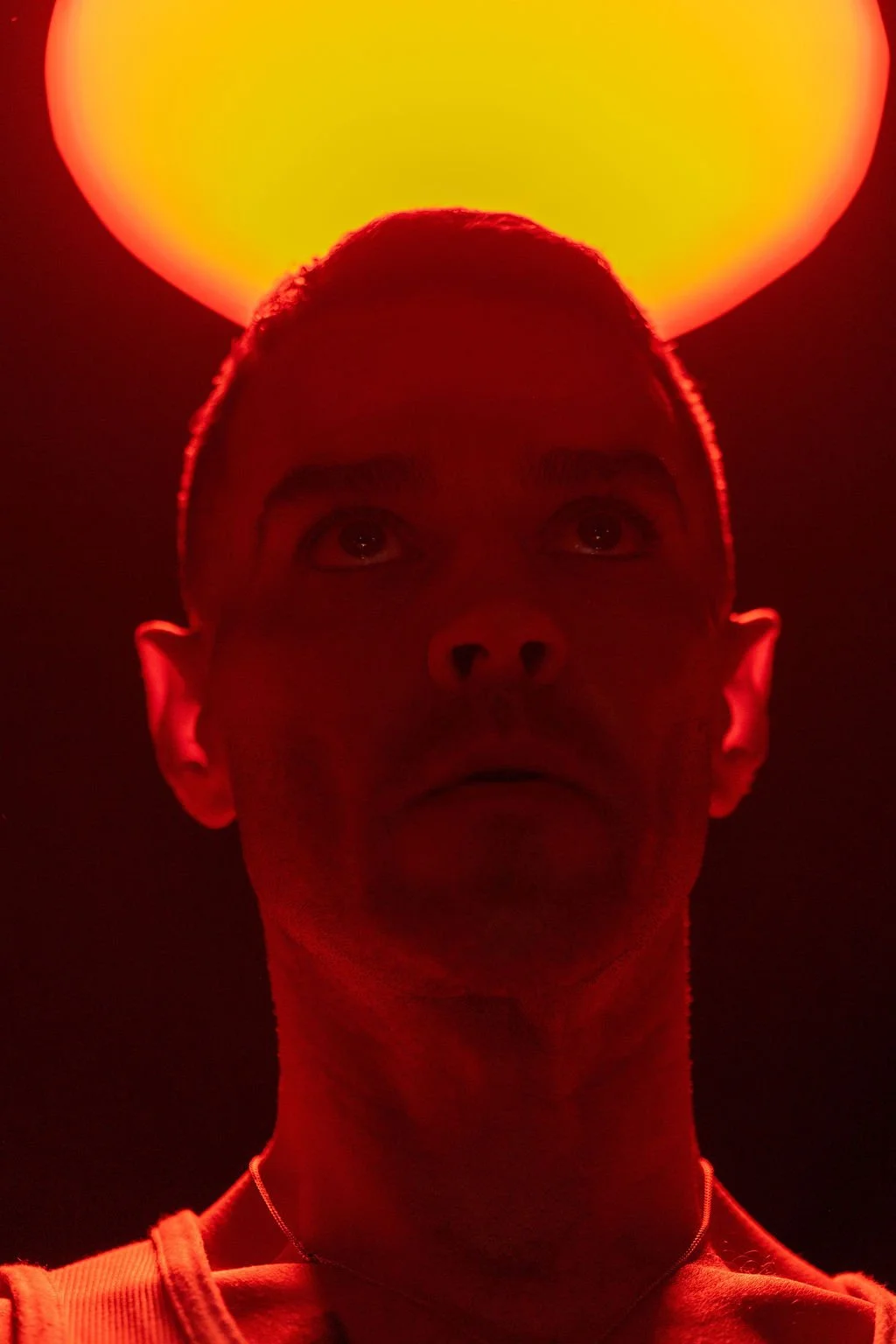
At 43, Willis speaks with the kind of clarity that only arrives after years spent negotiating expectation — public, professional and internal. He is candid about the anxieties that once accompanied his transition from pop star to actor, particularly within the theatre world, where performers crossing over from music are often met with suspicion.
“There was always that sense that people thought you were being given something because of who you are,” he says. “I definitely had a chip on my shoulder about that.”
Now, that burden appears to have lifted.
The result is a performance rooted not in self-consciousness but in conviction. That confidence is perhaps what makes his Emcee so unnerving.
Rather than leaning into a broad theatricality, Willis has approached the role from the inside out. The script offers remarkably little in terms of fixed definition, leaving the character open to interpretation. For an actor, that can be both liberation and abyss.
“The first thing I do is break down the facts,” he explains. “What does the script actually tell you? What do people say about him? What are the truths?”
“With the Emcee, there’s basically nothing.”
So Willis went deeper.
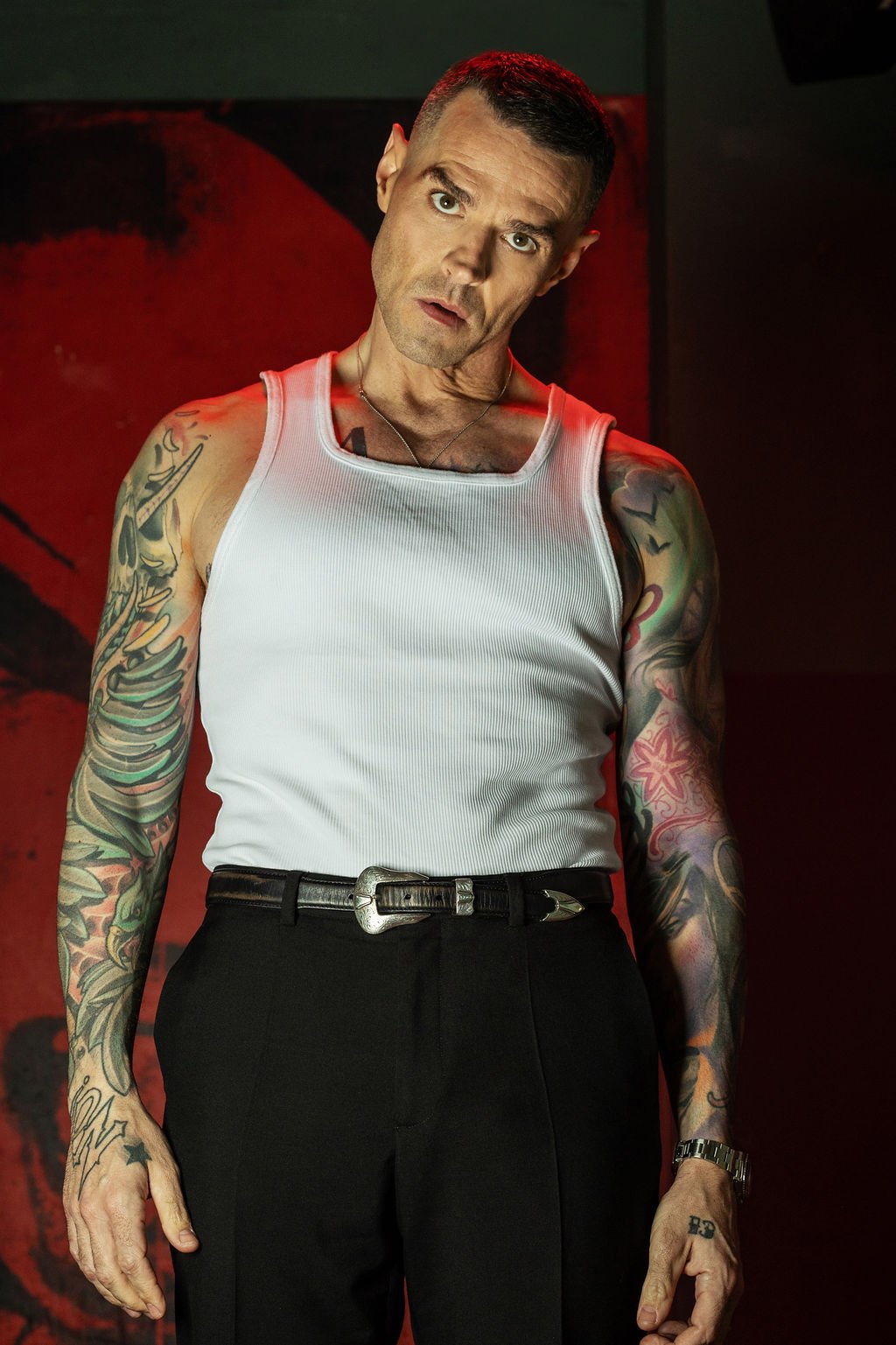
He considered every possibility: a mythic figure, a godlike observer, an alter ego, a symbolic force. Yet the breakthrough came not in abstraction but in motive.
“What does he want?” he says. “Once I found that, everything fell into place.”
That want, in Willis’s reading, is survival. It is a chillingly intelligent choice.
Because what makes his Emcee so effective is not overt villainy, but something far more disquieting: self-justification.
He does not play evil. Instead, he plays certainty.
“Is he a good guy?” Willis asks. “That’s what I find interesting. Because for me, he has to be. I think he is, for me to be able to play it. You can’t play evil.”
It is an answer that cuts to the heart of why Cabaret remains so devastating. Set in Berlin in the late 1930s, on the edge of fascism, the musical thrives in the space between pleasure and collapse, between those who see what is coming and those who choose not to.
Few productions have captured that tension as viscerally as the current West End staging, which continues to transform the Playhouse Theatre into the immersive, decadent claustrophobia of the Kit Kat Club.
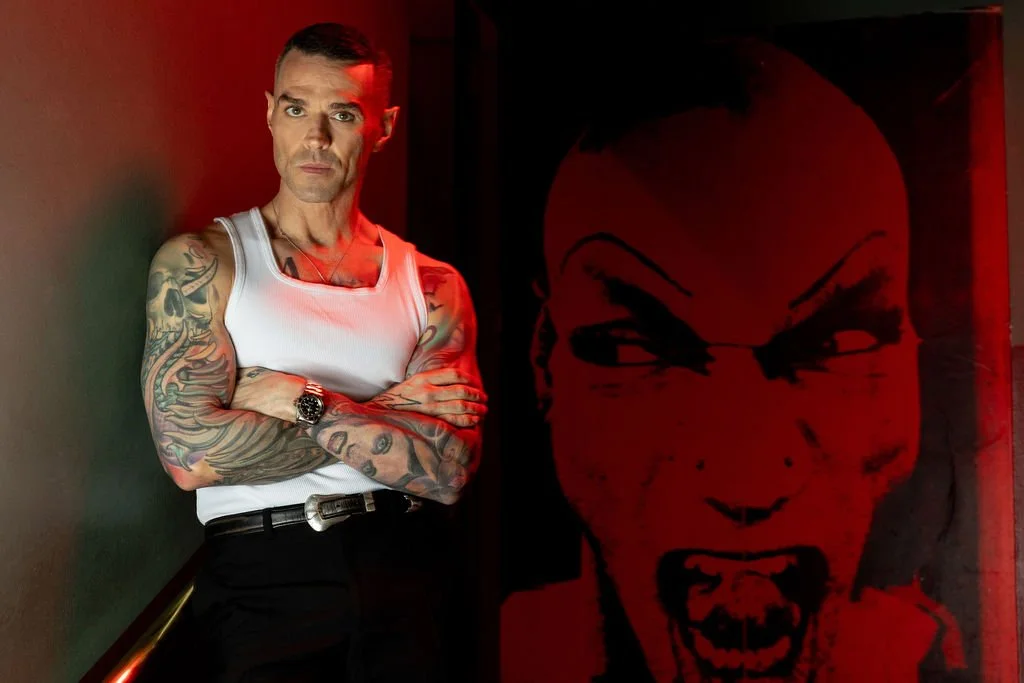
For Willis, the physical space is not backdrop but instrument.
“What they’ve done with the theatre is incredible,” he says. “Everything is designed to lull you into a false sense of security.”
That includes his own increasingly playful interaction with the room.
The Emcee, in his hands, is omnipresent. He prowls the theatre beyond the boundaries of the stage, materialising beside audience members when they least expect it, using the immersive design to create moments of private unease.
“Sometimes I’ll stand right next to someone’s seat and they have no idea I’m there until I move,” he says, grinning. “I love that.”
It is the kind of instinct that reveals the deep continuity between Willis the musician and Willis the actor.
Years of commanding arenas with Busted have translated seamlessly into a role that thrives on breaking the fourth wall.
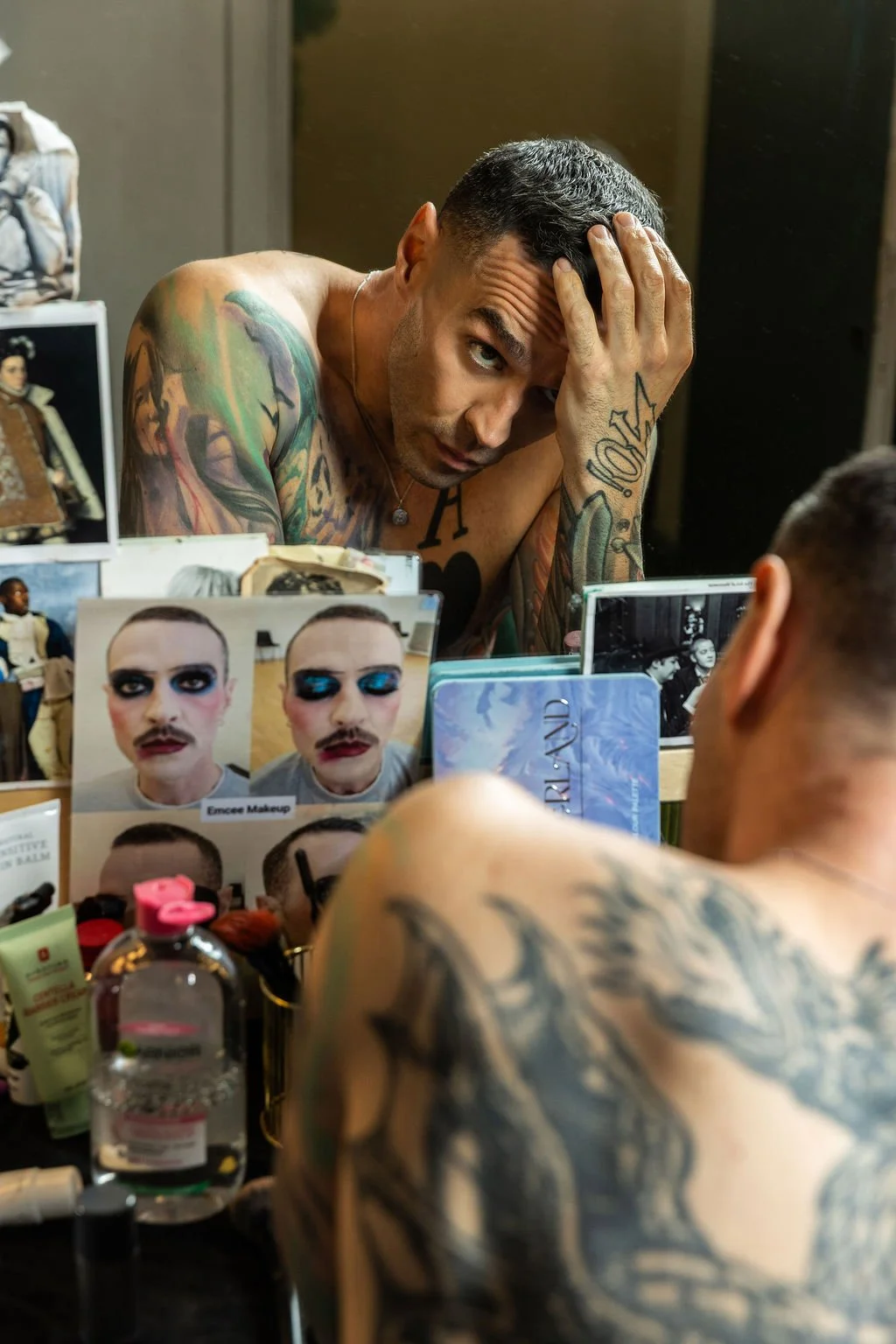
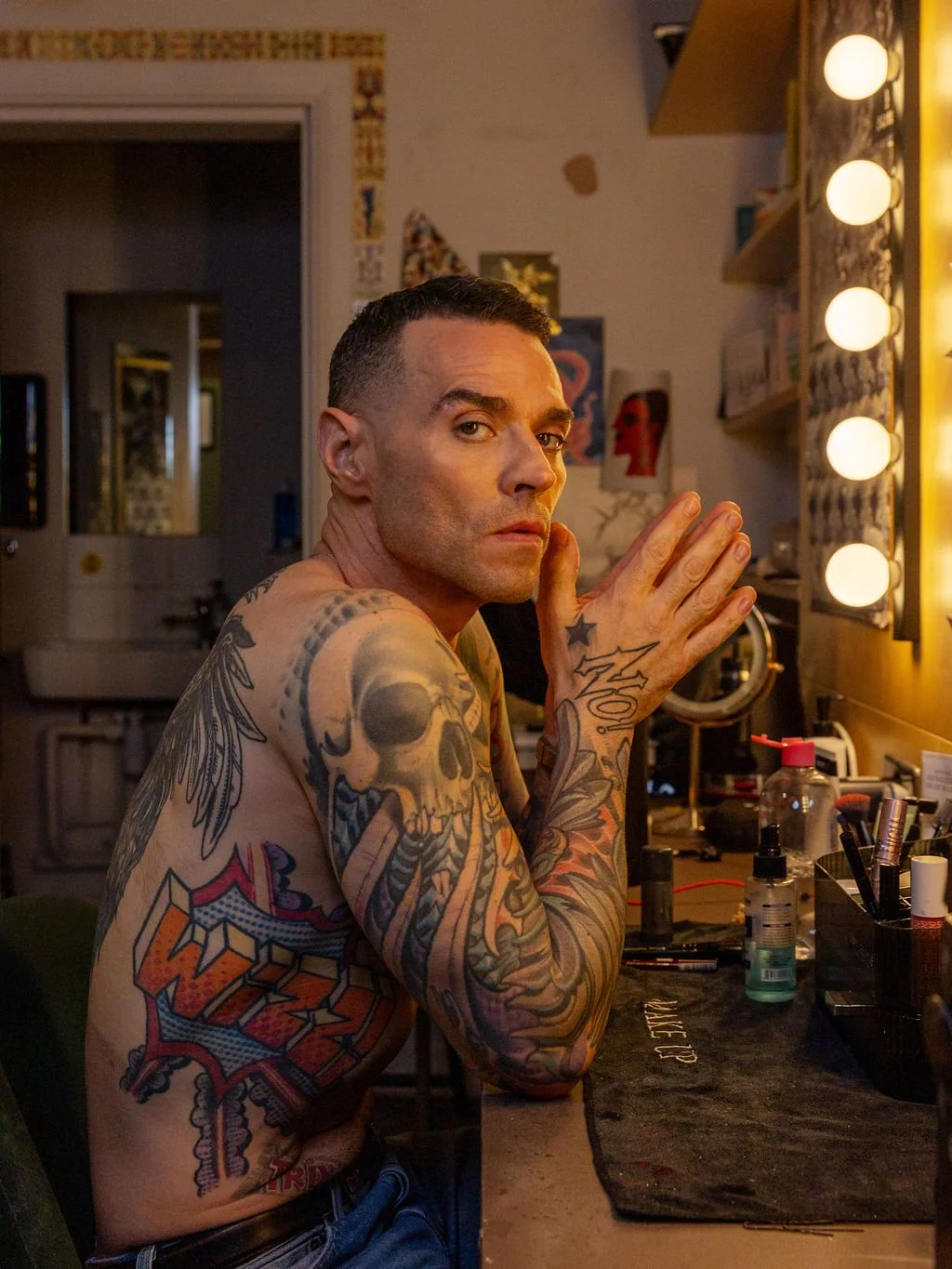
“For a lot of actors, that’s a real problem,” he says. “But for me, talking directly to the audience feels very natural. It’s like a gig.”
Indeed, it is precisely that live-wire relationship with the room that gives his Emcee its electricity. He understands how to hold a crowd, how to weaponise eye contact, how to make an audience complicit.
Sometimes he makes them laugh. Sometimes he makes them squirm. Often, he does both at once. Yet beneath the bravura lies extraordinary discipline.
Willis describes the role as the most physically, mentally and vocally demanding work of his career.
“This is the most difficult thing I’ve ever done,” he says flatly.
The vocal demands alone are relentless. Unlike the stop-start surges of a live concert set, the Emcee requires a sustained performance register that offers little reprieve.
He laughs when describing the failed experiment of trying to give the show “60 per cent”. “It was awful for me, awful for the audience. I felt ashamed,” he says. “This role doesn’t work unless you give it everything.”
That absolute commitment is visible in every beat of the performance. And perhaps that is what makes this moment feel so significant for Willis. This is not reinvention, exactly. Rather, it feels like convergence.
The showman from the arena years, the actor who returned to drama school in his thirties to refine his craft, the performer who has learned to metabolise fear rather than be ruled by it — all of those selves meet here, under the dim lights of the Kit Kat Club.
Cabaret has always functioned as a mirror, reflecting the anxieties of the age back at its audience. Its themes of political complacency and creeping authoritarianism remain as resonant now as ever, which is part of what makes this production feel so urgent.
Willis knows it.
“I don’t think anyone can watch this show and not feel how relevant it is,” he says.
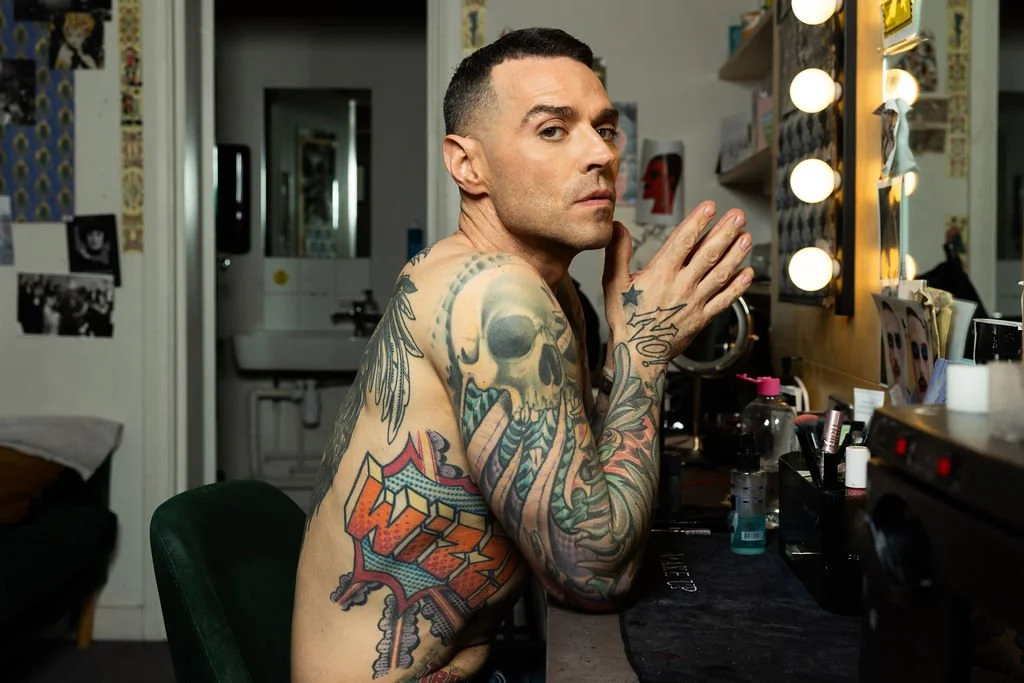
But if the production holds a mirror to society, Willis’s Emcee holds one to something more intimate: our appetite for spectacle, our willingness to be seduced, our instinct to look away until it is too late.
That is no small feat.
For a performer once known primarily for arena choruses and pop-punk euphoria, this turn in Cabaret reveals something richer and more formidable.
Book tickets to see Cabaret now.
Follow Matt Willis on Instagram.