
At The Pass: Shogo Amamoto on bringing one of Asia’s most coveted sushi counters to London
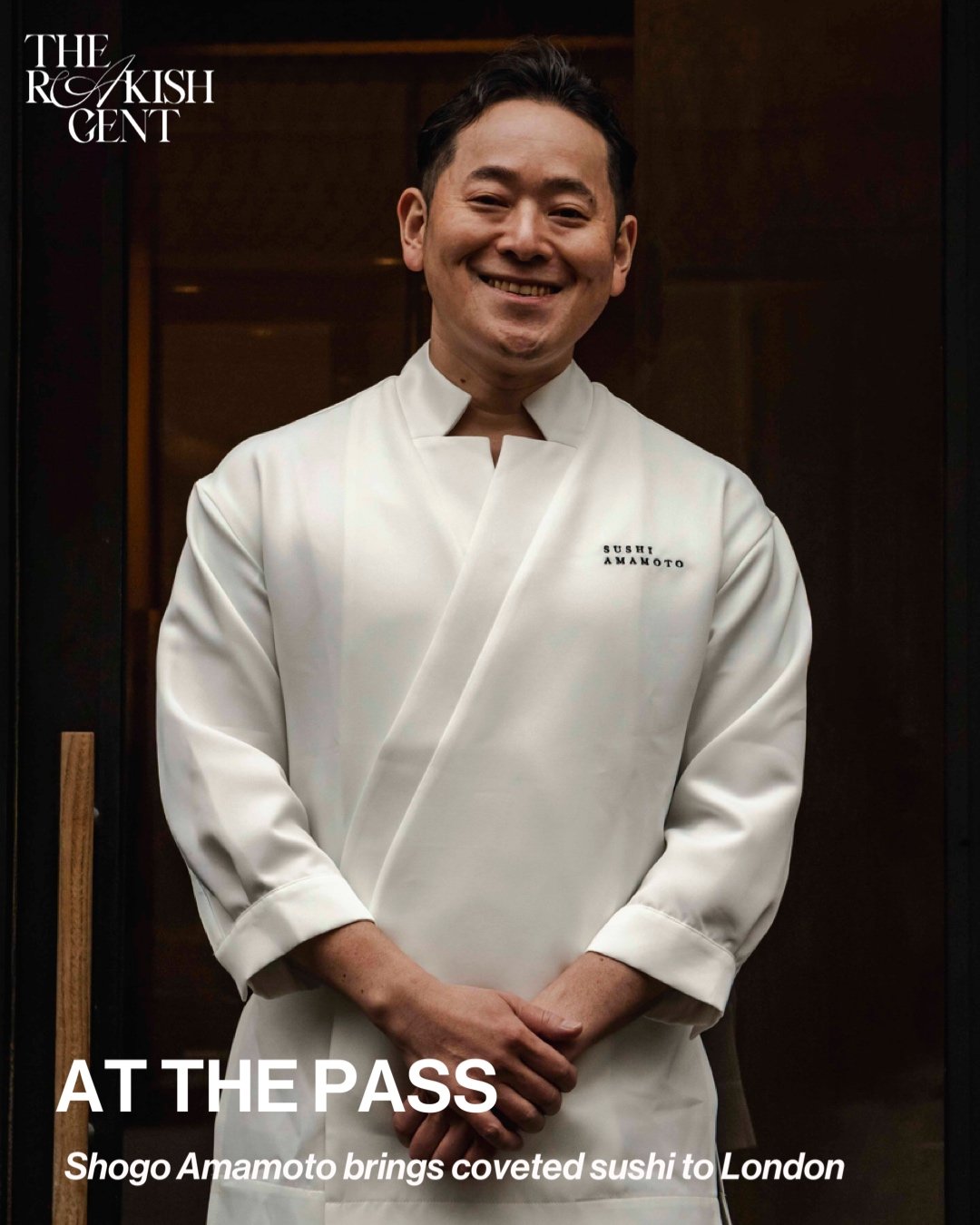
For the second instalment of At The Pass, The Rakish Gent turns to Mayfair, where one of Asia’s most revered sushi masters has made his European debut. Chef Shogo Amamoto’s name carries considerable weight in the world of omakase. His original counter in Taipei, Sushi Amamoto, became one of the most difficult reservations in East Asia, with waiting lists stretching close to a year and a reputation that saw it awarded two Michelin stars on its first appearance in the guide.
Now, that exacting philosophy arrives in London.
Set within a 16-seat counter on Albemarle Street, Sushi Amamoto London marks the chef’s first venture outside Taiwan and his most significant international move to date. The opening, developed in partnership with London restaurateurs Geoff and Lucas Leong, alongside Head Chef Jongho Park and the Michelin-starred team behind the former Taku, represents not reinvention but continuity: a faithful expression of Amamoto’s Edomae discipline, adapted thoughtfully to its new setting.
For Amamoto, the move to London was less about expansion than evolution.
“Taipei was a defining chapter for me,” he says. “The response from guests was beyond my expectations, and it brought with it a strong sense of responsibility to keep evolving. London felt like the natural next step as a global culinary capital, where tradition and innovation across so many cuisines is welcomed and diners are both diverse and deeply engaged.”
That sense of responsibility is central to how he speaks about his work. Born in Fukuoka, Amamoto began his apprenticeship at the age of 15, an early start that forged the discipline and precision for which he is now internationally recognised. His approach to Edomae sushi remains rooted in those formative years.
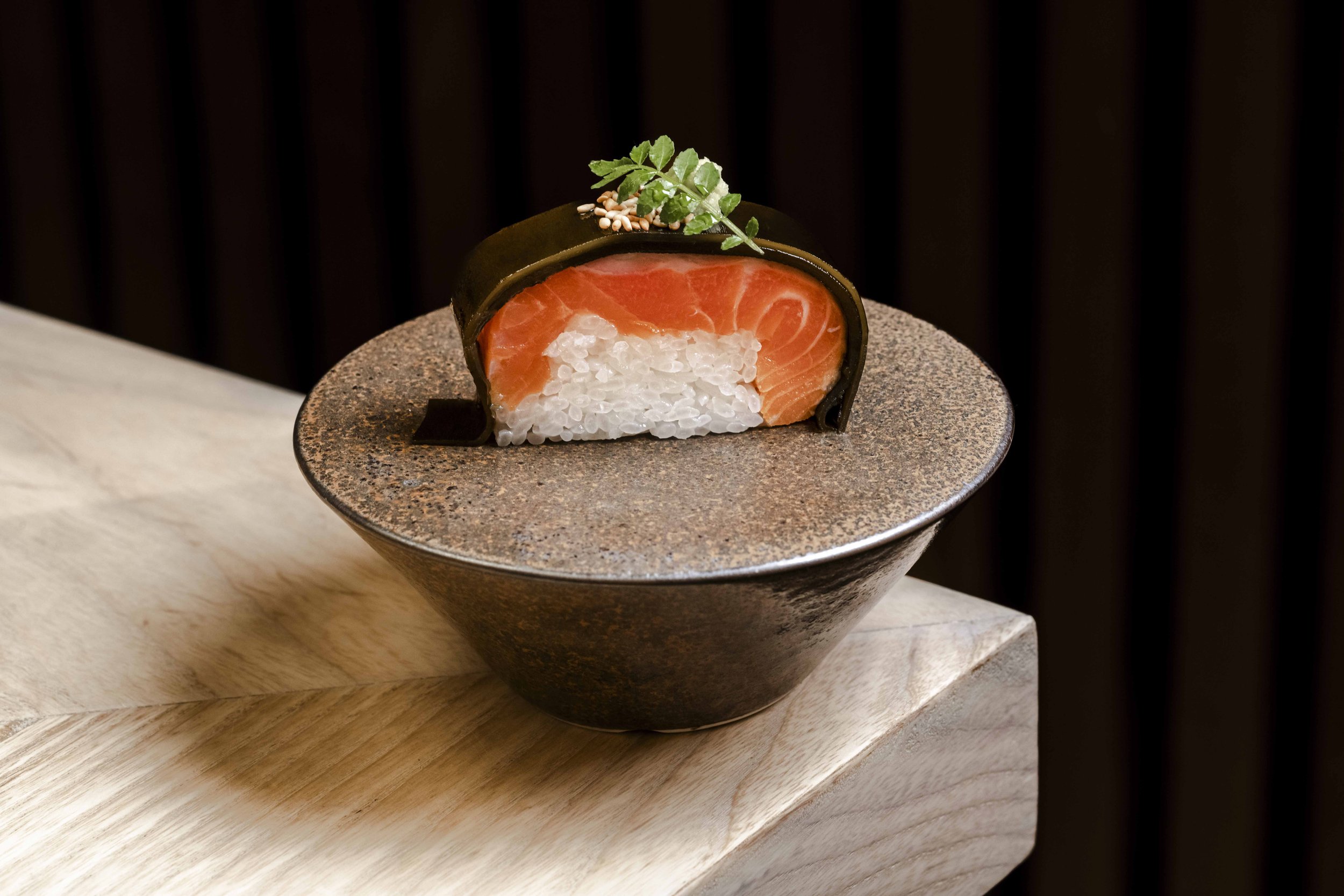
“Starting my training at 15 taught me discipline, repetition, and humility,” he says. “Even now, I believe mastery comes from doing the simplest things correctly, every day. Those early years continue to guide everything I do.”
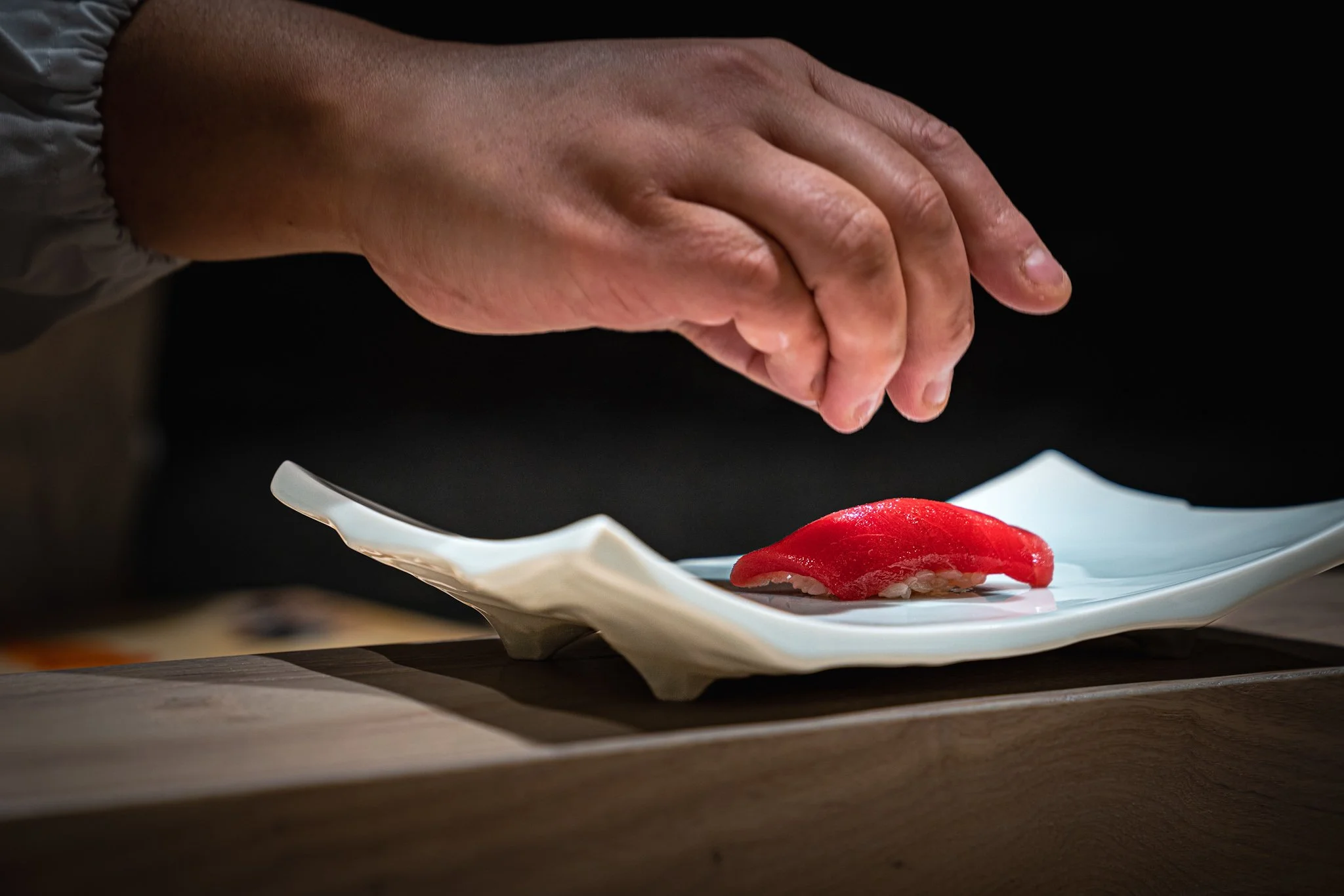
This philosophy is immediately evident at the counter, where every gesture appears calibrated, every movement deliberate. Edomae sushi, after all, is defined by centuries of restraint and technique, and Amamoto is adamant that its core principles do not shift simply because the postcode changes.
“The essence of Edomae sushi does not change,” he says. “Technique, balance, and respect for the ingredient must remain constant.”
Yet London inevitably brings its own conditions — climate, produce, rhythm — and it is here that the subtlety of his craft reveals itself.
“Every place has its own water, climate, and produce,” he explains. “My role is to understand those differences and make subtle adjustments without compromising the foundation; we embrace the produce available here and follow seasonal availability.”
This is perhaps where Sushi Amamoto London feels most compelling. Rather than attempting to replicate Taipei wholesale, the restaurant responds to Britain’s seasonal rhythm and access to exceptional European seafood, while preserving the exacting standards that made the original legendary.
“It’s important for me to continue using ingredients available in this region, support sustainable practices, and help the community,” he says. “I have since learnt more about the fish and herbs available on this side of the world.”
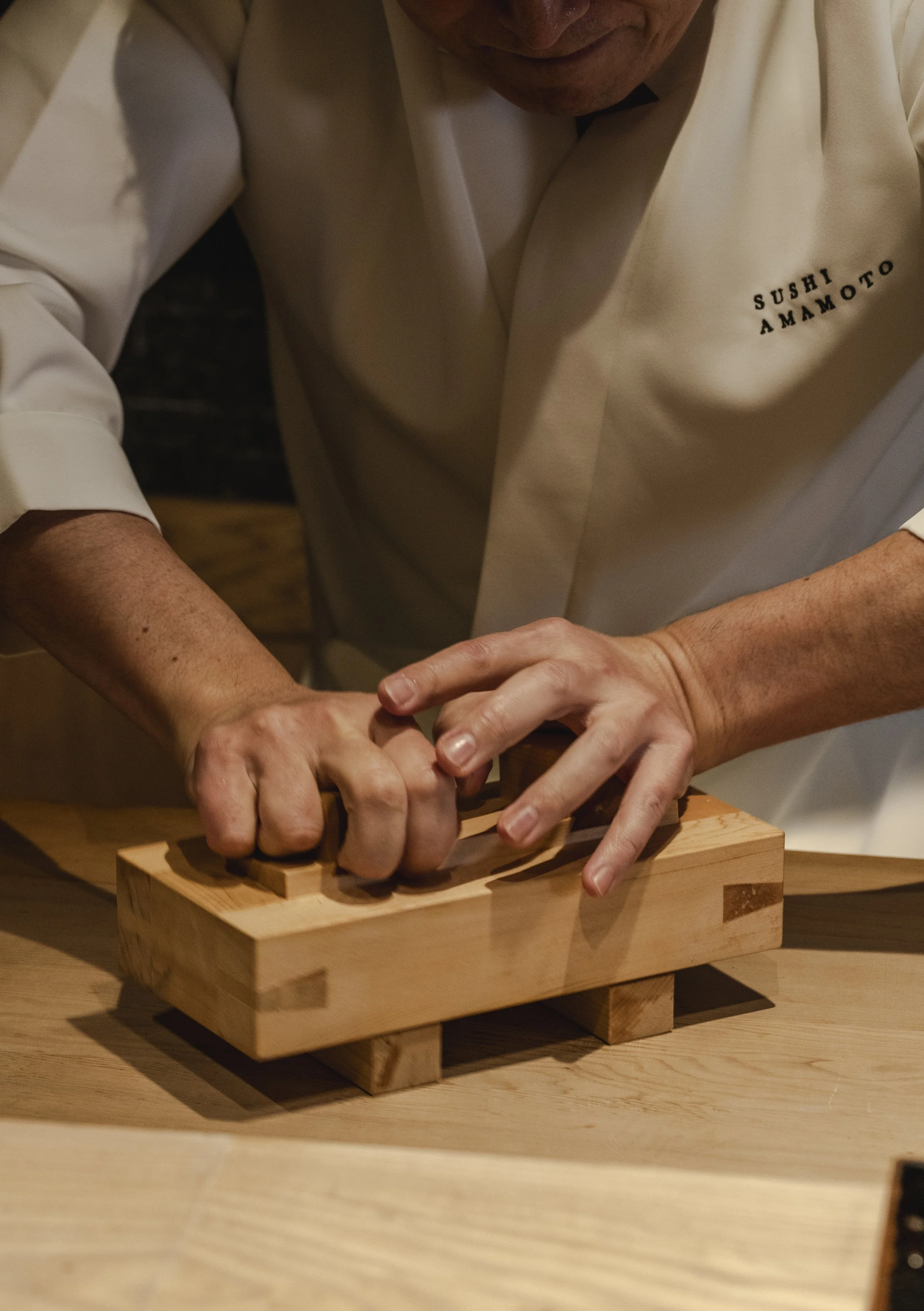
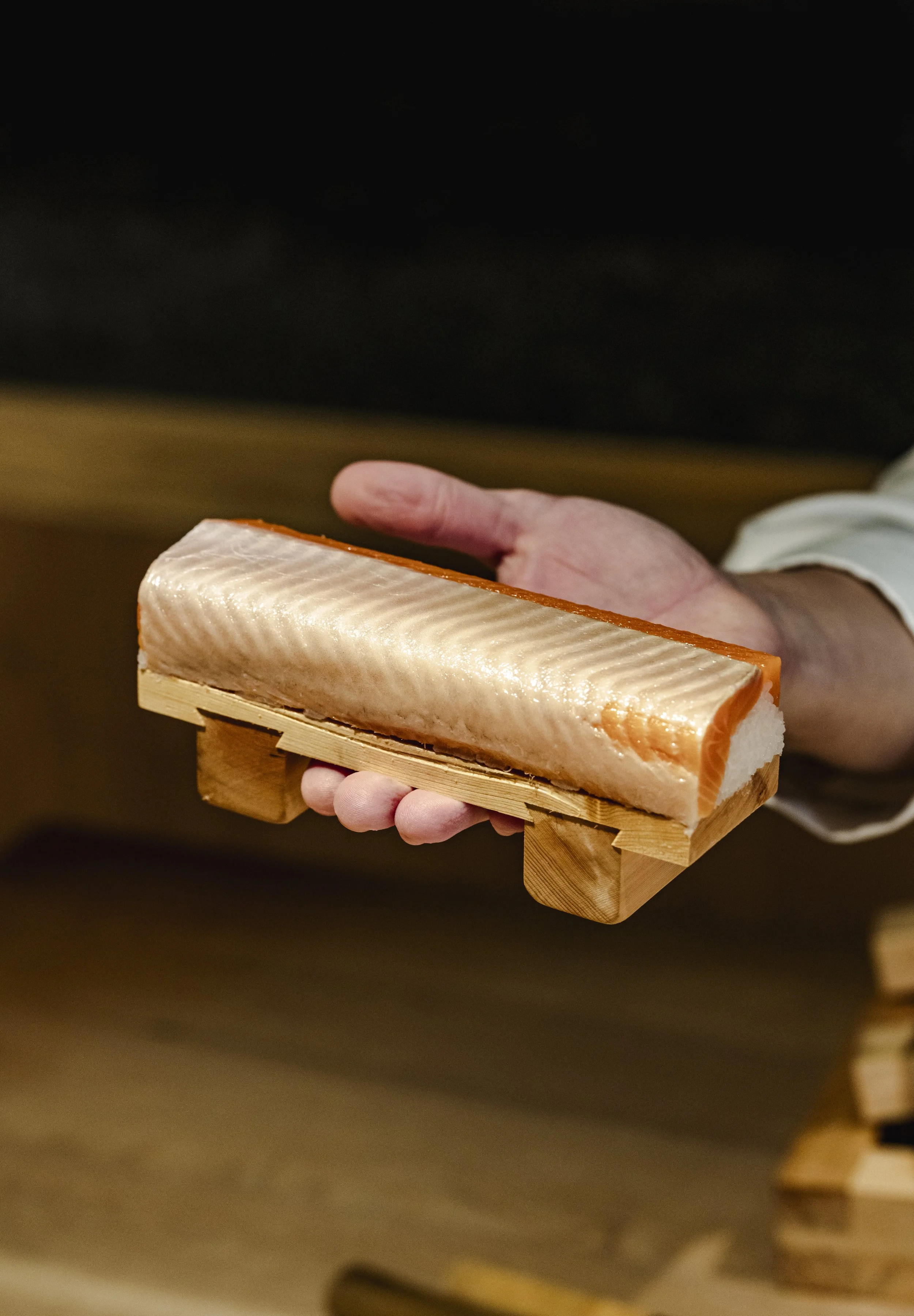
The result is a menu that remains unmistakably Amamoto in philosophy, yet distinctly London in expression.
“Of course, this differs from what is available in Taiwan and Japan, but it has intense flavours, different raw ingredients ready to give inspiration,” he says. “I find myself using ingredients that resemble those available in Asia in terms of texture and taste, without compromising on quality.”
The rice, however, remains non-negotiable.
“The rice is, of course, from Japan; this is how I ensure that glistening texture and apply my techniques.”
For Amamoto, every element of the omakase is built around the idea that a single piece of nigiri should function as a complete composition rather than a passing bite.
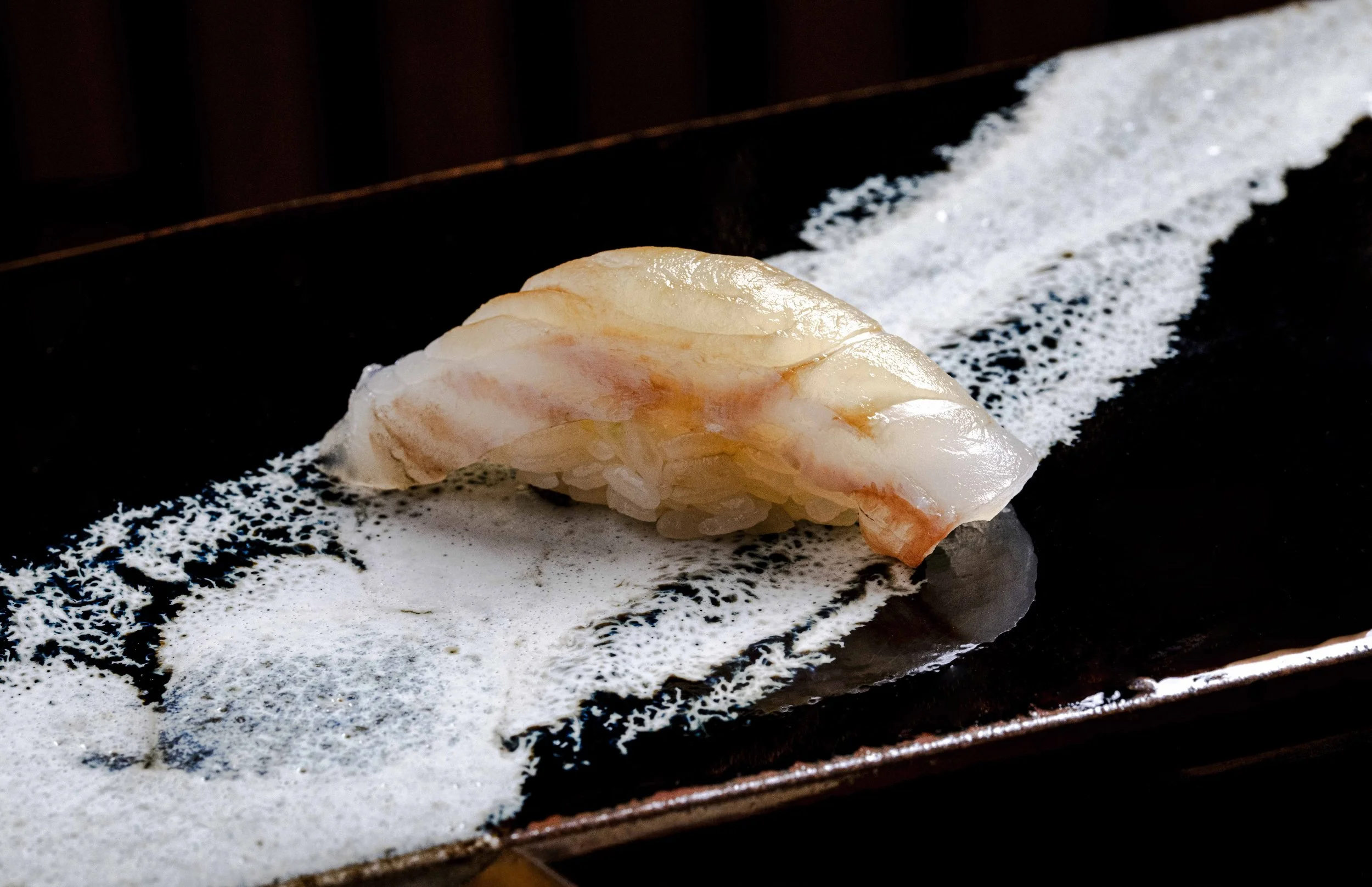
“Each piece of nigiri should be complete in itself,” he says. “The temperature of the rice, the seasoning, the cut of the fish, and the timing all come together in a single moment.”
It is a philosophy that elevates the smallest gesture into something almost architectural.
“Within one bite, there should be a sense of beginning, peak, and finish — an experience that is both precise and fleeting.”
That fleeting quality is what makes the intimacy of the room so essential. With just 16 seats, Sushi Amamoto London preserves the direct relationship between chef and guest that lies at the heart of omakase.
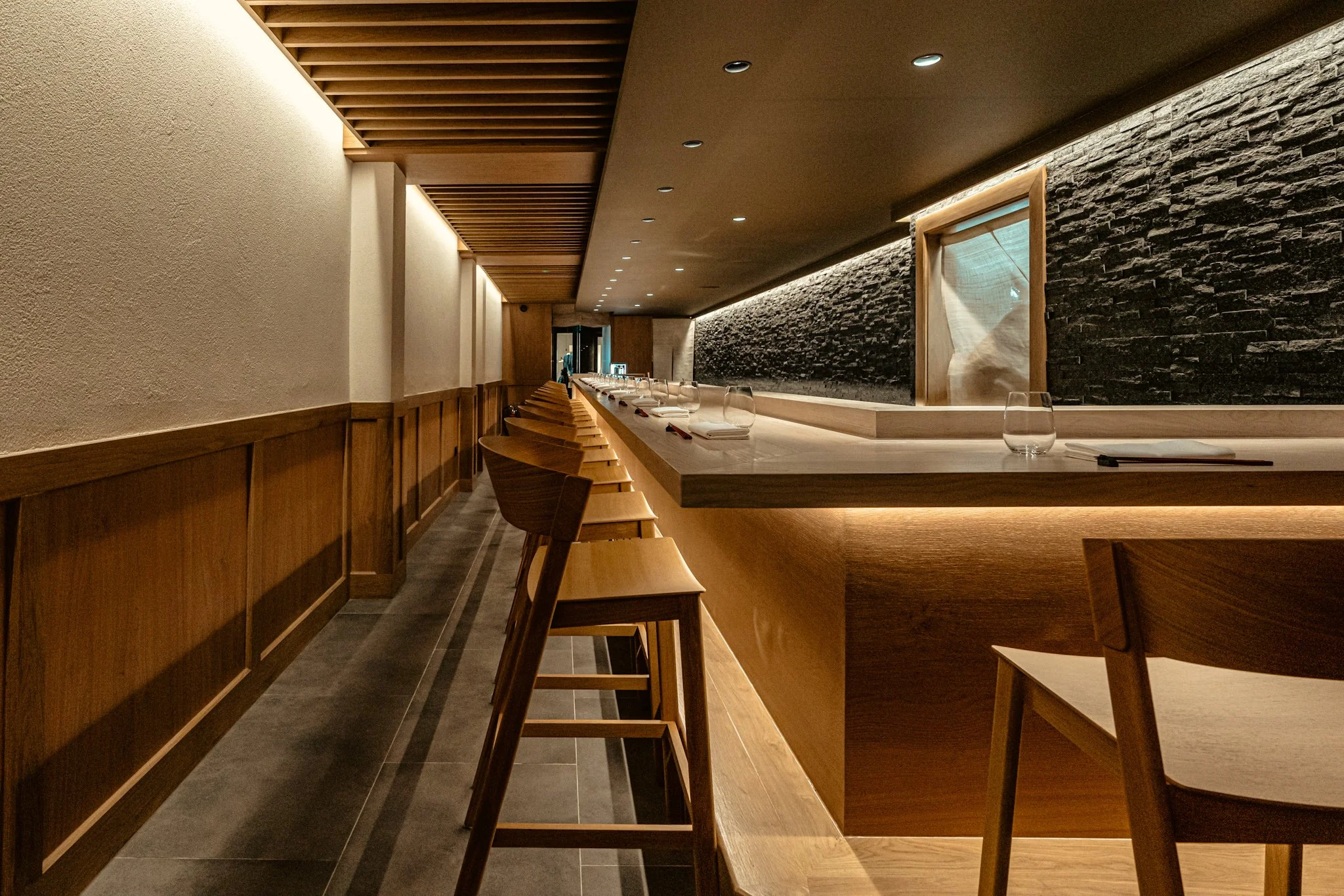
“Sixteen seats allow for a direct connection with each guest,” he says. “Sushi is not only about taste, but it is also about timing, atmosphere, and communication.”
For Amamoto, scale is inseparable from quality.
“If the scale becomes too large, that connection is inevitably lost.”
This intimacy extends beyond service into education. Much of the theatre of omakase is not performance for performance’s sake, but a means of revealing craft.
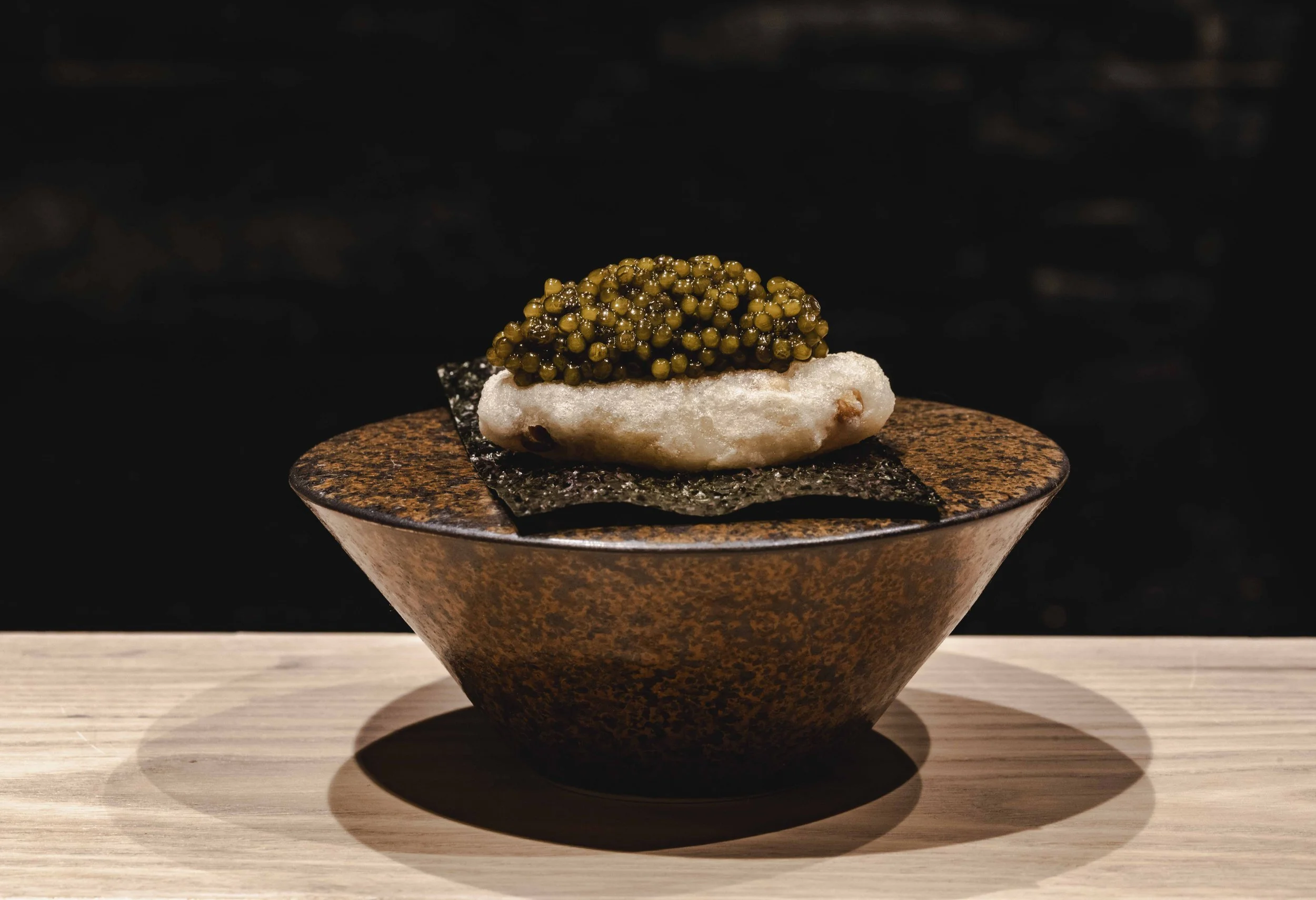
“I hope guests in London come to understand that sushi is not defined by luxury ingredients alone, but by technique and intention,” he says.
In a city where Japanese dining has become increasingly sophisticated, this feels like an important distinction.
“Even the simplest piece can become extraordinary through precision and care.”
He encourages diners to engage fully with the traditions of the counter, particularly the immediacy with which each piece should be eaten.
“Sushi is best enjoyed immediately after it is served, allowing you to experience the optimal balance of flavour and temperature.”
The London opening is also strengthened by continuity behind the pass. Head Chef Jongho Park, who remains from the Michelin-starred Taku era and trained with Amamoto in Taipei, provides a direct bridge between the chef’s original philosophy and its London execution.
“Working with Jongho Park and the team has created a strong sense of continuity between Taipei and London,” Amamoto says. “We share the same standards and discipline.”
That shared understanding extends to the restaurant’s partnership with the Leong family, whose history in London’s Japanese dining scene stretches back decades.
“For me, it was their respect for authenticity,” he says. “I felt confident they would protect the integrity of my work while helping it grow in a new market.”
In a city now home to some of the most ambitious Japanese restaurants outside Japan, Amamoto is less interested in competition than contribution.
“London already has a sophisticated and evolving Japanese dining scene,” he says. “Rather than competing, I hope Sushi Amamoto can contribute by deepening the appreciation for craftsmanship and the philosophy behind Edomae sushi.”
For At The Pass, this feels like precisely the kind of conversation worth having: not merely about what appears on the plate, but about the discipline, thought and cultural integrity that underpin it.
At Sushi Amamoto London, every detail — from the grain of the rice to the timing of the handover across the counter — is a reminder that luxury today lies not in excess, but in precision.
Book a table at Sushi Amamoto London.