
Jake Dennis: Consistency, Control and the Champion’s Mindset

There are drivers who arrive in Formula E with curiosity. Jake Dennis arrived with intent.
By the time he secured his Season 9 World Championship with a record-breaking 11 podiums, the British driver had already spent over a decade proving his adaptability across motorsport’s most demanding disciplines. But what separates Dennis isn’t simply speed. It’s calibration — the ability to read a race, manage energy, and execute without emotional waste.
Spend five minutes with him and that becomes obvious.

Born in Nuneaton, Warwickshire, Dennis entered motorsport the traditional way: karting titles, British championships, world championships. Success came early and frequently. When he stepped into single-seaters in 2011, he didn’t need long to adjust. He dominated the inaugural InterSteps Championship with eight wins and seven poles, then claimed the Formula Renault Northern European Cup at the first attempt.
The McLaren Autosport BRDC Award followed — a rite of passage in British motorsport and a marker that this was a driver destined for the upper tiers.
From Formula 3 to GP3, from Monza victories to Sepang wins, Dennis climbed methodically. He finished third in the ultra-competitive FIA Formula 3 European Championship behind Felix Rosenqvist and Antonio Giovinazzi, collecting six wins and 16 podiums in the process. There was a Macau top-ten. There was endurance racing. There was the Bathurst 12 Hour pole position and a second-place finish in one of the world’s most punishing races.
He diversified. GT racing. DTM with Aston Martin. FIA World Endurance Championship. Simulator and development duties for Aston Martin Red Bull Racing from 2018 onward.
If anything, the variety sharpened him.
Dennis admits the golden Formula One dream lingered until he was 21. Then realism — and ambition — met.
“I got to the point where I needed to start earning some money,” he says. “I wanted to make this my profession and become a professional driver.”


Formula E was gaining momentum around 2018 and 2019. The level was rising. The technical complexity deepening. Dennis saw opportunity — not as a fallback, but as a frontier.
When he got his chance in 2021, he took it.
His rookie season was immediate proof. A victory in Valencia from the front — managing energy beyond expectation. Another win at home in London. A title fight that went to the wire before a technical glitch halted the charge. Third overall, and one of the most impressive debut campaigns in the series.
But it was Season 9 that cemented his status.
Eleven podiums. Two victories. Record books rewritten. A championship secured not by flash, but by repetition.
“Consistency,” he says when asked what defined that title run. “Anyone who delivers that volume over a year is going to be champion.”
He doesn’t romanticise it. It wasn’t just his driving. “The team didn’t really make any mistakes. We had one of the biggest car advantages every session.”
That clarity is telling. Dennis understands that championships are systems, not moments.
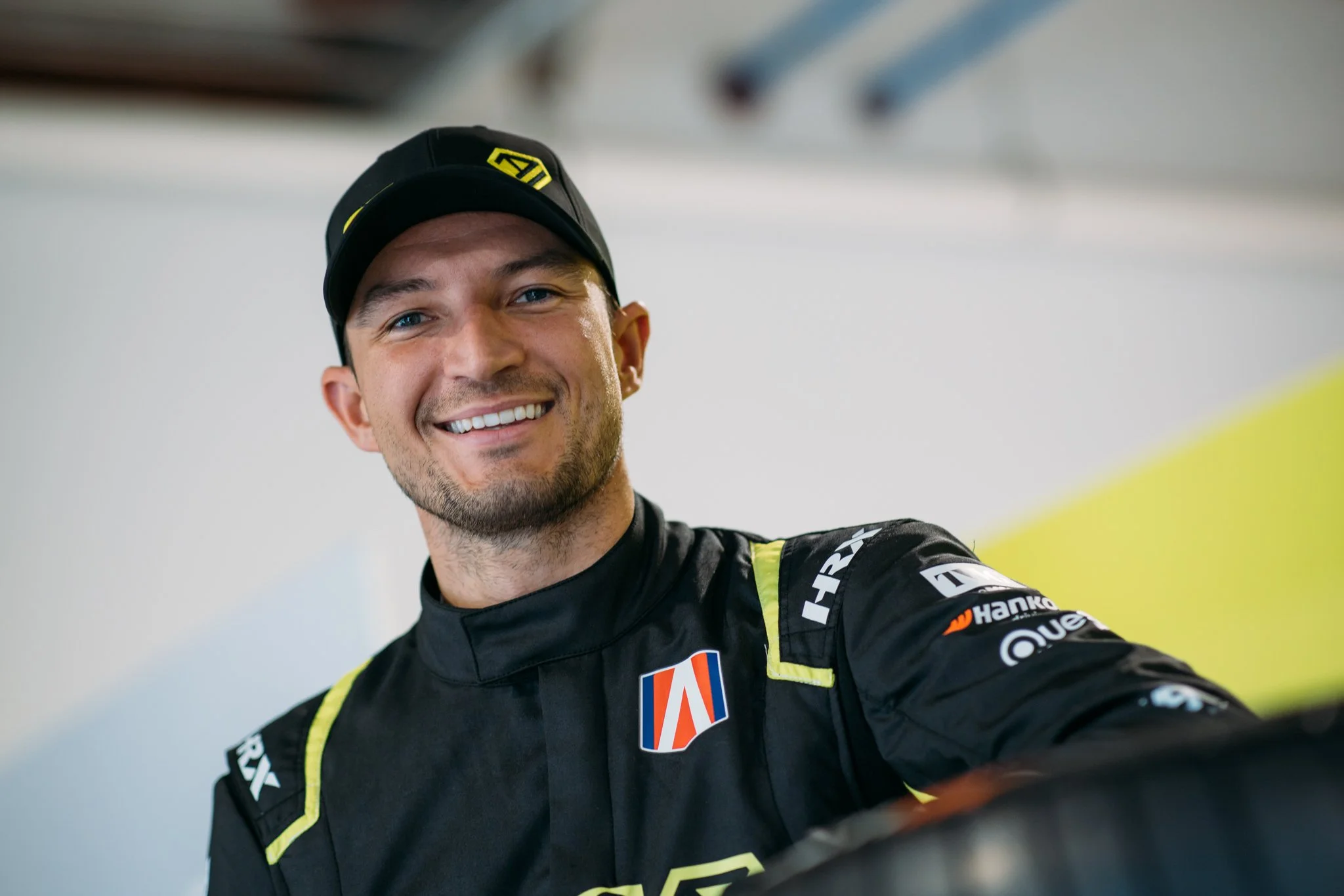
From the outside, Formula E can look chaotic — overtakes, lifting and coasting, sudden surges. Inside the cockpit, it’s closer to advanced data management at 200mph.
“I think it’s the amount of buttons we press,” Dennis says, almost laughing. “It’s honestly probably five times the amount of even Formula One.”
As a Red Bull Racing development driver, he knows what F1 demands. Formula E, he argues, is different. More software. More systems. More tactical layering.
“For the driver, it’s very much understanding your wheel and knowing where everything is off by heart.”
There’s no room for hesitation. No margin for fumbled inputs. Mental bandwidth is as important as reflex.
And that’s where Dennis thrives.
“You can be aggressive and lead from the front, or be more conservative and come through at the end. I’ve won races doing both.”
Four hundred overtakes in a race? “Absolutely mental,” he says — but it’s that unpredictability that excites him.
When asked how racing in a city like Miami changes the atmosphere, Dennis shrugs off the glamour.
“For us, it’s just a track. A piece of tarmac.”
The difference isn’t the skyline — it’s the fans.
Racing in America is growing. Engagement is rising. And as an Andretti driver — representing an American outfit — there’s added weight. Added expectation.
But expectation, for Dennis, is internal first.
“My expectation is to deliver my absolute best,” he says. “Whether it’s a race win, a fifth or a tenth — bring the best result the car is capable of.”

Formula E compresses a weekend into a day. Practice. Qualifying. Race. Often within six hours.
“It’s pretty mental,” Dennis says. “You’re bouncing from meetings to getting changed to getting ready. No real downtime.”
From a spectator’s point of view, it’s continuous action. From a driver’s, it’s relentless processing. There’s no three-day build-up. No extended reset window.
The intensity is immediate — and that suits him.
Season 10 brought highs and frustrations. A dominant win early in the year. A trio of podiums. Then a tapering of results and a seventh-place finish overall.
The Amazon documentary captured some of that tension.
“I probably came across as myself,” he reflects. “You saw me during a difficult year.”
Frustration was visible. The team had been world champions, and suddenly results were drifting.
“In Season 9, there were four races in a row where I didn’t score a single point,” he says. “I was pretty brutal with the team and myself.”
He saw morale dip. He saw the effect of intensity without cushioning.
“I’ve definitely changed how I approach bad days now. I try to be more reflective. More professional. More of a leader.”
That shift matters. Especially as he enters Season 12 not just as a former champion, but as mentor to new teammate Felipe Drugovich.
The speed hasn’t gone anywhere. The edge remains. But there’s an added layer of composure.
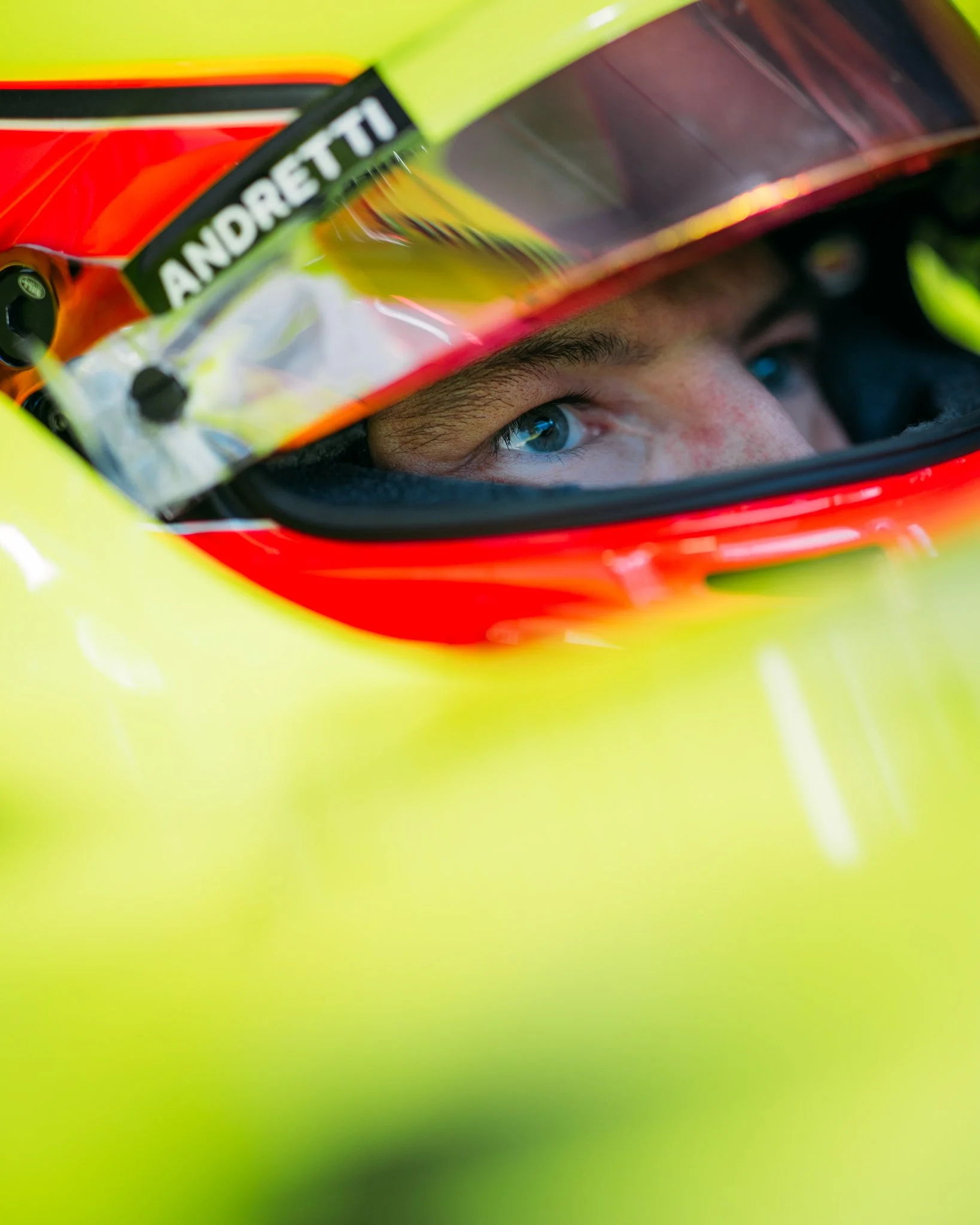
Away from the circuit, Dennis’s reset button is unexpectedly simple: golf.
“It’s been great,” he says. “Four or five hours without your phone. Just reflecting.”
Handicap? Twelve — with a goal of 9.9 by summer.
The detail feels telling. Even leisure becomes incremental improvement.
Routine, however, is elusive. Jet lag. Travel. Constant movement. In the off-season he builds structure and fitness blocks. During race months, it’s maintenance and balance.
“You need to arrive at a race weekend feeling like you’ve done your work, but not knackered.”
That equilibrium — prepared but not drained — might be the essence of his career arc.
Jake Dennis doesn’t present as flamboyant. He presents as efficient.
His championship was not an anomaly. It was engineered.
As Formula E transitions into its next era, with GEN3 Evo machinery raising the stakes again, Dennis remains anchored at Andretti — steady, experienced, recalibrated.
He once chased the golden dream of Formula One. Now, he stands as one of the defining figures in electric racing’s most competitive period.