
Formula E and the Rise of Dan Ticktum

Miami doesn’t do subtlety.
The palm trees are manicured, the paddock is polished, and somewhere between South Beach gloss and high-performance theatre sits the travelling circus that is Formula E. It is motorsport reimagined for a generation raised on instant data, sustainability rhetoric, and urban spectacle. And if you still think electric racing is quiet, polite, or remotely dull, you haven’t stood trackside as 22 GEN3 cars dive into Turn One with 400 overtakes pencilled into the afternoon’s itinerary.
Our trip to Miami was not just about the racing. It was about understanding how Formula E has evolved from experimental curiosity into a serious, technical battleground — and why one of Britain’s most scrutinised talents, Dan Ticktum, has finally found his moment within it.

From the outside, Formula E can look chaotic. Cars lift and coast. Positions shuffle. Drivers appear to surrender leads only to reclaim them when it matters. To the untrained eye, it’s frantic. To those inside the cockpit, it’s chess at 200mph.
Ticktum puts it plainly: “It’s more mentally demanding than other racing. The amount of situations you need to assess on the fly, very quickly, is higher.”
He’s not exaggerating. Unlike traditional categories where mechanical grip and outright pace dictate rhythm, Formula E requires constant software management, energy calculations, split-second attack mode deployment decisions and strategic restraint. It’s as much about when not to overtake as when to go for it.
And the contact? It happens. But these cars don’t shatter like porcelain. They rub, recover and reset — which makes for a spectacle that feels closer to street fighting than Sunday cruising.
Miami amplifies that intensity. The heat. The condensed schedule. The pressure of American showmanship. Everything moves faster. Everything feels louder, even when it technically isn’t.
Ticktum is blunt about the track layout — “not the best,” he admits — but Formula E was never built purely around romantic circuits. It’s built around cities. Around access. Around bringing the race to the audience rather than the other way around.
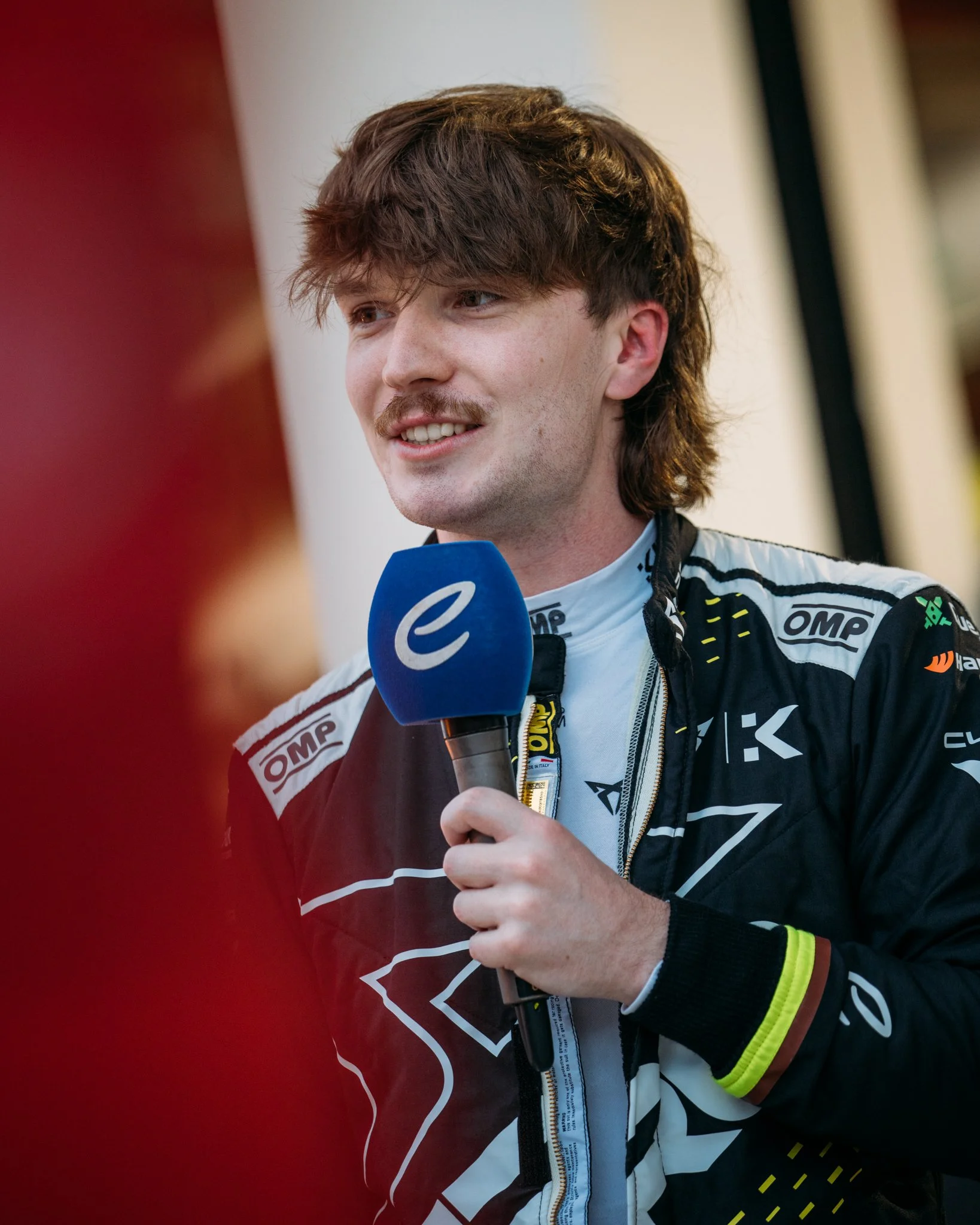
Long before electric powertrains entered the equation, Dan Ticktum was part of Britain’s conveyor belt of racing talent.
In 2013, he finished second in the CIK-FIA European karting championship — tied on points with a certain Lando Norris. The margins were microscopic. The trajectory looked obvious.
Street circuits became his calling card. The Macau Grand Prix — that notorious ribbon of unforgiving tarmac — rewards bravery as much as precision. Ticktum mastered it. He won in 2017 and 2018, beating Norris and then Callum Ilott, and joined an elite club of multiple winners that includes future Formula E champions like Antonio Félix da Costa and Edoardo Mortara.
There was more silverware to come. Runner-up in the 2018 FIA Formula 3 European Championship behind Mick Schumacher. A step into Formula 2. A win at Silverstone. A statement victory on the streets of Monaco in 2021.
On paper, it reads like the standard prelude to Formula One. Reality rarely follows the script.
Ticktum entered Formula E in 2021/22 with NIO 333 — a team operating without the depth of manufacturer firepower enjoyed by rivals. There were flashes: a first point in Rome, a strong qualifying in Monaco, a Duels appearance in Seoul. But consistency? Elusive.

Season 9 brought the new GEN3 era and a rebrand to ERT. The results didn’t surge. Seventeenth in the Drivers’ Championship doesn’t headline press releases.
Season 10 was marginally steadier — a career-best fourth at Misano — but the narrative hadn’t shifted.
Ask Ticktum about resilience and he doesn’t romanticise it. “The first three years, being in the worst car, were tough,” he says. “Very taxing on my pride.”
There’s a particular pressure that arrives when racing becomes your job rather than your dream. You’re no longer chasing potential; you’re delivering output. Formula E, Formula One, endurance racing — these are the categories where drivers are paid professionals. Expectations are real. Patience is finite.
For a driver often cast as motorsport’s disruptor-in-chief, the waiting was uncomfortable.
Season 11 changed everything.
The transformation from ERT to CUPRA KIRO wasn’t cosmetic. It was structural. Porsche powertrain at the rear. Investment at the front. Sponsorship secured. Stability restored.
“The fact that we’ve got a Porsche powertrain in the back of our car,” Ticktum says, almost understated. “The team grew massively. We’ve got a competitive car now. That makes a massive difference.”
Momentum followed.
A debut podium — third in Tokyo. The release was visible. The first win — Jakarta — felt inevitable by that point. Less breakthrough, more confirmation. Then pole position at home in London (even if a penalty shuffled the order later).
It became a season of firsts. More importantly, it became a season of proof.
Ticktum had always had the speed. What he now had was machinery to match it.
Modern drivers race on two stages: the circuit and the screen.

Ticktum’s appearances in the Formula E Amazon documentary series painted him as the sharp-edged antagonist. He’s candid about it.
“I was definitely edited to be the controversial, bad-boy character,” he says. “They try and shape a narrative. The second season was more balanced.”
There’s a certain irony here. The very traits that made him a headline magnet early in his career — intensity, refusal to sugar-coat, visible frustration — are also the traits that sustained him through lean seasons.
Season 11 suggested evolution rather than reinvention. The edge remains. The volatility feels controlled. Winning does that.
Back in Miami, the sun dips, and the paddock exhales after another compressed race day. Formula E weekends move quickly — practice, qualifying, race — often within hours. There’s little time to overthink. Which suits Ticktum.
“From a spectator’s point of view, there’s lifting and coasting, a lot of overtaking, cars moving around,” he says. “It can be quite exciting to watch.”
It is. Particularly when a driver with something to prove is in the mix.
Ticktum continues with CUPRA KIRO for 2025/26, armed with continuity — same team, same powertrain philosophy, same upward curve. In a championship defined by fine margins, stability is currency.
Formula E itself sits at an inflection point. The technical sophistication has increased. Manufacturer involvement deepened. The racing — unpredictable but increasingly refined — is carving its own identity separate from Formula One rather than in its shadow.
And perhaps that’s where Ticktum fits best.
Not as the nearly-man of junior formulas. Not as the caricature of a documentary edit. But as a driver who endured the long apprenticeship and emerged sharper for it.
Season 11 will be remembered as his breakthrough. Miami felt like confirmation that it wasn’t an anomaly.