
EXCLUSIVE: Leo Suter on Becoming Inspector Lynley

Full look - Thom Sweeney
Seventeen years after Inspector Lynley last appeared on British television, the actor reflects on legacy, class and playing a detective defined by quiet authority.
Words - Tajinder Hayer
Photography - David Reiss
Styling - Grace Gilfeather
Grooming - Michele Baylis
Seventeen years after Inspector Lynley last appeared on British television, the character returns in a new BBC One adaptation of Elizabeth George’s bestselling novels, written by Steve Thompson and produced by Playground Entertainment. The four-part series marks a contemporary reintroduction of DI Thomas Lynley, a role now led by Leo Suter.
For Suter, joining a series with such an established readership was both reassuring and weighty. “It’s a special thing – to be able to join a show which already has a devoted following,” he says. “That brings with it a reassurance that the source material is really solid, and also a responsibility to do justice to the previous iterations of the story.”
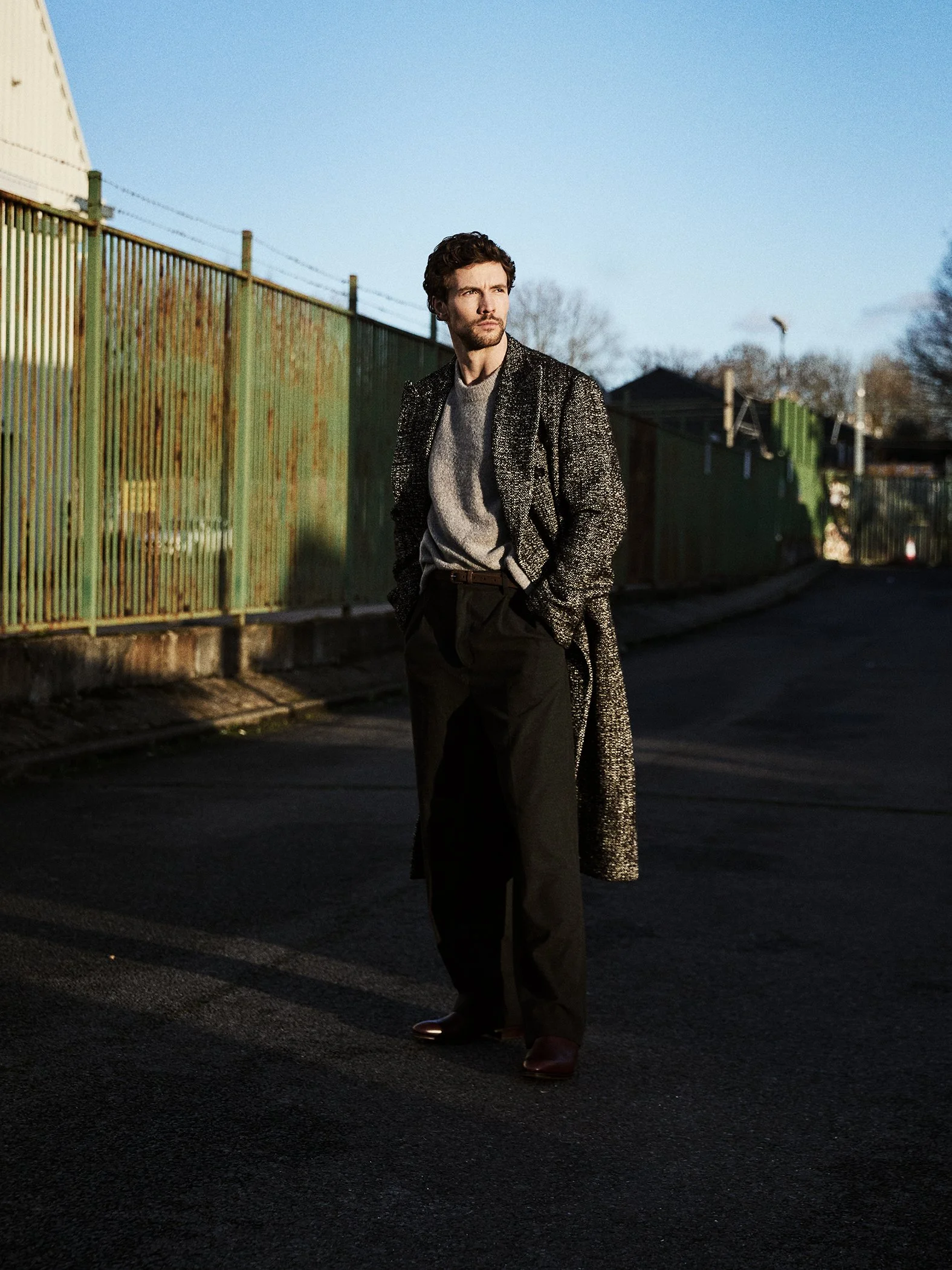
Overcoat & Trousers - Dolce & Gabbana, Knit - Soft Goat, Boots - George Cleverley
“The thing I found interesting about Lynley was his choice to turn his back on the aristocratic road-map ahead of him.”
What anchored his decision to take on the role was an immediate sense of connection to the character. “When I first got the character breakdown for Lynley I could immediately see crossovers between Tommy Lynley and myself – we both went to Oxford for example.” More significantly, Suter was drawn to Lynley’s decision to reject expectation. “The thing I found interesting about his character was his choice to turn his back on the aristocratic road-map ahead of him, and turn instead to a far less certain life as a detective in the police-force. It was not a typical path for him to have chosen.”
That sense of choosing uncertainty resonated personally. “When I left university, there was a well trodden career path ahead of me of a life in the law or the city or maybe more academia, but instead I chose to pursue a career as an actor – which is also an uncertain and less conventional route.” For Suter, that parallel clarified his relationship to the role. “That convinced me that I had something interesting to offer to this role and to bring something fresh to an updated version of the show.”
Class is a defining element of Thomas Lynley, but in this iteration it is treated with restraint. “Lynley’s aristocratic background is clearly a central tenet of the show. It’s a key part of the antagonism between him and Havers,” Suter explains. Early discussions with director Ed Bazlegette focused on how that background should register on screen. “We both felt that Lynley’s class needed to seep through effortlessly but it couldn’t be something too overt.”
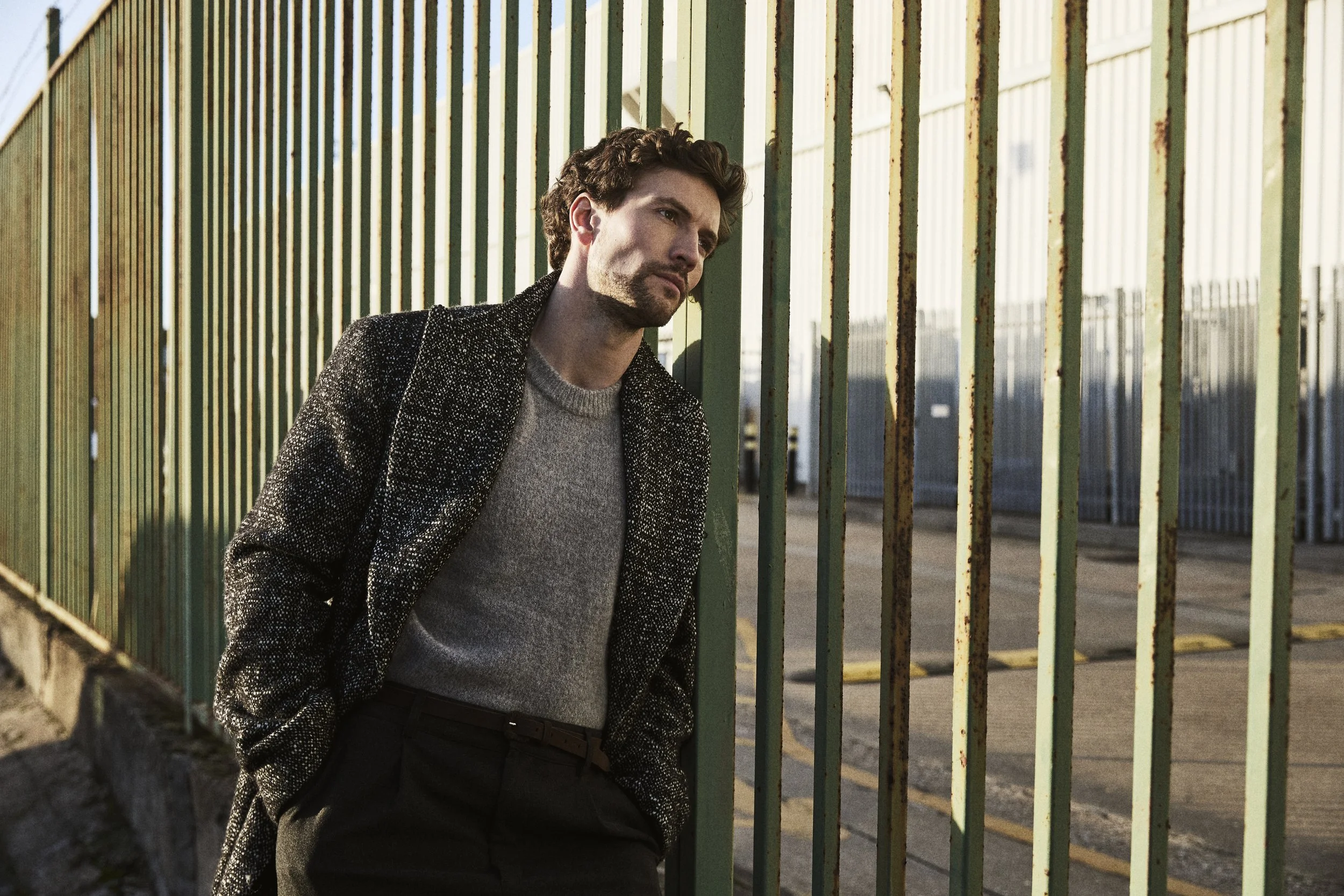
Overcoat & Trousers - Dolce & Gabbana, Knit - Soft Goat
Placed in a modern policing environment, the character required adjustment. “In the present day, we felt Lynley would need to temper down his aristocratic background else he would be laughed out of the police station. So the accent is deliberately not a heightened or clipped RP.” Instead, class emerges gradually. “It takes Havers’ prodding and poking to tease out of him the clues of his aristocratic home life.”
With Elizabeth George’s novels having sold over forty million copies worldwide, audience expectation is unavoidable. Suter sees that tension as productive rather than limiting. “I think it’s possible to feel both of those things. And actually they feed into each other.” Acknowledging the original BBC series, he is clear about the need for distinction. “Nat Parker and Sharon Small did a fantastic job bringing these characters to life 17 years ago. But there wouldn’t be much fun in trying to make a carbon copy of their work.”
Instead, the focus was on reinvention. “It becomes really important that I make a conscious effort to make this version of Lynley entirely my own.” Context plays a role in that shift. “The world that I am bringing him into, the modern Britain of 2025, is so different. And it’s really interesting and fun for the fans to see this beloved character brought up to date.”
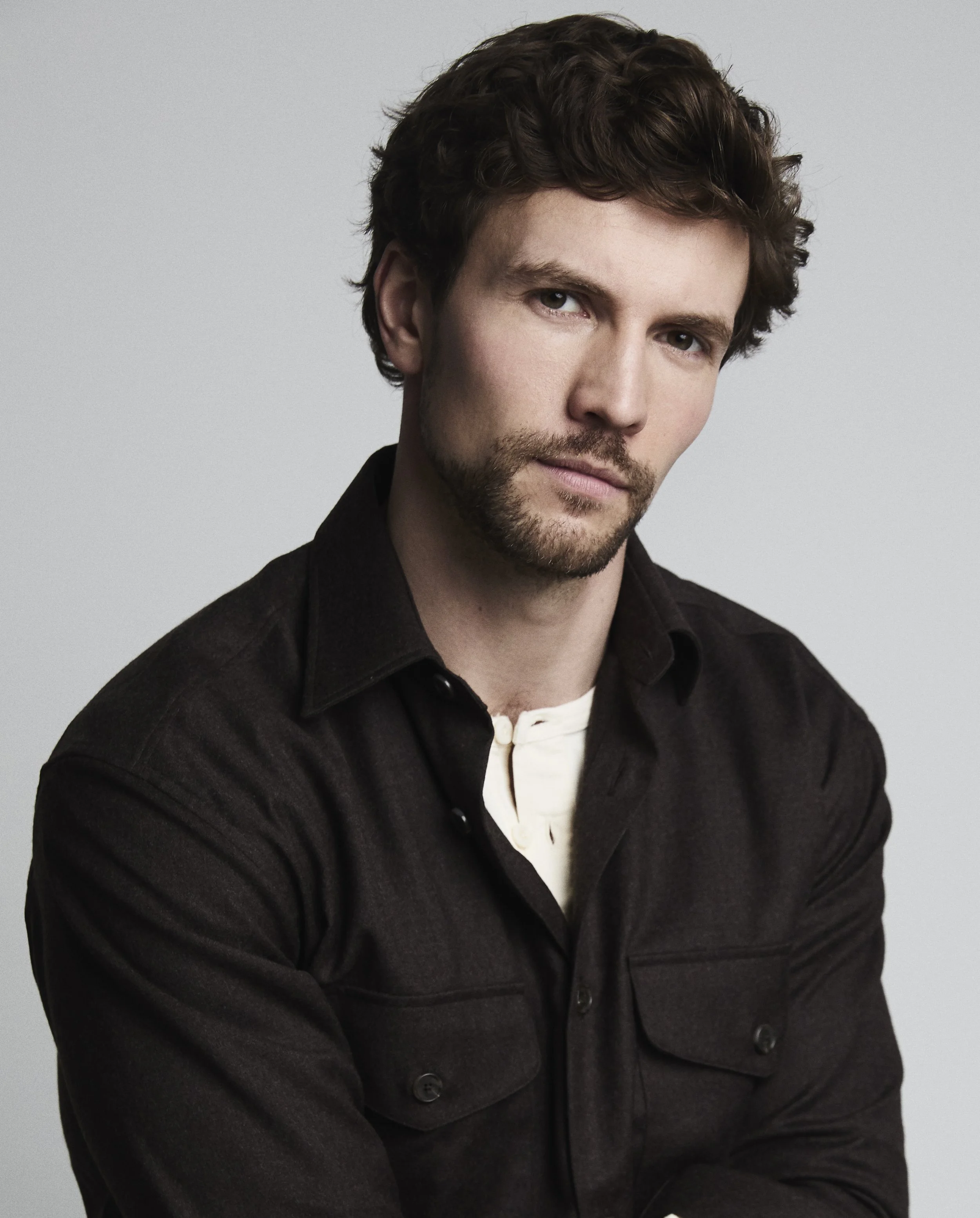
At the centre of that modernisation is Lynley’s partnership with Sergeant Barbara Havers, played by Sofia Barclay. “That mismatch is really important for the show,” Suter says. “It was great fun to be able to play those scenes with Sofia, where Havers and Lynley can really get under each other’s skin.”
Their dynamic rests on ideological opposition as much as personality. “I think it’s always compelling to see two characters, who have a total conviction in their beliefs, challenge each other and hold each other to account – especially considering the different world views that Lynley and Havers bring to the table.” Off screen, the collaboration was equally positive. “Working with Sofia was really such a treat – she is a terrific actor but also a very warm and kind person who makes coming to work everyday really special.”
“Lynley can dominate a room quietly — he doesn’t have to scream and shout to get his point across.”
The tone of Lynley is shaped by its creative team as much as its cast. “We were blessed with a wonderful creative team to help build this show,” Suter says. Of Steve Thompson’s scripts, he notes: “I think Steve does a fantastic job of adapting Elizabeth George’s novels to screen. It makes one’s life as an actor so much easier to have scripts that are rich with character and plot.” Playground’s approach to casting also left an impression. “It was always sad to see the previous episode’s cast of actors leave, and then a treat getting to know and work with the next band of actors to join us.”
As the titular detective, Suter was conscious of the responsibility of narrative clarity. “You really are at the head of the pack and you get to lead the audience through the intricacies of a knotty crime puzzle.” Preparation was essential. “I made sure that I really understood how the bits of logic connected so that the crimes all made sense.” That groundwork allowed for precision in performance. “That allows you to have some fun figuring out where the red herrings are and knowing when and how to bring the audience on the journey with you – deciding when to land the eureka moment.”
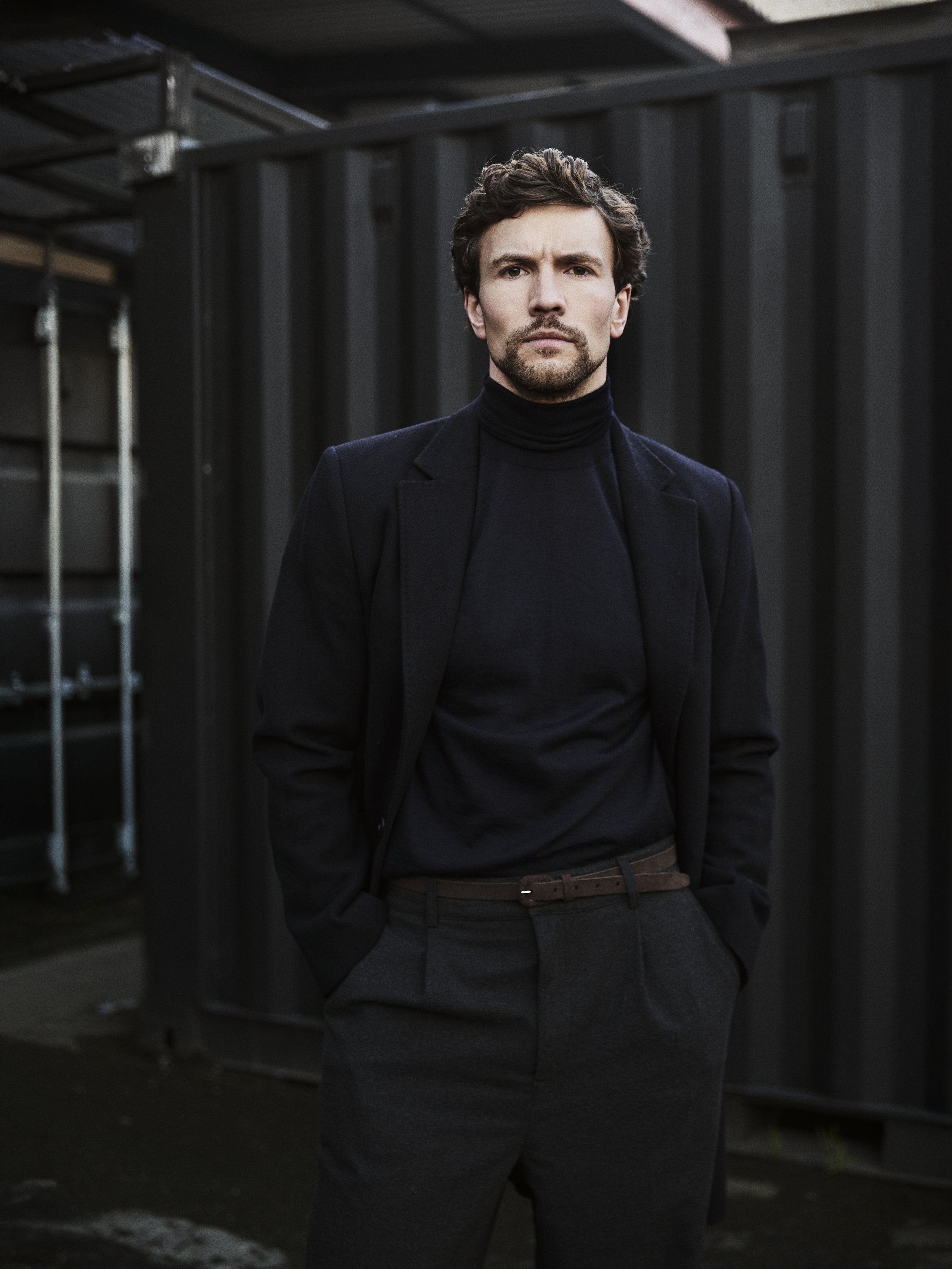
Jacket & Trousers - Thom Sweeney, Belt - Giorgio Armani, Knit - John Smedley
Lynley’s authority, however, is rarely forceful. “He can dominate a room quietly,” Suter says. “The private school education and aristocratic background gives him an effortless confidence that means he doesn’t have to scream and shout to get his point across.” This makes moments of disruption stand out. “Breaking that restraint and subtlety then becomes really meaningful.” He points to scenes with DI Nies, played by Danny Mays. “The rare glimpses where we see Lynley get angry with his superior… become all the more powerful.”
Alongside filming Lynley, Suter recently appeared on stage in Michael Grandage’s adaptation of The Line of Beauty at the Almeida. The shift back to theatre sharpened the contrast between mediums. “There is something really special about acting on stage. It is an unfiltered process – there is no postproduction, editing, etc.” The immediacy is part of the appeal. “The performance you give on stage is the performance the audience receives.”
Theatre also reconnects him to his beginnings. “I became an actor because I loved theatre at school and at university – so it was wonderful to go back to the stage and remind myself of that thrill.” Rehearsal time is another distinction. “Over the course of a few weeks of theatre rehearsals you can really get into the gritty detail of each line.” Television, by contrast, moves at pace. “There is a schedule to stick to, so you are forced to rattle through the story. Though it must be said, that brings its own, unique thrill too.”
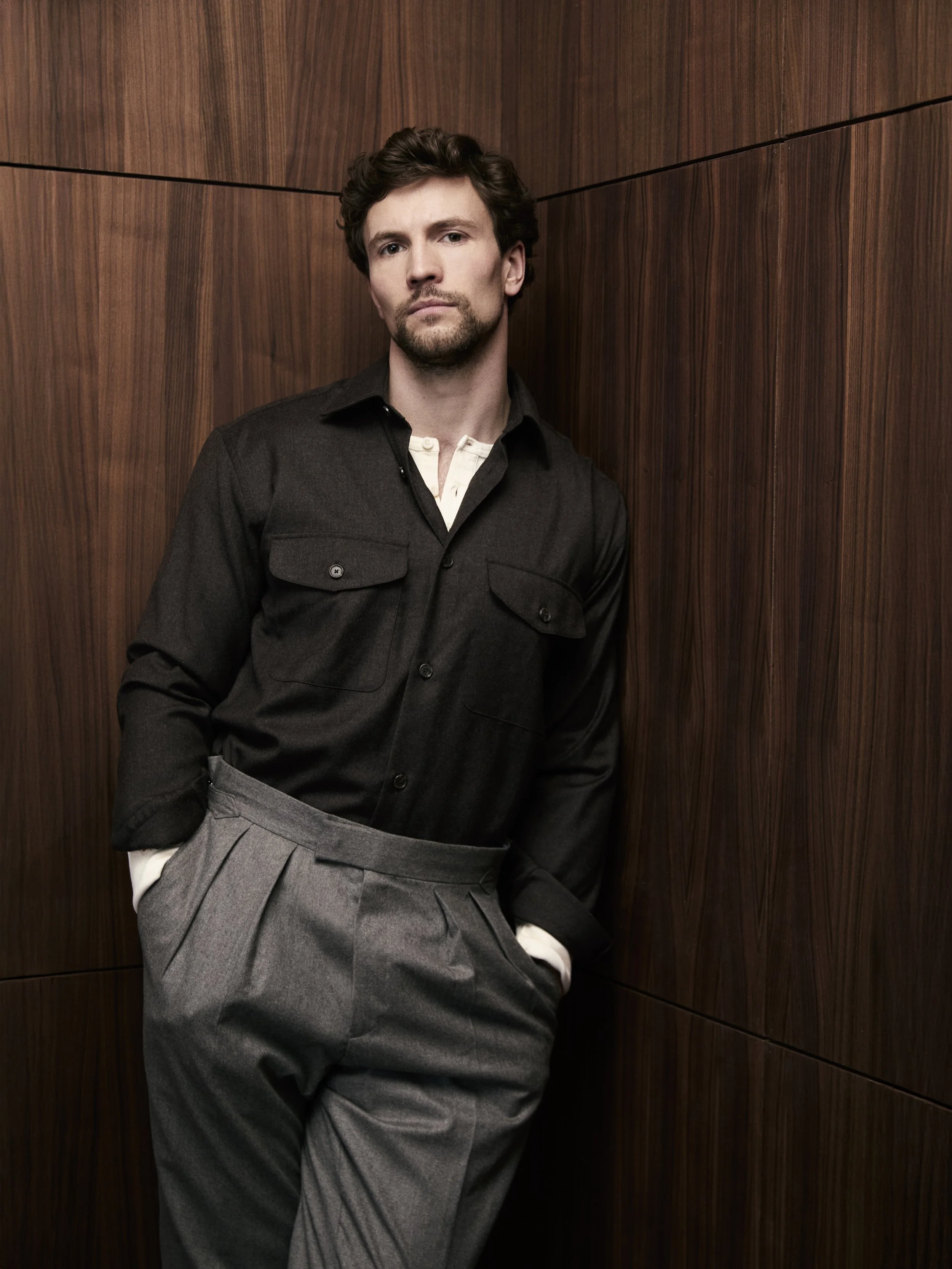
“I really respected Lynley as a character. He is incredibly noble and devoted.”
Across projects ranging from Vikings: Valhalla to Victoria and now Lynley, Suter consistently returns to the importance of writing. “Certainly a good script is a crucial starting point. If that foundation stone isn’t there, it’s very hard to come back from.” He points to dialogue as a key marker. “Good dialogue is so hard to fake, so when you see the real thing it immediately leaps out at you.” Reflecting on Vikings: Valhalla, he recalls the level of detail on the page. “In many instances each swing of an axe was already thought through and written on the page.”
His recent and upcoming projects span genres and tones, something he views as one of the privileges of the profession. “One of the joys of being an actor is moving from the different worlds of each project.” Looking back, he notes the shifts with amusement. “I’ve certainly had different phases in my career… then I had a few years bulking up and growing my hair out as a viking; and I’m now back to being a clean cut detective who wears a smart suit and drives a sports car.”
As Lynley introduces him to new audiences while reconnecting others with a familiar character, Suter’s hope for the role is direct. “I really enjoyed playing Lynley – I really respected him as a character.” He pauses on what defines him. “He is incredibly noble and devoted and I think he has a lot of admirable qualities.” And, ultimately, “I hope audiences fall in love with him the same way I did.”
Follow Leo Suter on Instagram.
The new season of Lynley starts on BBC One at 8:30pm on 5 January 2027.