
SINO: The New Taste of Ukraine in Notting Hill
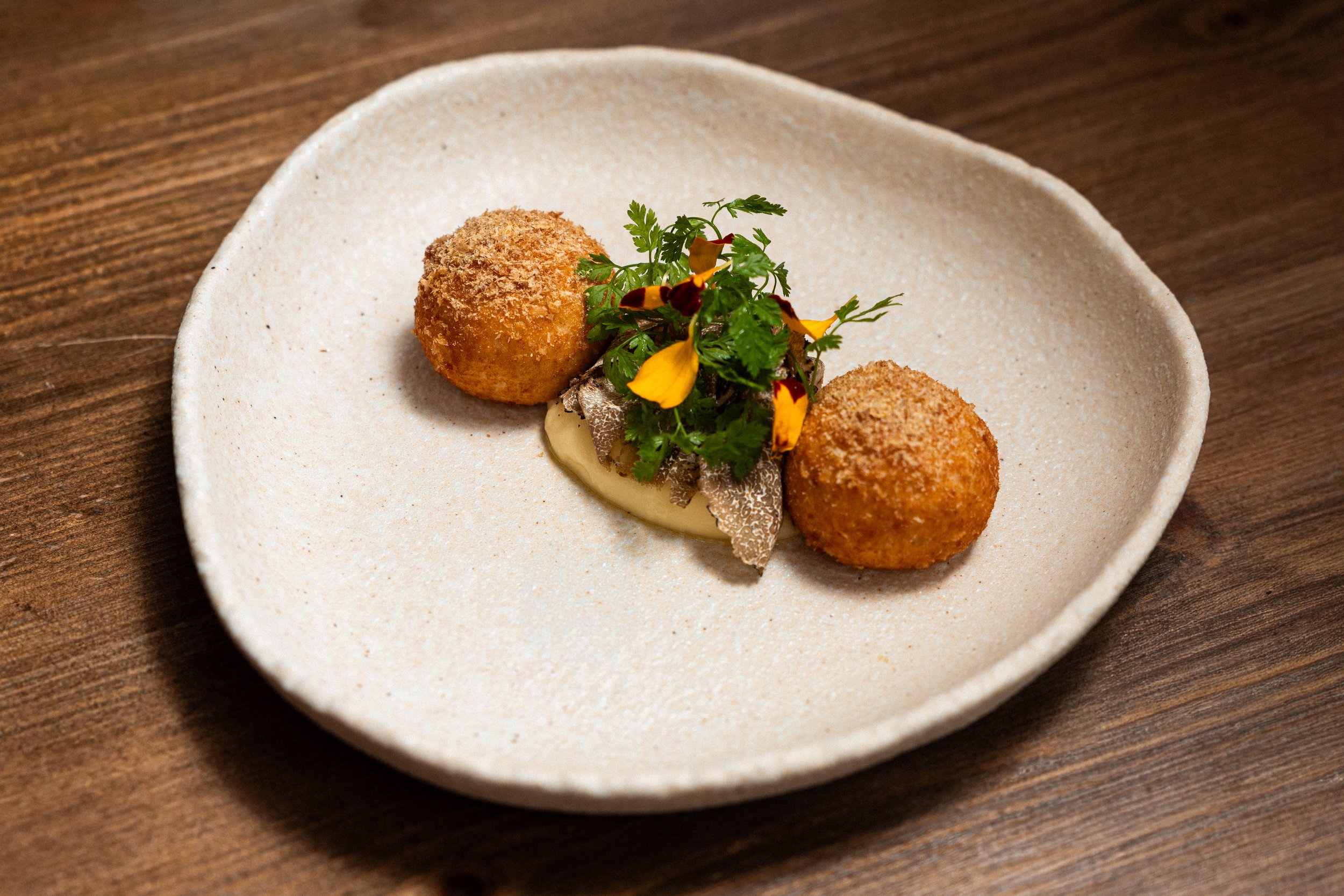
In Notting Hill, chef Eugene Korolev is reimagining the flavours, memories and landscapes of Ukraine — bringing a refined new expression of Ukrainian cuisine to London.
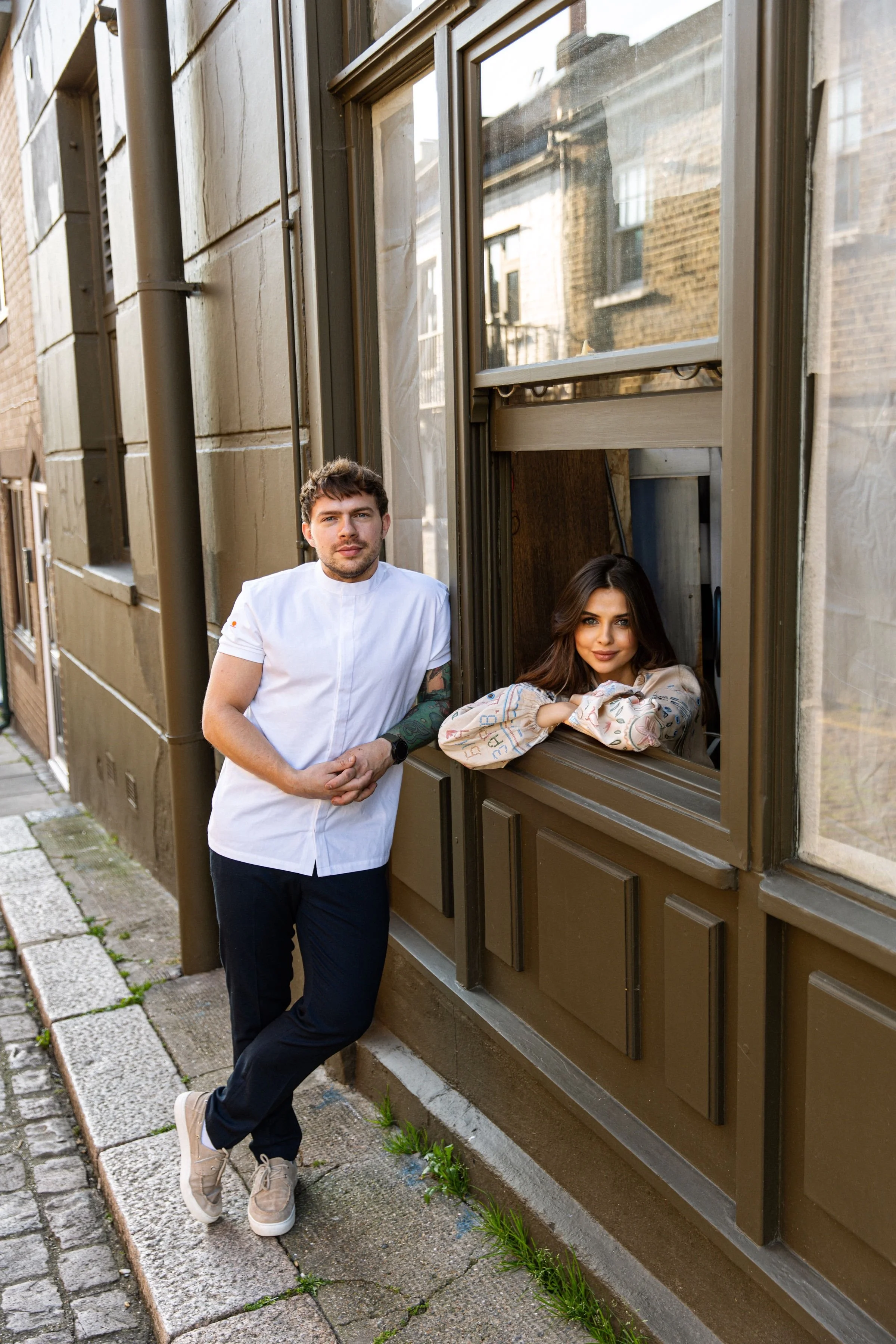
There are restaurants that announce where they come from, and there are restaurants that make you understand it. SINO, the Ukrainian-inspired restaurant from Polina Sychova and chef Eugene Korolev in Notting Hill, belongs firmly to the latter.
Opened in May 2025, SINO is an attempt to introduce London to a more expansive, contemporary vision of Ukrainian cuisine: one that respects tradition without being constrained by it, and one that looks beyond the familiar shorthand of borscht, dumplings and Chicken Kyiv to explore the extraordinary regional diversity of a country whose food is shaped by fertile plains, forests, mountains and the Black Sea coast.
Pronounced "see-no", the restaurant takes its name from the Ukrainian word сіно, meaning hay. It is an understated choice, but an evocative one. Hay carries associations of harvest, countryside and summer; of Ukraine's agricultural heritage and its connection to the land. Those associations run through SINO, both in the cooking and in the room itself.
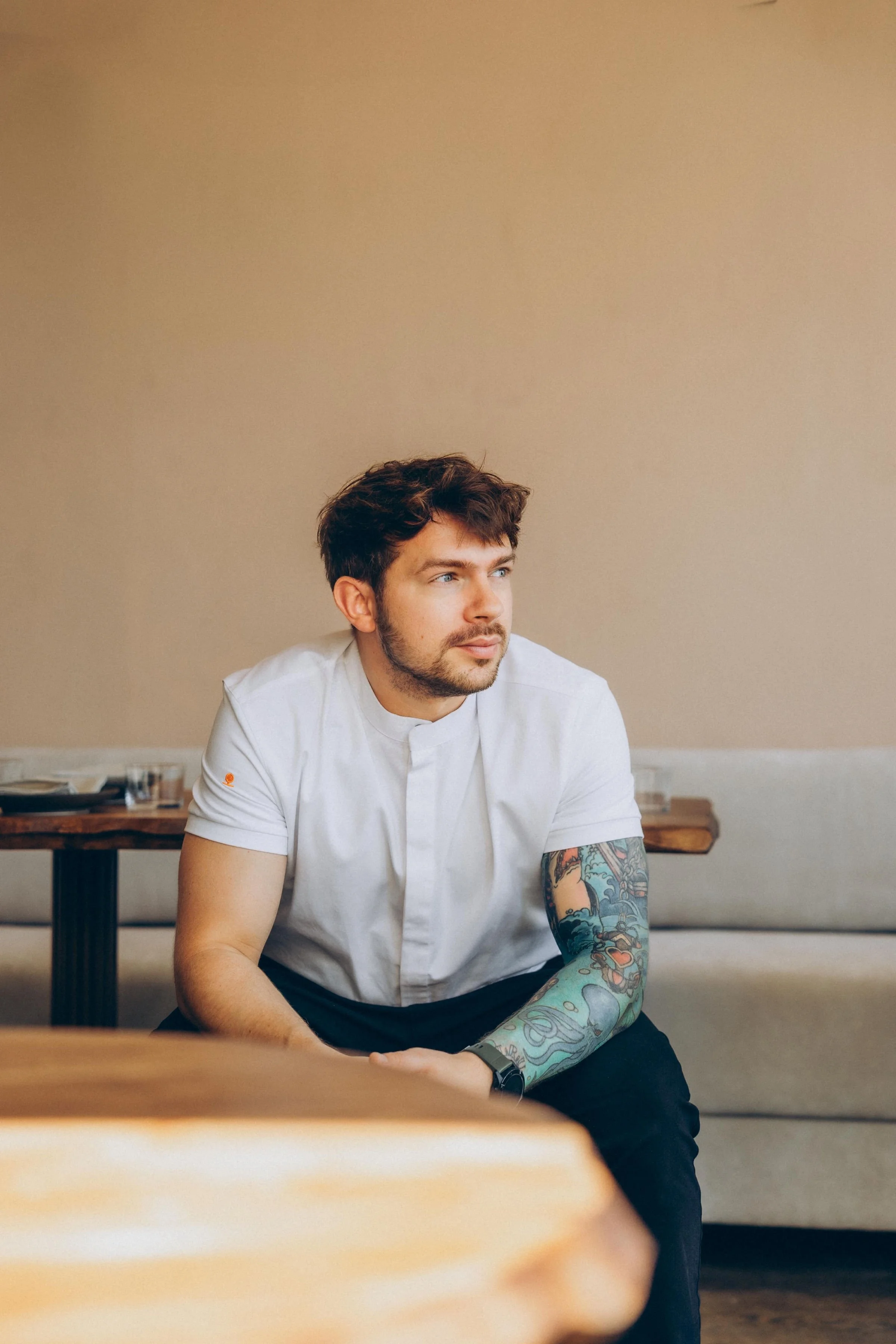
For Korolev, hay is also deeply personal.
"Hay immediately takes me back to childhood summers in Ukraine," he says. "It's the smell of the countryside, long days spent outdoors and the connection between people and the land."
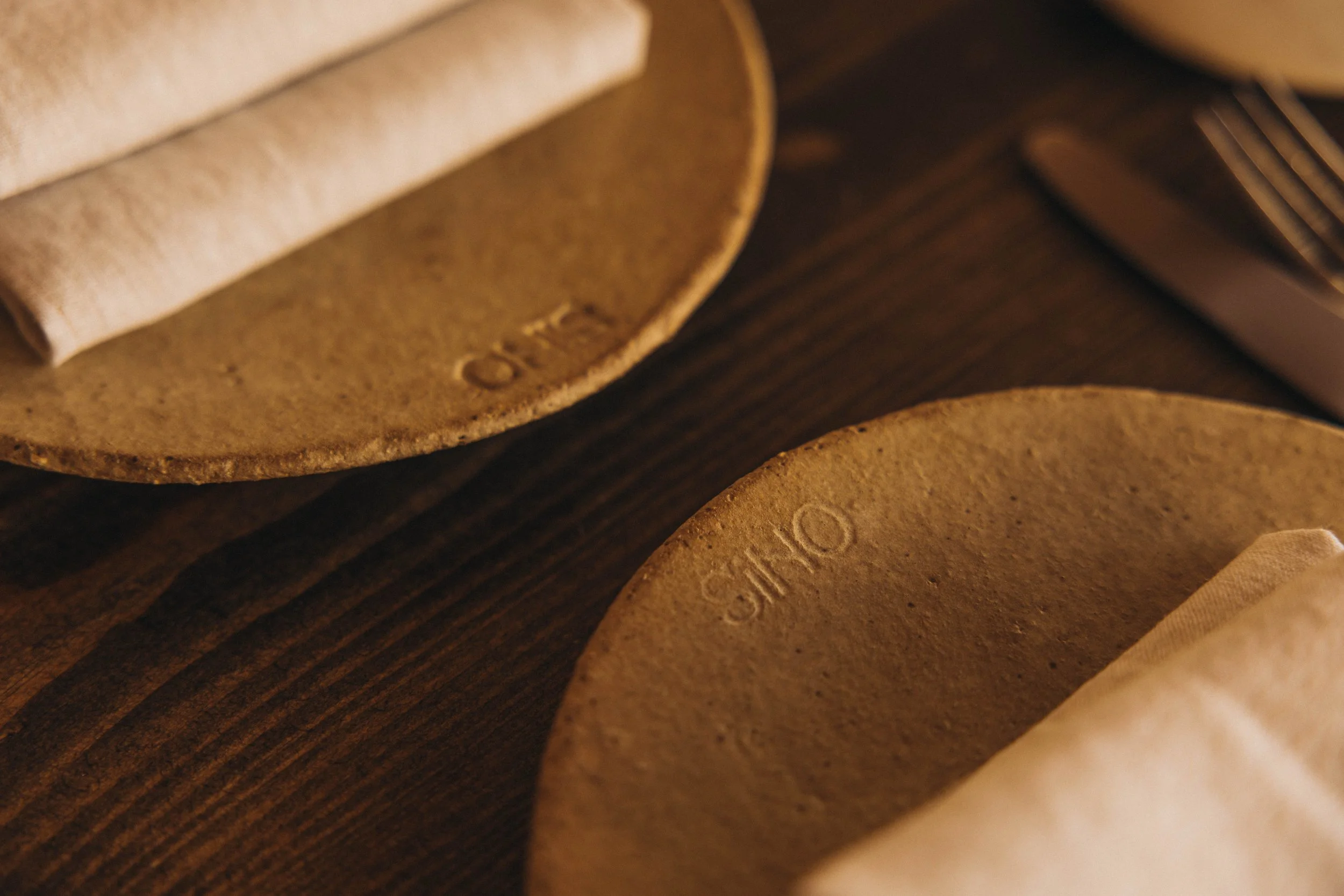
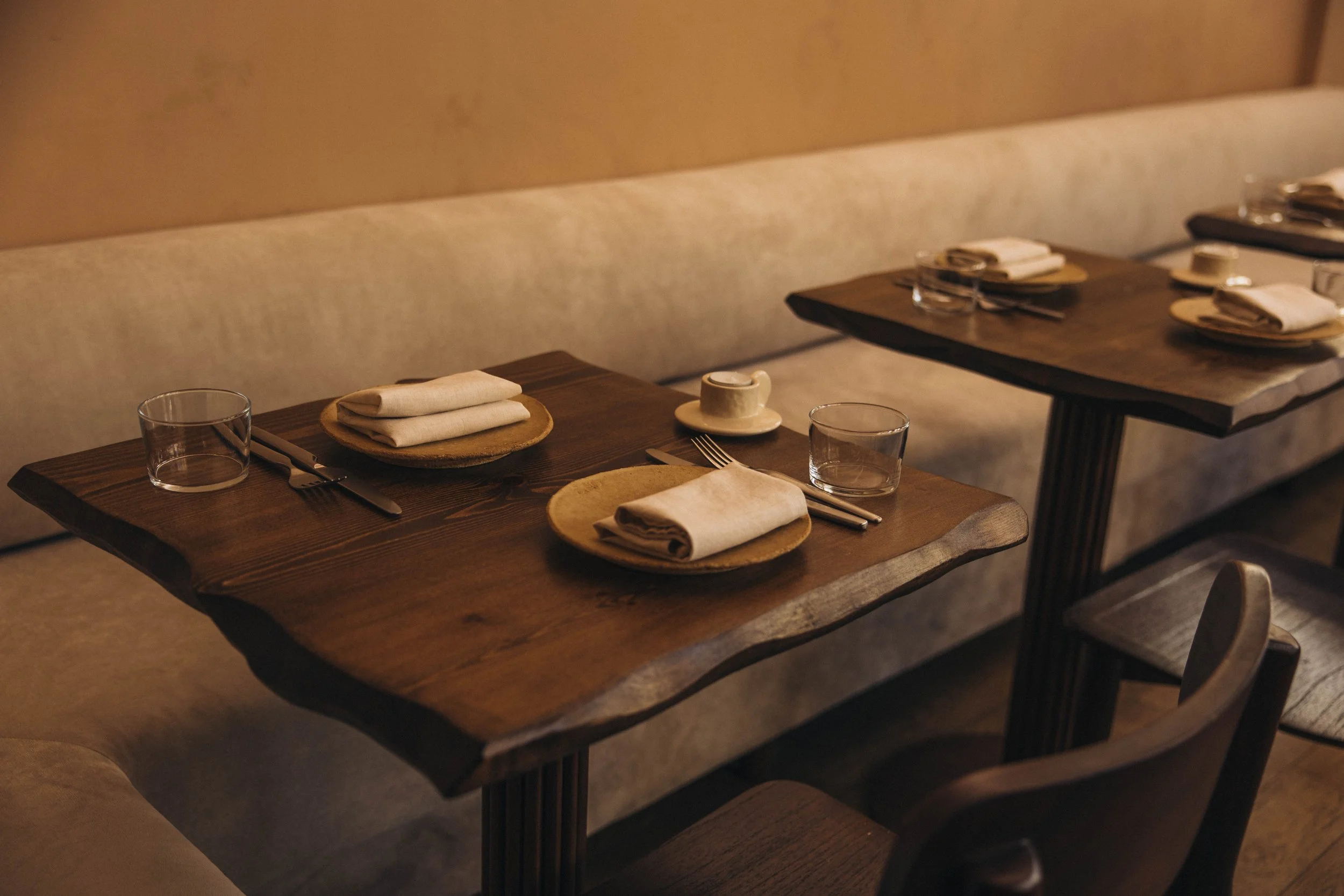
That sense of place is central to the restaurant. Rather than relying on overtly folkloric decoration or easy national stereotypes, SINO has been conceived as a contemporary expression of Ukrainian culture. Polina has overseen an interior filled with natural textures and subtle references to the country's landscape. Different Ukrainian clays feature on the walls, while sculptural, handmade lighting comes from Ukrainian specialist Clayp. Tableware comes from Saga, an artisanal Ukrainian ceramics studio whose work draws on the natural world.
The result is a 52-cover restaurant that feels modern and distinctly rooted at the same time: a 30-cover main dining room, a ten-cover private dining room and a small terrace, all carrying echoes of the rural landscape that inspired the name.
That balance between modernity and heritage is even more apparent on the plate.
Korolev is from Dnipro, in eastern Ukraine, and has spent much of his career developing a culinary language that is both international and deeply connected to home. His CV includes some of Europe's most respected kitchens, among them two-Michelin-starred Vendôme near Cologne, Poland's first Michelin-starred restaurant Atelier Amaro and Paris's one-Michelin-starred Benoit. In 2019, he represented Ukraine at the Culinary Olympics, while he now serves as president of Bocuse d'Or Ukraine.
Those experiences have given him an appreciation for precision, technique and discipline. But at SINO, technique is deliberately placed in service of the ingredient rather than the other way around.
"Working in Michelin-starred kitchens taught me that the ingredient should always be at the centre of the plate," Korolev explains. "Technique is incredibly important, but it should never become the story itself."


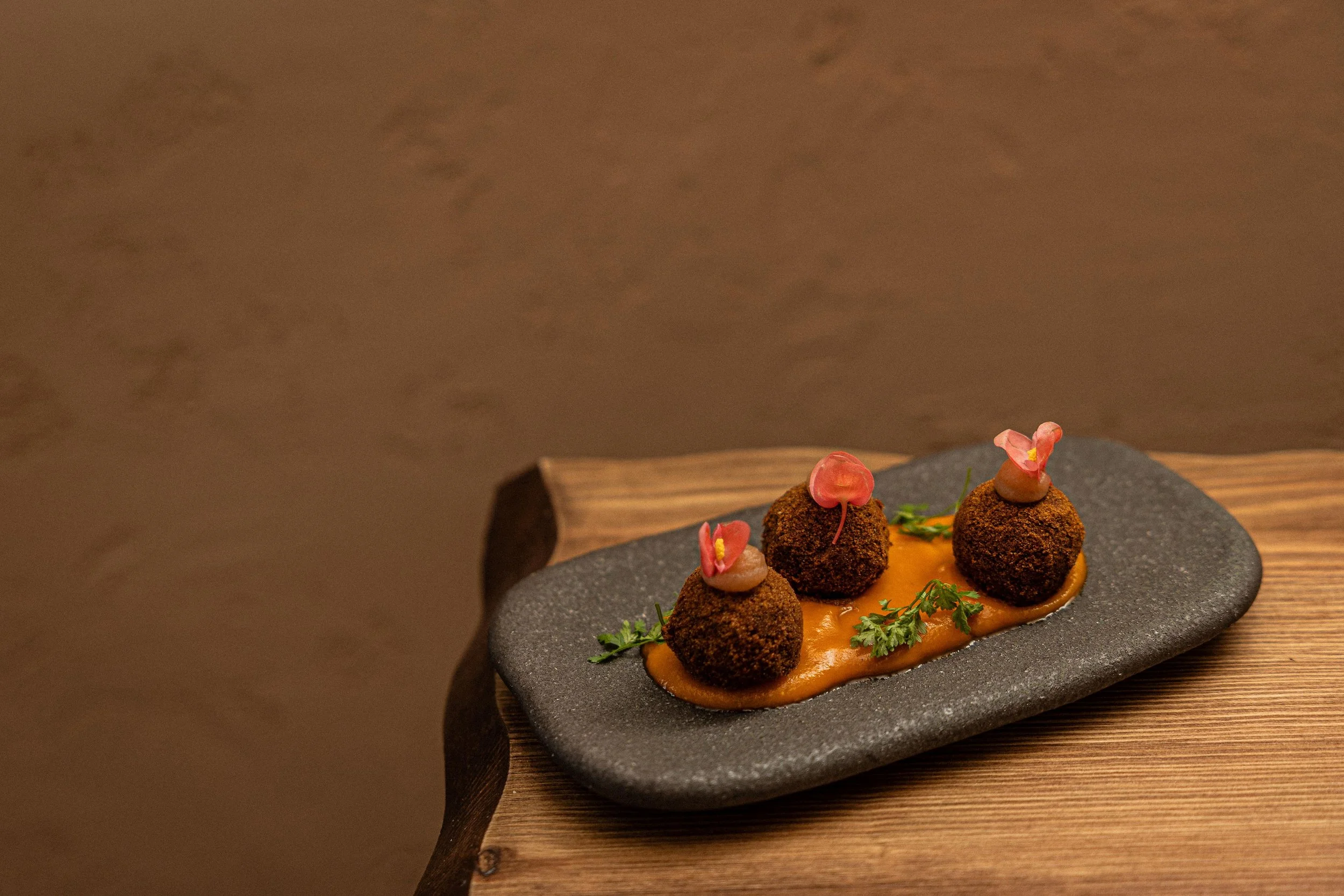
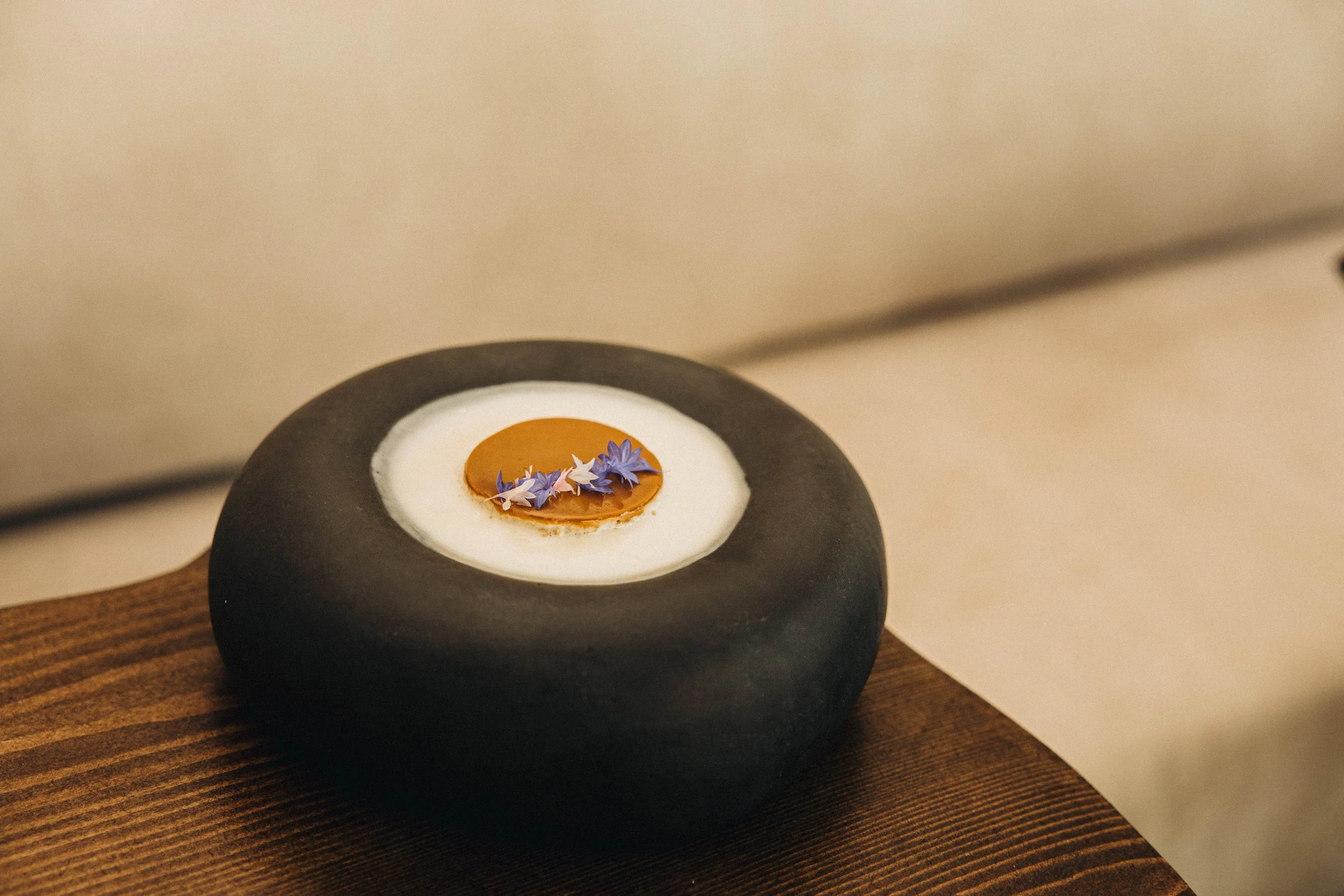
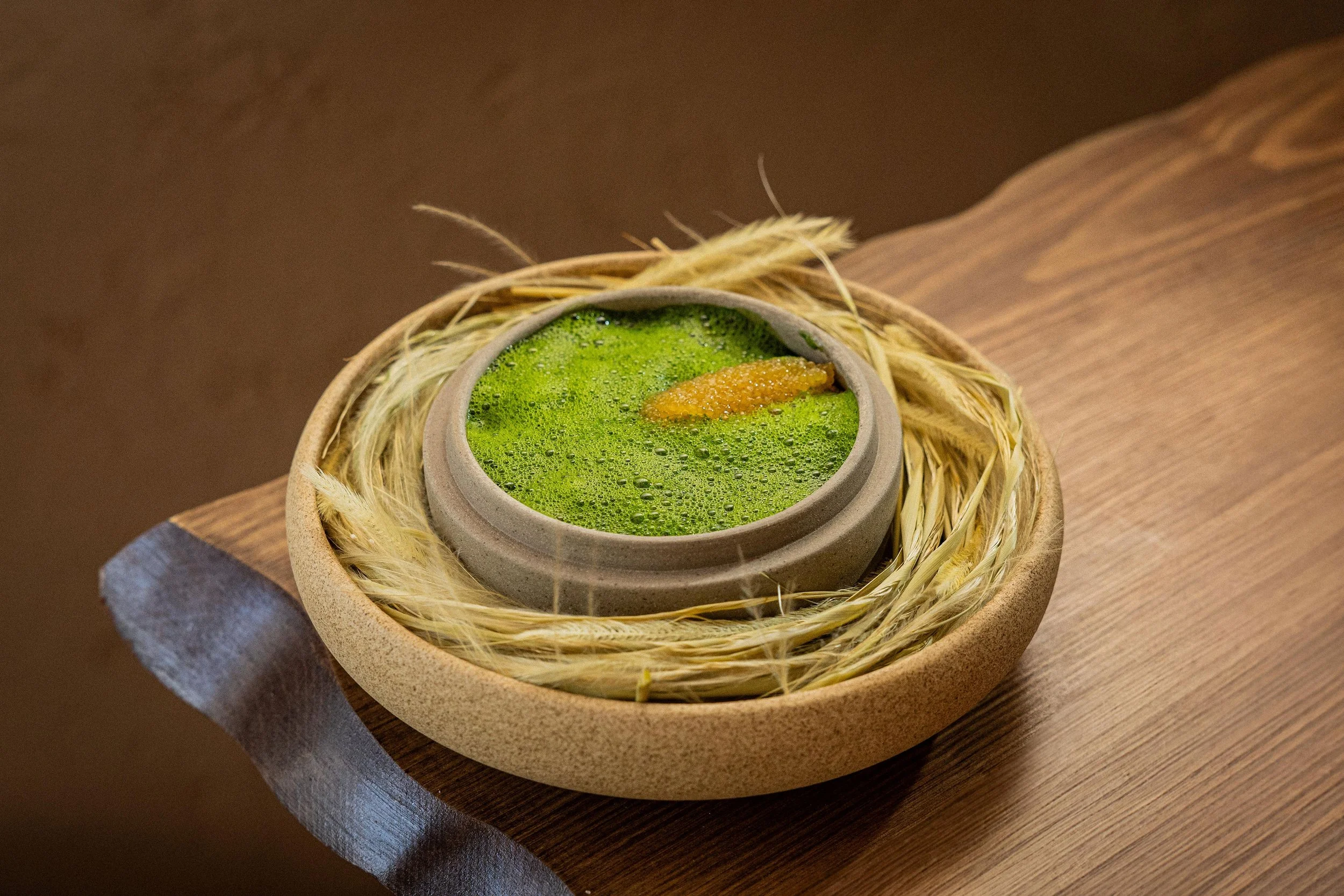
It is a useful philosophy for understanding SINO's cooking. The restaurant isn't attempting to turn Ukrainian food into something unrecognisable. Instead, it asks what happens when dishes, ingredients and memories from Ukraine are treated with the same precision and curiosity that Korolev encountered in Europe's great kitchens.
During our visit, that approach was immediately apparent.
A crunchy banosh, served with mushroom and wild garlic aioli, takes inspiration from one of Ukraine's best-known traditional dishes but transforms its textures and presentation. Beef tartare arrives with mushroom mousse and Jerusalem artichoke, bringing together earthy, savoury flavours with the refinement and restraint that have become hallmarks of contemporary European cooking.
Then comes Chicken Kyiv — perhaps the most recognisable dish on the menu, and one that Korolev believes has the power to challenge preconceptions about Ukrainian food.
"Most guests arrive with a very fixed idea of the dish," he says. "And it's incredibly rewarding to see their reaction when they discover a version that's both familiar and completely different."
At SINO, the Chicken Kyiv is accompanied by bison grass mash, wild garlic butter and truffle. It retains the essential pleasure of the original — crisp exterior, aromatic butter, richness and comfort — while giving it a distinctly contemporary context.
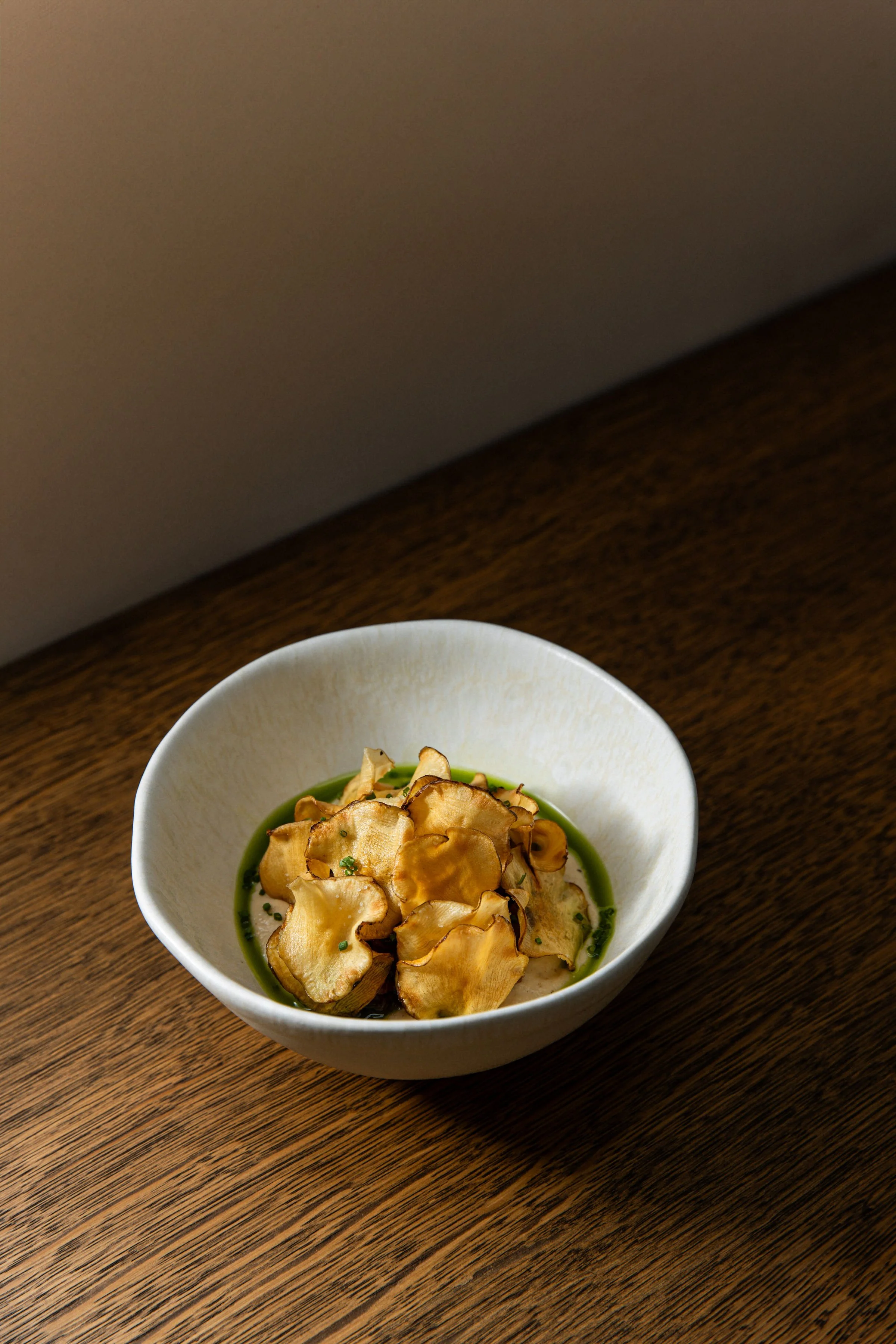
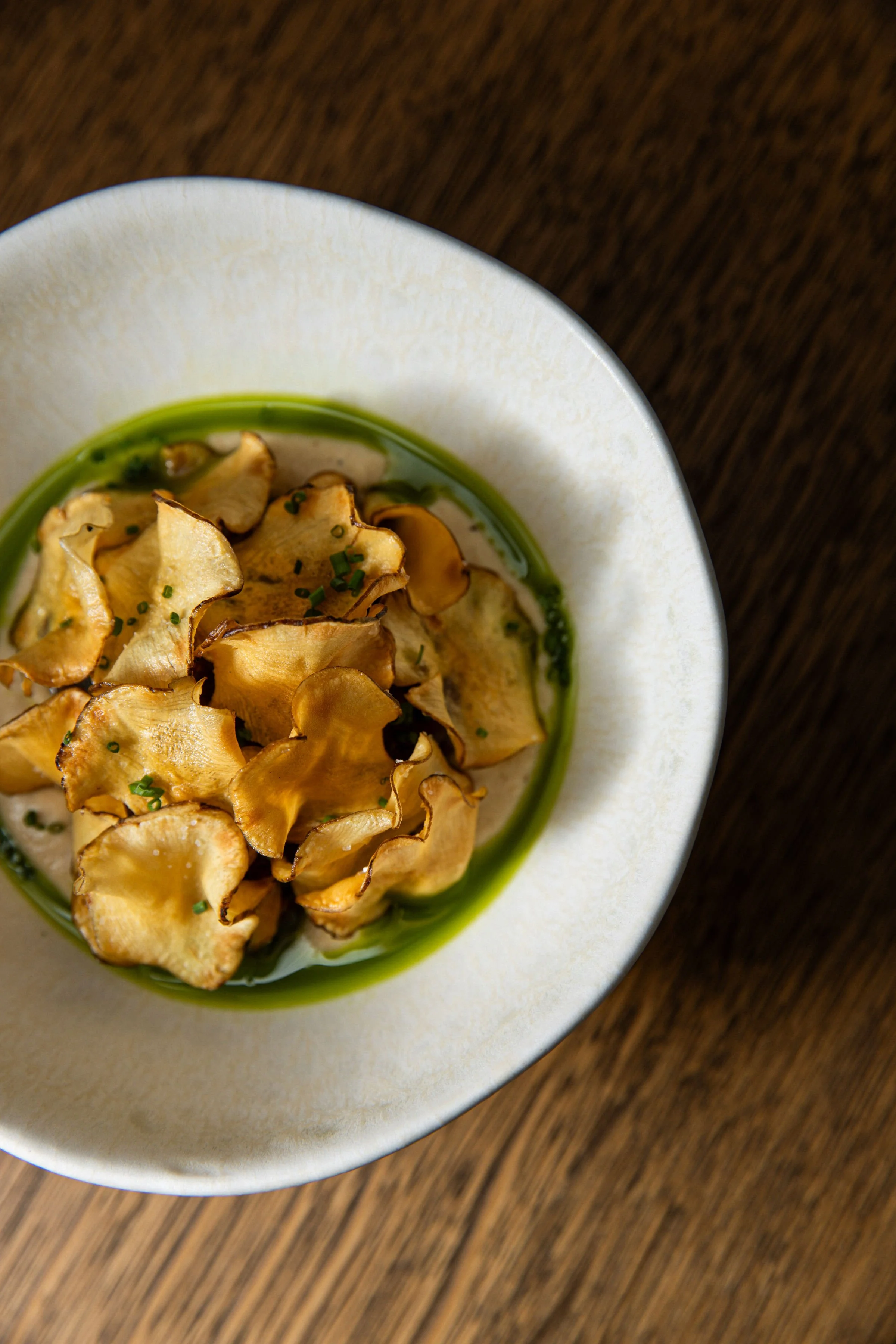
A slowly cooked pork belly continues the theme, pairing the richness of the meat with beetroot and pickled plum. Elsewhere on the menu, smoked potato is combined with pike roe, hay-infused cream, onion and mushroom; aubergine is marinated with dill flowers, fennel and garlic and served with Kyyrma bread, a traditional unleavened bread stuffed with cheese; while beef tartare is paired with ceps sabayon, Jerusalem artichoke crisps and lovage oil.
There is a sense throughout the menu of Ukraine being treated not as a single cuisine but as a collection of landscapes and regional traditions.
Korolev has travelled extensively throughout the country, seeking out local ingredients and recipes, and that experience informs the menu. One dish of cherry-glazed BBQ catfish, for example, is an elevated interpretation of a famous dish from Pryvoz Market in Odesa. Fried parsley root, samphire, kovbasa, dried grated mussels and bell pepper sauce bring together ingredients and references that speak to the country's geography, including its relationship with the Black Sea.
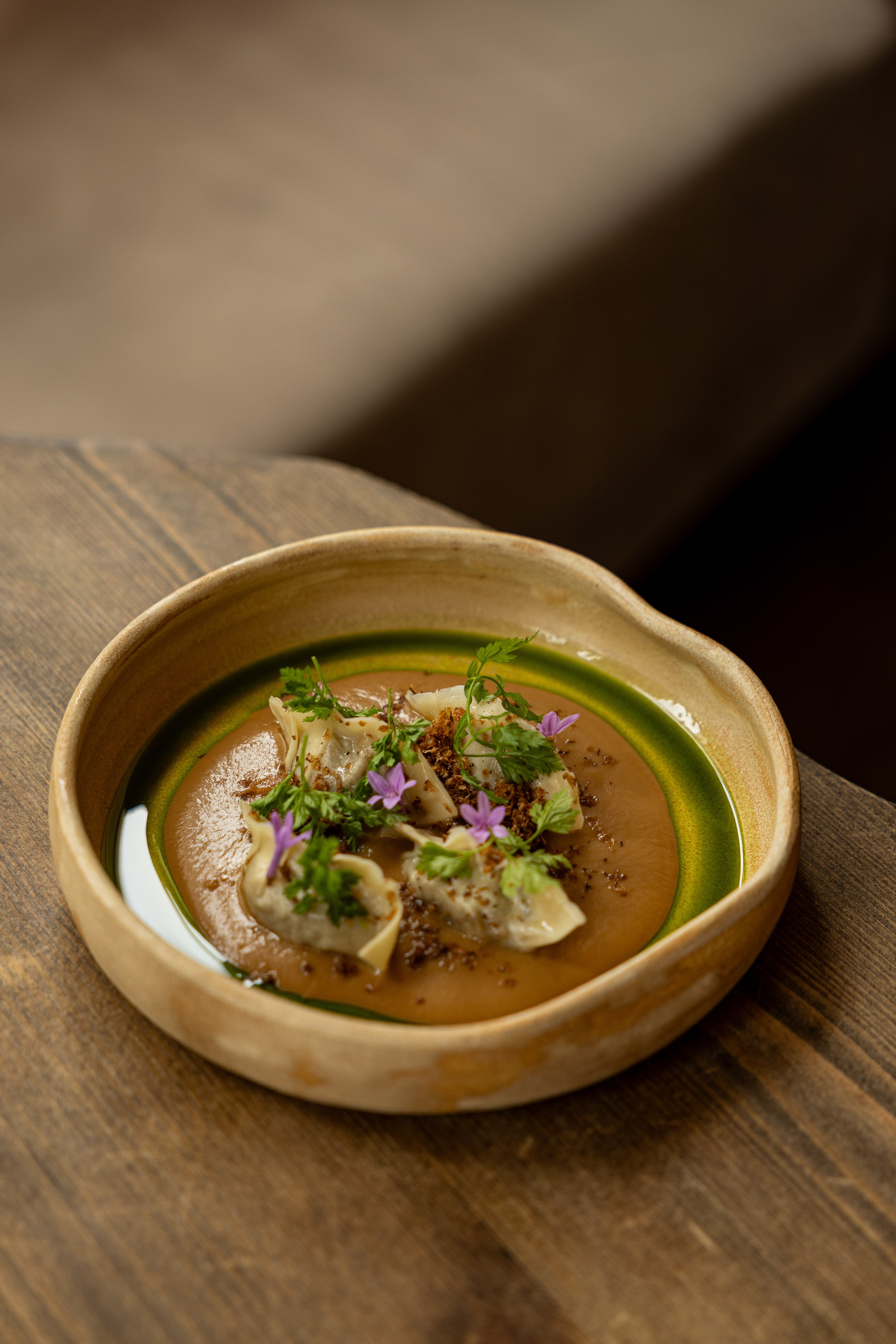
Vareniky, meanwhile, are filled with oxtail and served in a spicy beef broth alongside house-made mushroom garum. Desserts include honey cake with buckwheat chocolate and halva ice cream with pickled almond and fermented sea buckthorn.
For Korolev, however, these dishes aren't exercises in nostalgia.
"Every dish has to be delicious first," he says. "If it isn't, nothing else matters."
That statement is perhaps more important than it initially sounds. SINO isn't intended as a culinary museum. Its purpose is not to preserve Ukrainian food behind glass, untouched by time or outside influence. Korolev sees tradition as something living.
"My role isn't to preserve Ukrainian cuisine in a museum," he says. "It's to help it continue growing while respecting where it came from."
It is an especially pertinent philosophy given the circumstances in which SINO came into being.
Korolev opened his first solo restaurant, Manufactura, in Dnipro in 2021. A year later, Russia's full-scale invasion of Ukraine changed the course of his life. In February 2022, he left the restaurant and joined the Ukrainian special forces, serving on the front line until September 2023.
His return to the kitchen was therefore more than a return to a profession. It was a return to a part of his identity.
"It reminded me that food is never just food," he says. "In difficult moments, sharing a meal can provide comfort, dignity and a sense of normality."
That understanding of hospitality now informs his approach to SINO.
"A restaurant isn't only somewhere people come to eat; it's a place where they celebrate, reconnect and create memories," he says. "That responsibility feels even more meaningful now than it did before."
It also helps explain why SINO's Ukrainian identity is so important without becoming the sole subject of the restaurant.
The partnership between Korolev and Sychova was forged in the aftermath of the invasion, with the pair developing a vision for a restaurant that could help introduce Ukrainian culture and gastronomy to a wider Western audience. When SINO opened, Korolev brought the core of his former Dnipro team with him, creating a predominantly Ukrainian brigade in London.
There is an obvious practical advantage to having a team that already understands how one another works. But Korolev believes the significance goes deeper.
"It creates a real sense of trust and shared purpose," he says. "Many of us have worked together before, so we understand each other without needing many words."
More importantly, the food isn't merely something the brigade has studied.
"These aren't recipes we've learned from books," he says. "They're flavours we've grown up with."
That distinction is crucial. SINO's ambition is not simply to make Ukrainian food more palatable to a London audience. It is to make Ukrainian food understood on its own terms, while allowing it to evolve through the experience of a chef who has cooked across Europe.
This is where Korolev's role as president of Bocuse d'Or Ukraine becomes significant. His interest in Ukrainian gastronomy extends beyond his own restaurant. He wants the country's cuisine to be recognised internationally for its quality, diversity and history rather than simply through the lens of current events.
"I hope Ukrainian cuisine becomes recognised for what it has always been: one of Europe's great culinary traditions," he says.
The qualification that follows is telling.
"Not because it's fashionable or because people feel sympathy for our country, but because it genuinely deserves a place at the table."
There is no sense of wanting special treatment. Instead, there is a determination to compete on the strength of the food itself.
Ukraine's culinary story is, after all, remarkably broad. Its fertile agricultural regions provide grains, vegetables, fruit and herbs; its forests offer mushrooms and wild ingredients; its rivers and coastline contribute fish and seafood; and its regional traditions reflect centuries of cultural exchange.
At SINO, those influences become ingredients in a conversation between past and present.
For Korolev, the best way to tell that story is through flavour.
"If someone leaves SINO talking about the flavour of fermented cherries, smoked catfish or a modern Chicken Kyiv instead of only the headlines they've seen on the news, then we've achieved something meaningful," he says.
"Food has a unique ability to create understanding without saying a word."
That idea gives SINO a purpose beyond simply being another new restaurant in Notting Hill. Its existence is cultural as much as culinary, but crucially, the restaurant doesn't lean on sentimentality. The cooking is confident enough to stand without it.
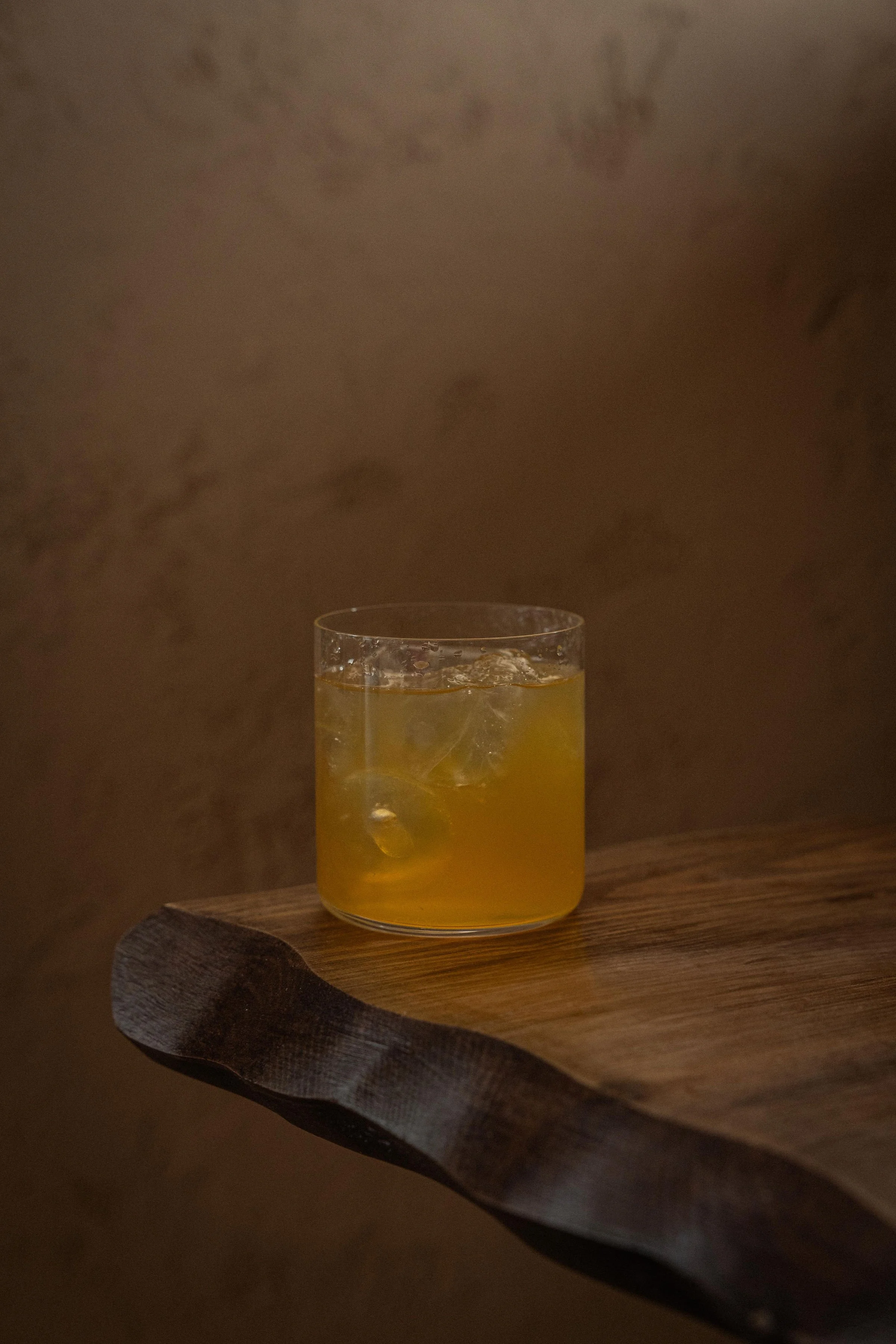
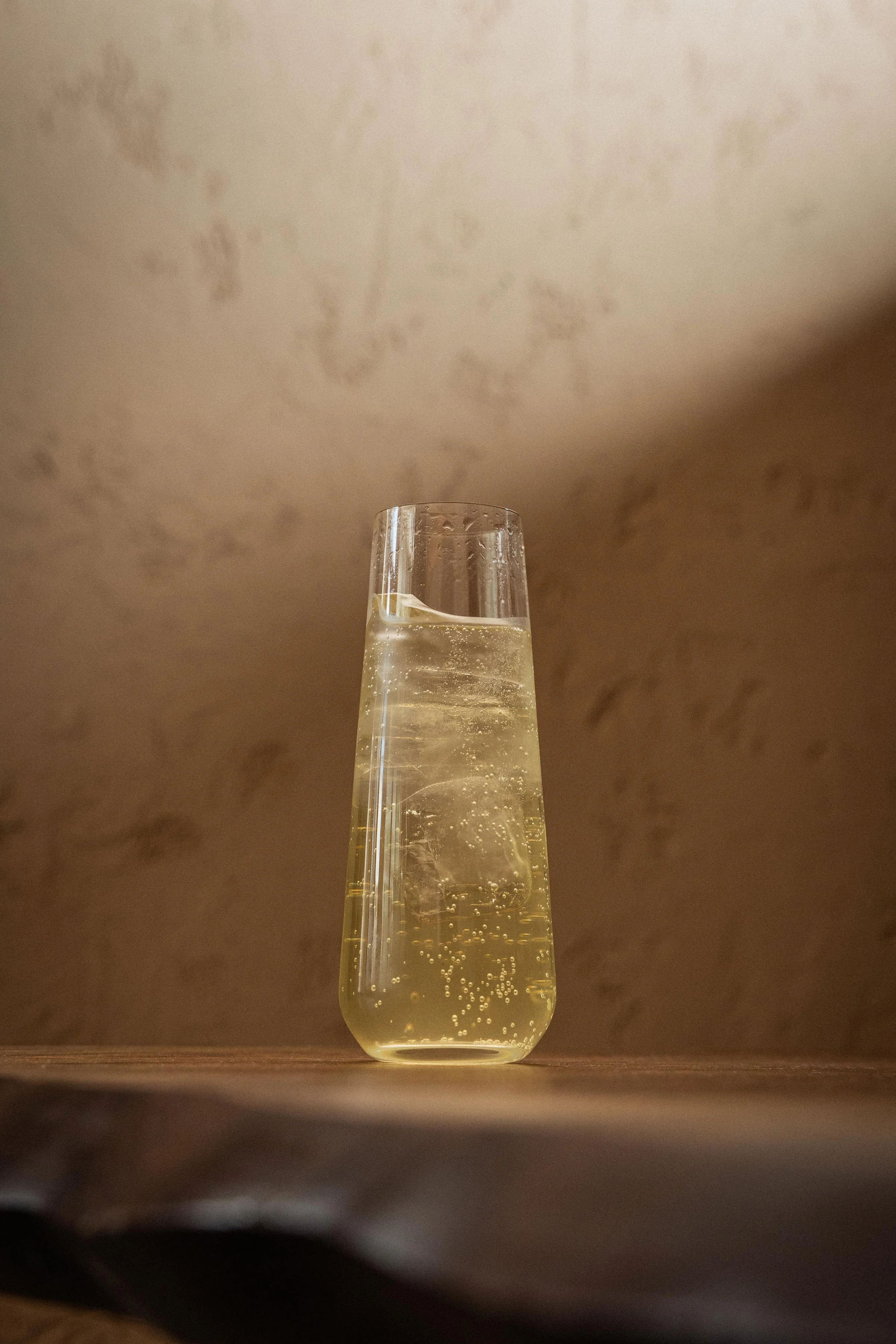
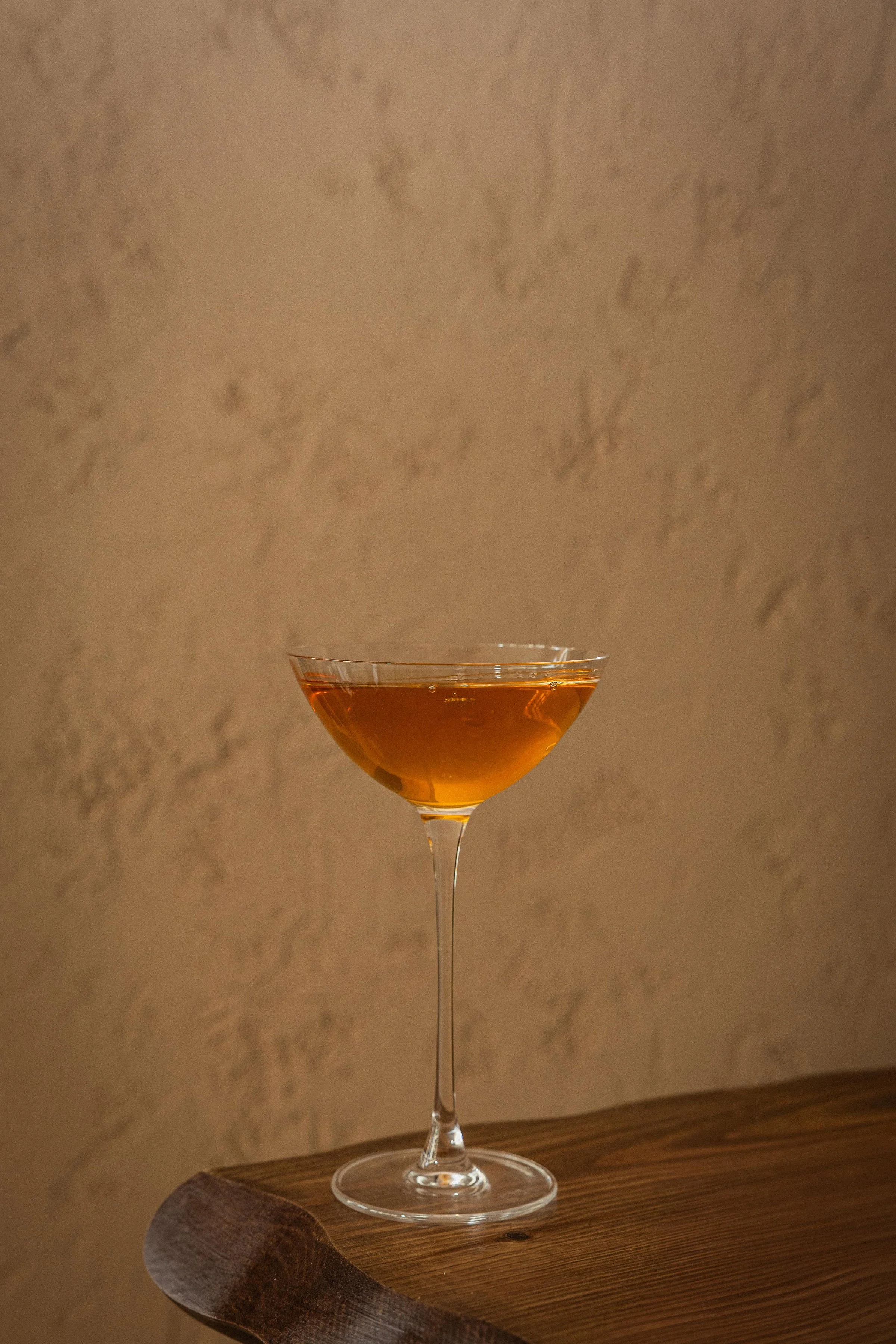
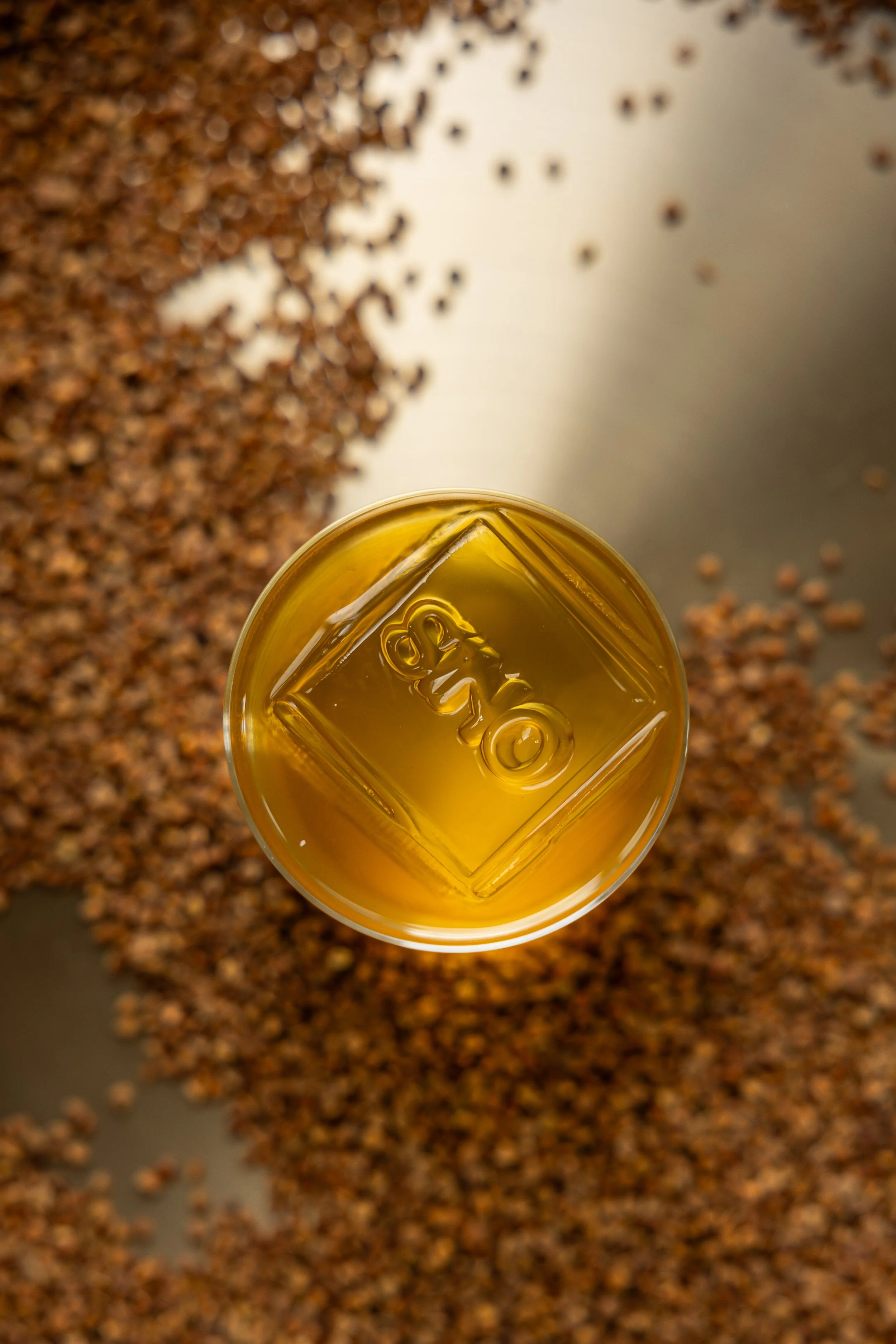
The drinks follow the same philosophy. Ukrainian mixologist Ana Reznik, formerly of A Bar with Shapes for a Name, has created a cocktail list inspired by classic Ukrainian dishes, using laboratory-led techniques to create unexpected combinations. The Buckwheat Milk Punch combines buckwheat with cardamom, vanilla and aged rum, while the Apple Bun takes inspiration from a famous Ukrainian dessert, pairing vodka, butter and dulce de leche distillates with crisp apple juice and vanilla cream soda.
The wine list, meanwhile, has been curated by Majken Bech-Bailey, formerly of two-Michelin-starred Aimsir in Ireland. It ranges across established European regions while giving space to Eastern European producers, including Ukrainian and Georgian wines. Among them are bottles from Beykush Winery on the Black Sea shore, another reminder of the geography that sits behind SINO's cooking.
Taken together, the restaurant is an argument for looking at Ukraine through a wider lens.
It is a country with food worth exploring, ingredients worth discovering and traditions capable of evolving. It is a culture with its own visual language, its own regional identities and its own relationship with the land.
And perhaps that is ultimately what Korolev wants guests to take away.
"I hope they leave feeling curious," he says.
Curious enough to learn more about Ukraine, its culture and its food. Curious enough to question the assumption that Ukrainian cuisine is simple or limited to a handful of familiar dishes.
"If we've changed even one person's perception of Ukraine through a meal," he says, "then we've done something worthwhile."
Book a table at SINO.