
SPOTLIGHT: Mr Jack Fox
Words - Tajinder Hayer
Photography & Videography - Kirk Truman
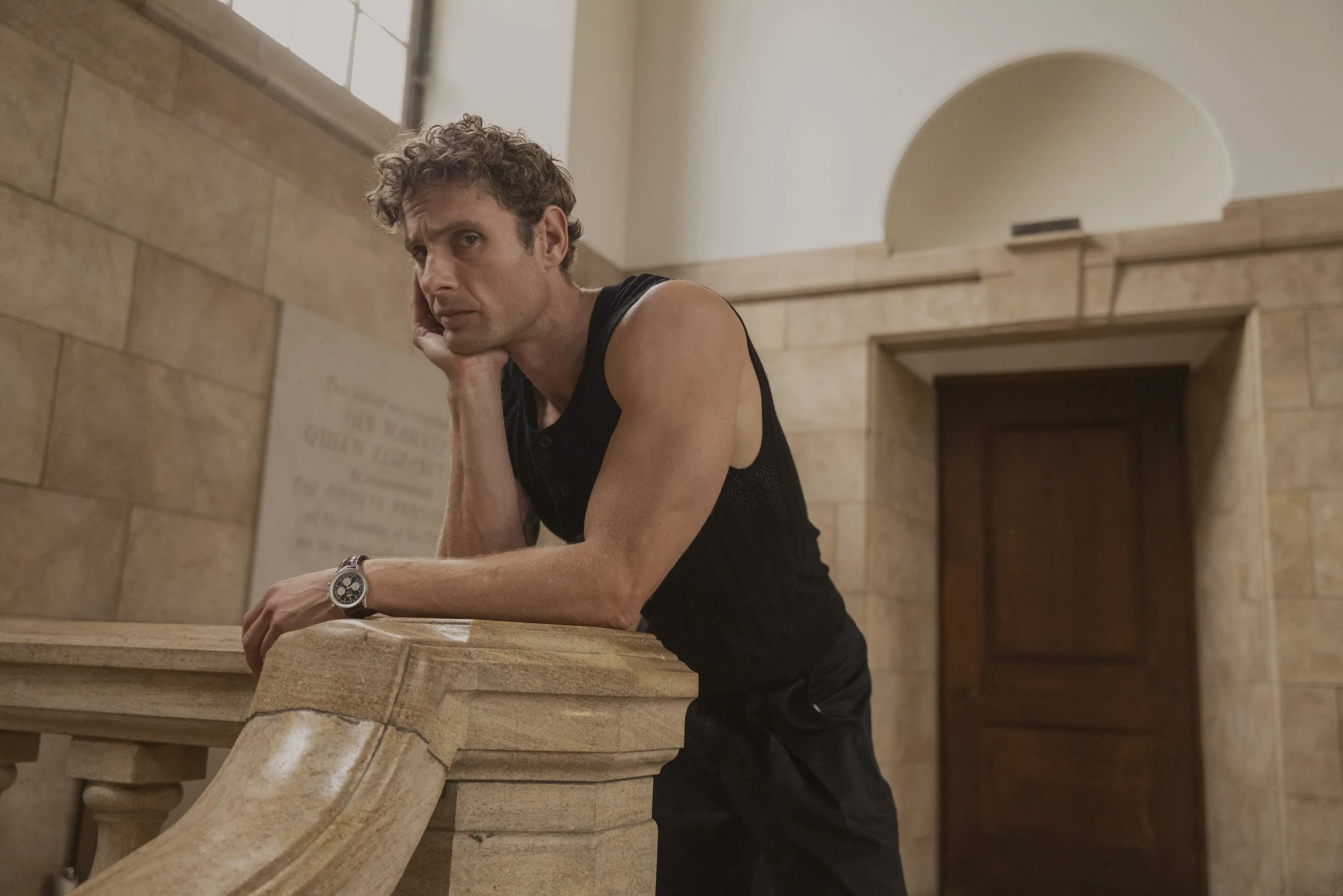
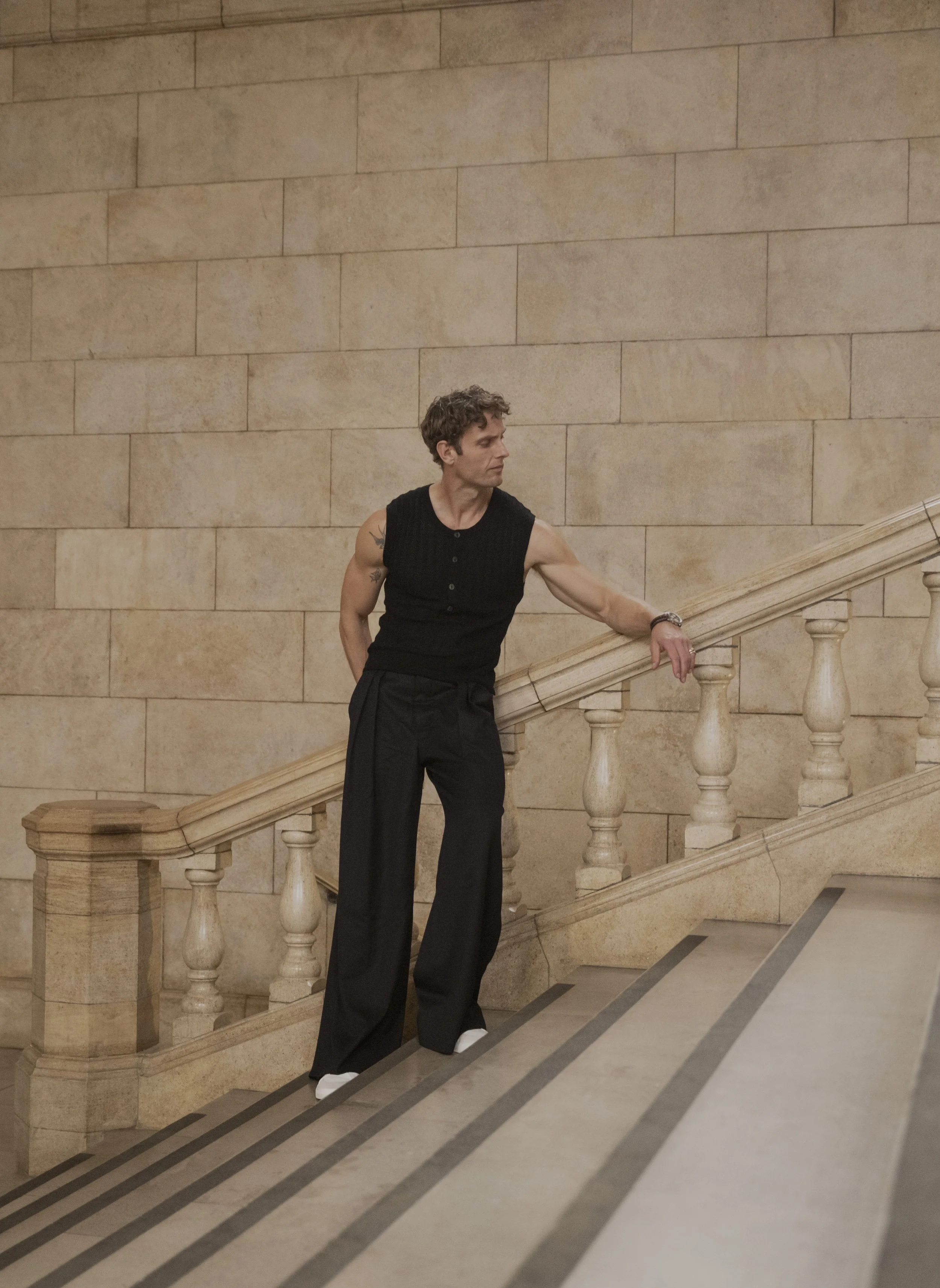
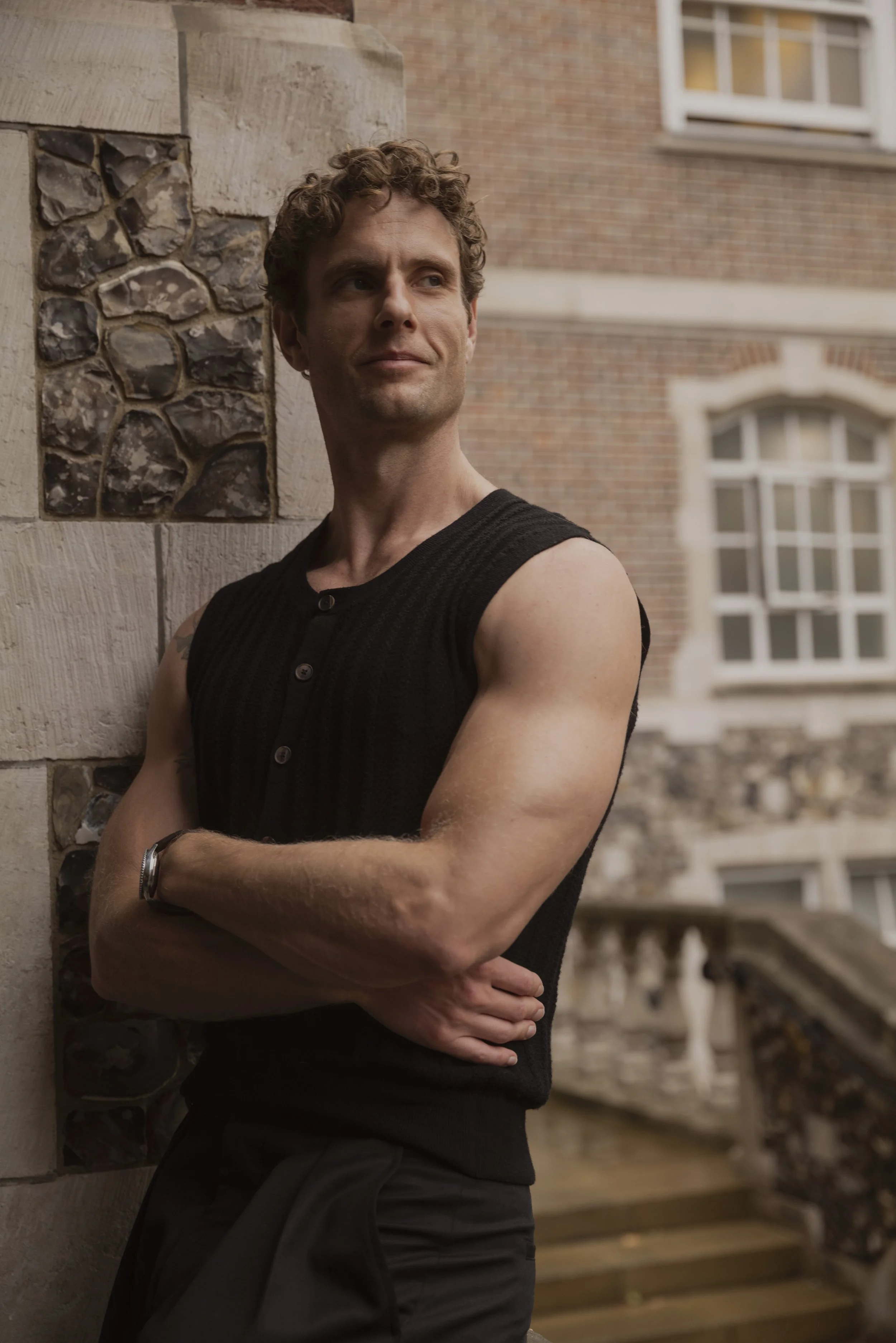
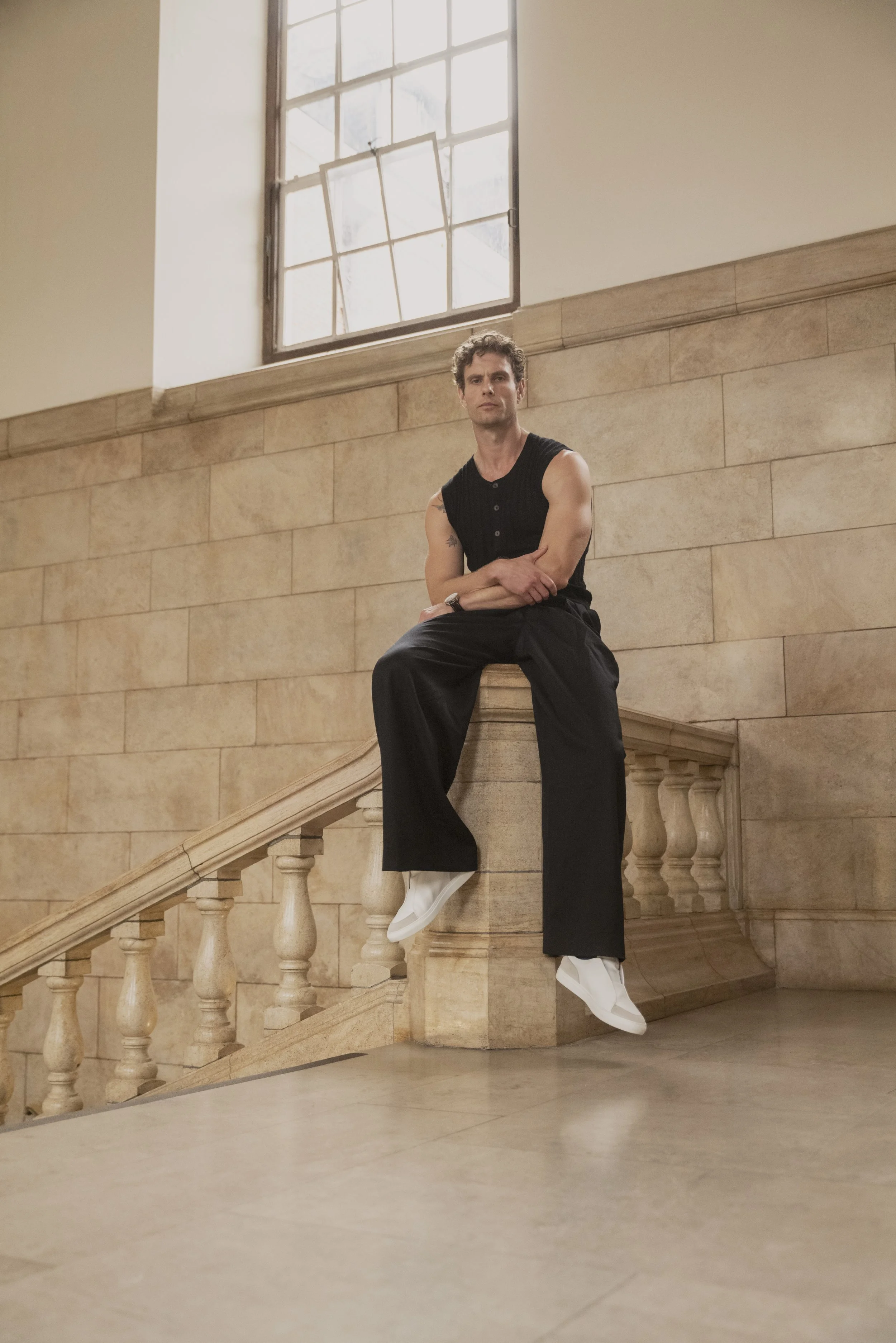
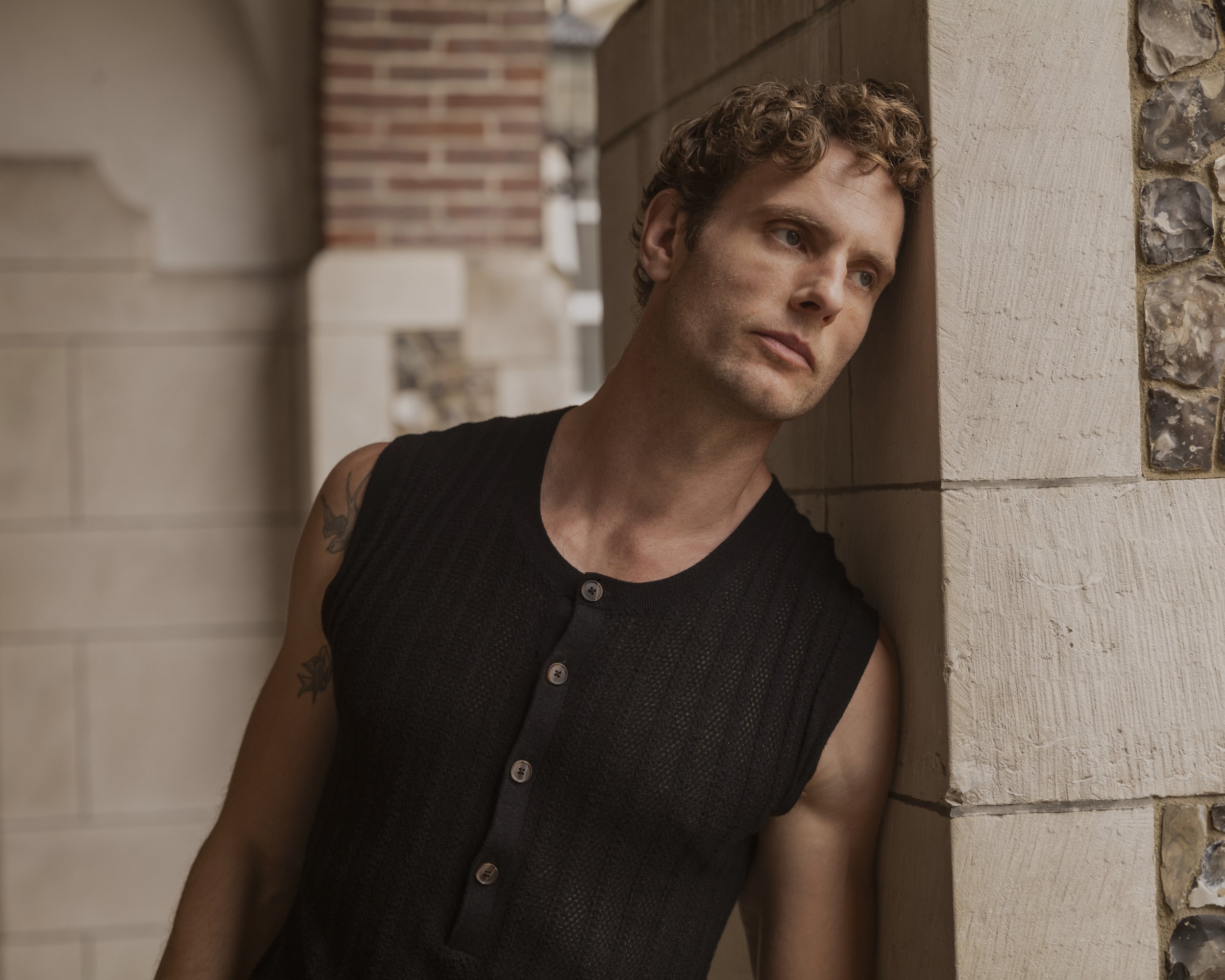
Jack wears King & Tuckfield
With thanks to the stunning Goodenough College, Bloomsbury patroned by King Charles III where this film was shot
There is something rather appealing about Steve, the character Jack Fox returns to in Operation Napoleon – Tears of the Wolf. He is not the usual action-thriller hero. He is an academic, British, slightly rumpled, armed with a sharp mind, dry wit and, increasingly, rather more experience than he had bargained for.
When Fox first played Steve in Operation Napoleon, the character was a man who found himself caught up in a conspiracy almost by accident. This time, the circumstances are rather different.
“Curiosity, mainly, and the company,” Fox says of what drew him back. “Steve was such good unfinished business after the first film — this slightly crumpled British academic who wandered into a conspiracy aglow with corduroy.”
The sequel picks up that unfinished business, with Steve now considerably more capable than the man we met previously. The story takes him into a new conspiracy involving wartime secrets, codes and a mysterious cache of Nazi diamonds known as the ‘Tears of the Wolf’, with the action spanning Iceland, Finland and Germany.
“I wanted to see what happened when the adventure stopped being an accident and started being his life,” says Fox. “He’s sharper now, a little less amused by his own cleverness, because the stakes have caught up with him.”
That evolution was central to Fox’s approach to returning to the role. In the first film, Steve’s defining quality was his sense of being a fish out of water: a man with a strong moral compass suddenly forced to navigate circumstances well beyond his usual world. The sequel demands something more.
“In the second iteration he’s become a more adept, capable and seasoned version of himself,” Fox explains. “He was always written with a dry wit and charm, and I was so pleased to see that continue, something that I leaned into harder second time around.”
It is a shift that also changes the way Steve responds to danger. His intelligence has always been his greatest asset, but the sequel puts increasing pressure on the idea that every problem can be solved by talking through it.
“The moments where talking stops being useful,” Fox says when asked what challenged him most as an actor. “Steve’s whole identity is that he can explain his way through a problem. This film keeps putting him in places where explanation won’t save anyone — colder, tighter, more physical.”
The challenge, he adds, was making that change without losing the character underneath it. “He’s still the clever one in the room, it’s just the rooms on fire.”
The international scale of Tears of the Wolf also gives Steve a very different physical world to navigate. Iceland, already familiar territory from the first film, gives way to Finland and Germany, with each location bringing its own atmosphere to the story.
“You don’t act on those places so much as get pushed around by them,” Fox says. “Iceland has that raw, slightly mythical weather, we already knew from the first film. Finland is different — the archipelago, those bunkers — quieter, colder, a bit haunted. Germany brings the weight of the history they’re actually chasing.”
For Fox, however, it is the mystery at the heart of the story that remains the most compelling part of Steve’s journey. “The mystery, without question,” he says. “That’s Steve’s natural habitat — a scrap of code, a lost piece of music, some wartime footnote nobody else has bothered with.”
It is also a useful description of what makes the character work. Steve is not interesting because he suddenly becomes an action hero. He is interesting because he remains himself while being forced into situations that are increasingly far removed from his comfort zone.
That balance was something director Jyri Kähönen was keen to preserve. Fox describes Kähönen's approach as calm, something he particularly appreciated given the demands of shooting across three countries.
“For Steve, he kept pulling me back towards the man we already knew — bright, a bit rumpled, not built for mercenaries and bunkers — and then asked what happens when that man can’t leave,” says Fox. “I really loved working with him.”
Returning to the film also meant reuniting with Vivian Ólafsdóttir and Ólafur Darri Ólafsson, two actors with whom Fox had established strong relationships during the first film. He is particularly warm when discussing both.

“Two of my favourite people on and off set,” he says of Ólafsson. “Darri is raucously funny, talented, insightful. He brings out the best in you. Never without a bellowing laugh and a wonderful restaurant suggestion.”
Of Ólafsdóttir, he says: “Vivian is someone who always wants to better herself, and the film. She would always come to set with an idea, wonderfully collaborative, kind and thoughtful.”
For Fox, that familiarity is more than simply useful when returning to a film. “Working with people you trust and care about, turns the work into a joy,” he says. “I’m incredibly fortunate to have them both as scene partners and friends.”
It is a sentiment that says something about Fox’s wider approach to acting. His career has moved between comedy, drama, television and film, and he sees the distinctions between those forms as less absolute than they might appear.
“You adjust the tools,” he explains. “Comedy wants timing and a looser wrist. Drama wants patience. A thriller like this wants the research done early so it doesn’t sit on the surface.”
The preparation may change, but the fundamental process does not. “TV lets you find a character over months; film asks you to arrive with him already packed. Underneath that, it’s the same work: read, listen, stay curious, and don’t decide delivery until you are on set.”
That last point feels particularly telling. For Fox, preparation matters, but so does the ability to remain open once the cameras are rolling. Looking back on his career, he identifies curiosity — and a willingness to learn from those around him — as among the most valuable things he has discovered.
“The useful thing is curiosity, and the humility to steal from everyone around you — directors, other actors, the crew,” he says. “Most of the job is listening.”
There is also a useful lack of solemnity in his view of the profession. “Being slightly out of your depth isn’t a failure; it’s usually where the interesting work starts. And don’t confuse seriousness with solemnity. The work matters. You don’t have to.”
It is a philosophy that feels surprisingly appropriate for Steve. After all, he is a character who has spent two films being pushed beyond his depth and discovering that he is rather better equipped for it than he first thought.
So, will Fox return for another chapter?
“He’s become rather good company,” he says. “There’s still something in him that feels unfinished — which is a nice place to leave a person, and also a good reason to come back.”
For a character who started out as an academic accidentally wandering into a conspiracy, that sounds like a promising place to leave him.