
Jacob Dudman Comes Into His Own
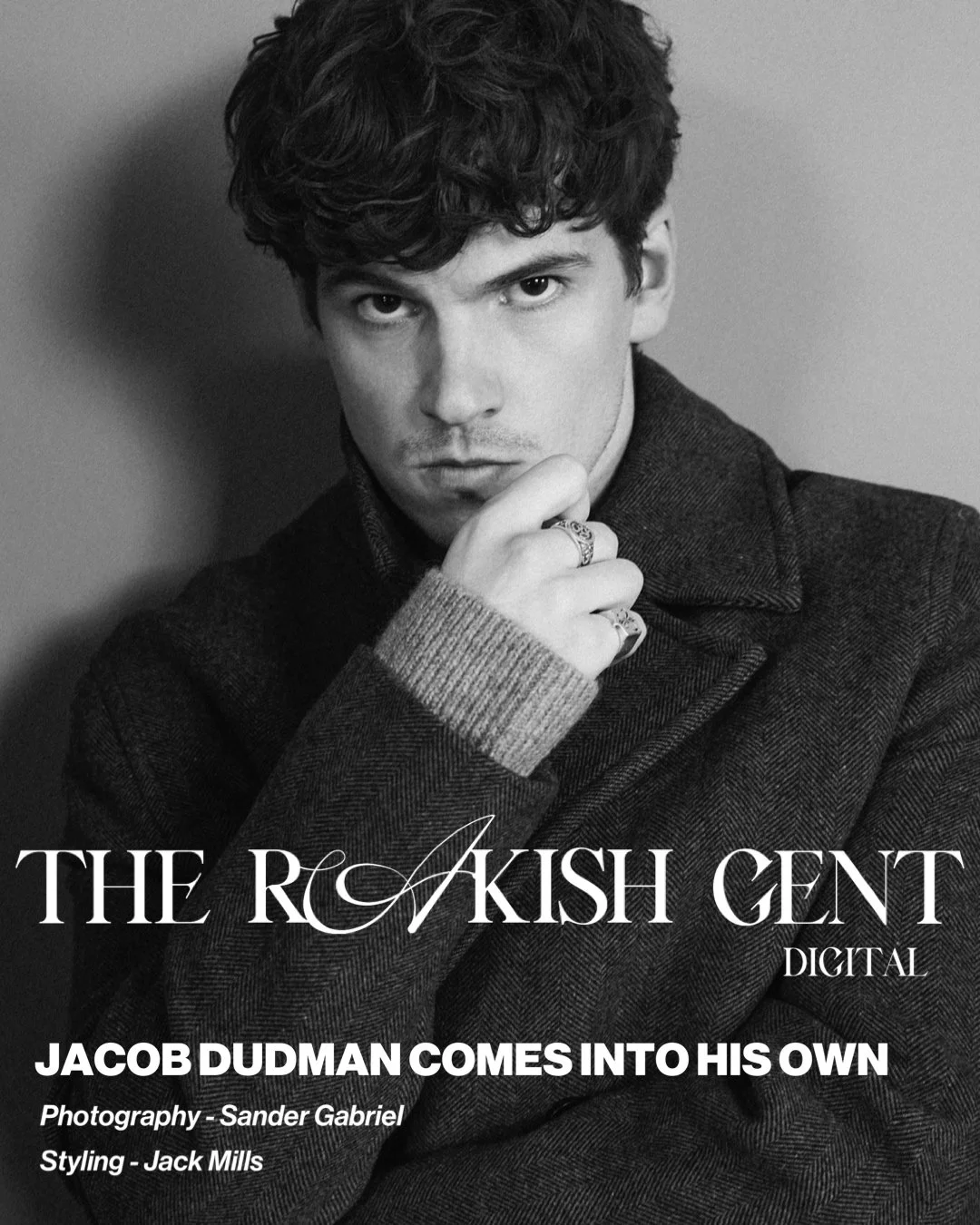
Overcoat & Knitwear - Wax London
Words - Taj Hayer
Photography - Sander Gabriel
Styling - Jack Mills
Grooming - Kenny Leung at Carol Hayes Management using Morphe and Color Wow Hair
Shot on location at FINKS at Clissold House
With his first leading film role in The Choral, Jacob Dudman steps into the spotlight with clarity, humility and a deep respect for the power of story — from Alan Bennett’s words to the landscapes that shaped him.
There is a moment, early in The Choral, when the camera finds Jacob Dudman standing in the doorway of a Yorkshire village hall as music swells behind him and the distant thunder of war murmurs beyond the fields. It is a quiet entrance — unshowy, human, almost hesitant — and yet undeniably a turning point. In many ways, it mirrors Dudman’s own arrival in British cinema: subtle but striking, a long-anticipated unveiling of an actor who has been working steadily, thoughtfully, and often under the radar for years.
“The cast are people I’ve admired for so long,” he says, still visibly energised by the experience. “It was a joy and a privilege to see how everyone approached their work. They’re the level of talent that elevates your performance by osmosis.” Ralph Fiennes. Simon Russell Beale. Roger Allam. Alun Armstrong. For a first leading role, the bar could hardly be higher. “I felt like I was learning so much every day,” he adds. “It was an amazing opportunity and privilege.”
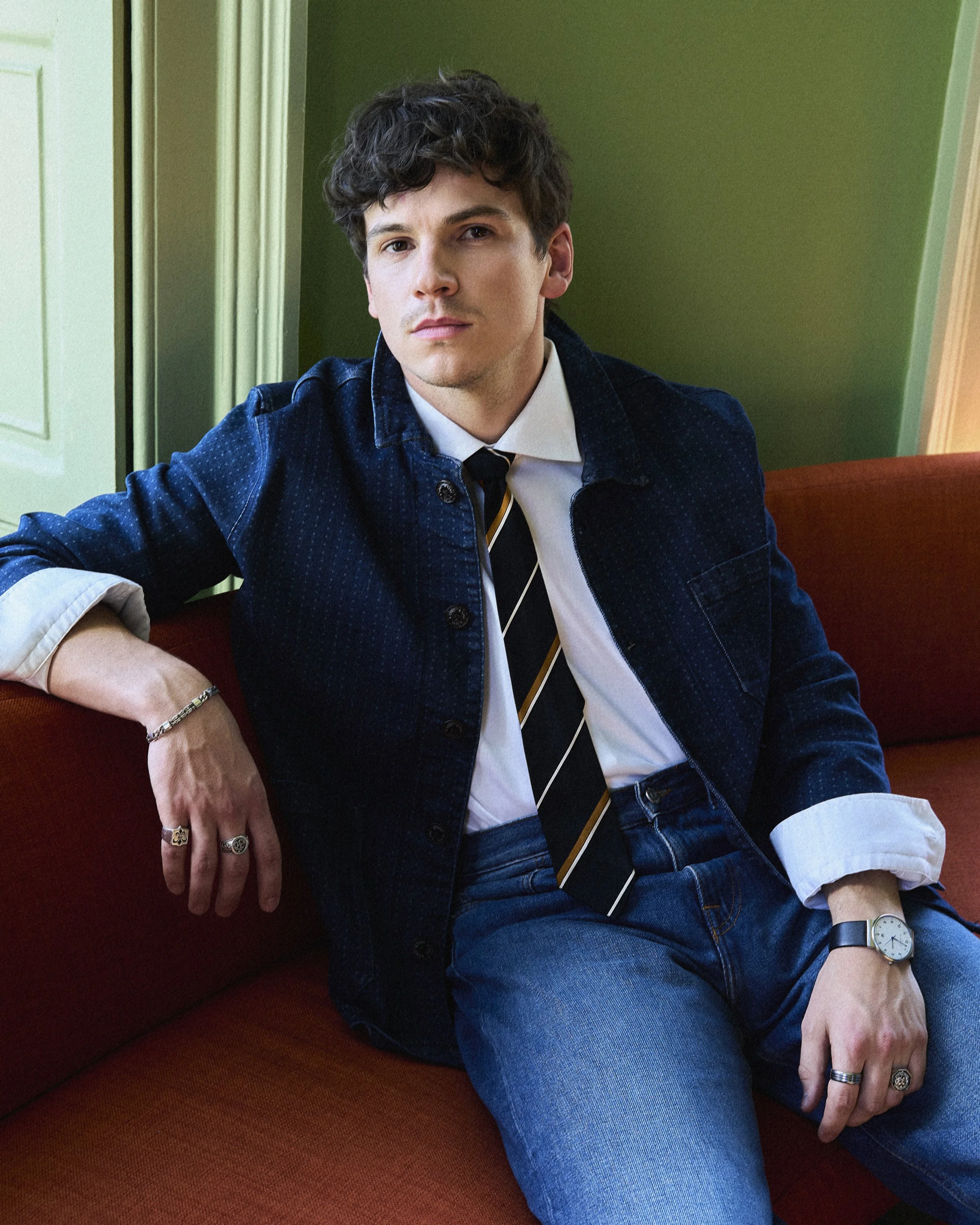
Jacket - &Sons, Shirt - Eton, Denim - A Day’s March, Tie - vintage
The Choral marks the first original Alan Bennett screenplay — an almost sacred sentence in British arts — brought to life by Nicholas Hytner, Bennett’s long-time collaborator and one of the most respected directors working today. Set in the early days of the First World War, it tells the story of a village choral society stripped of its young men to the front line, leaving Dr. Guthrie (Fiennes) to recruit a group of teenage singers to carry the music forward. Dudman plays Clyde, whose arrival signals the shifting tides of the war, of youth, of innocence.
“From the first read, it was obvious to me how I wanted to map out Clyde’s journey,” he says. “I always ask myself: what’s the point of my character being here? Which instrument in the orchestra am I playing? Clyde serves so many turning points. As an actor, it was just so juicy — I was like a kid in a sweet shop.”
He laughs as he says it, but the metaphor holds. Dudman approaches performance with the precision of a musician: rhythm, intention, breathwork, respect for the score. Bennett’s writing, he notes, makes that essential. “Alan Bennett will be studied for hundreds of years,” he says. “His dialogue is unmatched — so deeply human in a way that a sentient AI could never replicate. He’s so specific in his choice of language that it forces you out of any sort of dull, generic performance.”
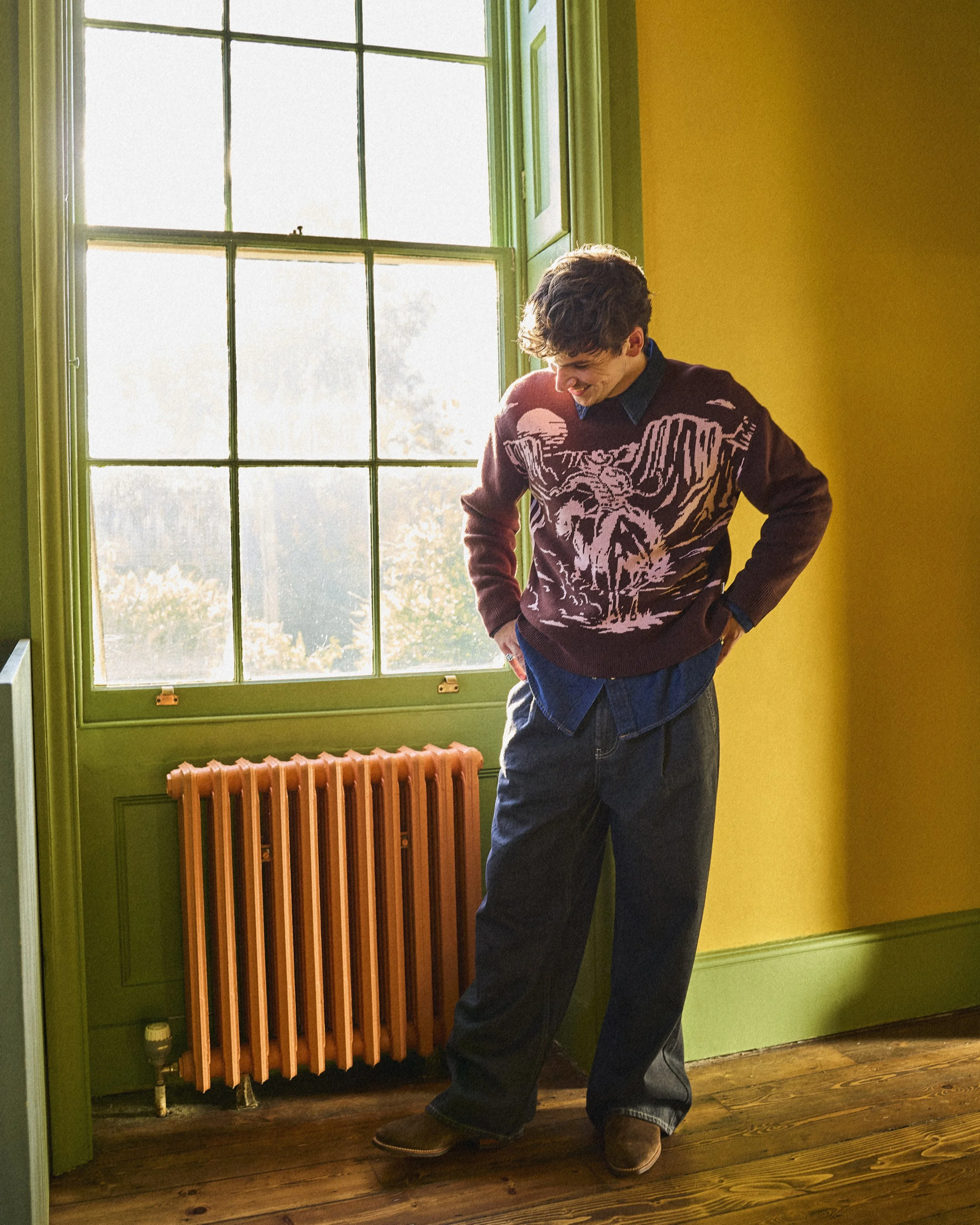
Knitwear & Shirt - Wrangler, Denim - Pull & Bear, Boots - R.M. Williams
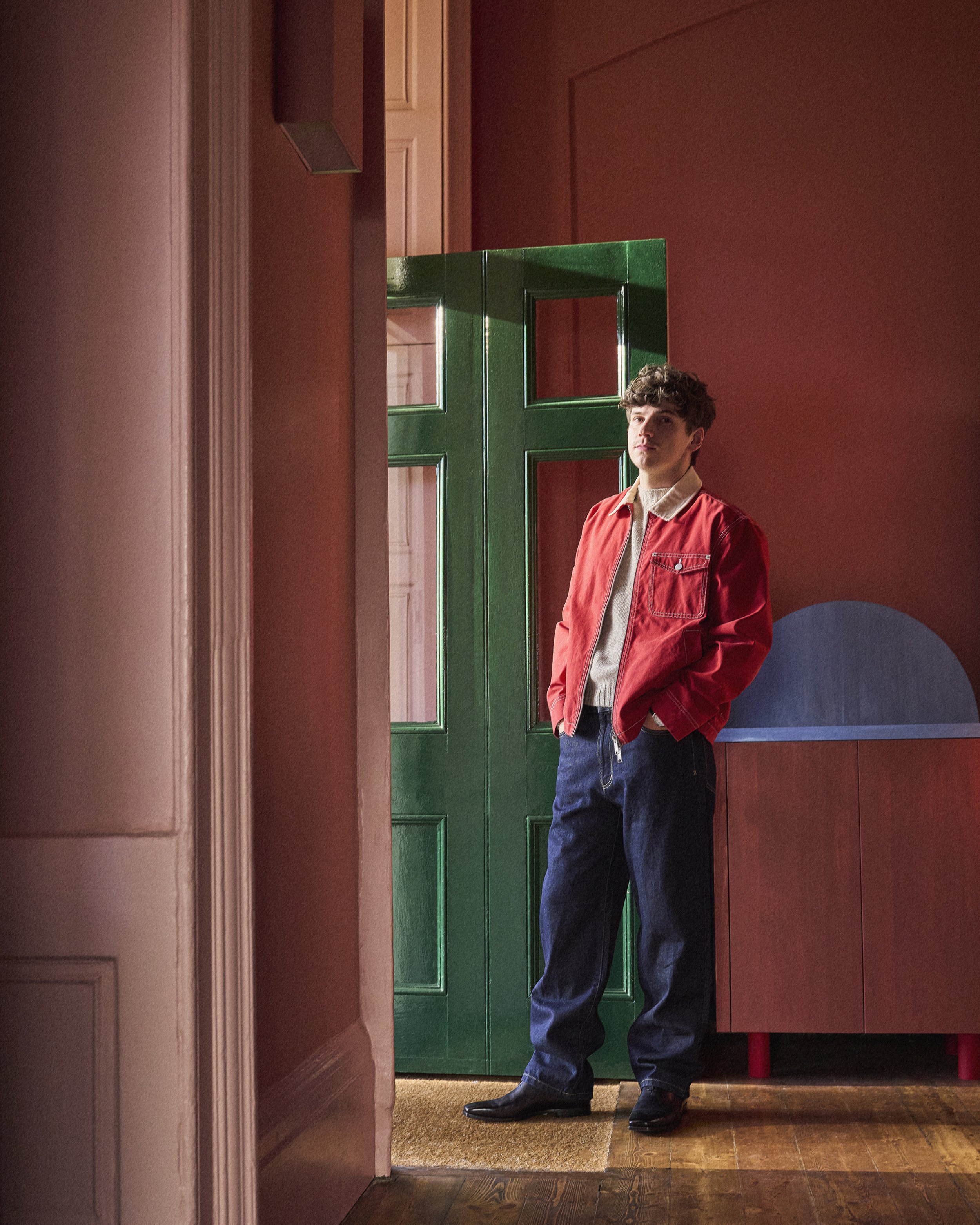
Jacket - Wax London, Knit - Le Kilt, Denim - Pull & Bear, Shoes - Berluti
There is one moment in particular — a monologue Clyde delivers about the horrors of the front line — that stayed with him. “It was so moving to read, so graphic and profound, that after doing my usual work I just had to get out of the way. Say the words. Any ‘acting’ would draw away from the power of the text. You just let it fall out of you. It’s the sort of writing you only hope you do justice.”
Dudman’s instinct for grounded, character-led storytelling has become a through line in his career so far. Even within the varied tapestry of roles — The Stranger’s fragile son; The Last Kingdom’s long-lost heir; The Winx Saga’s supernatural drama — there is a consistency of emotional truth. Yet he bristles slightly at being boxed in. “Well, clearly I’m a fibber,” he grins. “I’m filming Scrubs right now and having the best time — a larger-than-life comedy with fantasy sequences. Not exactly grounded realism.”
But he quickly returns to his compass point. “Truthfully, something like The Choral is my favourite kind of project. That blend of heart and humour. Deeply human. But I’ve been lucky to enjoy variety — I want to stretch, explore, surprise myself. Every day’s a learning day. I’m here for the adventure.”

Jacket - Wax London, Knit - Le Kilt, Denim - Pull & Bear
It’s a sentiment that echoes the upbringing he describes with palpable warmth. Born and raised in North Yorkshire, he returned to that same landscape for The Choral. “It absolutely felt like a homecoming,” he says. “There were days where I nipped home to see my parents — a blessing in a job that can take you so far from home.”
He pauses, searching for the right phrasing. “There is a subculture in Yorkshire that’s hard to describe. Local folk know what I’m talking about. We’re dead proud and we do bang on about it, but where I grew up is something special. I always go back as much as I can. A’ll tell thee that f’nowt.”
He smiles. “I’m sipping Yorkshire Tea right now in my flat in Vancouver.”
That blend of sincerity and playfulness, of seriousness and ease, has quietly defined Dudman’s work since he emerged as one of Netflix’s early breakout stars. Long before The Choral, he had sustained a steady, impressive run: Medici, The A List, The Stranger, The Last Kingdom: Seven Kings Must Die. His ability to shift tone — from psychological thriller to gritty historical epic — without losing emotional clarity is rare, especially for an actor still in his twenties.
He’s also a filmmaker, though he’s quick to clarify the timeline. His short film Finger Food, a darkly comic sci-fi piece, came after he’d already begun acting. But its impact on his craft has been significant. “Any sort of creative expression informs you as a storyteller,” he says. “Studying film at uni and making my own projects gives me a great appreciation for the crew. A big movie set can be intimidating when you don’t understand all the moving parts, so learning how it all works helps you realise you’re a small cog in a large machine. It allows you to take things less personally.”
This idea — of humility, perspective, the understanding that acting is both deeply personal and profoundly collective — runs through everything he says. When asked whether his varied background gives him a different view of the industry, he shakes his head. “My career so far has been completely at the mercy of other decision makers,” he says. “I’m so grateful to everyone who’s given me an opportunity and I hope I’ve repaid their faith.”
But then he gives himself a little credit, too — and rightly so. “I want to give credit to my younger self, who nearly always followed his gut. I hope that each project — in front of and behind the camera — helps me learn about the business, become more grateful, and improve me as a person, which I value above all else.”
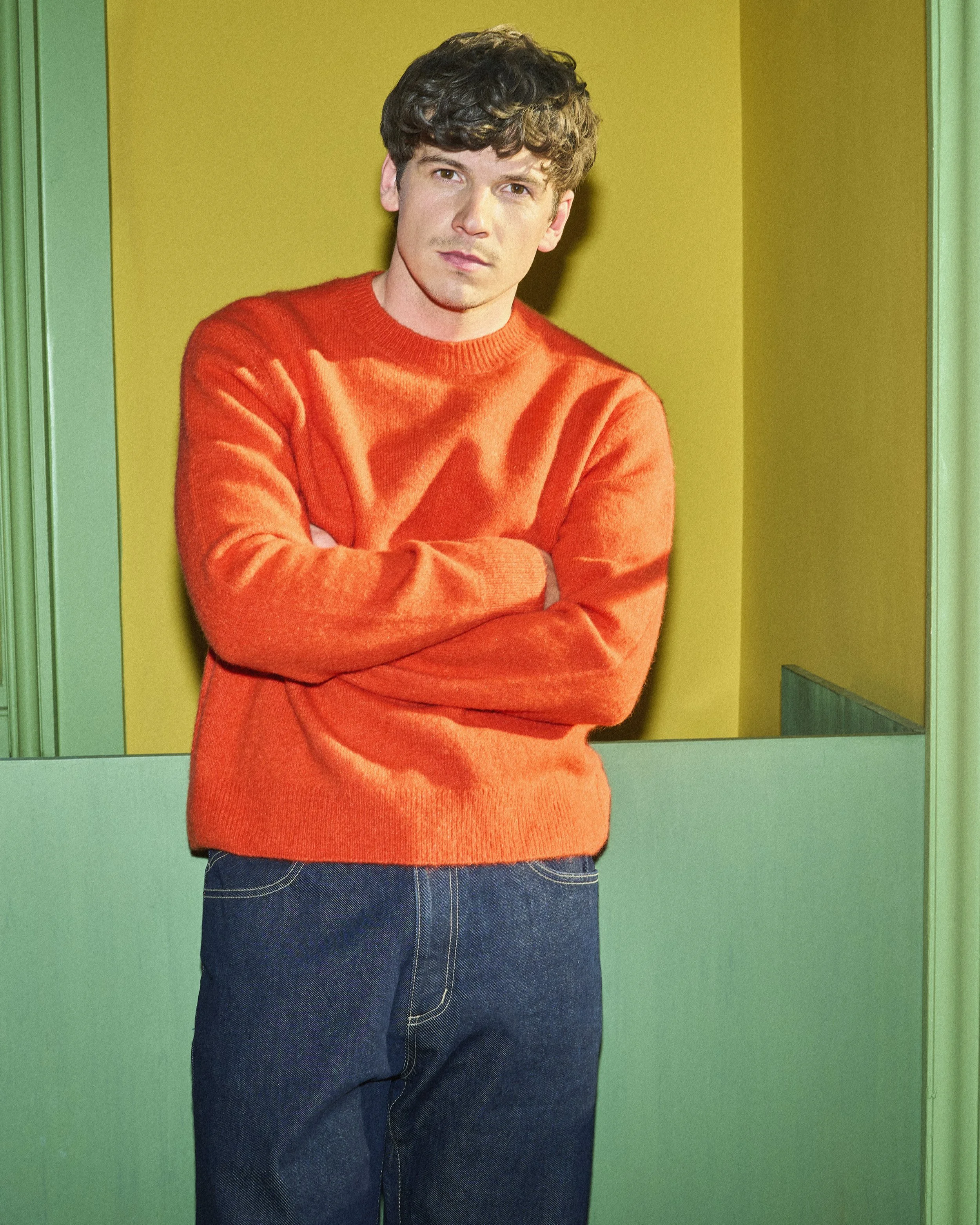
Knitwear - Wax London, Denim - Pull & Bear
If The Choral is a film about the unifying force of music — how it fortifies communities through the darkest of times — then Dudman’s relationship with sound is more than symbolic. “Music is such an elegant art form,” he says. As a young actor he trained at the Royal College of Music, learning posture and breathwork for opera. “It opened my eyes to the power of that genre. It should be for the masses, not just those who can afford a night at the theatre. If the universe really is all vibration, then no wonder music can be so transformative.”
There is something musical, too, in the way he approaches the shifting scales of production — from sprawling Netflix sets to the quieter, more intimate world of The Choral. “I’m not sure I’m ever conscious of a production’s scale,” he says. “My job is the same regardless. You’re plonked in front of a camera and have to tell the truth of that moment. The script tells you where it wants to be placed. Like any conversation, you fall into the rhythm or pitch that the situation calls for.”
It’s this emphasis on truth — moment-to-moment truth — that makes Dudman such an intriguing rising figure in British film: the actor who stands in the doorway between worlds, equally at home in streaming epics, indie shorts, period dramas, and whatever unexpected left turn might come next.
And there will be left turns. He seems energised by them — the possibility of surprise, the thrill of the unfamiliar. “I want to stretch,” he says again, almost like a mantra. “I’m open to pretty much anything.”
Yet for all his openness, The Choral feels like a crystallisation — the project that threads together his roots, his discipline, his emotional sensibility, his love of language and of music. It is a story about young men stepping into roles they never expected at a time the world was shifting beneath their feet. And it is the story that introduces Jacob Dudman, fully, to the screen.
He says it best himself, reflecting on the experience of bringing Clyde to life: “You just hope you do it justice.”
The Choral is in cinemas now.
Follow Jacob on Instagram.
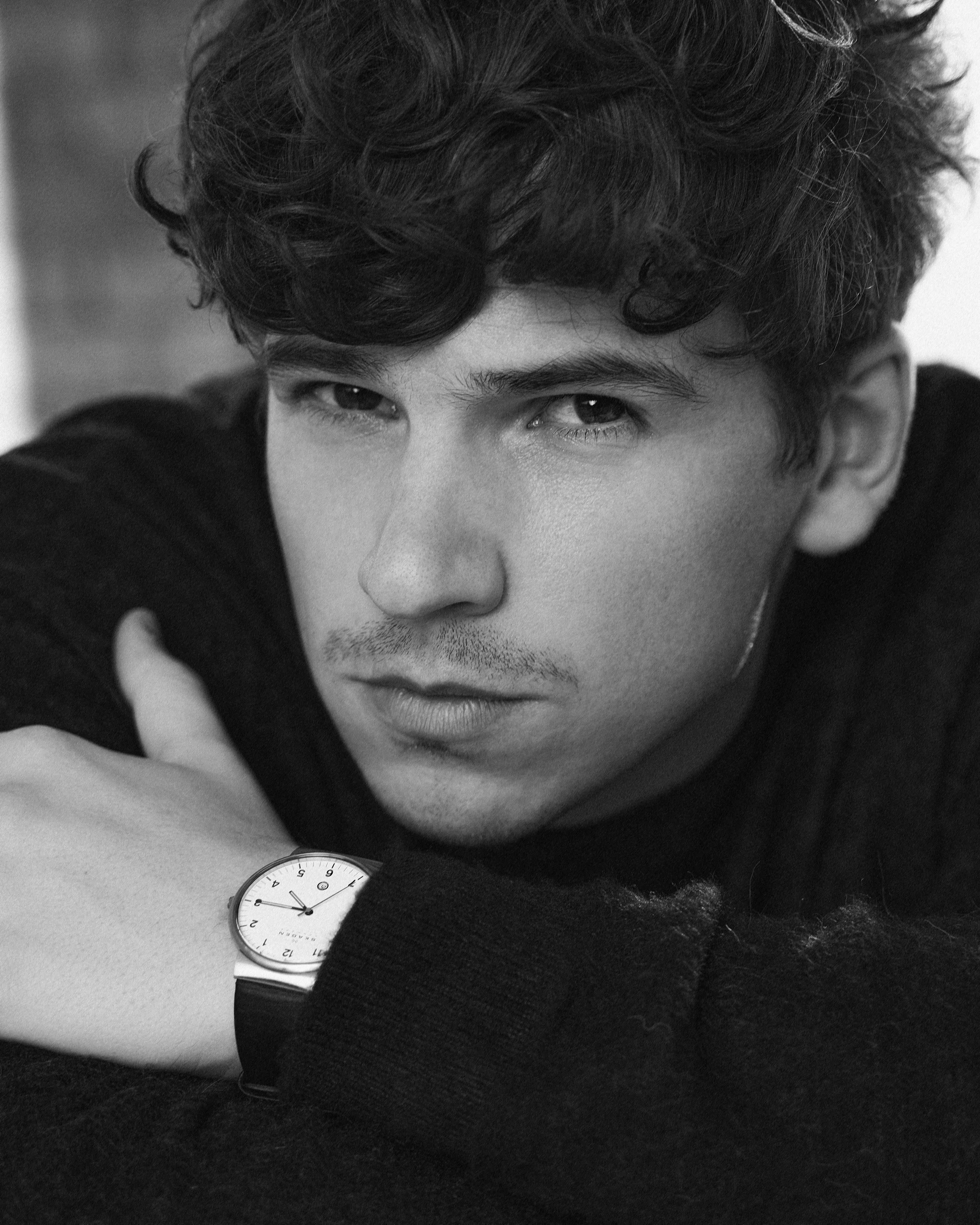
Knitwear - Berluti