
EXCLUSIVE: Samuel Barnett understands the responsibility upon him and the cast of Pride.

Photo credit: Faye Thomas
As a West End transfer of the hit musical, Pride, is confirmed Samuel Barnett discusses putting on his tap shoes, keeping queer history alive, and looks back at his debut role.
Words - Alastair James
Samuel Barnett stands atop a table. He’s wearing a perfectly fitted red jumpsuit. A kaleidoscope of lights transports him from a working men’s club in South Wales to the dancefloor. All around him people dance and sing, he’s leading everyone in a rousing musical number that’s not only one of Pride’s most joyful moments but also one of Barnett’s favourite bits of the show. He’s not so much on top of a table as he is on top of the world. “Every night I just think, ‘Oh my god! I'm absolutely living my musical theatre dream here,” The History Boys actor says. “I will not get a better musical role for me that's more perfect in terms of new writing,” he effuses. “But then on a personal level, as an achievement, as a dream of mine to do a proper West End musical, I'm doing it.”
Much like Barnett audiences, those who’ve already witnessed Pride’s brilliance and those who’ve missed out, can rejoice that the show is getting another life. Fresh off the press, it’s been announced that the show is transferring to the West End, the Bridge Theatre specifically with performances starting 12 November 2026. Pride will be the inaugural show for the state-of-the-art 900 seat theatre. Having enjoyed rave reviews at the National, Pride closes on 12 September, affording those staying with the show a small break. And with Barnett confessing to “living like a monk” due to the demands of the show, a break might not be such a bad thing. “This is the single most challenging job I have ever done. And it's also the most exhausting,” he shares of playing Jonathan Blake, a founding member of the activist group Lesbian and Gays Support the Miners (LGSM).

Photo credit: Manuel Harlan
Like the 2014 film of the same name the show follows the true story of LGSM and their support for the striking miners of South Wales, both disparate communities facing heavy persecution in the 1980s. At the same time as she worked to dismantle the coal industry, Margaret Thatcher and her government attacked the gay community while a devastating pandemic raged in the background. Barnett is “thrilled” to stay with the production as it moves from one home to another, having been with it for a preview run in Cardiff earlier this year. “I'm really excited that we're going to be launching [the Bridge Theatre] with its inaugural show.”
By any metric Pride has been a success. Two sold out runs and rave reviews from press and audiences alike speak to that. Barnett doesn’t read reviews but has been told “they're good.” As to why it’s had the resonance it has, consistently reducing audiences to sniffling wrecks by the end, Barnett theorises that being a musical allows it to access things it wouldn’t as a play. “It's so much more immediate, especially because there's music, which cuts past anybody's thinking and goes straight to the emotion.” I suggest, having seen the show in Cardiff and in London, that it feels accessible, which I clarify I don’t mean condescendingly. “No, I think that's a good thing,” Barnett agrees. “There's nothing wrong with accessible at all. The more people it can touch, the better. It really doesn't matter where you come from or who you are, you're probably going to get something from this.”
In discussing whether a play version would be as effective Barnett argues, “I don't see the point in doing something on stage that's a pre-existing screen work if you're not going to make it theatrical.” Taking ‘Light Perpetual,’ - a moving tribute to those lost in the Aids crisis - specifically, he reasons, “There isn't anything like that in a film. It was very important to stop the show and go this is what was going on, people were dying. There's PhDs out there about what culture would look like now if we hadn't lost a vast section of the queer community in the 80s and 90s. It's really important that this show also honours that as well as tells the story.”
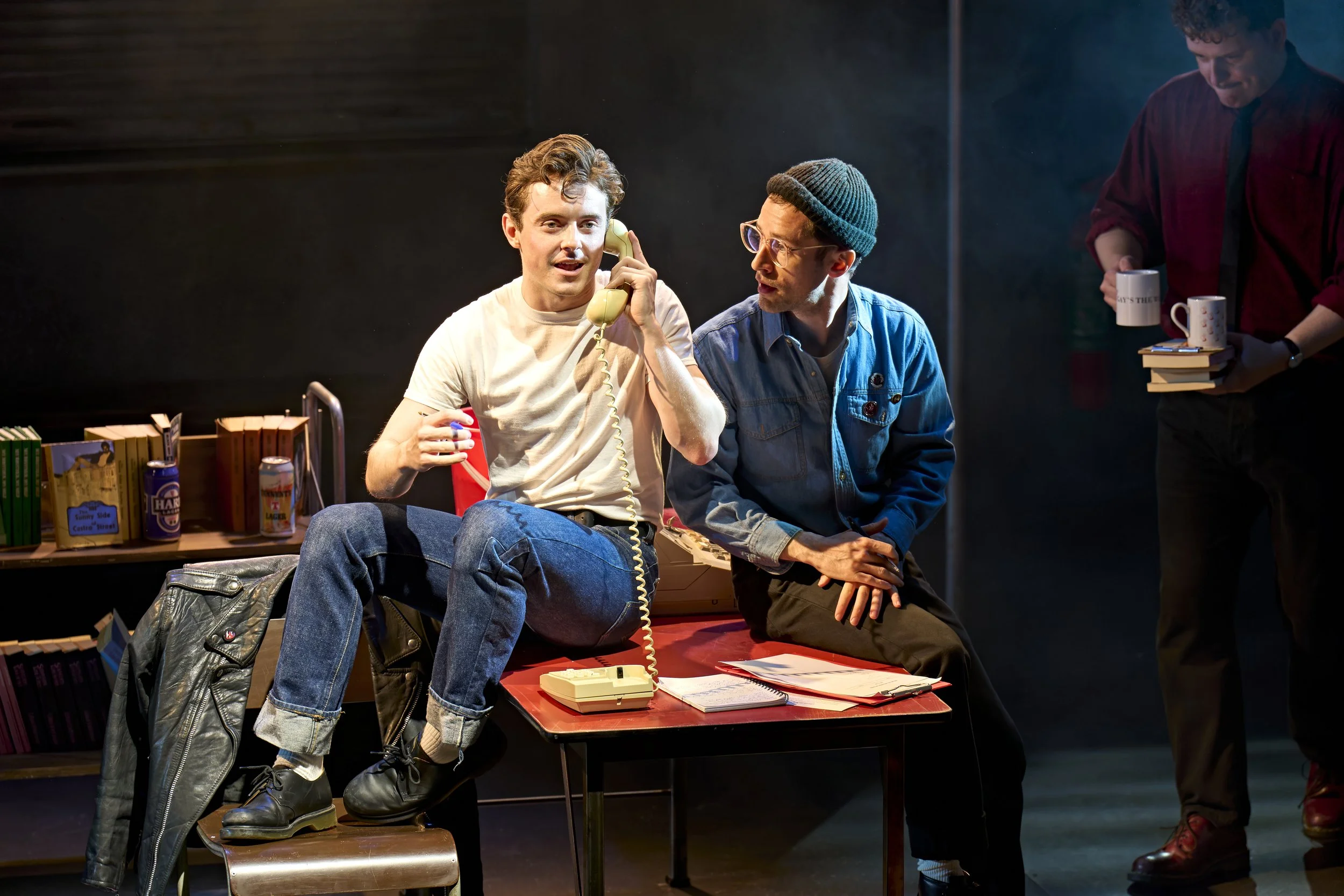
Photo credit: Manuel Harlan
Another reason it’s had such an impact is the subtle way it draws parallels to today’s world. Barnett’s had friends from across the political spectrum see the show, some identifying the similarities between the attitudes depicted towards gay people in the 80s with those aimed at the trans community now. “It's getting people to recognise each other's humanity and that's what drama can do,” he opines. He references Netflix’s Adolescence as another example of how drama can influence public discourse. “Pride is a Trojan horse in that way because it's a musical,” he picks up also suggesting that people’s negative perceptions of musical theatre allow it to pack a greater punch. “You're not necessarily expecting it to have such political heft, to be able to change minds, and it definitely is doing that.” Would Pride work if it wasn’t as subtle with its messaging? Barnett doesn’t think so. “Pride provides a dialogue for people internally to have with themselves. There's something about this show that causes them to connect with their own humanity and then with everyone else.”
As for playing Blake, played by Dominic West in the film, “It is such a privilege,” Barnett beams. Everything from The History Boys to his one-man show Feeling Afraid As If Something Terrible Is Going to Happen seems everything to have led to this moment where he’s perfectly poised to portray Jonathan. And while the 46-year-old wishes he was ten years younger, admitting his dancing was initially “rusty,” (he hasn’t danced for 25 years) watching him onstage it’d be hard for anyone to agree with this self-deprecating assessment. In particular, his opening number to the second act, “rusty” dancing or not, demonstrates all the qualities that make Barnett a standout performer; humour, comic timing, dancing, singing, and acting – it’s all there. Whether he agrees with that or not, he feels very lucky to be here. “Jonathan as a person is joyful and funny. He's had dark times in his life and a lot of grief, loss, and pain. And yet he's one of the most buoyant people I've ever met,” says Bennett of the man he’ll be sharing a lemon drizzle cake with two days after we chat. I’m told Blake is “thrilled” with how he comes off in the show. Bennett laughs, “He keeps saying, ‘I had no idea I could tap dance’.”
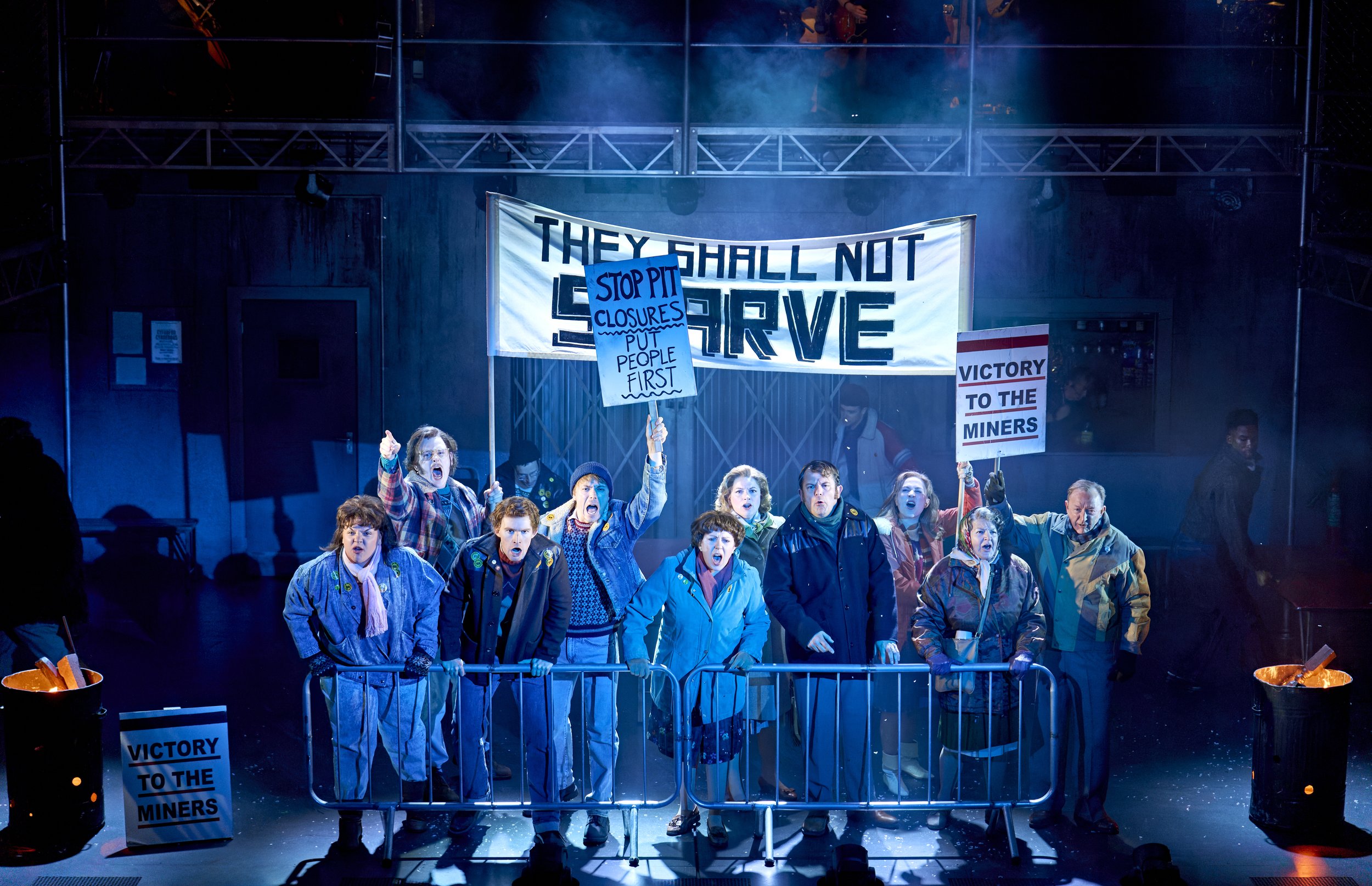
Photo credit: Manuel Harlan
Blake was one of the first people in the UK to be diagnosed with HIV. His story, like that of the LGSM, is important, not only to the queer community but to everyone. “We need to remember the prejudice that came with this because we do repeat things over and over again as humanity, we just forget,” says Barnett, all too aware of the vital significance of keeping this story alive. Acting may seem a frivolous pursuit at times but here the feeling of responsibility is tangible. Barnett wants to honour Blake’s activism as well as LGSM leader Mark Ashton (Jhon Lumsden), who died aged 26 from an Aids-related illness. “Every night it's like there are ghosts on the stage with us and it's important to remember those people because we stand on their shoulders. We have the rights we have today as queer people because of them and the rights are in danger of being rolled back.”
Reflecting on the changes in LGBTQ+ representation in the 22 years since The History Boys debuted at the National in 2004 Barnett sees cause for celebration. No longer do queer storylines and characters have to be morose, they can be joyful as seen with Jonathan in Pride. Sadly, it’s not the same across the board. “The representation of trans people it was reaching a really great point where you could just have a trans character who happened to be trans.” Barnett highlights Doctor Who, Heartstopper, and Orange is the New Black as examples. “That has changed so rapidly,” he laments. “And we know now it's because of the fundamentalist right-wing Christian lobby that are pumping money into this country to change the agenda.” He rejects any idea that because we do see more queer characters than we used to 20-odd years ago, that everything is fine. “This idea that the job's done or that we've gone too far one way, is absolute nonsense. Representation and normalising, that's what needs to continue to happen.”
Photo credit: Faye Thomas
As for the response he’s had over the years to playing Posner, a closeted gay man living in Yorkshire in the 80s (not so far removed from the Whitby-born actor’s own story), “it's hugely humbling and gratifying to be part of something that has helped people,” Barnett, who lacked any sort of representation to look to himself growing up, blushes. “Whether it's because of the parts that I've done or being visible, it moves me to think that that's helped other people. And now there's more, which is great. So, if I'm part of that movement, I'm really f****** pleased.”
Tickets for Pride will be available here from Wednesday 2 September with performances starting on 12 November 2026.