
Majesticks, Remastered
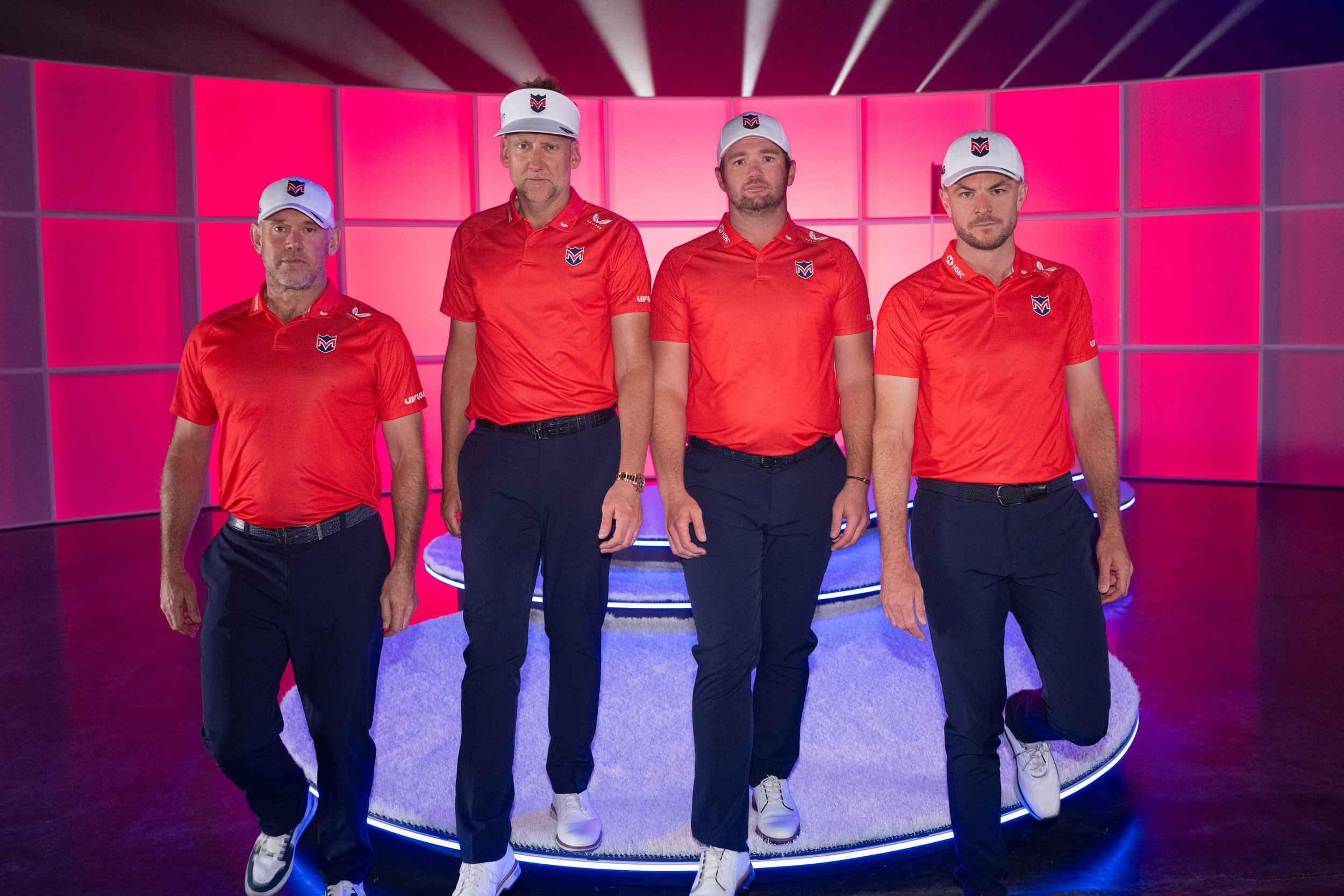
How LIV Golf’s only all-British team is redefining identity, heritage and ambition
There is something quietly powerful about clarity. In an era where professional golf is still recalibrating its future, Majesticks Golf Club has chosen to sharpen its focus—not by chasing novelty for novelty’s sake, but by returning to something elemental: identity. For the 2026 LIV Golf season, Majesticks arrives with a remastered brand, a refreshed visual language and, for the first time, a fully British lineup. Lee Westwood. Ian Poulter. Laurie Canter. Sam Horsfield. Four Englishmen, four distinct career arcs, unified under one banner. Red, white and blue. Heritage sharpened with intent.
What makes the rebrand compelling is not simply its aesthetics, but the timing. As LIV Golf matures beyond its disruptive adolescence, Majesticks is positioning itself as a franchise that understands both where the game has come from—and where it must go next.
“This rebrand represents who we are and what we stand for,” says Lee Westwood, Team Captain. “Golf in the UK has a long and influential history, so it’s great to be bringing that heritage to life through our identity. Alongside a team made up entirely of players from the UK, this makes it a truly special moment.”
For Ian Poulter, the shift is deeply personal. Few players have built careers as defiantly expressive, as proudly national, as Poulter. The new Majesticks identity, he says, amplifies something already ingrained. “For me, it’s a lot more impactful to wear red, white and blue—obviously being a proud Brit,” Poulter explains. “I love the team aspect. This kind of enhances it a lot more. To don the colours and represent Majesticks GC proudly—I think it’s going to be very cool for all of us collectively to wear that with pride.”
This isn’t nostalgia. It’s recognition. Britain’s role in shaping golf’s competitive and cultural DNA is unquestionable, and Majesticks is now the only team in LIV Golf explicitly built around that lineage. For Poulter, the symbolism matters as much as the scorecard. “We’ve collectively taken this great game to countries all around the world,” he says. “Now to represent where we’re from, properly, with a clear identity—I think it’s going to resonate with fans.”

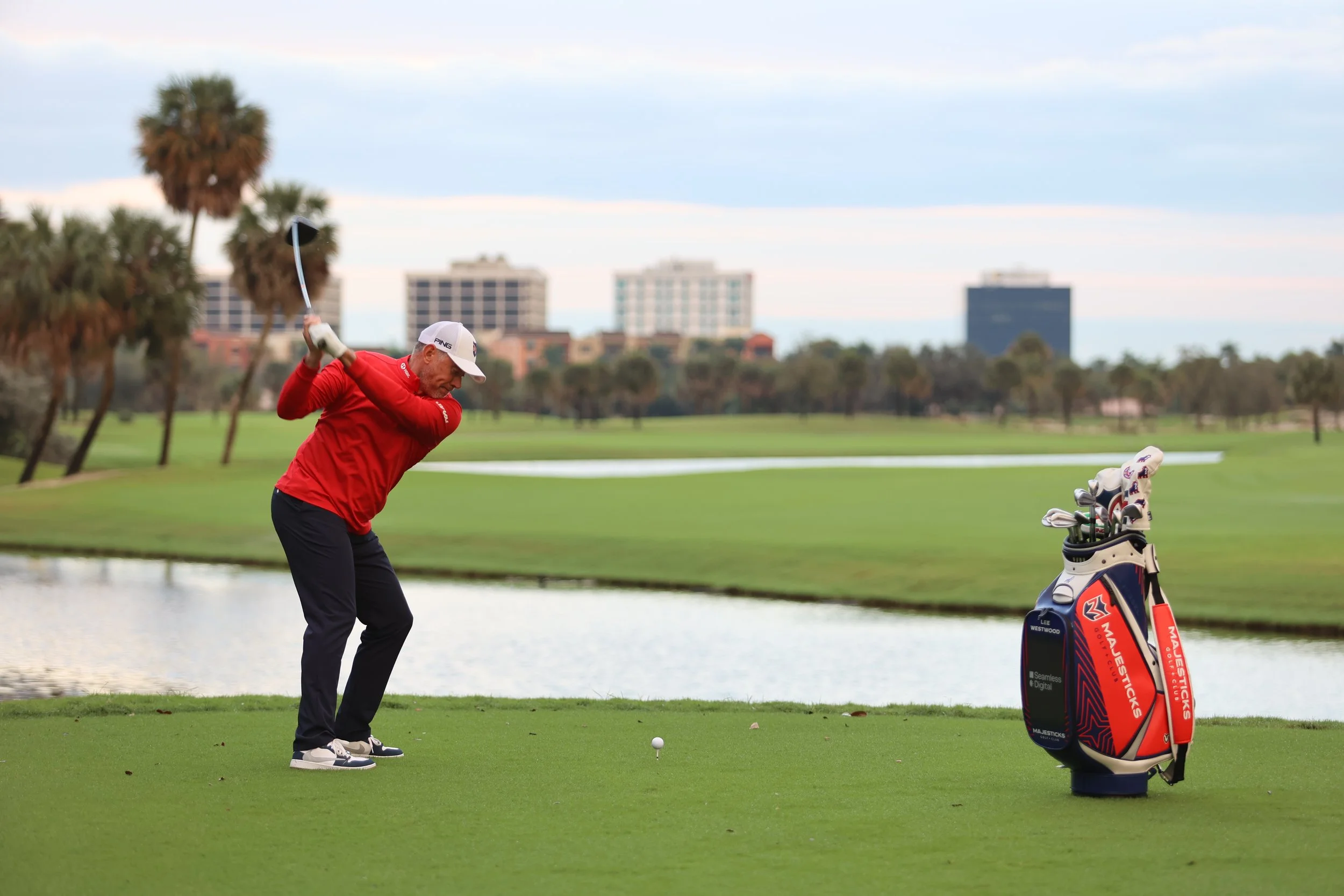

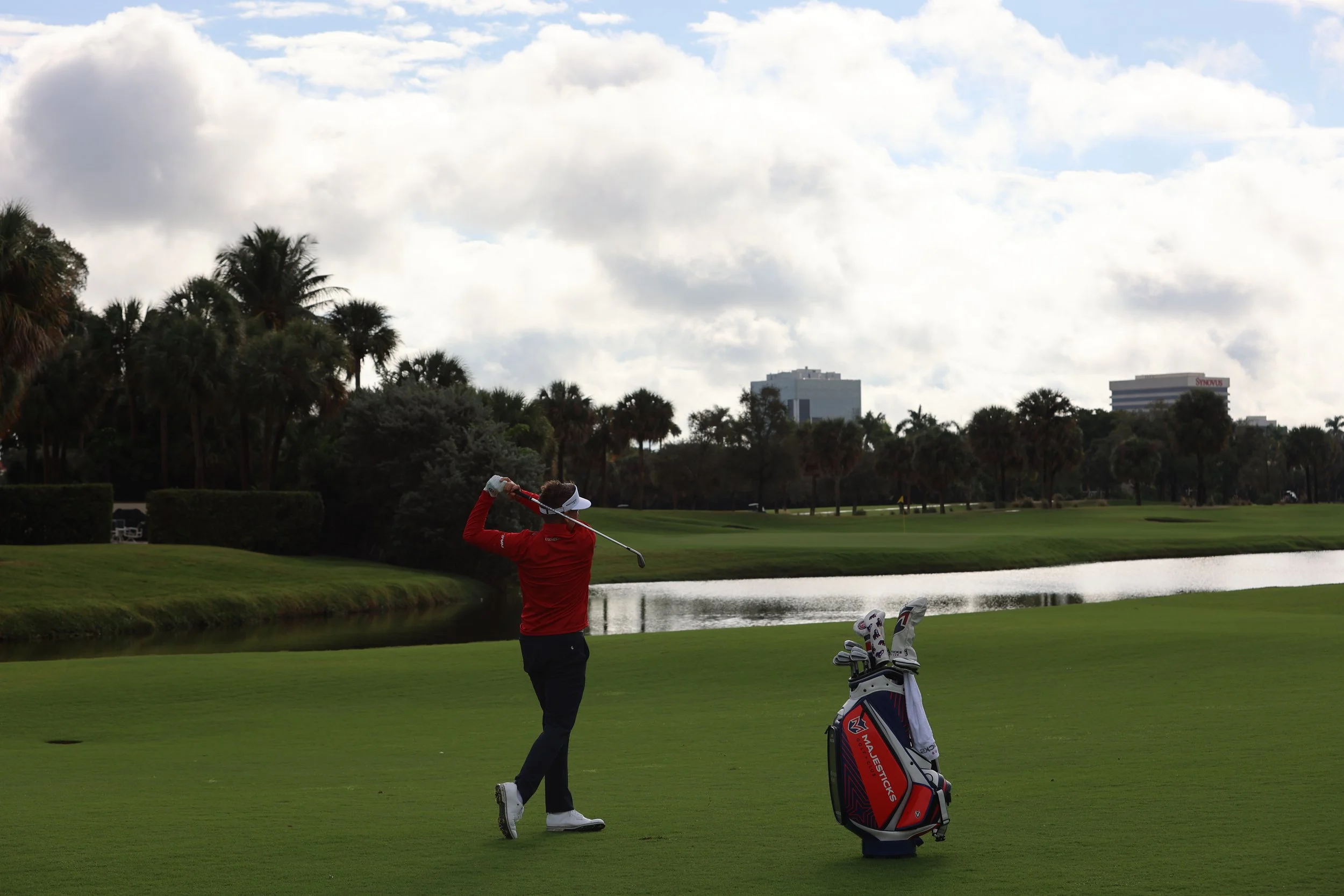
Westwood agrees. Having represented England, Great Britain and Europe across decades of elite competition, the emotional charge of national representation never dulls. “I’ve always had a very proud feeling representing my nationality,” he says. “Not just myself, but a country and a group of people. The colours of the Union Jack, the British bulldog—it all means something.”
Majesticks’ rebrand is also mirrored in its roster construction: legacy and progression, deliberately interwoven. Westwood and Poulter bring Ryder Cup pedigree, major championships and leadership earned in pressure environments. Canter and Horsfield represent the next chapter—globally experienced, tactically modern, hungry.
“We’re very lucky to have two British players of the pedigree of Ian Poulter and Lee Westwood,” says Laurie Canter. “What they’ve done in their careers, the pressure they’ve handled—it’s incredibly impressive. That legacy gives the team something solid to build on.”
But Canter is clear that reverence doesn’t mean rigidity. “There has to be a push and pull,” he says. “I hope me and Sam can light a fire under Ian and Lee at certain points, and I hope they do the same to us. A flock of birds is much stronger than a single bird.” That dynamic is already familiar to Sam Horsfield, who has spent the past two seasons learning from his more experienced teammates.
“They’ve been in pretty much every situation—on the course and off it,” Horsfield says of Westwood and Poulter. “The professionalism, how they carry themselves, how they handle pressure—it’s amazing to learn from.” The addition of Canter, returning to LIV Golf, strengthens the competitive spine. “Our only podium came when Laurie was on the team at the first event at Centurion,” Horsfield notes. “That gives us confidence. We know we can do it—we’ve done it before.”
What does it mean to be quintessentially British in modern professional sport? For Majesticks, the answer goes deeper than flags or colour palettes.
“If you trace it back to heritage,” Canter reflects, “it’s the stiff upper lip. Keeping going in the face of adversity. Turning up, being proud of who you are. That mindset is very true in golf—you don’t always have your A-game.” It’s a philosophy embedded in the team’s new visual identity: classic, restrained, resilient. The rebrand’s blue, red and white palette nods to tradition, but the execution is clean, contemporary, purposeful.
“This isn’t just about changing colours or a logo,” Poulter says. “It’s about pride, history, and representing where we’re from with confidence.” For Horsfield—who grew up in the United States but retains deep ties to the UK—the moment carries particular weight. “Being British means a lot to me,” he says. “I might have an American accent, but at heart I’m still as British as they come. Wearing those colours, representing the UK—it’s really special.”
LIV Golf’s early years were defined by disruption: shotgun starts, music on the course, a challenge to traditional governance. Westwood views that phase as necessary—but transitional. “LIV has shaken the game up,” he says. “It’s questioned monopolies, challenged the norm, and made golf cooler and more accessible—especially for younger fans.” Now, Majesticks is signalling maturity.
“I think we’re at a stage where Majesticks has to move past that initial disruptive phase,” Canter adds. “Rise above the mudslinging, and focus on the positive change the brand is bringing.” That includes community engagement through initiatives like Little Sticks, which introduces golf to children who might otherwise never access the sport. “We want to make an impression off the course as well,” Westwood says. “In communities, with young players, and by building a stronger fan base.”
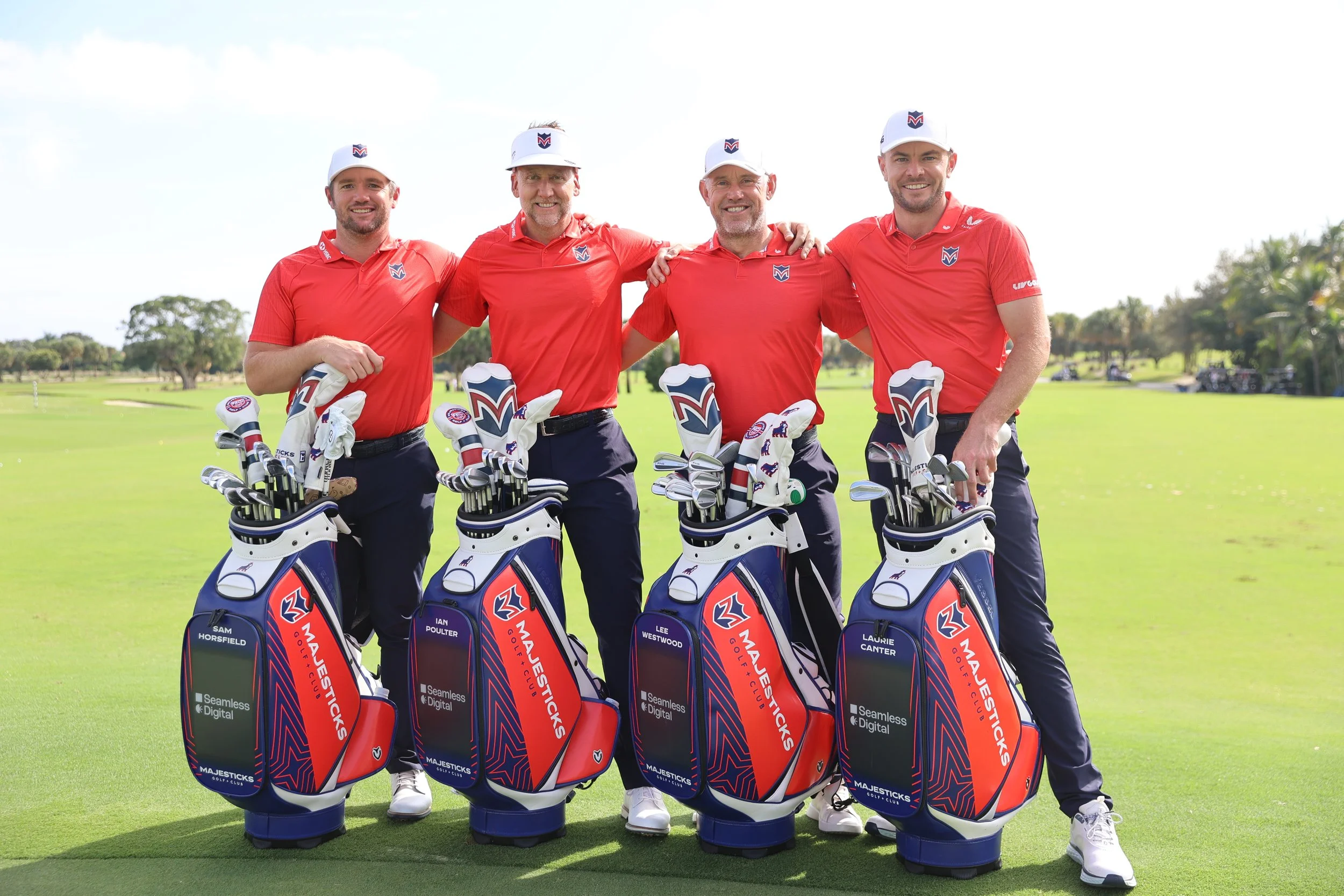
As Majesticks prepares to tee off the 2026 season in Riyadh, expectations are sharpened. The ambition is explicit: results must match the brand.
“I want the performances on the course to match where the brand is off it,” Canter says. “By the end of the season, I want us to be seen as a serious challenger for podiums.”
Poulter echoes the sentiment. “For us to be the British team—and a successful British team—is the statement,” he says. “Wearing the colours, doing great things, pushing the league forward and showcasing that around the world.”
For Westwood, the objective is dual: competitiveness and credibility. “Better results in 2026, absolutely,” he says. “But also building something lasting—something people connect with.”