
AT THE PASS: JEAN-GEORGES VONGERICHTEN ON THE BLACK PLATE, CULINARY INSTINCT AND HIS NEXT CHAPTER AT THE CONNAUGHT
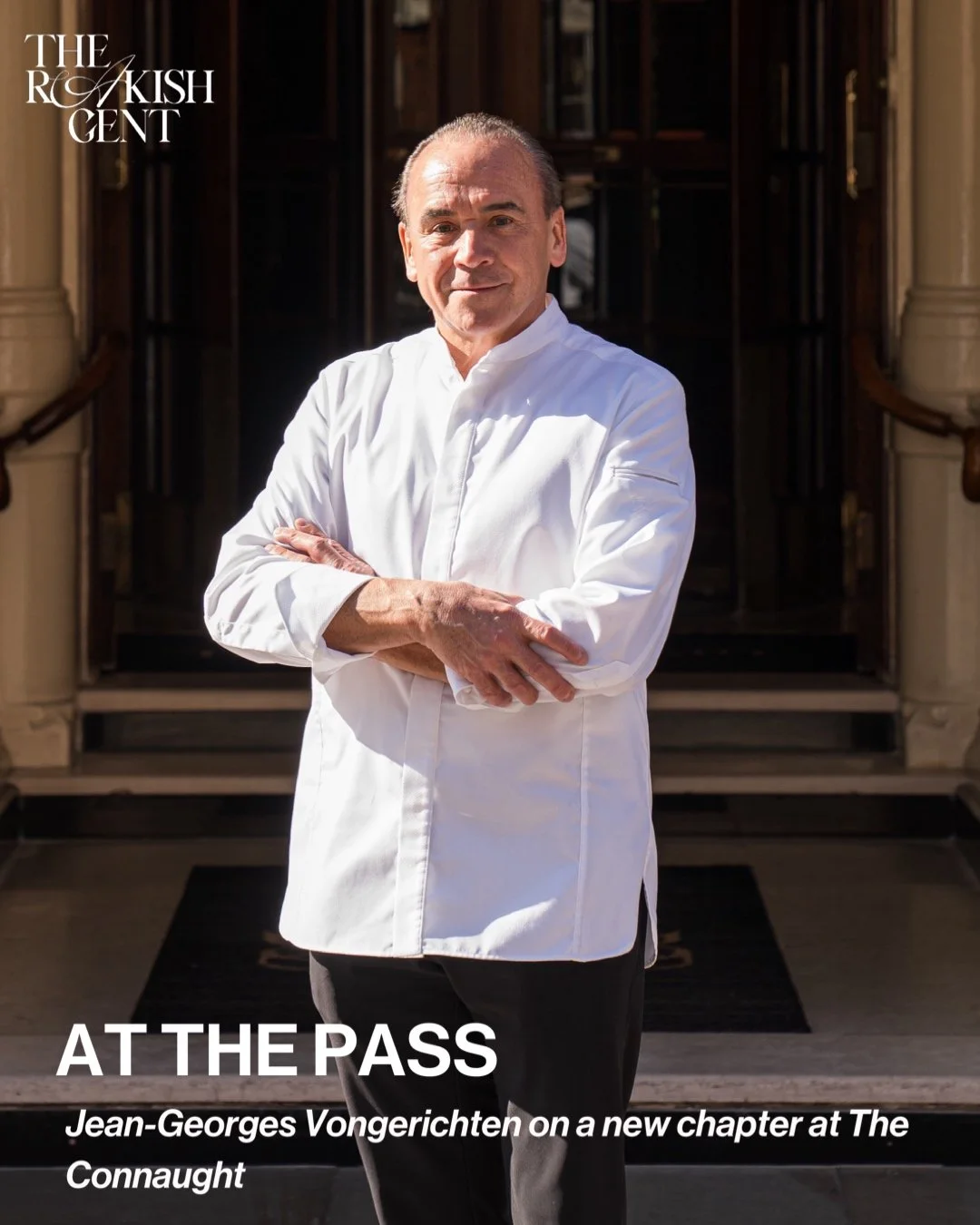
The chef who helped redefine modern dining returns to one of his most influential creations. At The Connaught, the Black Plate is back, bringing three decades of culinary history to a new generation of London diners.
There are chefs who build restaurants, chefs who build reputations, and a rare few who change the way people eat. Jean-Georges Vongerichten belongs firmly in the latter category. Long before the blending of French technique and Asian flavours became a familiar feature of contemporary dining, he was exploring what happened when the two collided, creating a style of cooking that would influence an entire generation of chefs.
Now, at Jean-Georges at The Connaught, one of the most recognisable expressions of that philosophy is back on the menu. The Black Plate, first created at Vong in 1995, returns as the centrepiece of a refreshed dinner offering, bringing together signature dishes that helped establish Vongerichten’s reputation for bold flavours, unexpected combinations and fine dining without unnecessary ceremony.
It is a fitting moment for a chef whose career has been defined by evolution rather than repetition. Across more than 30 restaurants worldwide, Vongerichten has demonstrated an ability to adapt his cooking to different cities, cultures and audiences without losing the sensibility that makes it unmistakably his. Yet the return of the Black Plate also raises an interesting question: what happens when a dish that helped define a chef’s past is brought into his present?
For Vongerichten, the story began with someone else’s idea.
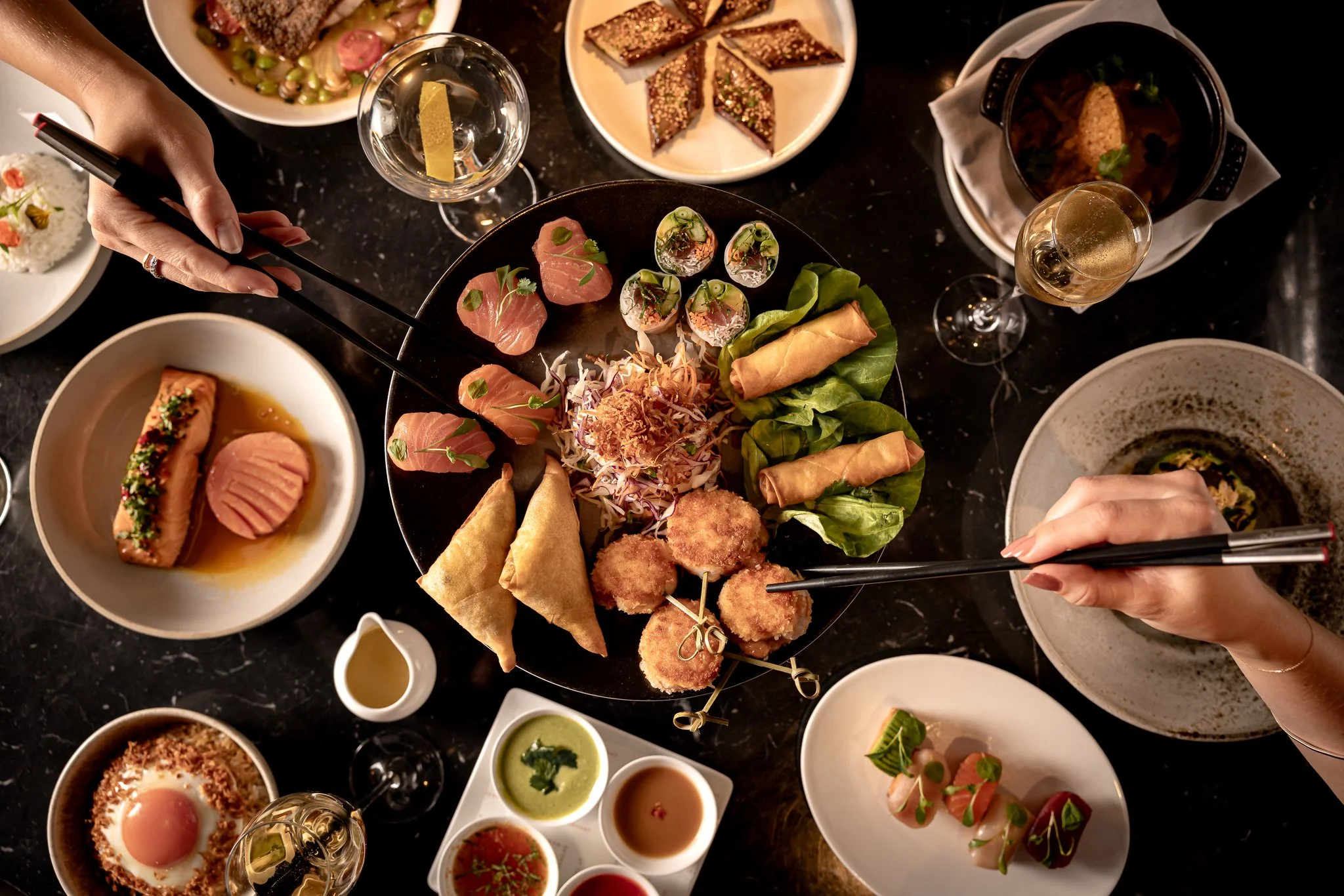
“It was actually the idea of our restaurant General Manager of Vong London at the time,” he explains. “He had the idea to do a plate of appetizers compiled from our best sellers, and the black plate was born.”
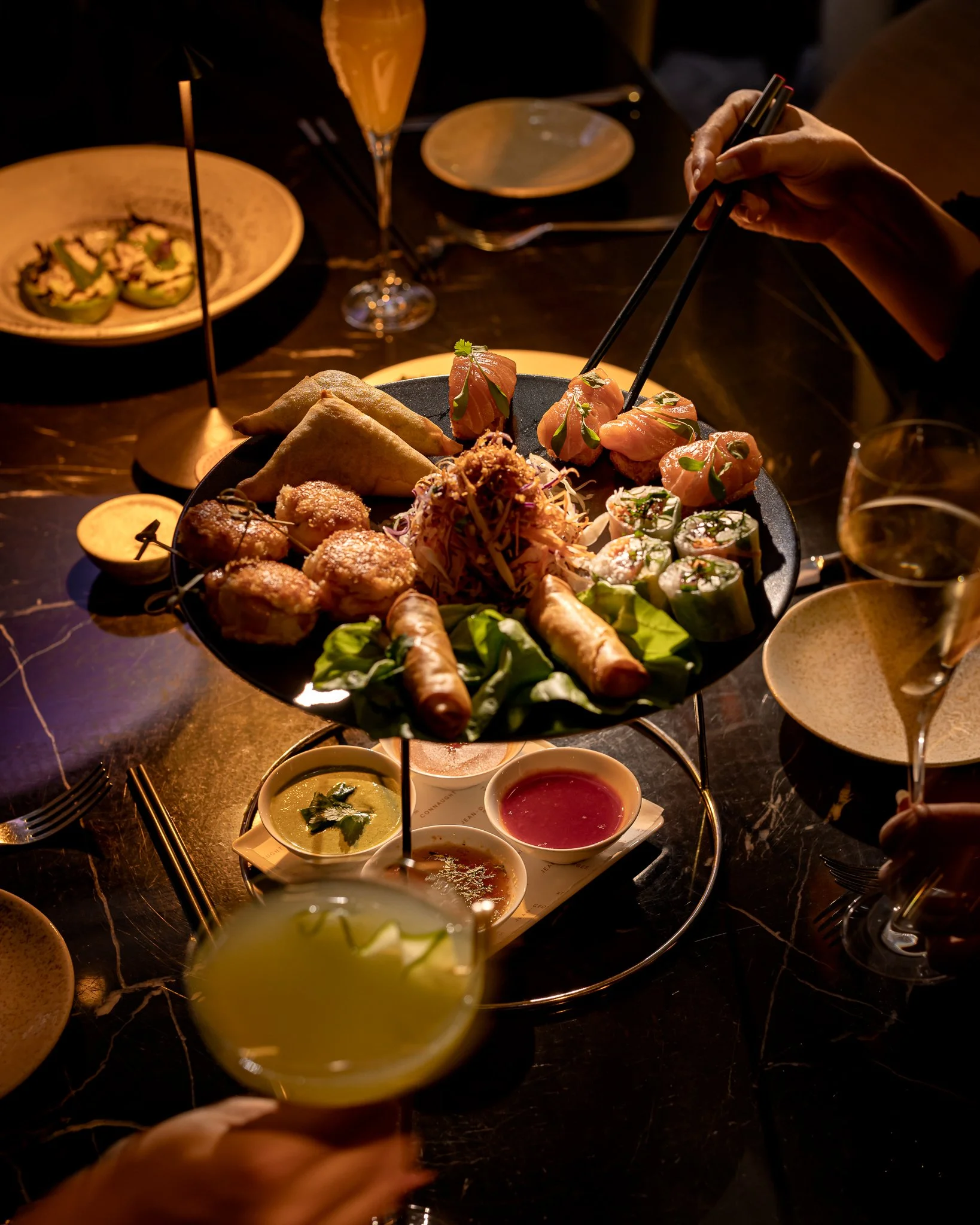
The concept was straightforward but effective: a collection of the restaurant’s most popular bites, presented together to offer diners an introduction to the kitchen’s thinking. Rather than committing to a single starter, guests could explore several flavours and textures in one sitting. The Black Plate became more than a convenient way to begin a meal; it was a distillation of Vongerichten’s culinary identity.
Its return to The Connaught brings some familiar favourites back into focus, including Crispy Salmon Sushi, Chicken Samosa and Raw Tuna in Rice Paper. Some elements remain unchanged, while others have been updated. The distinction matters. Nostalgia may be the initial draw, but the point is not to turn the restaurant into a museum of past successes.
“Today, some items are the same, and some have been updated,” Vongerichten says. “What it tells me is certain things are classic and don’t need to be touched, like the shrimp satay.”
There is confidence in knowing what to leave alone. In an industry that constantly demands the next innovation, the ability to recognise when an idea has already reached its destination is an underrated skill. The Black Plate’s enduring appeal lies in that balance: a format rooted in the past, with enough room to evolve alongside the chef who created it.
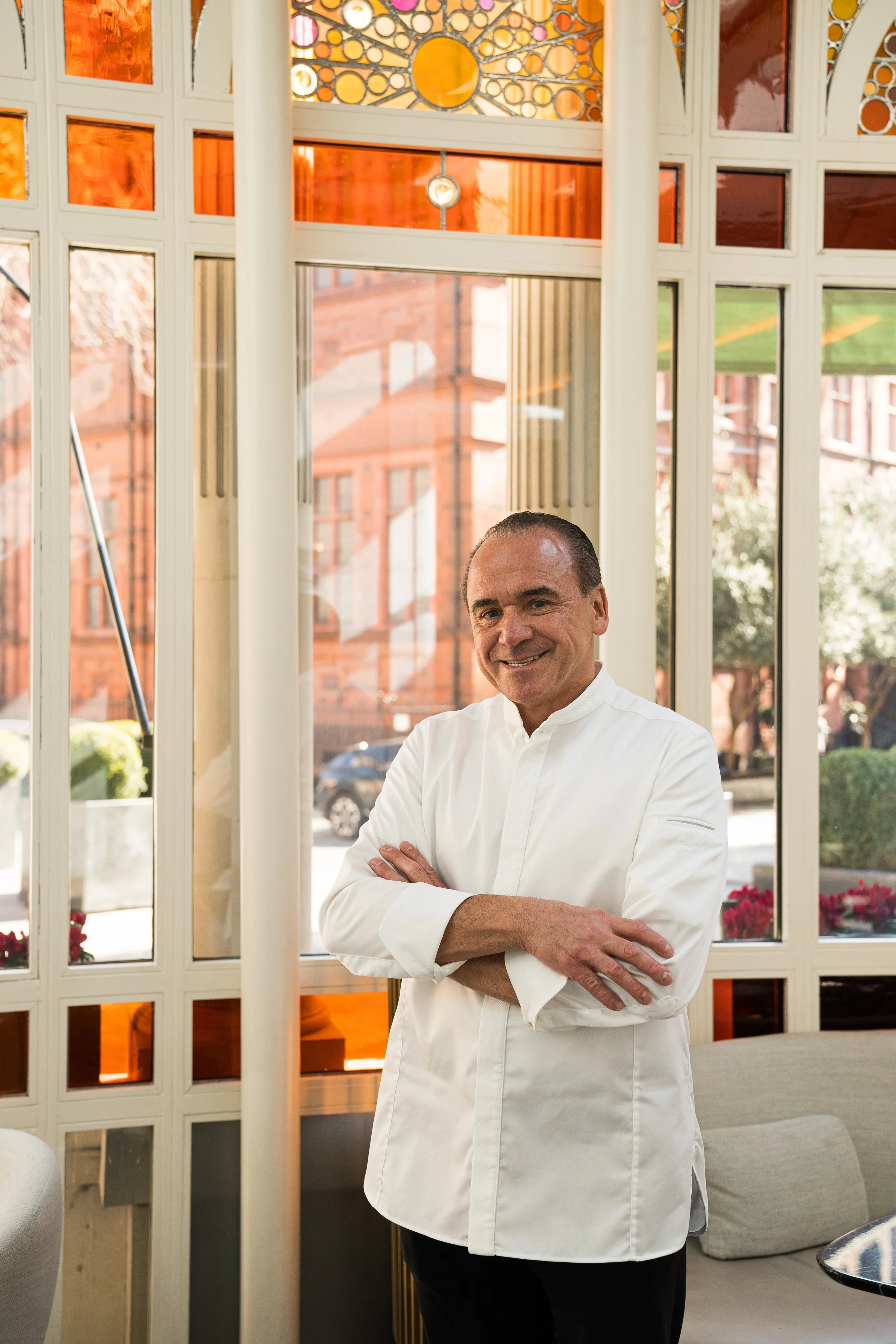
To understand why Vongerichten’s return to this repertoire matters, it helps to revisit the culinary landscape in which it emerged. Born and raised in Alsace, France, he trained under some of the country’s most respected chefs, including Paul Haeberlin and Paul Bocuse. His early grounding was in classical French cooking, but his subsequent travels through Bangkok, Singapore and Hong Kong introduced him to a far wider vocabulary of ingredients, aromas and techniques.
The result was not simply French food with Asian ingredients added for effect. It was a different way of thinking about flavour, one that challenged the assumption that fine dining had to rely on the familiar foundations of rich stocks, cream and conventional sauces.
Yet Vongerichten is quick to dismiss the idea that he set out to change the industry.
“No, I did not,” he says when asked whether he understood the influence his cooking would eventually have. “I was really just cooking from my classic French culinary background and my travels as a young chef through Asia. I had no idea it would be so influential and create fusion cooking.”
Perhaps that is part of the explanation. The most enduring shifts in cooking do not always begin with a manifesto. Sometimes they emerge from a chef following his instincts, applying what he knows to what he discovers, and remaining open to the possibilities between the two.
For Vongerichten, the instinct to balance flavours was present long before he travelled east. He traces it back to his Alsatian upbringing, where richness is traditionally countered by acidity, sharpness and freshness.
“Balancing flavours is a big part of Alsatian cuisine,” he says, pointing to choucroute, where rich meats meet the acidity of sauerkraut and the sharpness of mustard, or the fresh horseradish served alongside sausage or boiled beef.
His understanding of that balance, he explains, has not fundamentally changed. It has developed alongside the ingredients available to him. “I can use yuzu and sudachi now, instead of just lemon and lime; yuzu kosho instead of just jalapeño and herbs.”
That distinction is important. The philosophy remains consistent, but the possibilities continue to expand. Technique provides the structure; curiosity supplies the alternatives.
For a chef operating across a global portfolio, maintaining a recognisable identity without producing the same restaurant repeatedly is a considerable challenge. Vongerichten’s approach begins with geography rather than a signature concept imposed on every new location.
“When opening a restaurant, I start with the location before deciding on the concept,” he says. “What works in one neighbourhood may not work in another, and what is a fresh concept in one place may not be so in another. So, I always say to be in touch with your postcode.”
It is a deceptively simple principle, but one that explains the breadth of his work. A steakhouse in Las Vegas, a vegetable-focused restaurant near New York’s Union Square Greenmarket and a Latin-inspired concept in Doha do not need to share a menu to belong to the same culinary world.
What connects them is the attention to seasonality, local ingredients and the balance of flavours. The identity is not a fixed collection of dishes; it is a way of approaching them.
That philosophy finds a natural home at The Connaught, where the new menus draw on British produce while retaining the international sensibility that has long defined Vongerichten’s cooking. Cornish seafood and lamb, Scottish lobster and Hereford beef sit alongside flavours shaped by his travels through Asia. The ingredients are local, but the culinary reference points are anything but confined to Britain.
“We love visiting the farmers’ markets whenever we come to London,” he says. “The products here are so great. Sourcing locally has always been important to my restaurants and is the foundation of my cooking.”
For the new dinner menu, that means a more pronounced emphasis on sharing and discovery. The Black Plate leads into a selection of starters and larger dishes, while the ‘Simply Prepared’ section places the ingredient itself at the forefront. Cornish Lamb Chops, Scottish Blue Lobster and Cornish Dover Sole are paired with accompaniments including Padron peppers and Sriracha emulsion. Elsewhere, a returning Pad Pong cocktail nods to Vong’s history, while familiar British dishes and afternoon tea connect the restaurant to its London setting.
The aim is not to make The Connaught a London outpost of a restaurant elsewhere. It is to give the restaurant its own character within a much larger culinary vision.
Asked what he hopes guests will discover here that they might not encounter at his other restaurants, Vongerichten points to dishes created specifically for this menu. “I would love for guests to experience some of the new dishes, like the squid salad and duck curry. Those are currently unique to Jean-Georges at The Connaught.”
It is a telling answer. Even as the Black Plate revisits an established chapter of his career, the restaurant is not relying on history alone. The classics provide a point of connection; the new dishes give guests a reason to return.
For all the global reach of his restaurant business, Vongerichten’s priorities remain grounded in the fundamentals of cooking. Great suppliers, good ingredients and longstanding relationships have been constants throughout his career.
“My commitment to the farmers’ market and working with great suppliers has never changed,” he says. “I’ve been working with the same crab vendor in Maine for nearly 40 years, and those relationships have always been important to me.”
What has changed is access. The sourcing networks and technology available today allow chefs to establish a far more direct connection with the ingredients they use. In the United States, Vongerichten works with E-Fish, which connects his restaurants with fresh, wild-caught seafood from across the country, linking them directly to the boats supplying it.
For him, this is one of the most significant differences between cooking now and in 1995. The commitment to quality remains the same; the means of achieving it have become more sophisticated.
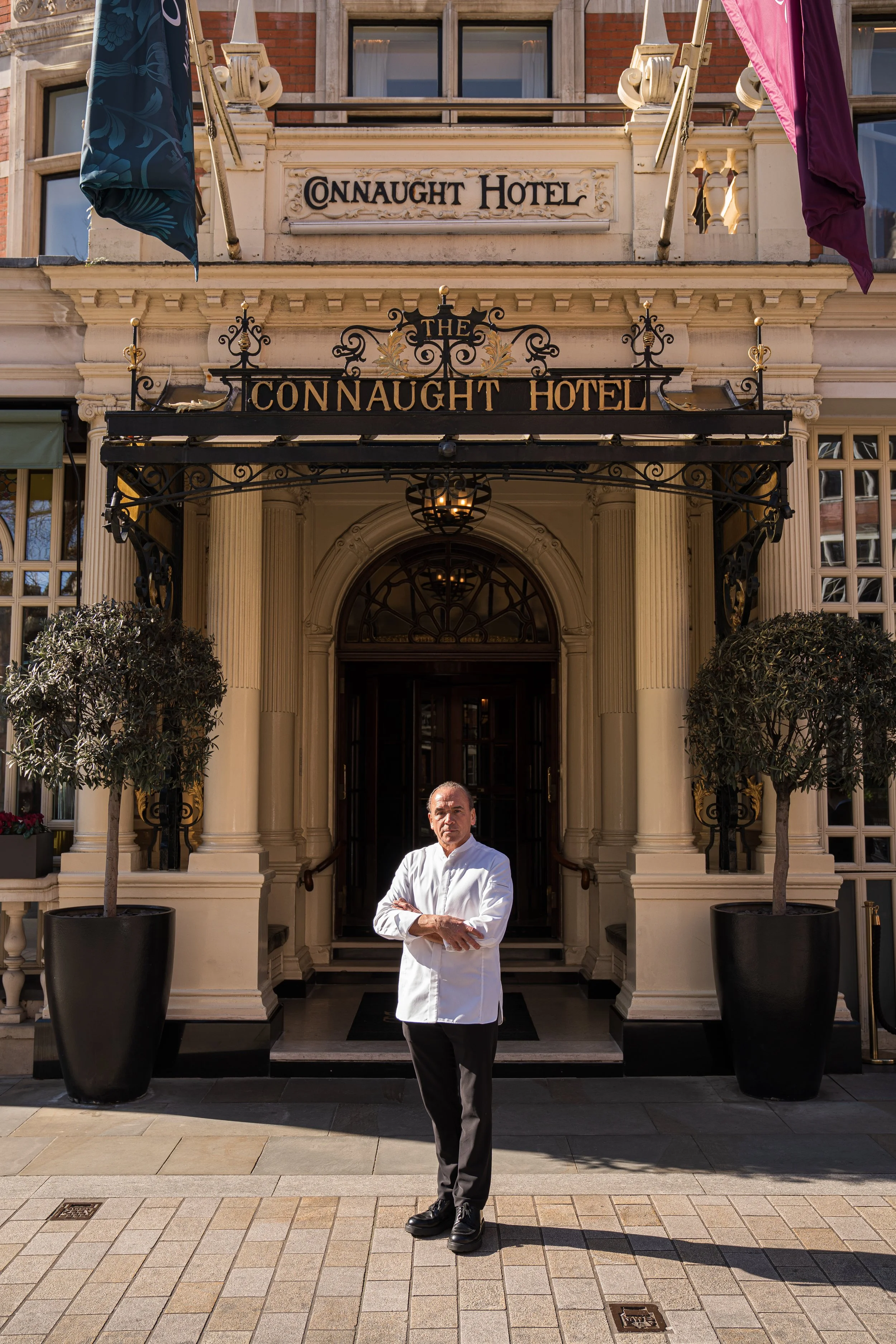
That focus on ingredients also informs his view of fine dining. Despite its reputation for elaborate techniques and expensive produce, he believes the category can sometimes overlook the potential of simplicity.
“I think fine dining can often overlook simple ingredients,” he says. “There is a complexity to simplicity that people sometimes forget. Sometimes a beautiful tomato at the peak of the season can be just as exciting as caviar or truffles. It’s really about the quality of the product and what you do with it.”
He also questions the assumption that an exceptional meal must occupy an entire evening. “I also don’t think fine dining needs to be a long, drawn-out meal. You should be able to have an exceptional dining experience without spending three or four hours at the table.”
It is an idea that sits comfortably with the Black Plate. Here is a chef whose cooking has helped shape the expectations of fine dining, arguing that its pleasures need not be complicated, intimidating or excessively time-consuming. The experience can be sophisticated without being solemn; the food can be technically accomplished without making a performance of its own complexity.
After decades at the forefront of the industry, Vongerichten shows little interest in treating experience as a reason to stand still. Ask what continues to make him curious in the kitchen, and the answer is characteristically open-ended.
“Everything keeps me curious — cooking techniques, ingredients, ingredient combinations,” he says. “I am always learning and have so much more to explore!”
London, in particular, continues to provide inspiration. Vongerichten has long admired The Connaught, and his relationship with the hotel remains an ongoing exchange rather than a settled arrangement.
“It’s the Connaught! I have always been a huge fan,” he says. “My relationship with the restaurant is constantly evolving. Every visit fills me with new ideas and new recipes. I always leave London inspired.”
That enthusiasm is significant in the context of the restaurant’s next chapter. The refreshed menus are being led in the kitchen by The Connaught’s Executive Chef, Ramiro Lafuente Martinez, working closely with Vongerichten’s vision. The result draws on the chef’s history without attempting to freeze it in time.
The Black Plate may have been born in 1995, but its return is not simply an exercise in looking backwards. It offers a reminder of the principles that have carried Vongerichten from his Alsatian beginnings to a global restaurant empire: curiosity, balance, a willingness to borrow ideas without losing sight of their purpose, and an enduring respect for the ingredient.
Three decades on, the most interesting question is not whether the dishes have stood the test of time. It is how a chef who helped change the direction of modern dining continues to find new possibilities in the fundamentals. At The Connaught, the answer begins with a black plate, a handful of familiar favourites and a menu that remains very much a work in progress.
Book a table at Jean-Georges Vongerichten at The Connaught.