
Dining Out: Akara, Borough Yards
London’s food scene is nothing if not ambitious. Every corner of the capital now seems to promise a ‘culinary journey’, a phrase so overused it often rings hollow. Yet walk into Akara in Borough Yards and the concept feels less like a marketing cliché and more like a genuine immersion. Opened in late 2023 by Aji Akokomi, the man behind Fitzrovia’s acclaimed fine-dining restaurant Akoko, Akara is a bold step into something different: an unapologetic celebration of West African flavours, designed for sharing, sipping and socialising.
Akokomi’s story is as compelling as the menu. A former IT project manager, he swapped spreadsheets for spices after years of hosting supper clubs at home. In 2017 he left the corporate world, studied at Leith’s, and then travelled extensively across West Africa – from Senegal and The Gambia to Nigeria and Ghana – to study traditional recipes and cooking techniques first-hand.
That immersion led to Akoko, which arrived in 2020 and immediately put West African fine dining on London’s culinary map. Akara, its younger sibling, is more relaxed but no less serious in its intent. It offers a stripped-back, modern space where dishes land with both punch and precision, showcasing the vibrancy of a cuisine too often overlooked in the capital.
If Akoko is fine dining’s theatre, Akara is its cool younger brother – stylish without being showy. Designed by London studio A-nrd, the restaurant sits within Borough Yards’ restored brick arches. The result is industrial but warm: exposed brickwork, soft grey walls, oak chairs and white limestone tables. The six-seater bar, clad in carved wood and topped with natural stone, glows invitingly under soft lighting.
Slip into a leather banquette and you’ll notice the calm restraint of the space. The palette is muted – grey, oak, stone – but the atmosphere hums thanks to the open kitchen at the back, where chefs plate up smoky seafood, vibrant sauces and the restaurant’s namesake fritters with an energy you can feel from the counter seats.
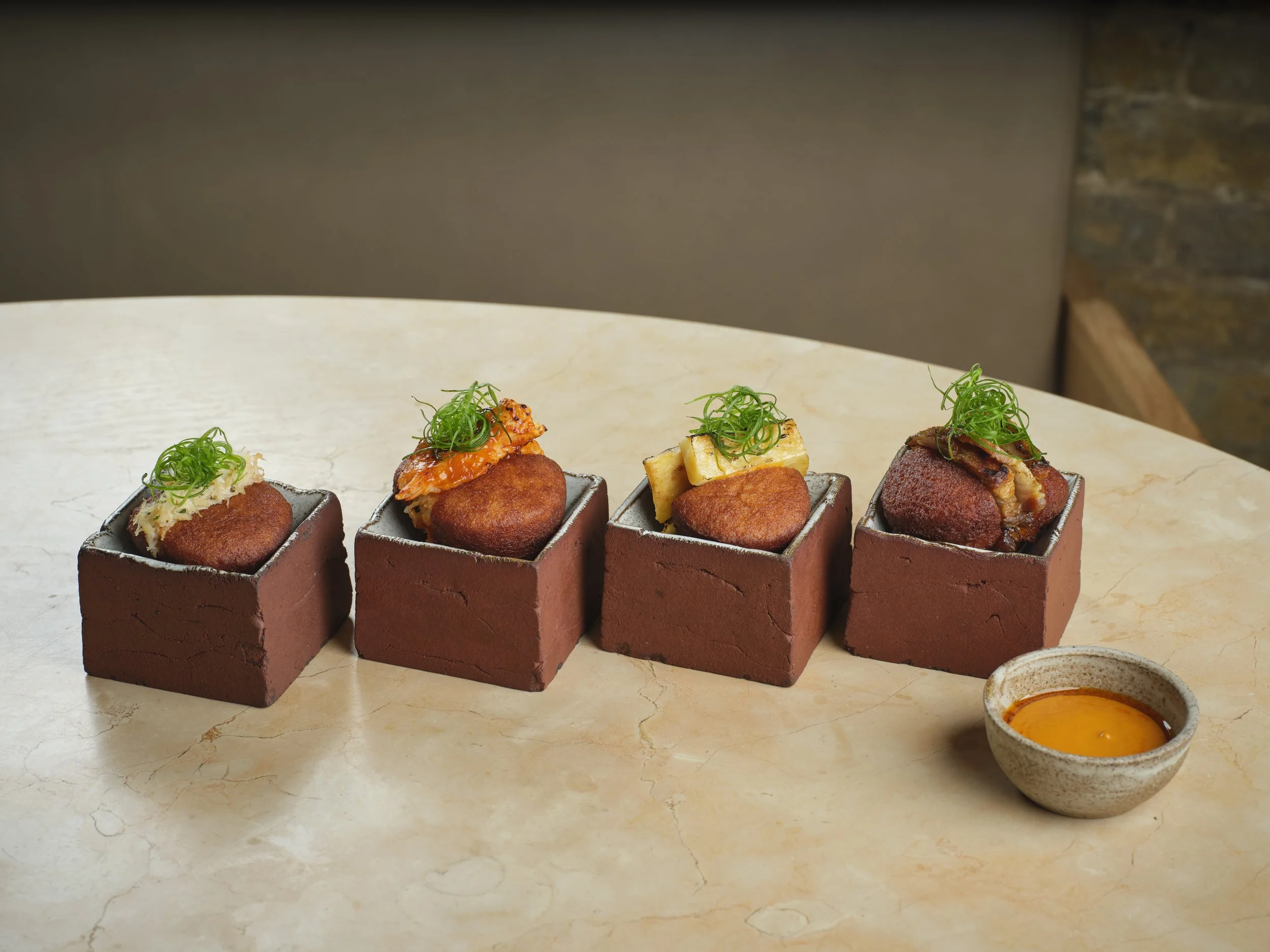
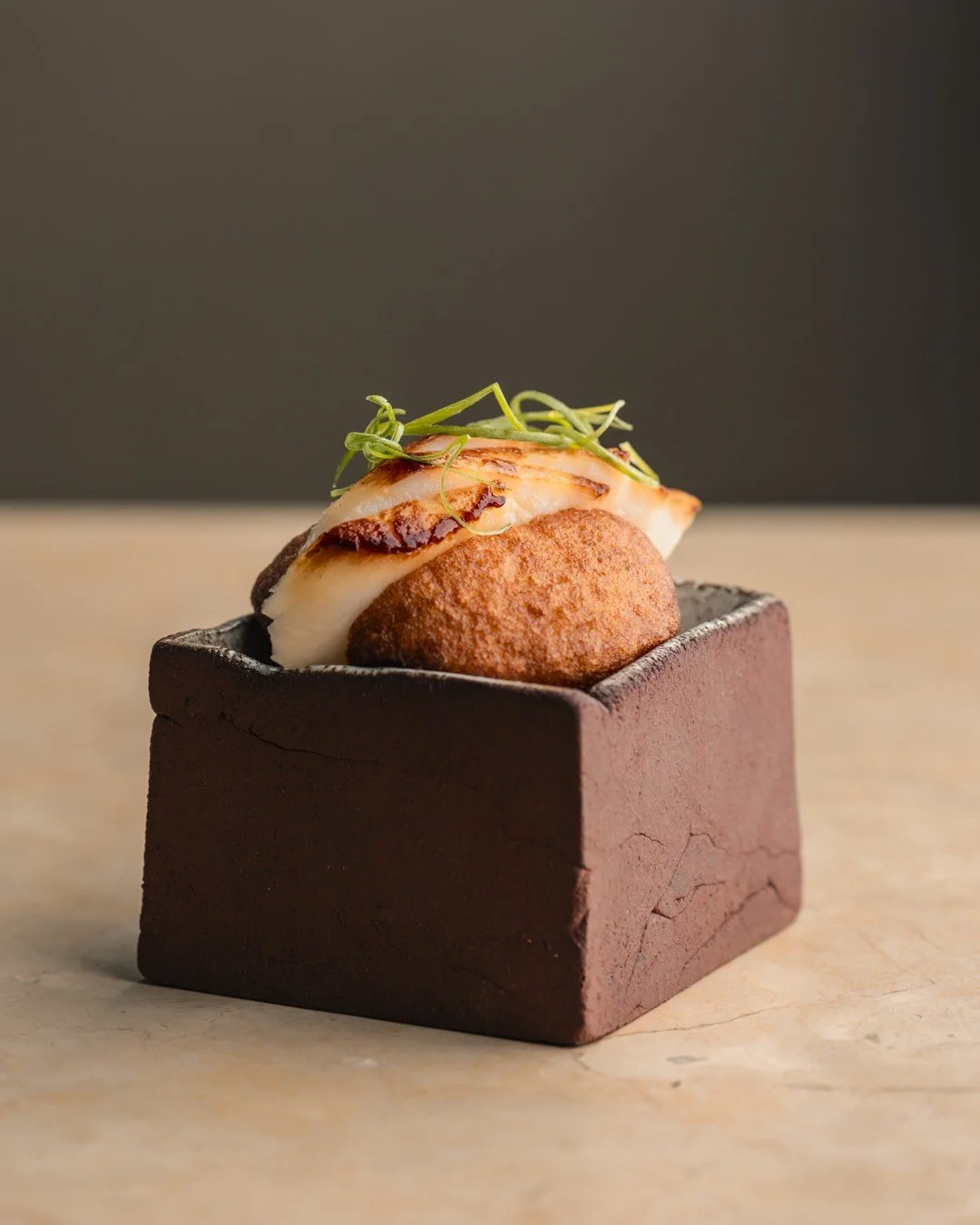
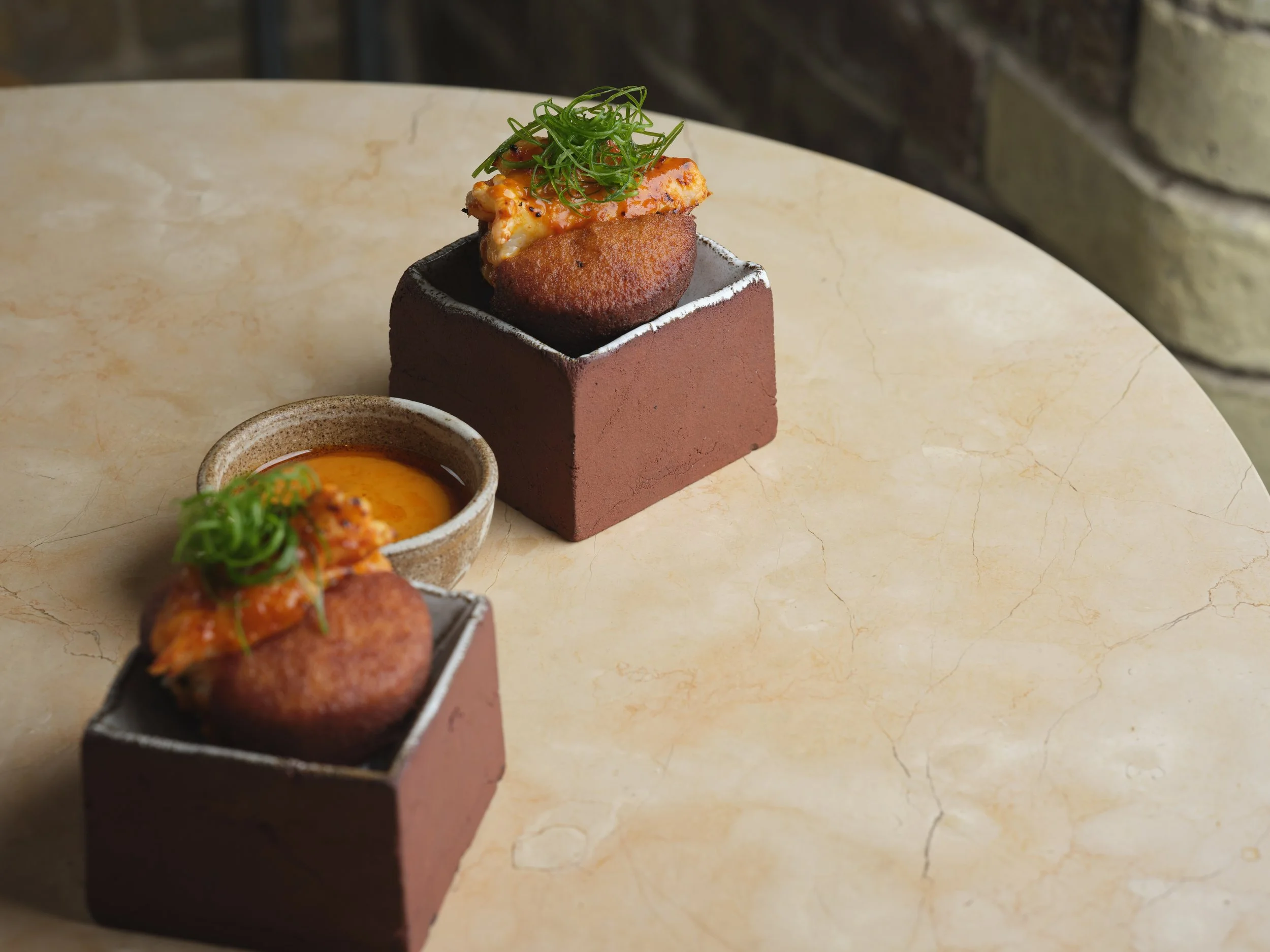
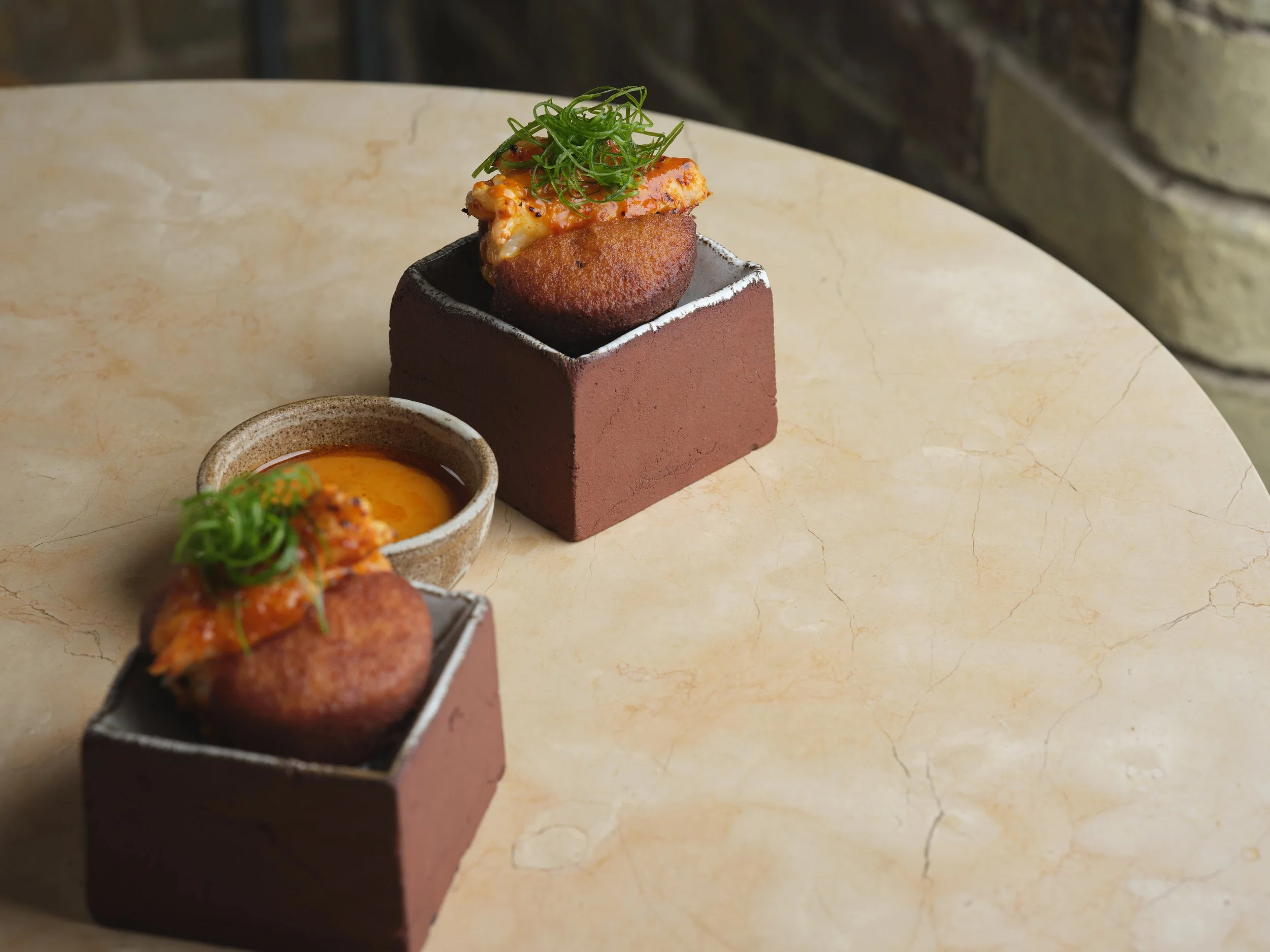
At Akara, the menu is built around akaras – black-eyed bean fritters with roots in West Africa that travelled to Brazil with enslaved Africans and became part of Afro-Brazilian cooking. Here, they’re transformed into delicate parcels filled with prawn, crab or tomato, accompanied by bean purée and a fiery Sosu Kaani.
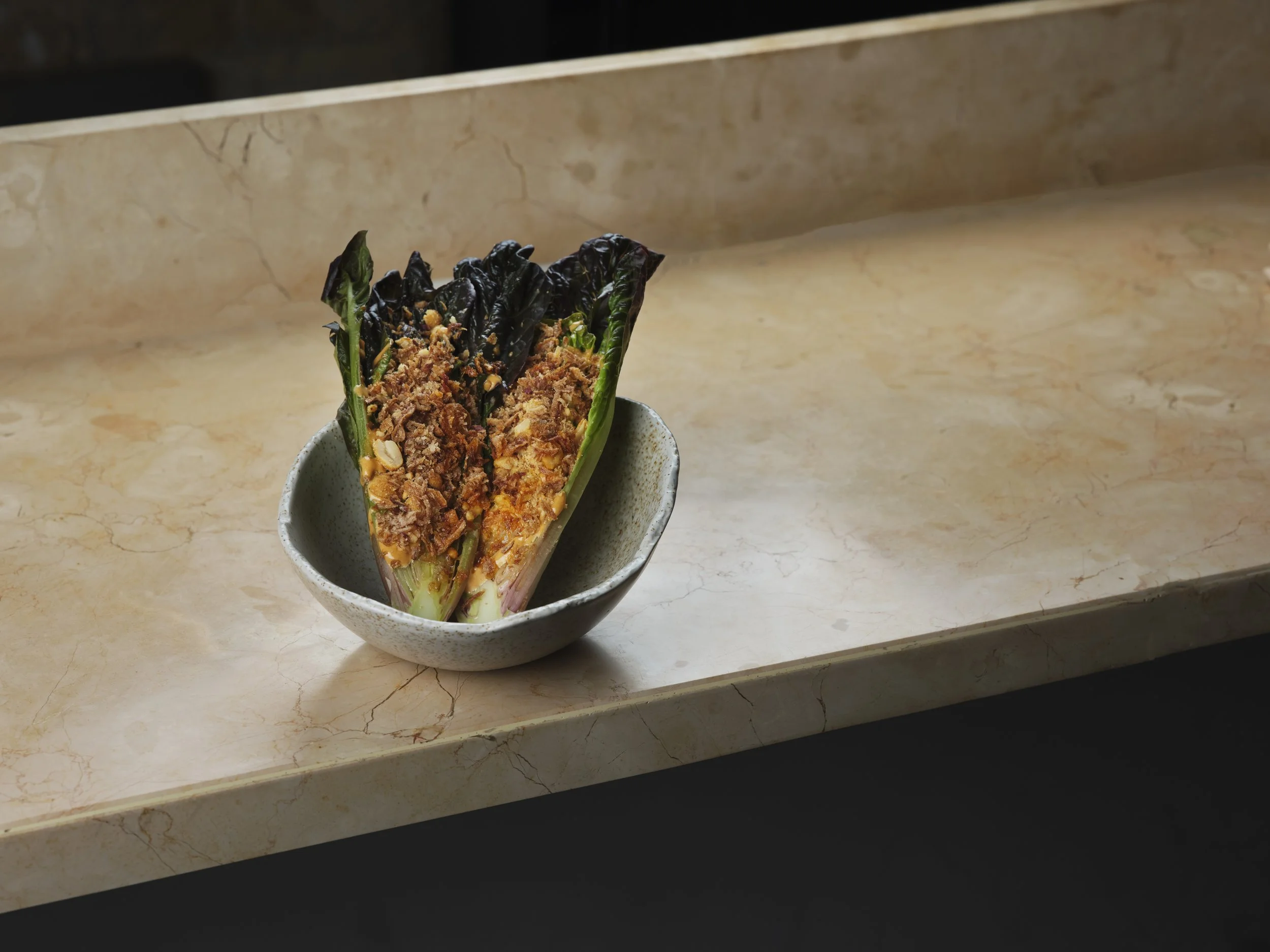
Before that, we opened with Sinasir Rice Pancakes topped with a black-eyed bean hummus – light, nutty and beautifully textured – and Beef Fataya, crisp pastry pockets that gave way to richly spiced meat, lifted by an Ata Din Din emulsion. Both dishes were immediate proof that Akara refuses to dilute or anglicise its flavours. Each bite arrived with heat, depth and authenticity – food cooked with conviction, not compromise.
From the larger plates, highlights included:
Lamb Dibi, grilled to smoky perfection and sharpened with mustard onion sauce.
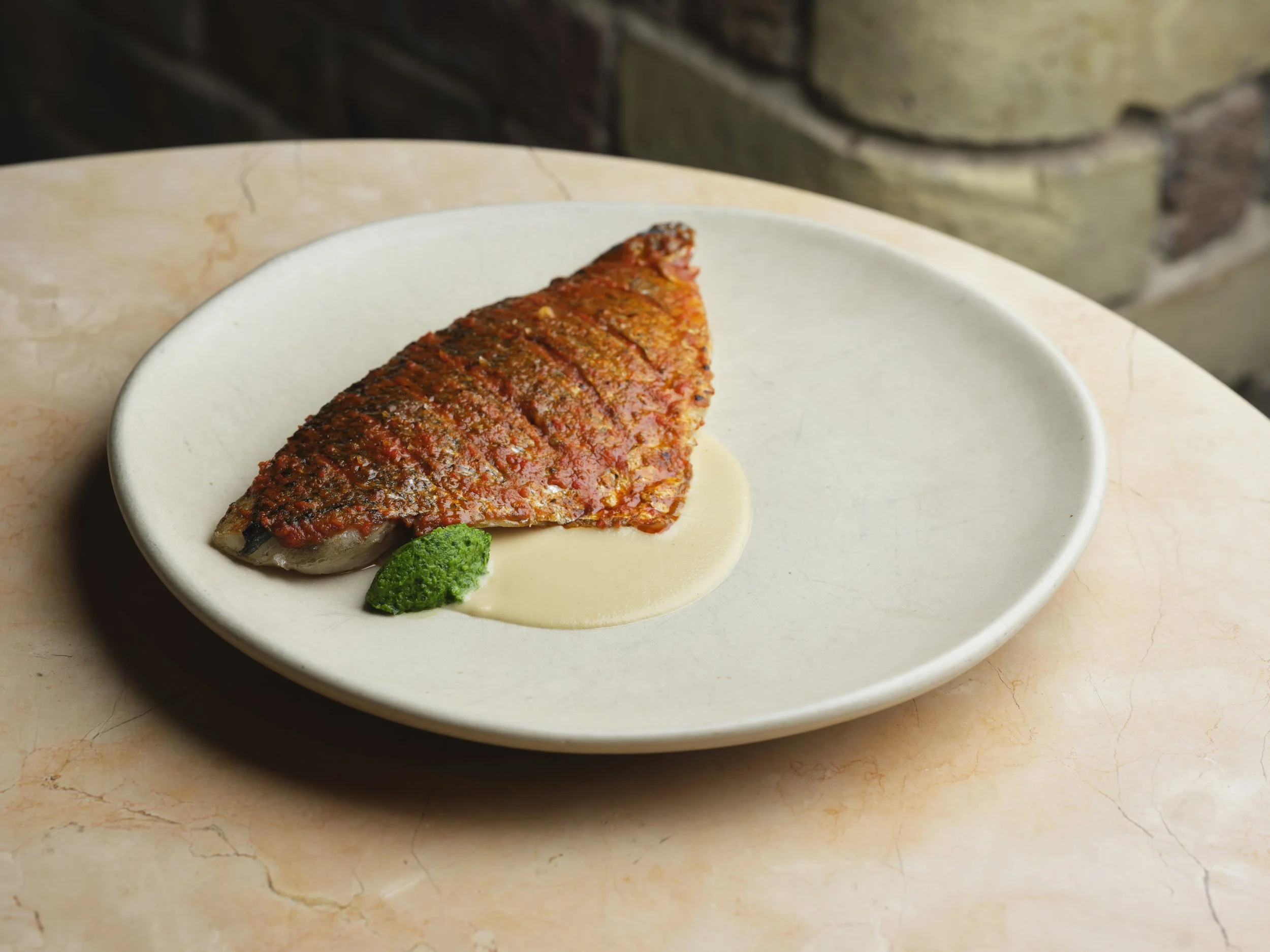
Butterflied Sea Bream, its skin crackling, its flesh brightened by green nokoss and sweet-sour yassa onion salad.
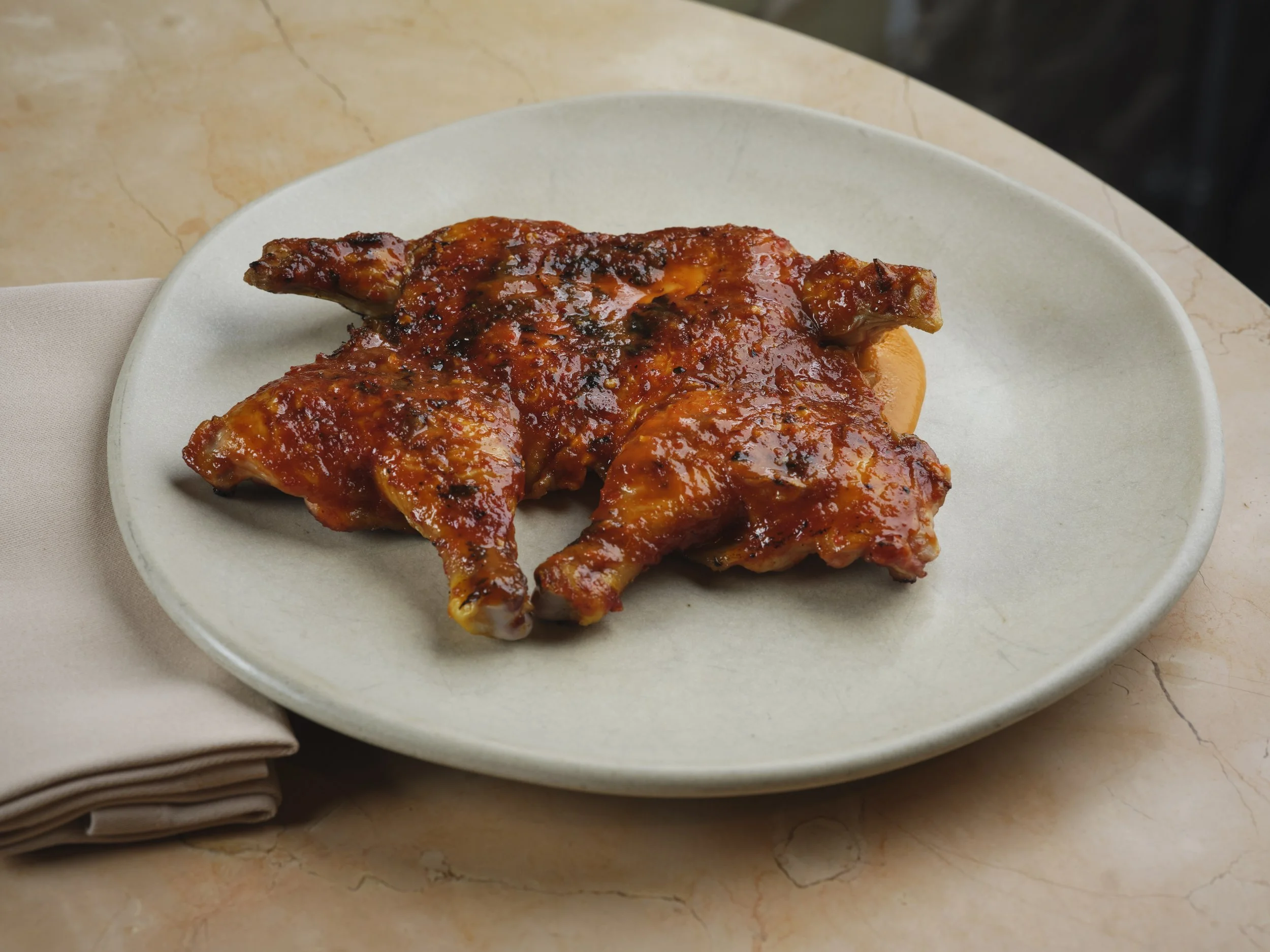
Lagos Chicken, a poussin charred just enough to lock in juices beneath a layer of crisp skin, served with a vibrancy that made it the standout of the evening.
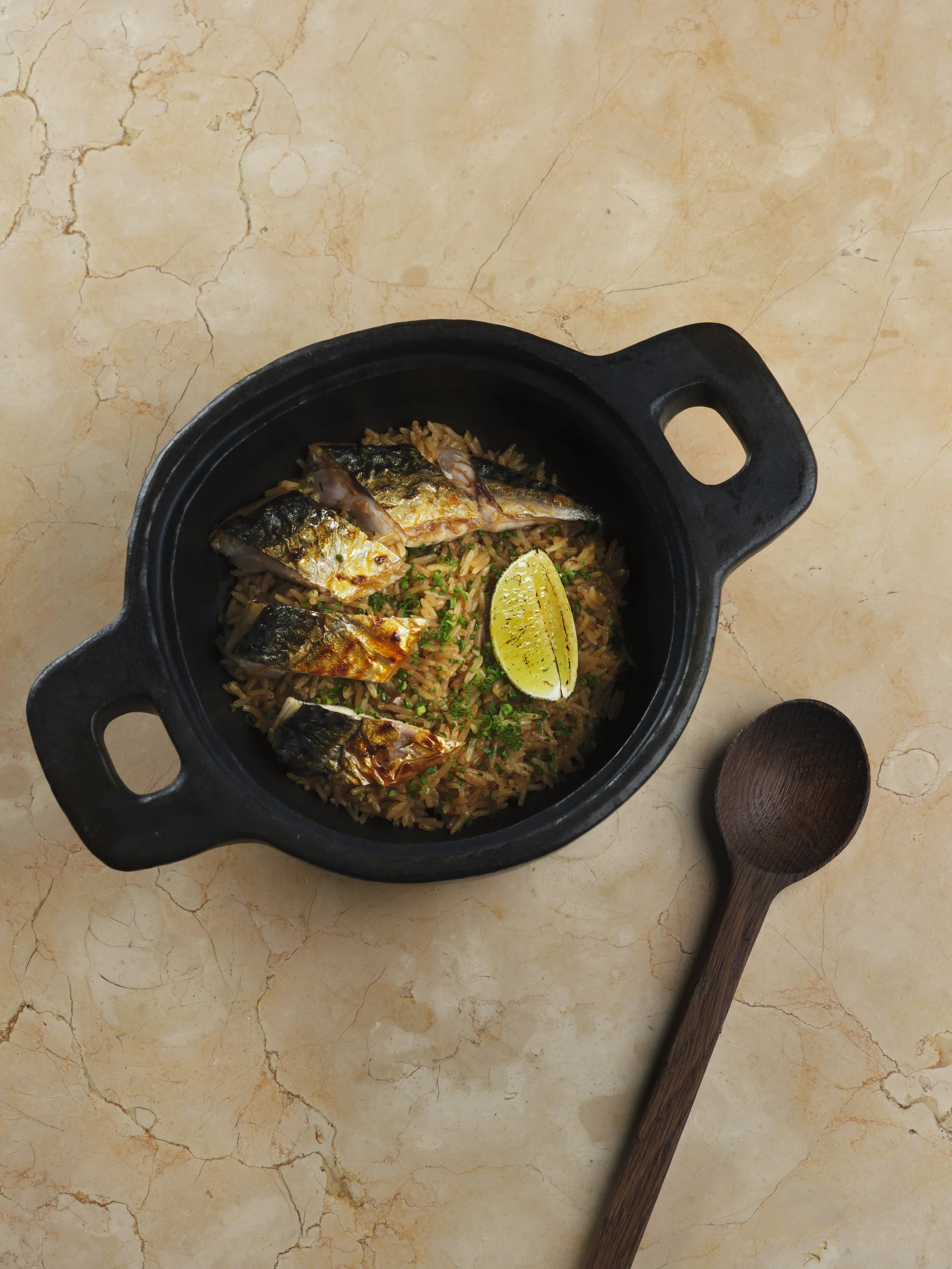
Efik Rice, fragrant, comforting and perfect for scooping up sauces.
The glossary printed on the back of the menu deserves mention: a thoughtful, educational touch that explains the origins of each dish, drawing diners into West Africa’s rich culinary lexicon.
The cocktail list balances tropical notes with bold spice. The Amoka mixed Afrique vodka with mango, papaya, aperitivo, passionfruit, lime, pineapple – then slipped in a hint of Scotch Bonnet for fiery intrigue. The Scotch Bonnet & Peach, meanwhile, was both refreshing and dangerous, the sweetness of peach soda disguising the kick of chilli.
For those leaning away from cocktails, the wine list is equally sharp. With 32 bottles (14 by the glass), it champions lesser-known varietals, each chosen to hold its own against Akara’s bold flavours rather than being drowned out by them. Prices range from approachable (£7 a glass) to celebratory (£130 a bottle), with enough breadth to satisfy both casual diners and serious oenophiles.
Here’s the thing: Akara isn’t a ‘big dinner’ restaurant. Portions are deliberately lean, designed for grazing alongside drinks rather than for a three-course blowout. That means you could easily assemble a meal of snacks and akaras that works brilliantly as a long, cocktail-fuelled evening, but anyone expecting heaping plates may find the mains a touch modest.
In many ways, though, that’s part of the charm. Akara excels as a social dining space – a place for discovery, sharing plates, conversation and cocktails, rather than a formal dinner destination. Think of it less as a rival to the city’s heavyweight tasting menus and more as a stylish counterpart to Borough Market’s bustle, where you sit under glowing arches and eat food that hums with history, migration and modern creativity.
London has no shortage of restaurants that claim to be global, vibrant or ‘inspired by travel’. Akara doesn’t need to claim. It simply is – rooted in Aji Akokomi’s lived experiences, in the traditions of West Africa, and in a desire to put those dishes on the table exactly as they should be. There’s no pandering to Western palates here, no watering down of heat or spice. Instead, you get something uncompromising, confident and deeply satisfying.
In a city addicted to novelty, that honesty feels refreshing. Borough Yards may be better known for its shopping and tourist-friendly proximity to the market, but Akara is worth seeking out on its own.
Akara sits firmly in the territory The Rakish Gent loves most: food and culture that are stylish, original and intelligent without losing their soul. It’s not a white tablecloth experience, but it doesn’t try to be. Instead, it’s a restaurant for modern London – a place where friends order too many cocktails, pass plates back and forth, and discover flavours that feel both entirely new and deeply timeless.
Book a table at Akara.