
AT THE PASS: PETER SANCHEZ-IGLESIAS
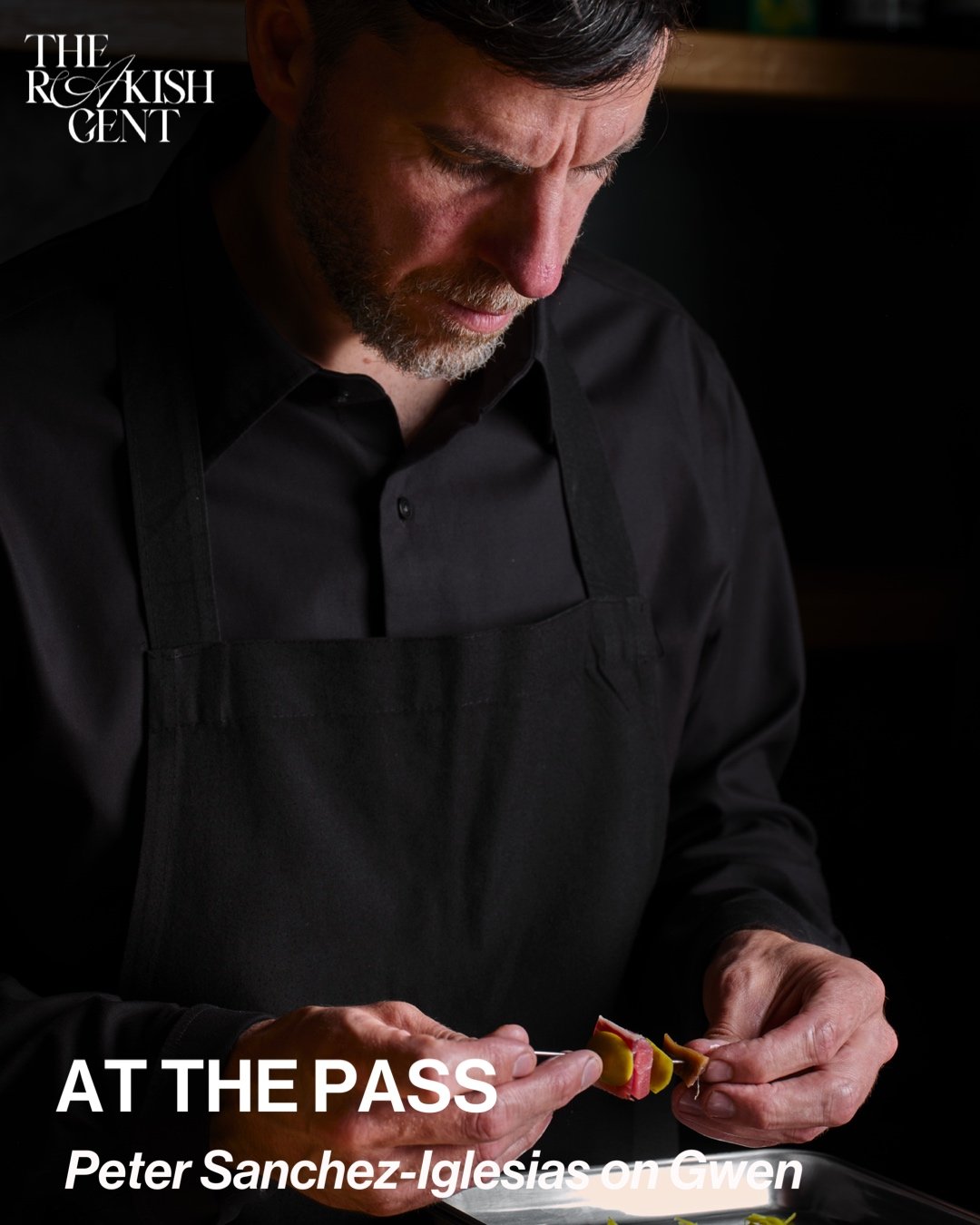
Peter Sanchez-Iglesias on Gwen, cooking with instinct, the power of fire and why eight guests can be more exciting than 150.
There is something deliberately radical about making a restaurant smaller.
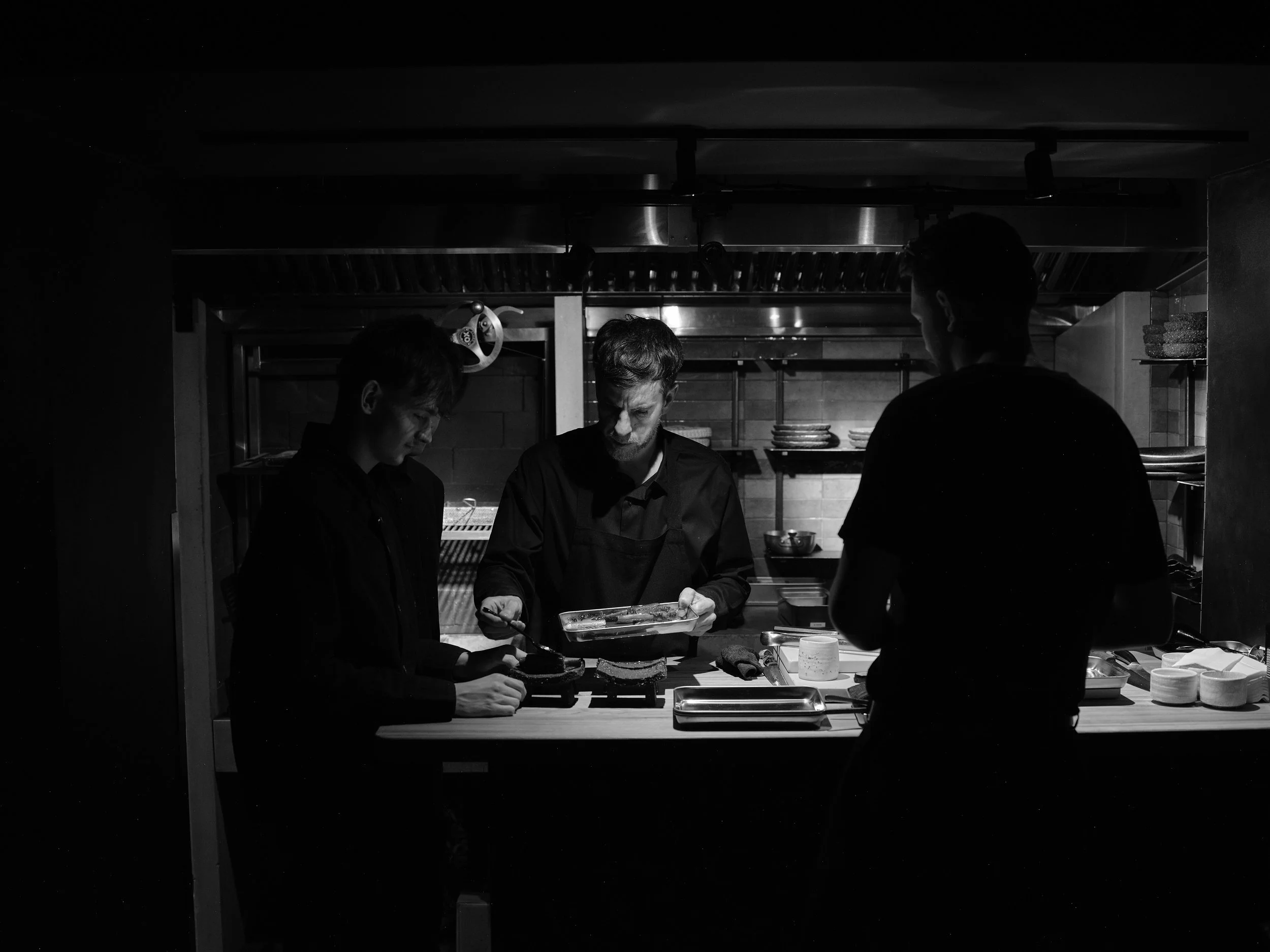
At Gwen, Peter Sanchez-Iglesias has reduced the machinery of fine dining to its bare essentials: eight guests, two chefs, two open kitchens and a multi-course menu that changes with the seasons. It is a significant departure for a chef who, only a few years ago, had almost 150 people working under him. But for Sanchez-Iglesias, the appeal is straightforward. He wanted to cook again.
“At one point, two or three years ago, I had almost 150 people working under me,” he says. “So going this small is a big change, but it means I get to cook every day rather than trying to organise and manage a whole team.”
That desire for control is not about perfectionism for its own sake. It is about proximity. At Gwen, Sanchez-Iglesias can see, touch and influence almost every part of the experience, from the preparation of a dish to its final presentation. It is something he and his brother Jonray used to talk about when they were starting out at Casamia.
“Even when we first started Casamia, my brother and I used to talk about it all the time and say, ‘Wouldn’t it be great just to have an eight-seater restaurant?’”
Years later, that idea has become reality in Machynlleth. Gwen, sister restaurant to Ynyshir, is an intensely intimate dining experience, with Sanchez-Iglesias working alongside Finn Langley, a recent student of local catering college Coleg Ceredigion. The format allows the chef to return to the thing that initially drew him to kitchens: cooking itself.
“The bigger the team gets, the harder it becomes to keep on top of all those tiny touches and details,” he says. “So that’s really why I’ve done this now: to cook, and to be able to do the very best I can.”
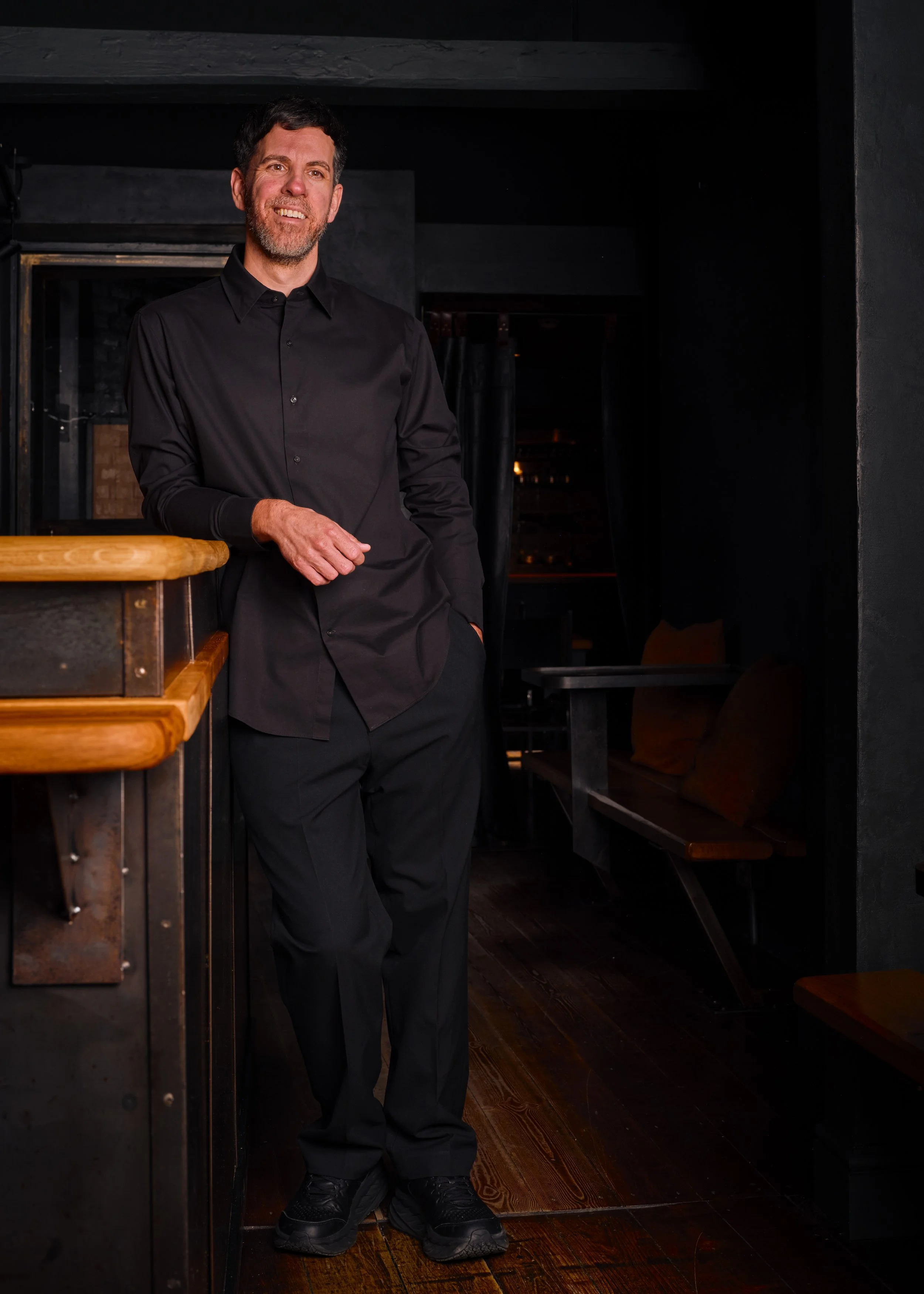
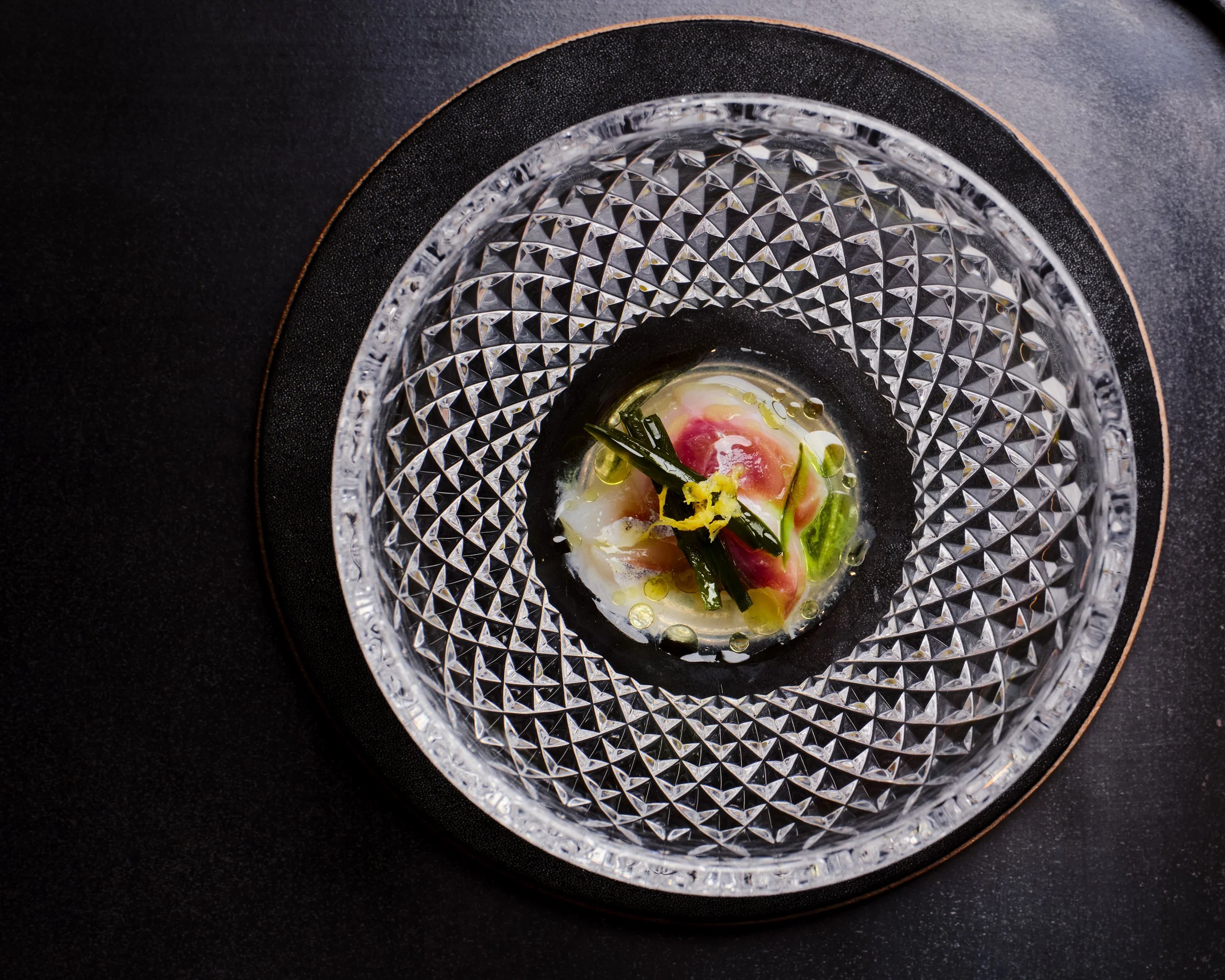
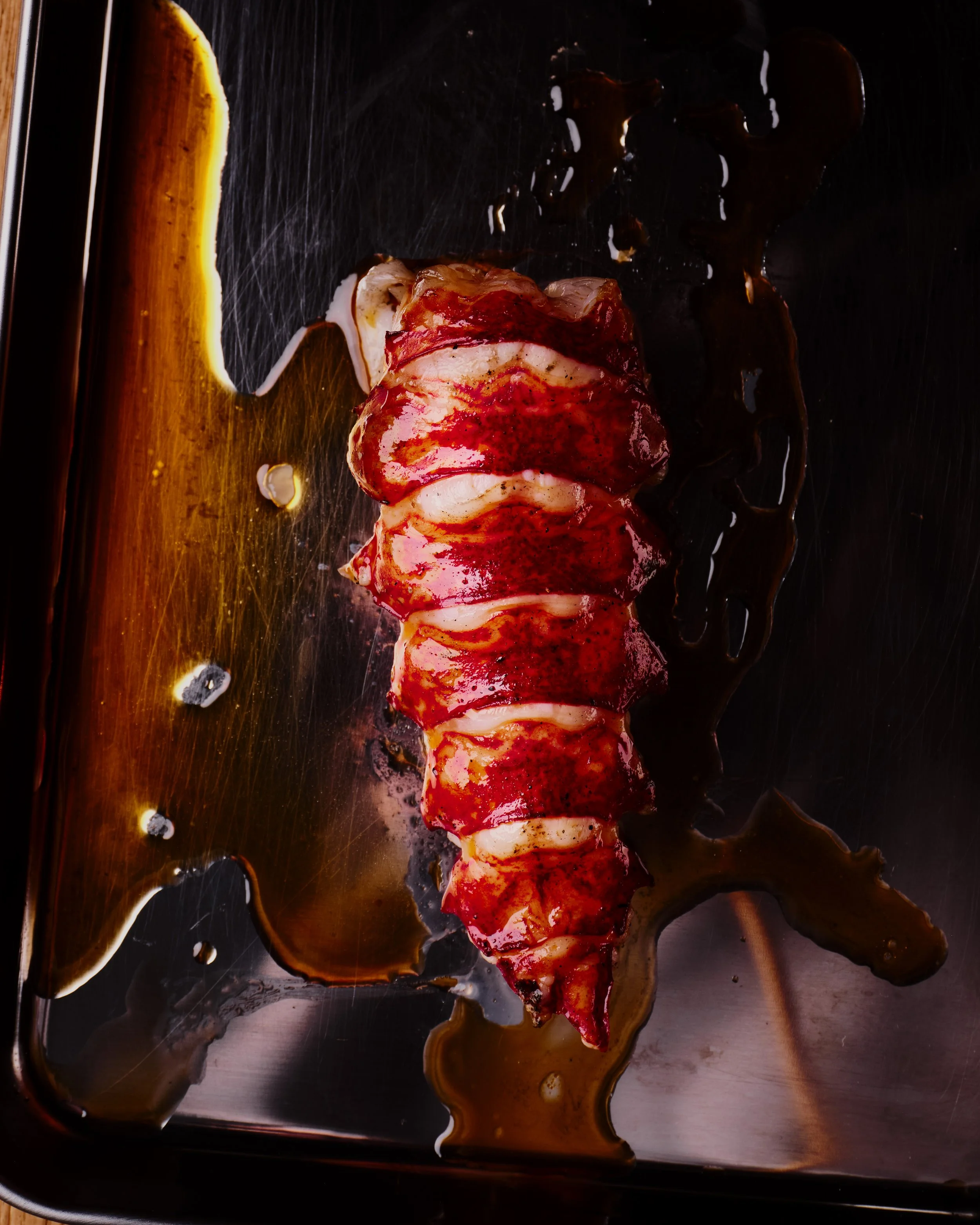
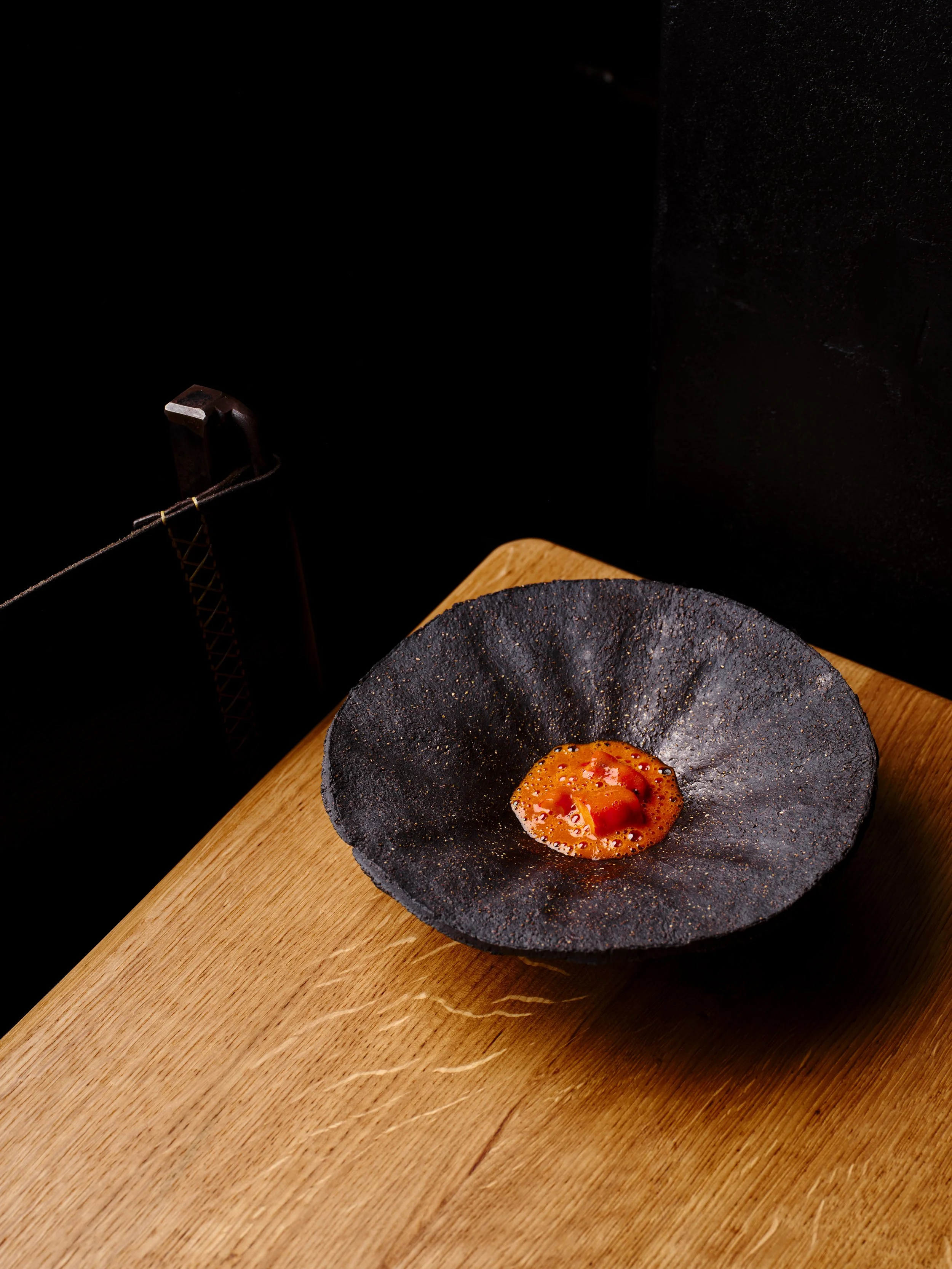
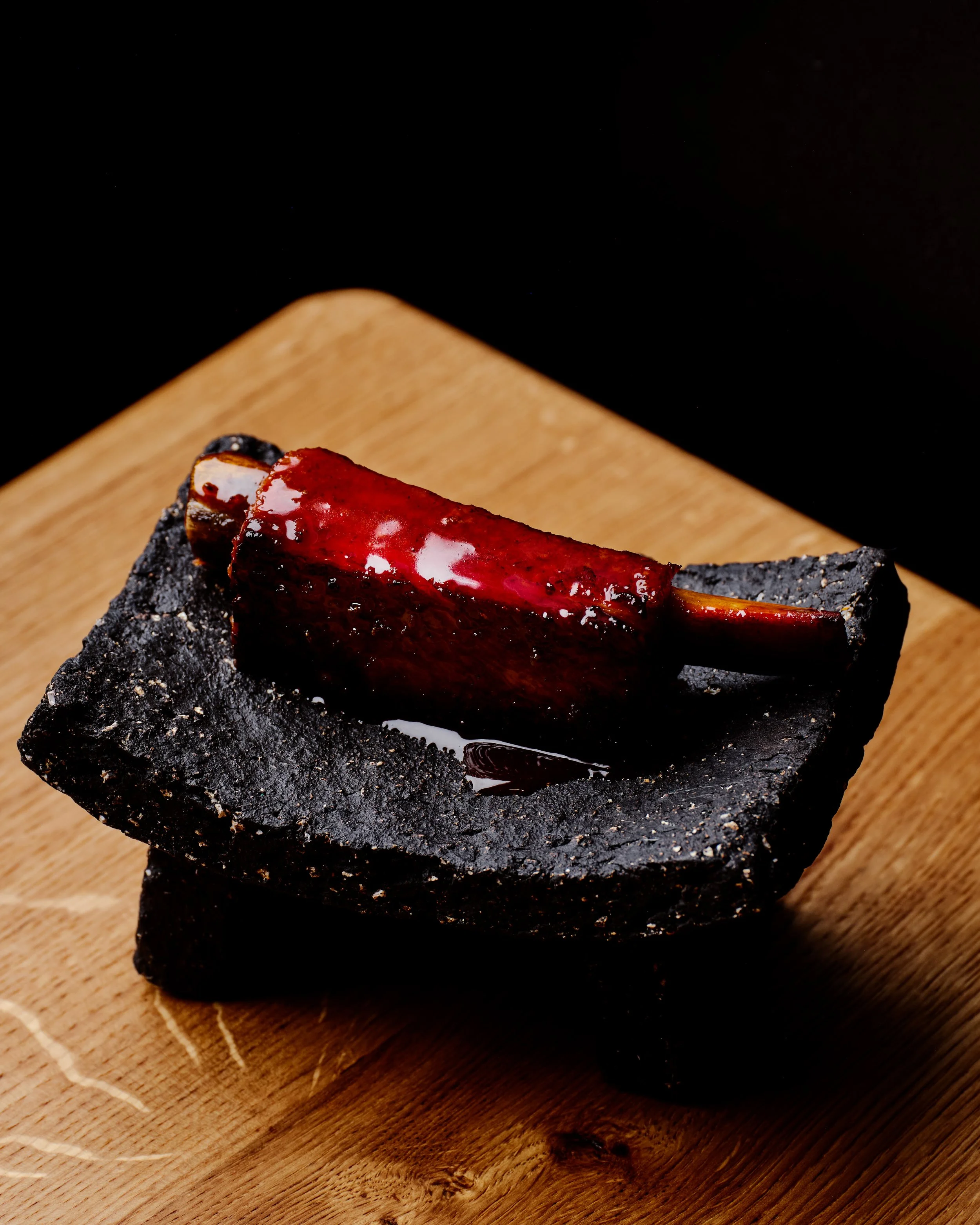
That might sound like a retreat from ambition. It is anything but. Gwen is the product of 25 years of cooking, travel and experience distilled into an eight-seat restaurant. Its approximately 20-course menu moves freely between influences rather than attempting to sit comfortably inside one particular culinary category. Tomato stracciatella sits alongside Hokkaido scallop mole blanco, carabineros birria with hibiscus and duck rib al pastor masa. Fire is a constant presence, while the produce dictates what happens next.
For Sanchez-Iglesias, that lack of a neat definition is the point.
“Cooking for 25 years, understanding food and what I like and don’t like, all the travelling and everything I’ve experienced, has defined it 100%,” he says. “The food is an amalgamation of the past, the present and wherever I want it to be in the future.”
The present is the ingredient. The past is everything that has shaped him. The future is the constant attempt to improve.
He compares his approach to a wine list. A great list might contain wines from Italy, France, Spain, Australia or elsewhere in the world, without needing to justify why they belong together. The same principle applies to his cooking.
“I want to be able to do anything I truly believe in or enjoy without thinking, ‘This doesn’t fit with the ethos.’”
It is an increasingly interesting position in a restaurant world that can be obsessed with identity. Chefs are expected to have a recognisable signature, a particular vocabulary and an instantly identifiable point of view. Sanchez-Iglesias would rather the food simply be his.
“Sometimes food should just be, ‘That’s Gareth Ward’s food. That’s Peter Sanchez-Iglesias’s food.’ It should exist in its own right rather than having to be categorised so much.”
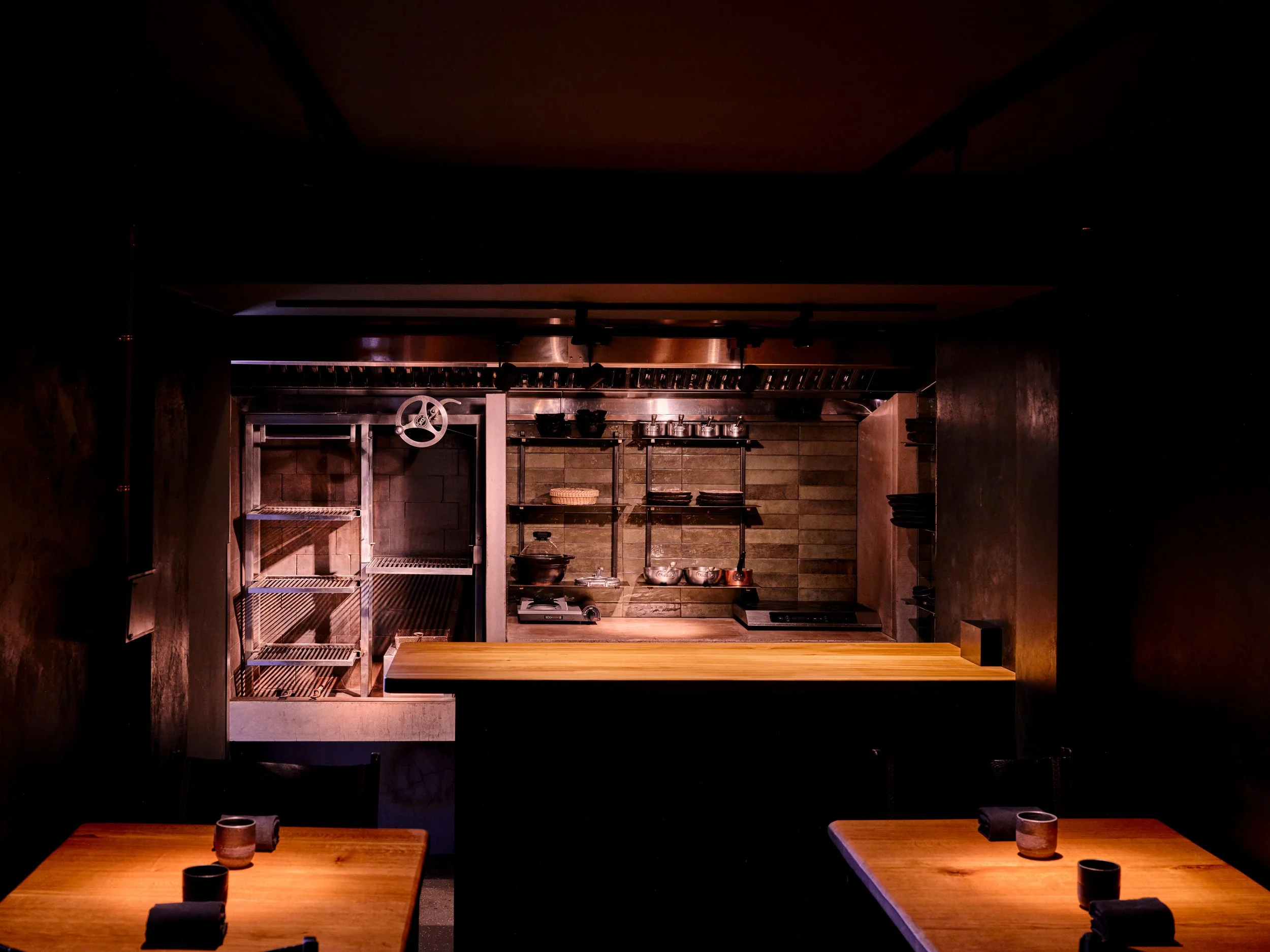
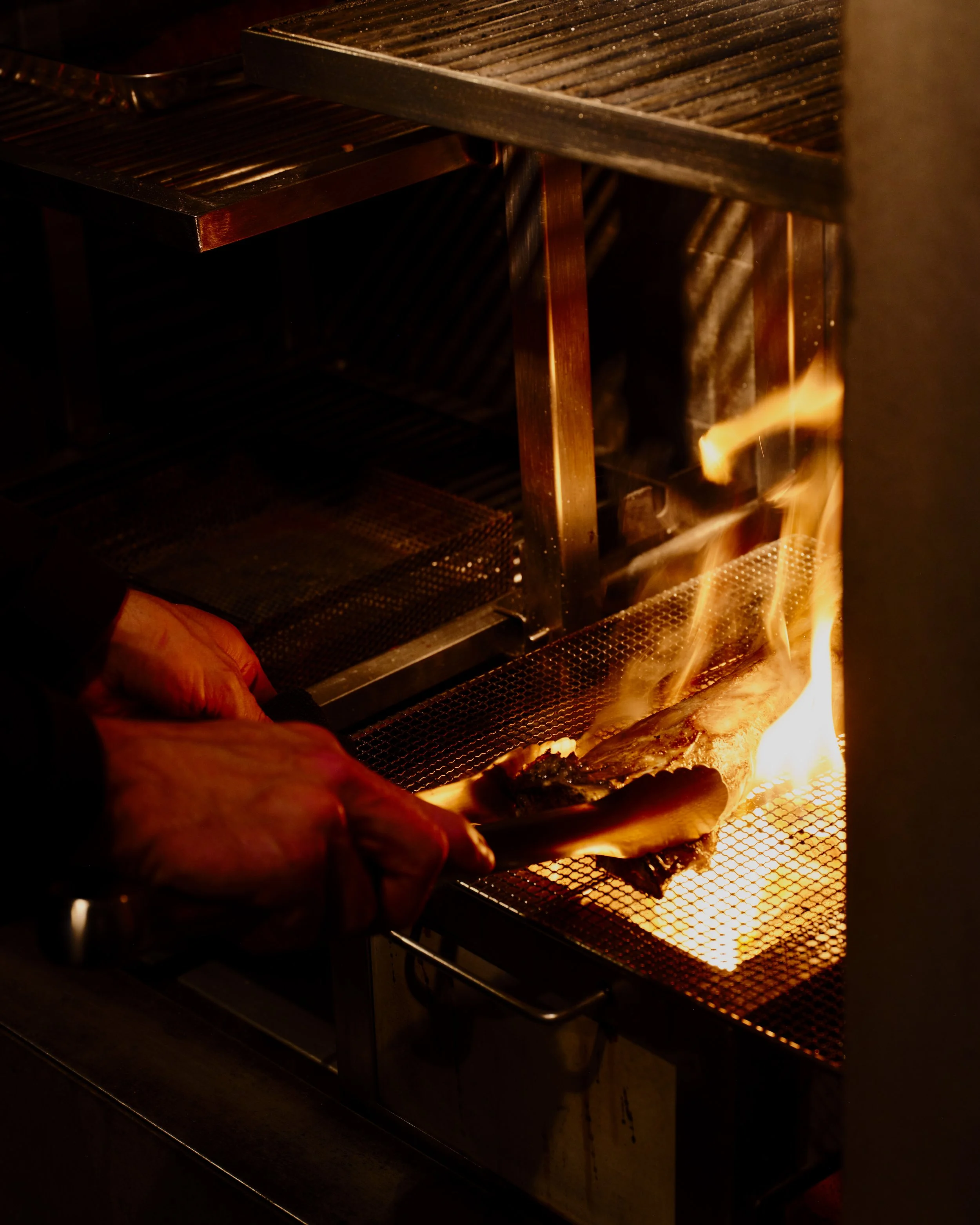
Fire provides one of the clearest expressions of that philosophy at Gwen. It is not merely a visual device or a fashionable cooking technique. Sanchez-Iglesias likes its unpredictability. Gas and induction offer a level of control that becomes familiar with experience; fire demands constant attention.
“Fire is never like that. You have to really understand it and learn how to control it,” he says. “That’s quite motivating because you’re constantly trying to make things that little bit better.”
There is also the question of flavour. Different woods and charcoals bring different characteristics, allowing the fire itself to become another ingredient. For a chef interested in the produce in front of him, that variability is part of the attraction.
The same thinking extends to Gwen’s hyper-seasonal approach. Sanchez-Iglesias is not interested in spontaneity as a gimmick. He sees it as a natural consequence of paying attention to ingredients.

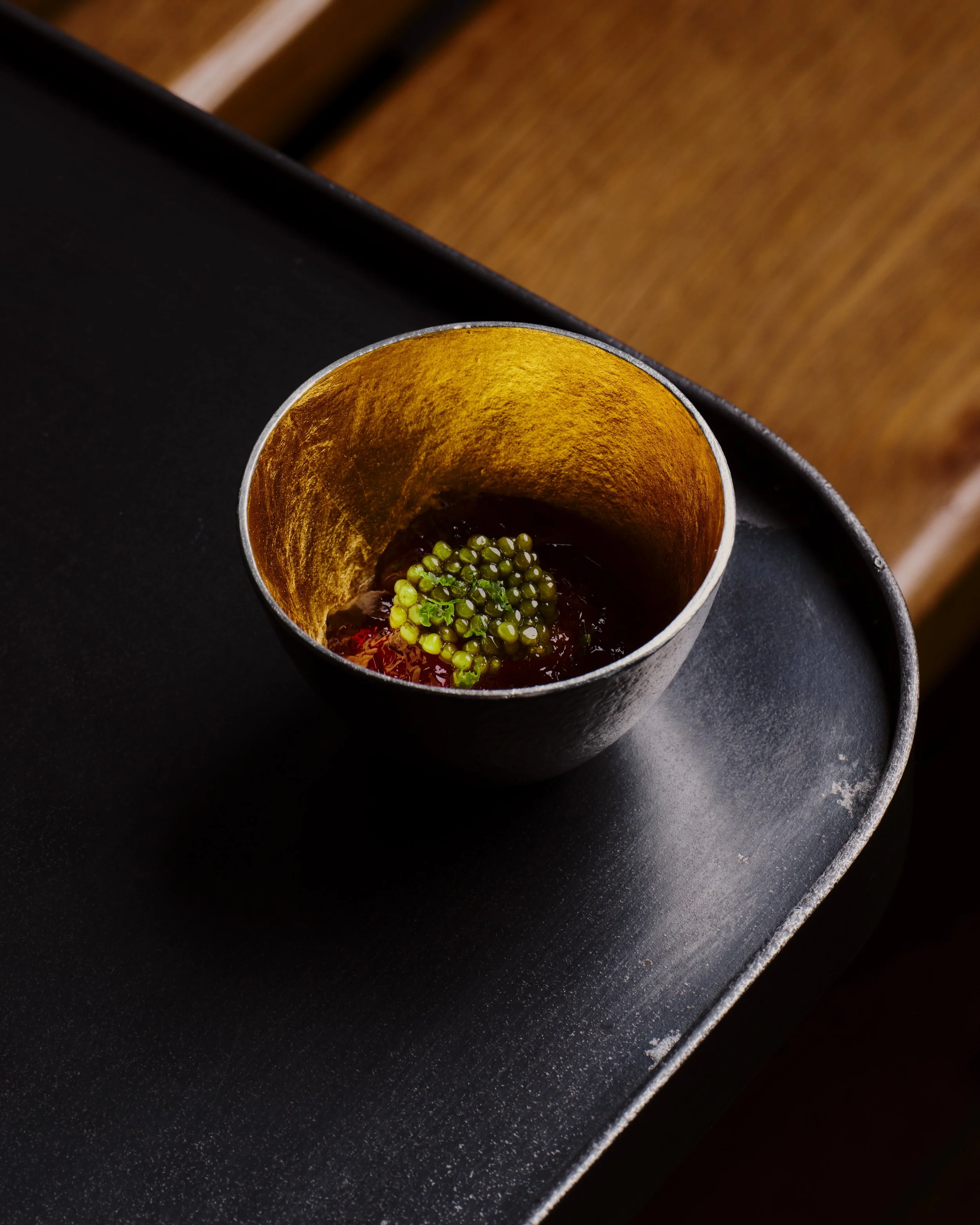
“If you have some incredible peas you’ve just picked from the garden and think, ‘Everybody needs to taste these right now,’” he says, “you might put them on the menu.”
The trick is knowing when that moment has passed.
Three days later, the same peas may no longer be at their peak. That is where consistency and seasonality intersect. At Gwen, the small team means Sanchez-Iglesias can respond almost immediately.
“I know I’m going to touch it during preparation, I’m going to cook it and I’m going to touch it again when it’s served,” he explains. “So I can change and adapt things much more quickly.”
That is one of the privileges of cooking for eight. It is also one of its responsibilities. When Sanchez-Iglesias is responsible for a dish from beginning to end, there is nowhere for the detail to disappear.
He applies the same intimacy to the restaurant's development of people. Working with Finn Langley, who is at the beginning of his professional career, has given Sanchez-Iglesias the opportunity to mentor in a way that becomes difficult when a kitchen grows into a large organisation.
“I love it,” he says. “I think it’s that personal bond you get to build and being able to have that one-on-one time with someone.”
There is an unexpected personal dimension to that relationship. Sanchez-Iglesias has a son and daughter of his own, and says he has found himself wondering whether he will ever mentor them in the same way.
“The way I guide Finn is how I’d want my own children to grow up, and that’s quite a beautiful thing.”
He knows the arrangement is temporary. Finn will eventually move on, as chefs do, and Sanchez-Iglesias already anticipates missing him. For now, he is enjoying the rare opportunity to give one person his full attention.
That sense of perspective has been hard-earned.
Sanchez-Iglesias began cooking professionally at 16 at his family's Italian trattoria, Casamia, in Westbury-on-Trym. Alongside his brother Jonray, he went on to launch Fratelli before returning to Casamia and taking the restaurant in a radically different direction. A Michelin star arrived in 2009, followed by a win on Gordon Ramsay’s Best Restaurant in the UK in 2010 and four AA Rosettes in 2012.
The brothers relocated Casamia to Bristol’s former General Hospital in 2016, opening Paco Tapas next door later that year. Paco, named after their father, went on to win its own Michelin star in 2017.
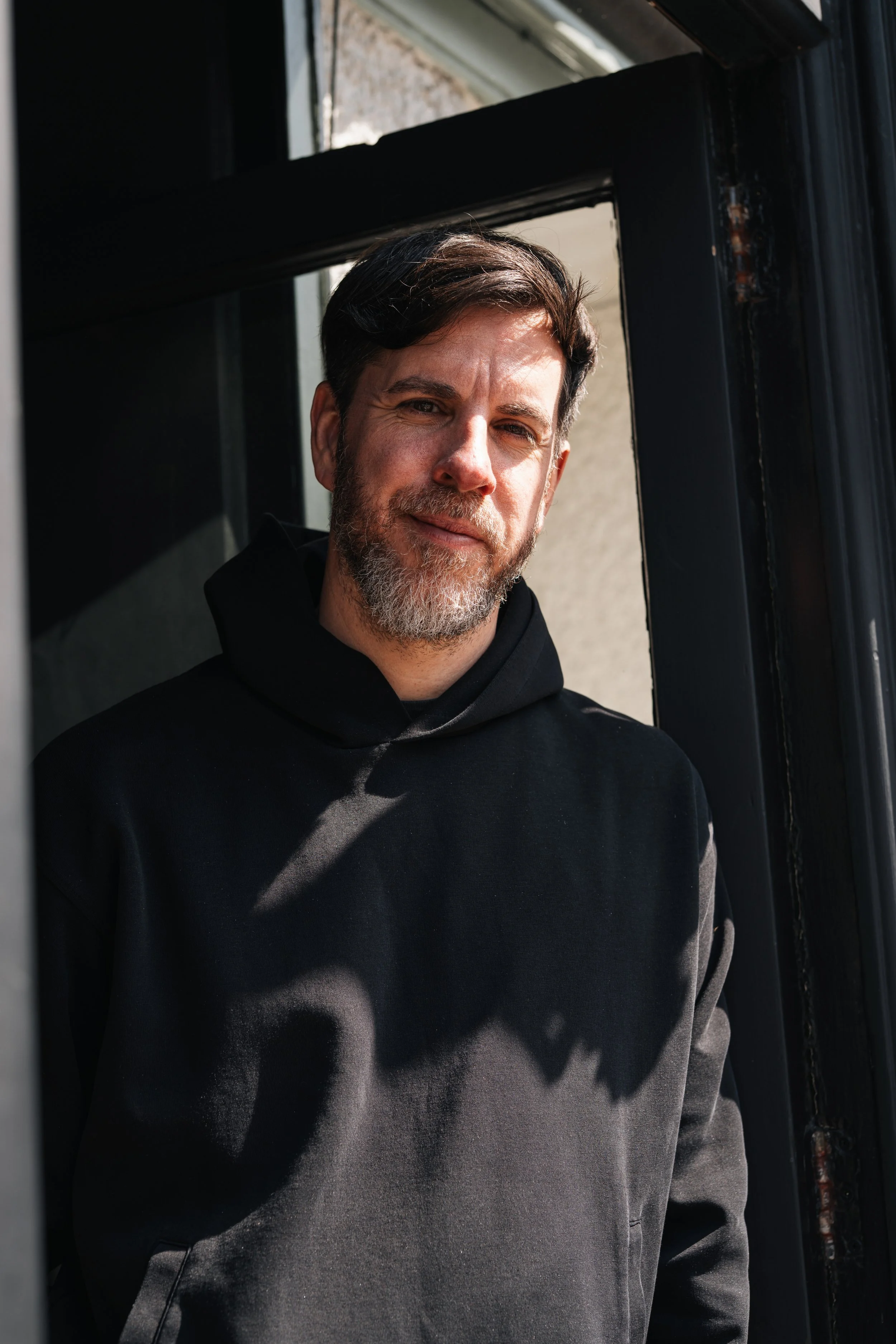
But the story was also marked by tragedy. Jonray died in 2015, aged just 32, leaving Peter to continue the family business alongside his parents, Paco and Sue. That experience inevitably changed him, including the way he approaches the pressure of a professional kitchen.
“Everything in life rubs off on you in one way, shape or form,” he says. “When you deal with certain things, like obviously my brother passing away, it makes you realise not to worry so much about the little things.”
The result is a calmer chef.
“Everything I’ve experienced has made me calmer in the kitchen.”
It is perhaps significant that Gwen has emerged from that perspective. After Decimo at The Standard in London, and following the subsequent closures of Casamia and Paco Tapas, Sanchez-Iglesias has chosen not to rebuild the empire. He has chosen eight seats.
The location matters, too. Gwen sits in Machynlleth, rather than the intensity of Bristol or London. Sanchez-Iglesias describes the difference less in terms of geography than energy.
“An area gives you a vibe,” he says. “If you have that vibe, if you feel energised by a place, it’s going to show in your hospitality.”
At Gwen, he feels that energy acutely. The surrounding landscape, the quieter pace and even the air contribute to the experience.
“It feels like an energy source,” he says. “Even the air feels cleaner because you’re not surrounded by a built-up city.”
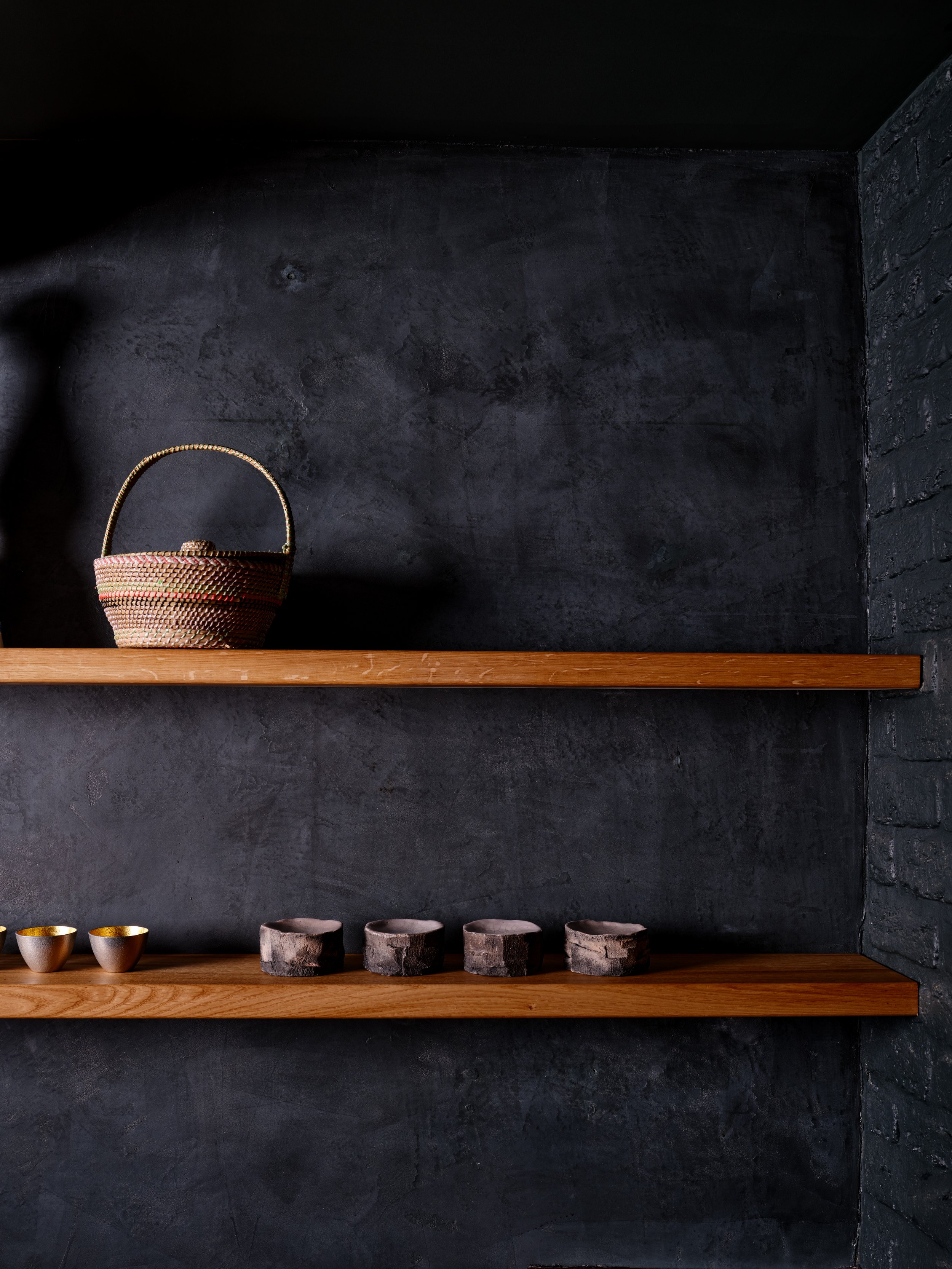
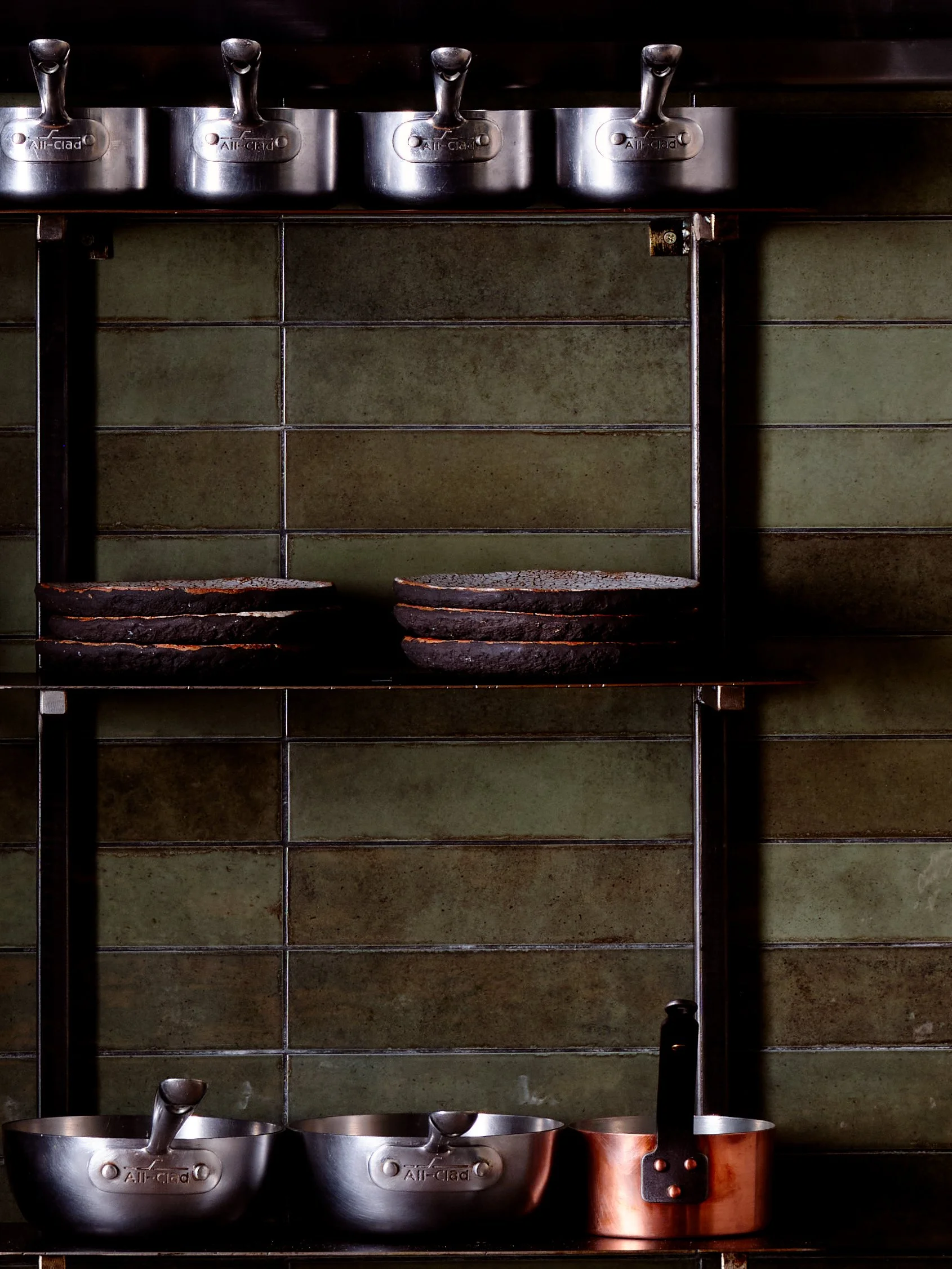
That atmosphere is reflected in Gwen’s physical design. Amelia Eiriksson, who is also behind Ynyshir, has created an interior that remains dark and atmospheric, with bespoke crockery and cutlery and hand-forged ironmongery from Ynyshir’s in-house smithy. The result is deliberately intimate rather than ostentatious.
For Sanchez-Iglesias, that intimacy is not simply an aesthetic choice. It changes what a restaurant can deliver.
“If I’m looking after three tables or I’m looking after 20 tables, which ones are going to get more of my eye? It’s going to be the three.”
At Gwen, there are only eight guests. Every reaction is visible. Every dish has somewhere to land.
And ultimately, that is what Sanchez-Iglesias wants the restaurant to create: not an exercise in culinary performance, but a memory.
“I just want people to be happy at the end of the day,” he says. “I want them to come away with a little memory.”
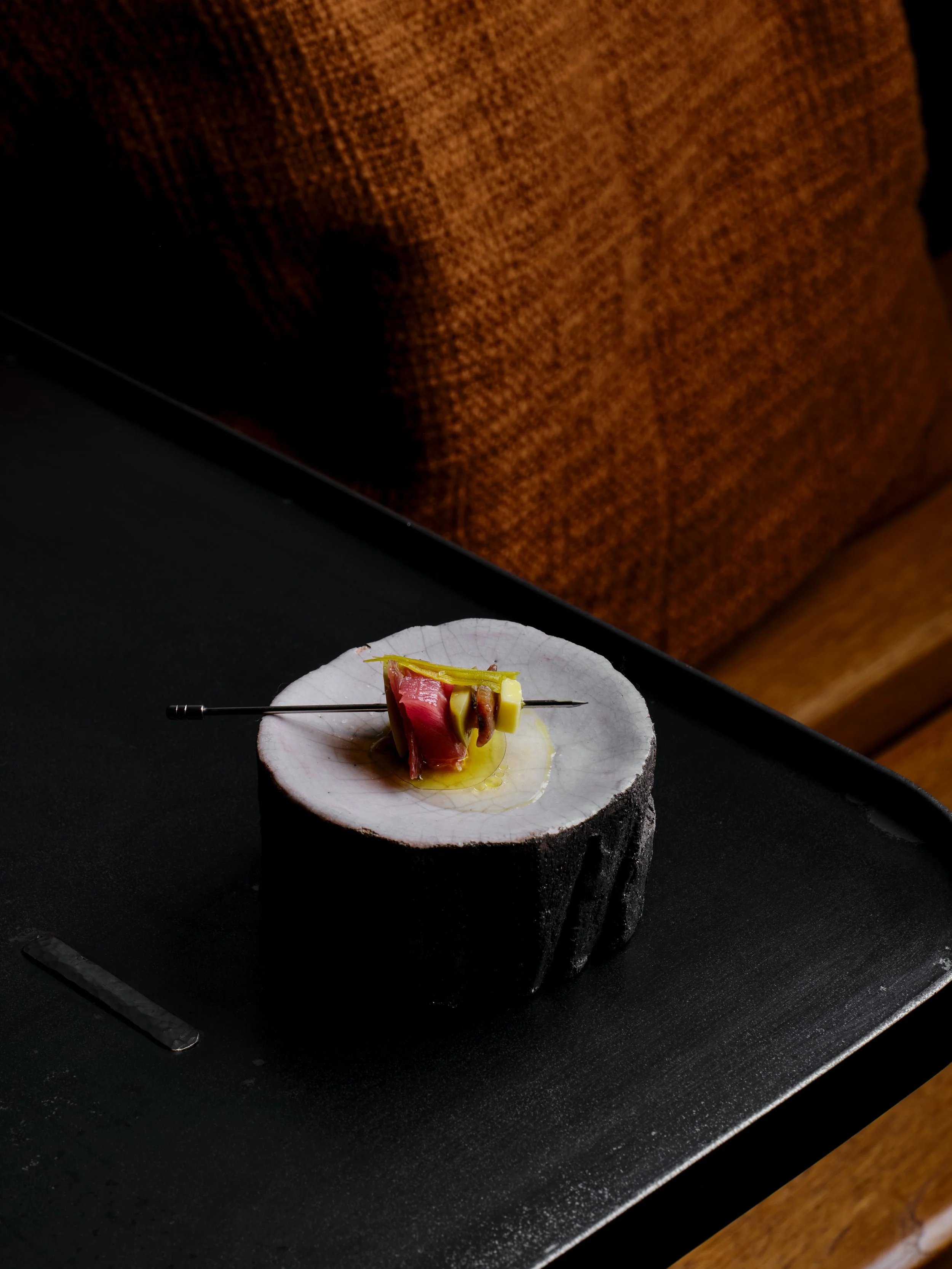
He recalls one particularly enthusiastic guest who decided to score every dish out of ten. After the gilda and parmesan arrived, the verdict was immediate: ten out of ten. The man kept returning to the parmesan throughout the meal.
Sanchez-Iglesias remembers the reaction because that is precisely the kind of response he wants Gwen to provoke.
“You’re going to remember that one for the rest of your life.”
For him, the most successful restaurant experience might not even be about a particular dish. It could be the conversation that follows one. The mood created around a table. A decision made over dinner. A moment that guests carry out of the restaurant without necessarily realising that the restaurant helped create it.
“It’s not necessarily just about the food,” he says.
For a chef who has spent 25 years learning how to make food better, it is a surprisingly simple ambition. Eight people arrive. Two chefs cook. Twenty courses unfold. And if, several hours later, someone leaves with a story they will still be telling years from now, Gwen has done its job.
Book a table at Gwen.