
At The Pass: Adam Handling MBE on Frog, British Luxury and Why Fine Dining Should Never Feel Stiff
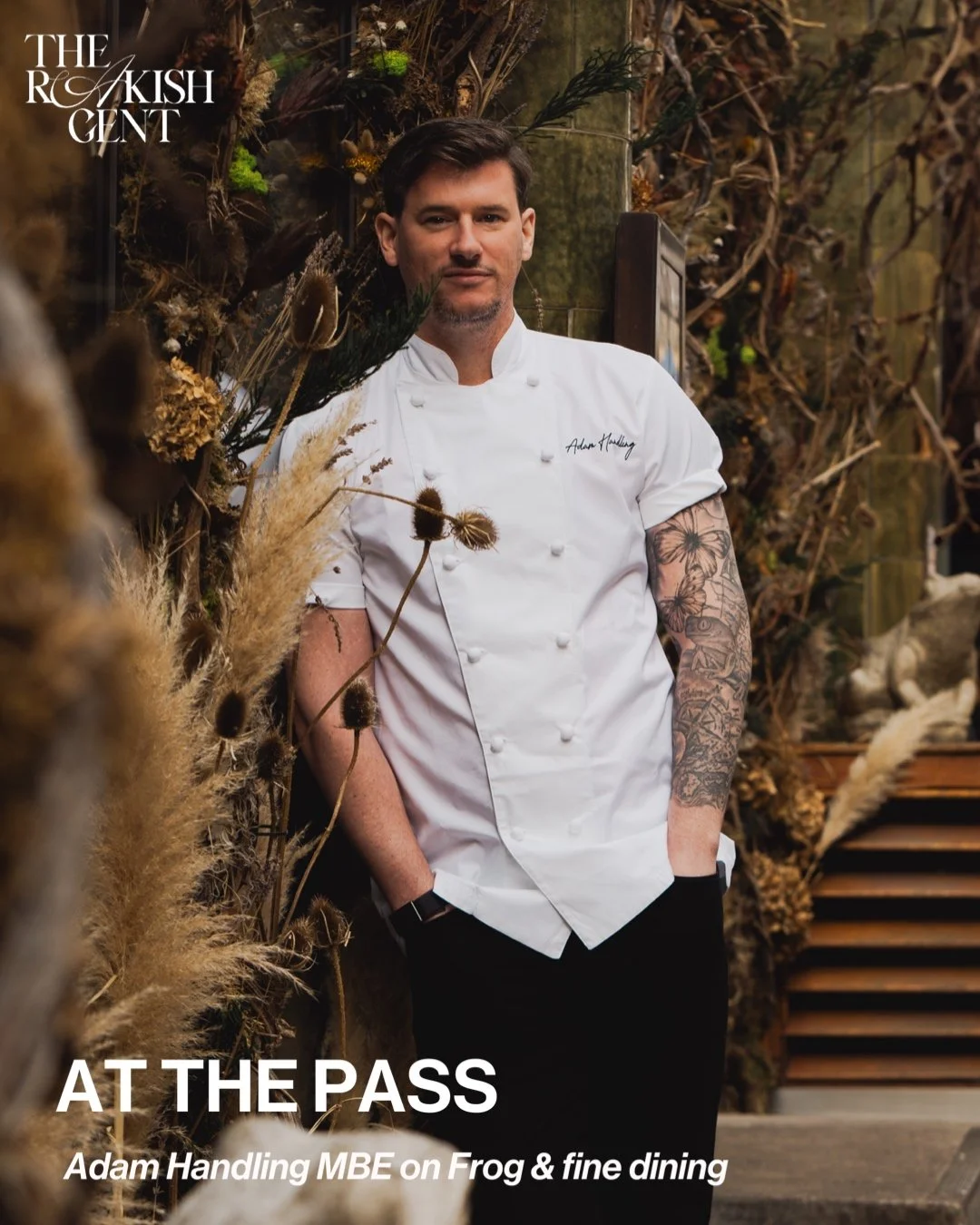
There is a moment during service at Frog by Adam Handling when the entire room seems to move in sync. Chefs glide between the open kitchen and dining room with the sort of calm precision usually reserved for theatre productions; guests lean forward as dishes are explained tableside; wine flows; conversations sharpen. In Covent Garden, a few streets from the West End’s marquees and velvet curtains, Adam Handling has built a restaurant that understands something many fine dining institutions still don’t: people want to be part of the performance.
Nearly a decade after opening Frog in 2017, Handling’s flagship restaurant continues to define its own version of British luxury. It has now retained its Michelin star for a fifth consecutive year, while the wider Adam Handling Collection continues its expansion across London and Cornwall. There is Ugly Butterfly 2.0, which recently earned its first Michelin star overlooking Fistral Beach; The Loch & The Tyne and The Tartan Fox, two gastropubs rethinking British pub food through a luxury lens; and downstairs from Frog itself, Eve Bar, where cocktails built from kitchen offcuts push his sustainability ethos even further.
But Frog remains the centre of gravity.
“Retaining the Michelin star for a fifth year is massive,” Handling tells The Rakish Gent. “But honestly, it’s a reflection of the team more than anything. Restaurants don’t win stars, people do.”
That team-first philosophy runs through almost every answer he gives. Last year, he promoted long-serving colleague Cleverson Cordeiro to Proprietor of Frog — a move that clearly means as much to him as any accolade.
“He’s been there since before the restaurant even opened and has played such a huge role in what Frog has become,” says Handling. “Guests love him, the team love him — he’s family to me.”
When Frog first opened in Covent Garden, the ambition was to challenge traditional expectations around fine dining. Handling wanted Michelin-starred food without the ceremony that can often make luxury restaurants feel inaccessible.
“The vision was to create something that felt different — sustainable British luxury dining, without the stiffness that can sometimes come with fine dining,” he explains. “We originally did breakfast, lunch and dinner, which feels mad now.”
Over time, the restaurant evolved into the tasting-menu-only experience it is today: immersive, deeply ingredient-led and unapologetically theatrical. The open kitchen remains central to that philosophy.
“Dining should be fun,” Handling says simply. “We’re in Covent Garden — right in the heart of theatreland — so why wouldn’t we create something immersive?”
At Frog, chefs present dishes directly to guests, eliminating the invisible divide between kitchen and dining room that has defined traditional fine dining for decades. Handling believes that transparency creates something more engaging — and more honest. “There’s nowhere to hide in an open kitchen, and I actually love that.” That openness extends beyond service and into the sourcing itself. Few chefs champion British produce with quite the same evangelical energy as Handling, whose menus are built around relationships with farmers, fishermen and growers across the country.
“I think Britain has some of the best produce in the world,” he says. “For a long time we didn’t shout about it enough.”
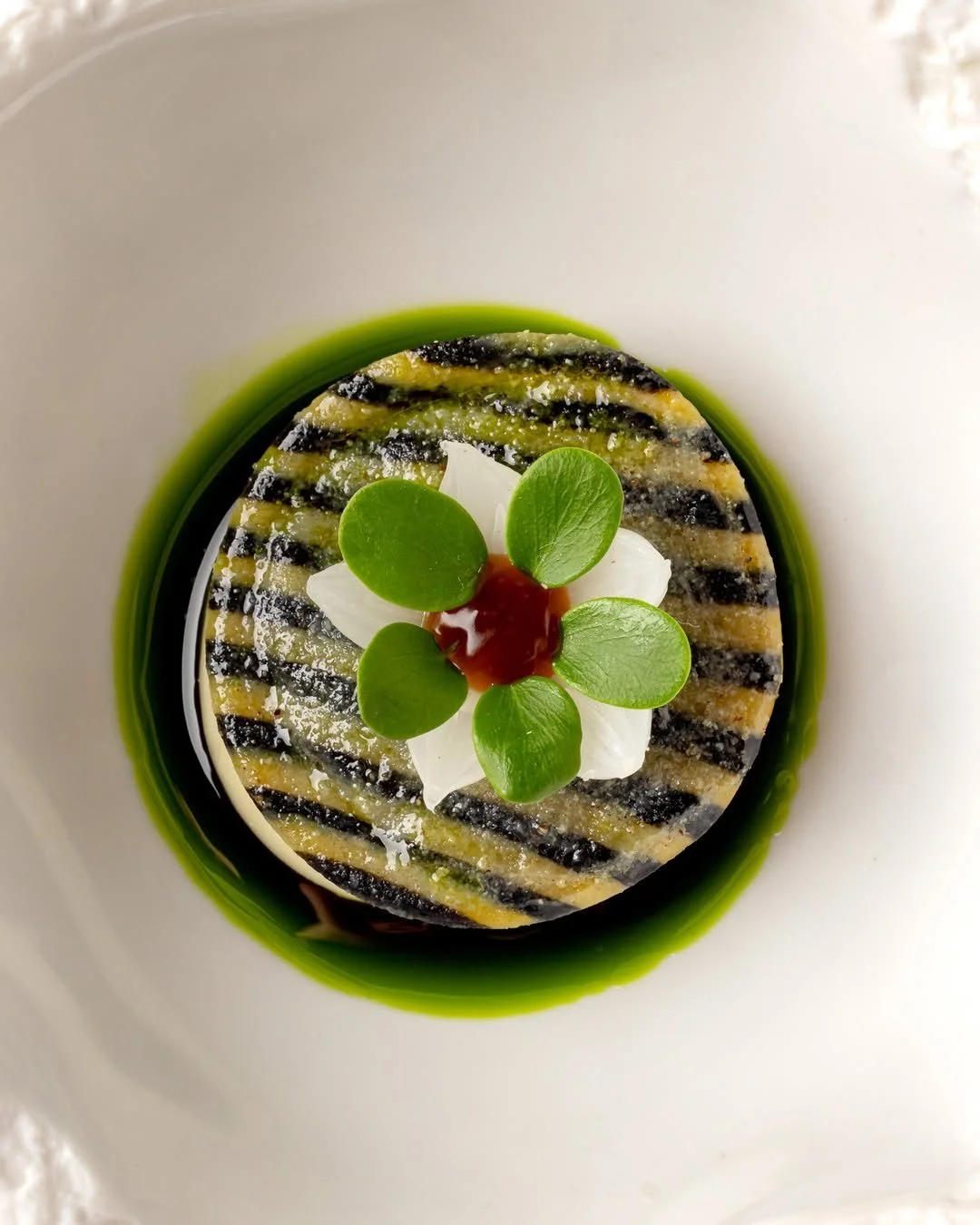
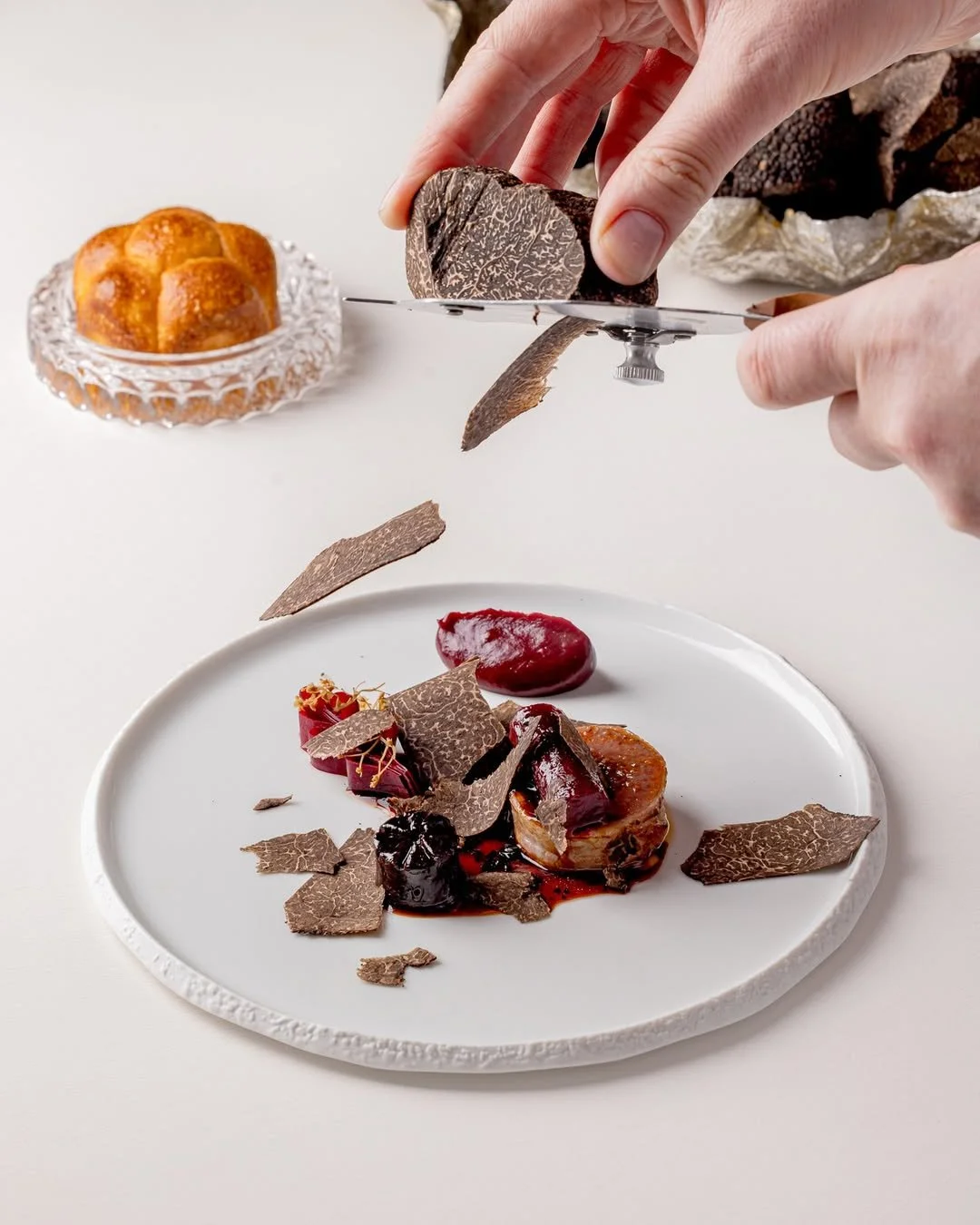
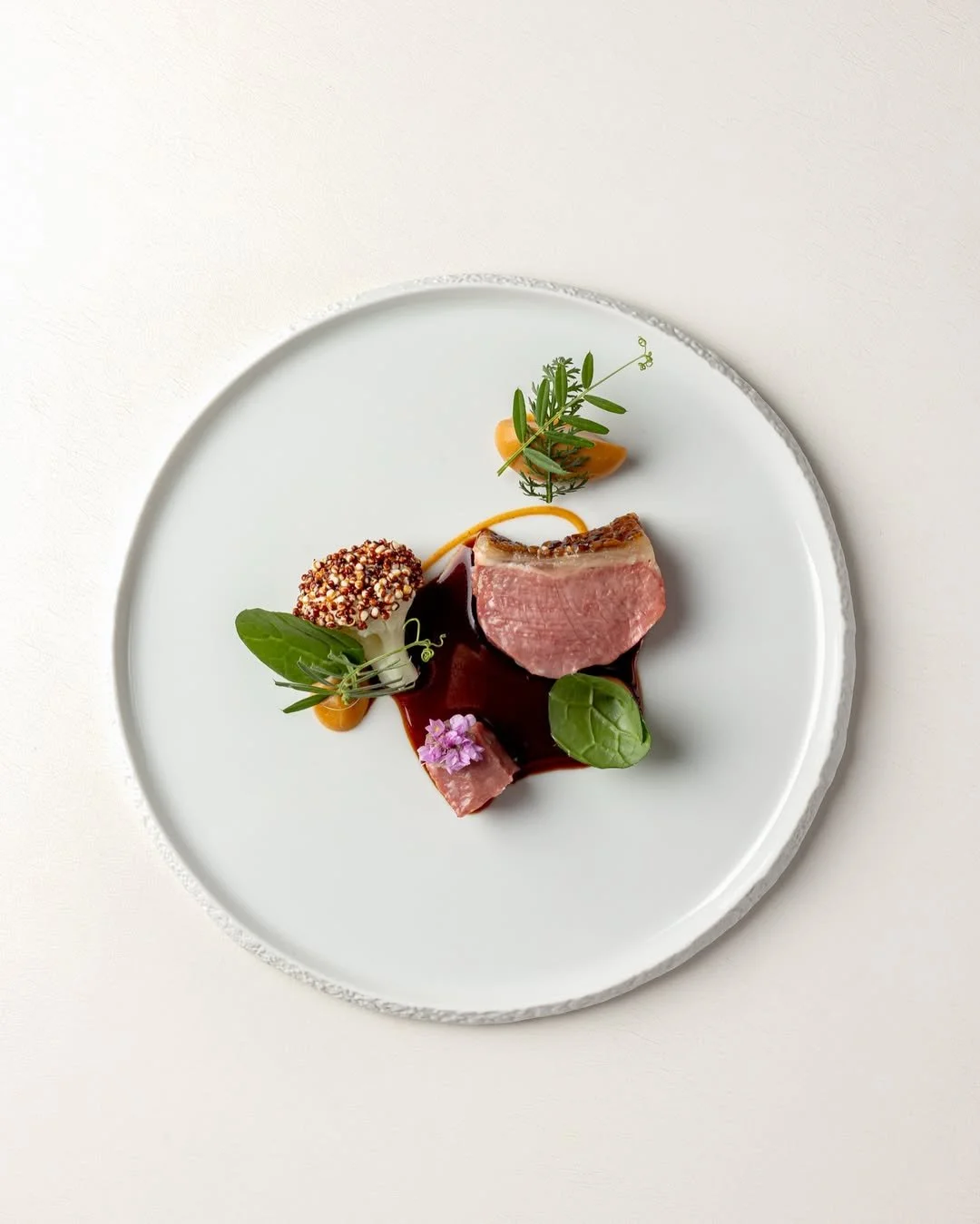
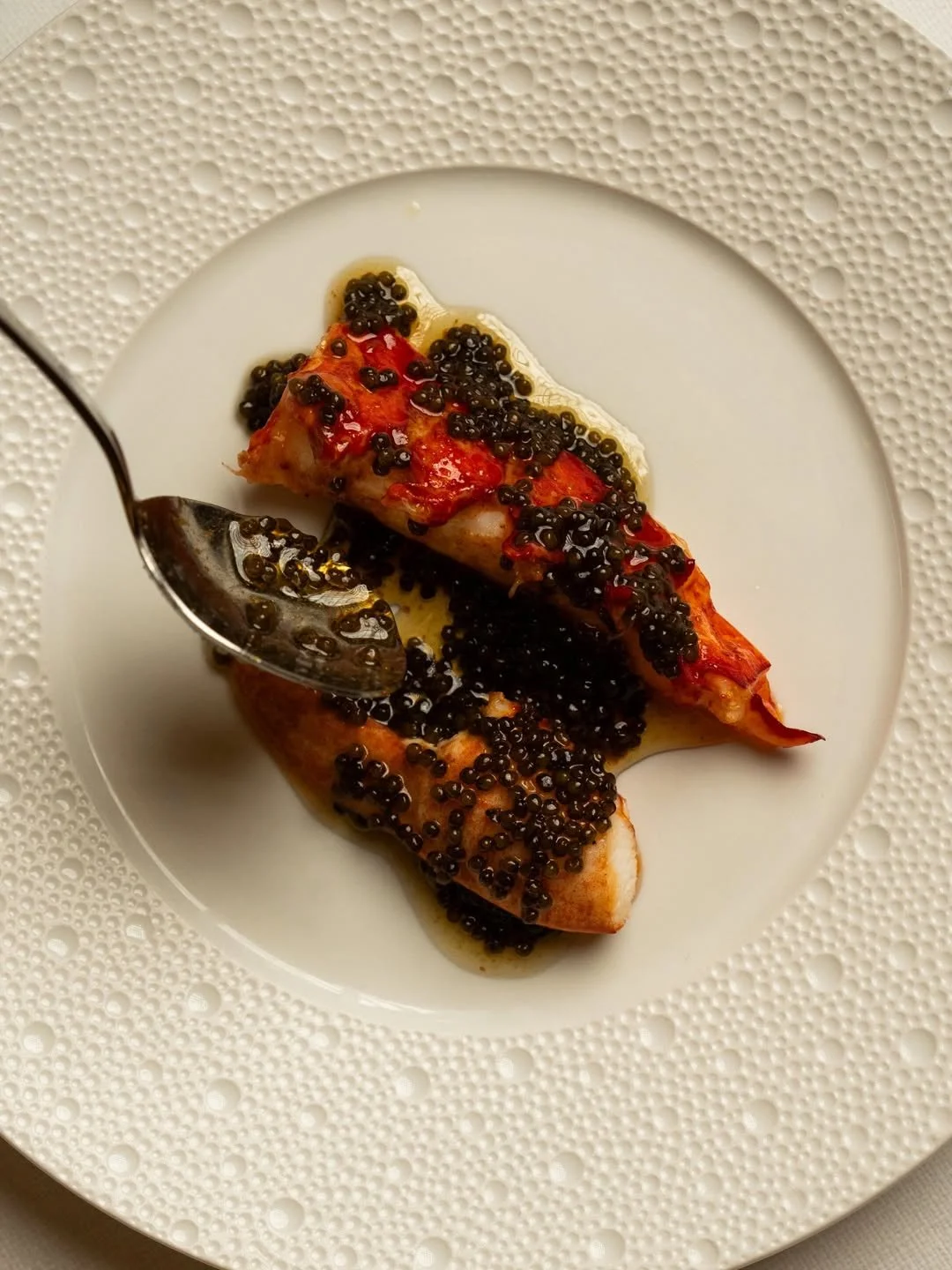
The wider Collection has increasingly embraced foraging and self-grown ingredients too. In Cornwall, his teams gather wild garlic, sea herbs and flowers for dishes served at Frog; at The Tartan Fox, eggs now come directly from chickens kept on-site.
“That connection to ingredients makes cooking far more exciting because you’re creating dishes around what nature is giving you.”
Sustainability, meanwhile, is not treated as a fashionable add-on or marketing exercise. It is woven into the DNA of the restaurant — partly because, according to Handling, waste simply never made sense to him.
“I hated wasting food because it felt wrong,” he says. “But it’s also made us better chefs because it forces creativity.” At Frog, whole animals are used nose-to-tail. Vegetable offcuts become oils and ferments. Shells become sauces. Ingredients that cannot be used upstairs often find a second life downstairs at Eve Bar, where the team has developed what Handling jokingly refers to as a “recycling triangle”.
It is a philosophy diners increasingly connect with too. Guests are now presented with a map showing where ingredients originate around the UK — a detail that reflects changing attitudes around provenance and transparency.
“People want to know where their food comes from,” he says. “And I think that’s brilliant.”
Still, for all the conversation around sustainability, sourcing and Michelin stars, what truly separates Frog from many of its competitors is its atmosphere. Despite the precision of the cooking, there is remarkably little pretension. “You shouldn’t be worrying about whether you’re dressed correctly or if you’re using the right knife,” Handling says. “Luxury should feel exciting and fun — never intimidating.”
He credits much of that guest experience to Restaurant Director George Hersey, who oversees hospitality across the Collection and focuses obsessively on how guests actually feel during service.
“Hospitality isn’t just service — it’s an experience,” says Handling. That broader experience also extends to the drinks programme, which recently earned Frog the title of ‘Best Designed Wine List – Europe’. Under Beverage Director Kelvin McCabe, the restaurant has built a cellar that balances prestige with accessibility — an approach Handling insists is deliberate. “It’s really important to me that it feels accessible and fairly priced,” he says. “It shouldn’t just be about chasing margins.”
English wines feature heavily too, including labels produced at Exton Park in Hampshire, alongside cocktail pairings and non-alcoholic options designed to mirror the creativity of the kitchen.
And while Frog has matured considerably over the last eight years, Handling insists complacency remains the enemy. “We’re constantly evolving dishes, refining techniques and pushing ourselves creatively,” he says. “But the DNA never changes.” Then, with the faintest grin detectable even through text, he adds: “And yes — I’d be lying if I said I wasn’t chasing that second star.”
Perhaps that ambition is precisely what keeps Frog moving forward. In a city as relentlessly competitive as London, standing still is rarely an option. Yet Frog’s success lies in understanding exactly what it wants to be: proudly British, unmistakably London, and completely uninterested in the tired formalities that once defined luxury dining.
Handling references the artwork inside the restaurant — including pieces by JJ Adams depicting the Queen and Piccadilly Circus — as a reflection of Frog itself: bold, modern and unmistakably tied to the capital’s energy. “London never stands still,” he says. “And neither do we.” As our conversation ends, I ask what he hopes guests take away from a meal at Frog. A flavour? A feeling? A memory?
“Hopefully all three,” he says.
“What matters most to me is that people leave feeling something — that they’ve had an experience that stayed with them beyond the table.”
Book a table at Frog.